Remains of d'Artagnan may have been found in Maastricht - DutchNews.nl

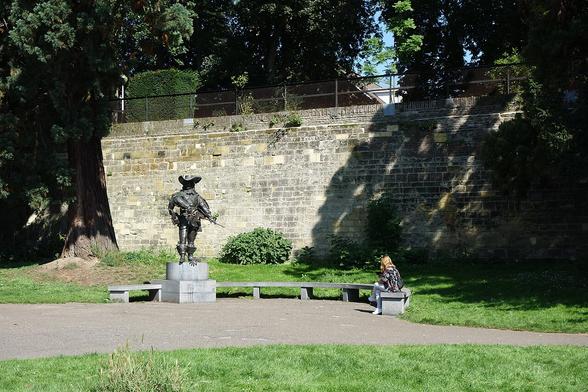
Archeologists may have discovered the skeletal remains of Charles de Batz de Castelmore, otherwise known as the fourth musketeer d’Artagnan, at a church near Maastricht. D’Artagnan, the leader of King Louis XIV’s elite corps of gentlemen, died in battle in 1973 during the French siege of Maastricht, probably from a wound in the chest caused by a musket bullet. The find may prove a theory put forward by French historian Odile Bordaz in 2008, that d’Artagnan could have been buried...

DutchNews.nl

#OnThisDay, 21 Mar 1945, Hannie Schaft, an active member of the Dutch resistance known as "the girl with the red hair", was arrested at a German checkpoint in Haarlem.

She was later executed, allegedly saying "I shoot better" after the first attempt to shoot her missed.

#WomensHistoryMonth #WomenInHistory #OTD #History #WomensHistory #WW2 #DutchHistory #Histodons

A little further along the path, the landscape changes completely.

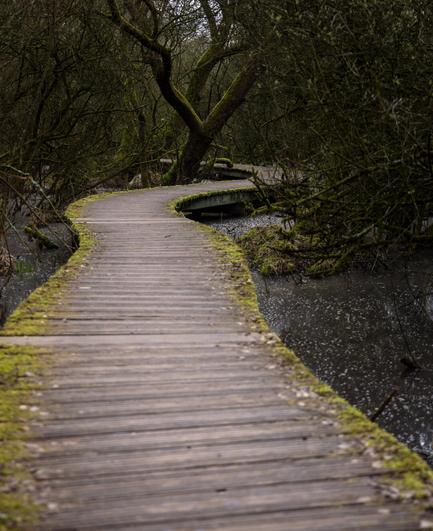
After descending the dyke near the Moerputten Bridge, you enter the swamp itself. Thankfully, there is no need to wade through the water. Wooden walkways guide visitors safely above the dark, still waters, weaving through moss-covered trees and dense shrubs.

And fortunately, the walkway is not straight.

Instead it gently twists through the swamp, creating a beautiful composition where the path disappears between the trees before reappearing again. In the soft morning haze, with sunlight struggling to break through the dense canopy, the scene became wonderfully moody.

This wetland landscape is not just beautiful — it is historically significant. The Moerputten area forms part of the low floodplains surrounding ’s-Hertogenbosch, a city whose history has always been closely tied to water. For centuries these marshes were part of a natural defensive system around the city. The wetlands were nearly impossible for armies to cross, turning Den Bosch into one of the most heavily fortified cities in the Netherlands.

The name “Netherlands” itself reflects this relationship with water. It literally means low lands — a country built in river deltas, floodplains, and reclaimed wetlands. Areas like the Moerputten show why water management, wetlands, and engineering have always been essential parts of Dutch history.

From a photographic perspective the winding boardwalk creates perfect leading lines, drawing the viewer deeper into the swamp.

Captured with my Canon EOS 5DS R and Sigma 24–70 Art at 24mm, f/2.6, 1/500 sec, ISO 100.

#Moerputten #DenBosch #DutchHistory #Netherlands #Lowlands #Wetlands #SwampForest #LeadingLines #MoodyNature #NatureReserve
#HistoricLandscape #CanonPhotography #Canon5DSR #Sigma2470Art #NatureAndHistory #NatureWalks #HiddenNature #StoryThroughTheLens #LightAndShadow #WonderingLens #ByMaikeldeBakker #MaikeldeBakkerPhotography #PixelfedPhotography #LightAndLife
#NatureLovers

A little further along my morning walk near the Moerputten Bridge, another perspective revealed itself.

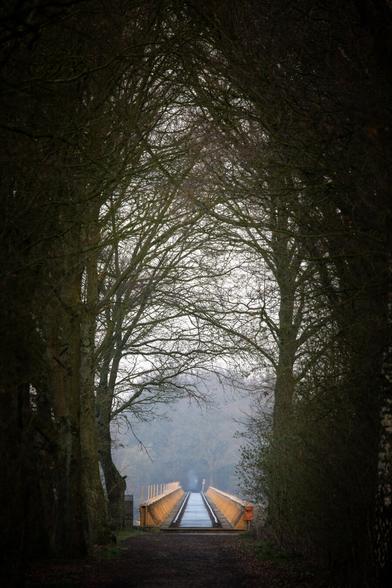
This time I stepped back and looked at the bridge from a distance, standing along the long lane that slowly leads toward it. Tall trees lined both sides of the path, their branches arching overhead like a natural tunnel. In the soft morning haze, the old railway bridge appeared quietly in the distance, framed by the trees as if nature itself was guiding the eye toward it.

The Moerputten Bridge is part of the historic Halve Zolenlijn, a railway line built in the late 19th century to connect the leather and shoe industries of Brabant with the rest of the Netherlands. At the time, this entire area consisted of wet peatlands and floodplains connected to the Meuse (Maas) river system. Regular seasonal flooding made construction extremely difficult, which is why the engineers built this long iron railway bridge to allow water to move freely beneath the tracks.

In other words, rather than blocking the swamp and wetlands, the railway simply crossed above them. A clever piece of engineering that respected the natural dynamics of the landscape.

From a photographic perspective this scene immediately stood out because of the leading lines. The narrow lane and arching trees pull the viewer’s eye forward until it finally rests on the distant structure of the bridge.

Captured with my Canon 5D Mark IV and Sigma 100–400mm, f/6.3, ISO 1250.
Sometimes a step back reveals the full story of a place.

#Moerputten #MoerputtenBridge #HalveZolenlijn #DutchHistory
#DutchEngineering #WaterManagement #NatureNetherlands #BrabantNature #LandscapePhotography #HistoricRailway #Wetlands #MorningWalk #LeadingLines #TreeTunnel #CanonPhotography #Canon5DMarkIV #Sigma100400 #Perspective #NatureAndHistory #ExploringNetherlands #PhotoStory #LightAndShadow #NatureWalks #LandscapeStory #WonderingLens #ByMaikeldeBakker #MaikeldeBakkerPhotography #PixelfedPhotography #LightAndLife #StoryThroughTheLens

The Swedish settlers established a trading relationship with the Susquehannock, and supported them in their successful war against Maryland colonists.
https://en.wikipedia.org/wiki/Swedish_overseas_colonies

(2/2)

#britishhistory #russianhistory #japanesehistory #frenchhistory #spanishhistory #poruguesehistory #dutchhistory #belgianhistory #swedishhistory

Swedish overseas colonies - Wikipedia

#OnThisDay, 2 Feb 1953, Dr Anna de Waal becomes State Secretary for Education, Arts and Sciences in the Netherlands. She is the first woman to hold a ministerial cabinet post in the country.

#WomenInHistory #OTD #History #WomensHistory #DutchHistory #Histodons

Strolling along the Spaarne in Haarlem at dusk, with De Adriaan windmill (1779) in view, is one of those simple pleasures. The city’s 17th-century heart, its lively atmosphere, and easy access to Amsterdam, the dunes, and the North Sea make it a special place. A quiet moment to appreciate history and the everyday beauty of the Netherlands.

#Haarlem #Netherlands #DeAdriaan #Spaarne #DutchHistory #TravelDutch #EveningWalk #HiddenGems #AmsterdamArea #NorthSea #DutchCulture #Windmill
https://globalnews.ca/news/11594042/us-panels-black-wwii-soldiers-netherlands/ “what they found was people who accepted them, who welcomed them, who treated them as the heroes that they were” #USHistory #DutchHistory #censorship #USPolitics #segregation #DEI #hate
U.S. removal of panels on Black WWII soldiers in Netherlands draws backlash

The removal, carried out without public explanation, has angered Dutch officials, families of U.S. soldiers and the local residents who care for the graves.

Global News
Fascinating deep dive into New Amsterdam's 140-year history from City Beautiful Blog. Did you know the first Jewish settlers arrived in 1654 after being rescued from Spanish pirates? Or that Harlem was named after the Dutch city Haarlem?
From Verrazano's 1524 sighting through Peter Stuyvesant's stern rule to the peaceful 1664 English takeover, this timeline reveals the Dutch colonial foundations of modern NYC.
#History #NewAmsterdam #NYC #DutchHistory #ColonialAmerica
https://citybeautifulblog.com/2025/05/16/nyc-history-timeline-new-amsterdam/
NYC History Timeline: New Amsterdam — City Beautiful Blog

Dates and events in the history of New York from the time of the first European explorers to the end of the Dutch colony of New Amsterdam.

City Beautiful Blog