CNN Polls – CNN Politics

CNN Poll of Polls: Trump approval

Presidential job approval ratings are one of the few metrics consistently and similarly measured in nearly all major public polls. An average of recent polls can often paint a more reliable picture of how the public views the president than a single poll can. The CNN Poll of Polls tracks President Donald Trump’s average approval and disapproval ratings in national polls. It includes the most recent results on this question which meet CNN’s standards for reporting and which measure the views of all US adults. The CNN Poll of Polls does not have a margin of sampling error.

See CNN’s archived Poll of Polls averages for President Joe Biden >>

Latest Trump approval rating

CNN Poll of Polls

Approve40%Disapprove59%

Date Range: 01/14-01/28

Editor’s Note: The disapproval is hovering at or near 60% disapproval of Trump. It will continue to fall, right up to Midterms, and beyond. My prediction…  Thanks to CNN for their fine summary poll. Across the multiple polls, the data in patterns become visible.–DrWeb

*The CNN Poll of Polls aggregates and averages a number of recent polls. The latest Poll of Polls includes results from Marquette Law School (01/21-01/28), Pew Research Center (01/20-01/26), Reuters/Ipsos (01/23-01/25), Strength In Numbers/Verasight (01/14-01/20), CBS News/YouGov (01/14-01/16).

CNN Poll of Polls: Trump approval rating over time

FireShot Webpage Capture 206 – ‘CNN Poll of Polls_ Trump approval rating I CNN Politics’ – www.cnn.comDownload

Donald Trump Job Approval Rating, 2025.
Source: CNN Poll of Polls / RealClearPolitics / The Economist

See All Polls

Continue/Read Original Article Here: CNN Polls | CNN Politics

#2025Data #2026 #Approval #CNN #CNNPolitics #CNNPollOfPolls #CNNPolls #Disapproval #DonaldTrump #Polling #TrumpAdministration #Voters

The Trump administration’s false claims and shifting rhetoric about the killing of Alex Pretti – CNN Politics

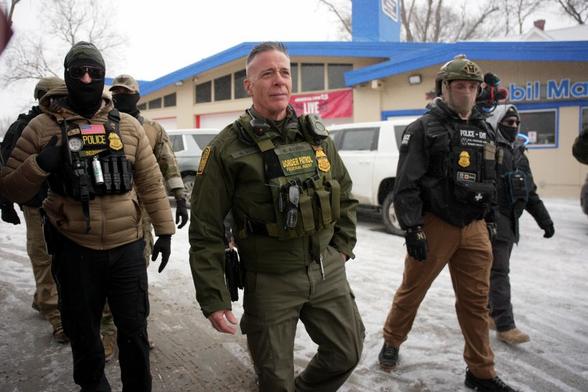
US Border Patrol Cmdr. Gregory Bovino with Federal agents outside a convenience store on Wednesday, Jan. 21, 2026, in Minneapolis. Angelina Katsanis / AP.

Politics 5 min read

The Trump administration’s false claims and shifting rhetoric about the killing of Alex Pretti

By Daniel Dale, Updated 47 min ago

A photograph of the pistol recovered by federal agents after a shooting in Minneapolis, Minnesota is shown on a screen behind Secretary of Homeland Security Kristi Noem during a news conference on January 24, 2026. Al Drago / Getty Images

Top officials in President Donald Trump’s administration have responded to the killing of Alex Pretti by the Border Patrol in Minneapolis on Saturday with a torrent of claims that are either contradicted by video footage or unsupported by any evidence presented so far.

  • Homeland Security Secretary Kristi Noem claimed Pretti “attacked” officers, an assertion echoed by FBI Director Kash Patel, but no footage available as of Sunday afternoon shows Pretti committing any attack.
  • Noem claimed Pretti was “brandishing” a gun, but no available footage shows Pretti even holding a weapon in his hand at the scene; a concealed gun appeared to be taken from his waistband area by a federal agent moments before he was shot.
  • White House deputy chief of staff Stephen Miller referred to Pretti as “an assassin” who “tried to murder federal agents,” Vice President JD Vance reposted this claim, and Border Patrol commander Gregory Bovino (and the Department of Homeland Security in a social media post) said it “looks like” Pretti “wanted to do maximum damage and massacre law enforcement.” But nobody has shown any evidence that Pretti sought to kill anyone, let alone perpetrate a massacre.
  • Patel suggested that Pretti broke the law by carrying a concealed gun at a protest, but the Minneapolis police chief said Pretti had a permit to carry the gun and was allowed to have it on him as he was protesting in a public place.

Pretti’s parents issued a statement on Saturday saying, “The sickening lies told about our son by the administration are reprehensible and disgusting.” And in television interviews on Sunday, the administration declined to repeat some of its most incendiary allegations from Saturday about Pretti, who was a registered nurse in an intensive care unit at a Veterans Affairs facility.

Here is a look at how the Trump team’s shifting rhetoric squares with what is known about Pretti and the circumstances around his death.

The administration claimed that Pretti ‘attacked’ officers. But videos don’t show Pretti committing any attack

Noem told reporters Saturday: “This individual impeded the law enforcement officers and attacked them,” repeating the phrase “attacked them” moments later for emphasis. When Patel was asked about the shooting in a Sunday interview on Fox News, he responded, “You do not get to attack law enforcement officials in this country without any repercussions.”

No video of the incident available as of Sunday afternoon showed Pretti attacking officers.

Various footage shows him directing traffic at the site of an immigration enforcement operation, yelling at a federal agent who was interacting with other bystanders to “not push them into the traffic,” holding up a cell phone appearing to record agents, and stepping in front of an agent to intervene as the agent shoved a woman to the ground; Pretti appeared to make momentary contact with the agent with his right arm and left hand.

The agent then sprayed him with a chemical irritant and dragged him to the ground; other officers joined in the confrontation as Pretti appeared to resist, and one agent appeared to strike him repeatedly as he was on the ground.

In a Sunday interview with CNN’s Dana Bash, Bovino claimed Pretti “assaulted federal officers.” But when Bash pressed Bovino to explain what moment in the video showed Pretti committing such an assault, Bovino would not provide any specifics.

Continue/Read Original Article Here: The Trump administration’s false claims and shifting rhetoric about the killing of Alex Pretti | CNN Politics

#AlexJeffreyPretti #CNN #CNNPolitics #DepartmentOfJustice #DHS #DOJ #FalseClaims #GregoryBovino #Killing #KristiNoem #Minneapolis #ShiftingRhetoric #Trump #TrumpAdministration #USDepartmentOfHomelandSecurity

No, Trump can’t cancel the midterms. He’s doing this instead – CNN Politics

Politics 5 min read

No, Trump can’t cancel the midterms. He’s doing this instead

Analysis by Zachary Wolf, 4 hr ago

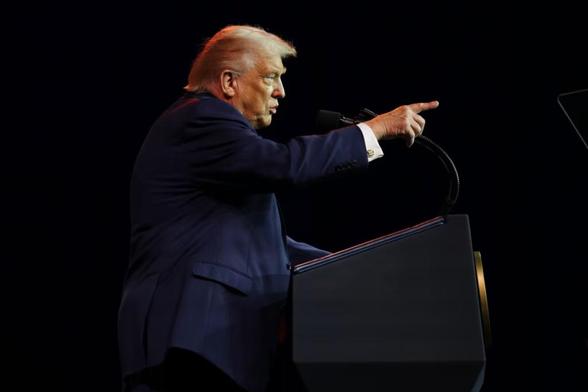
President Donald Trump addresses a House Republican retreat at the Kennedy Center on January 6, 2026, in Washington, DC. Alex Wong / Getty Images

A version of this story appeared in CNN’s What Matters newsletter. To get it in your inbox, sign up for free here.

Worried about losing unified Republican power in Washington and mystified at his lack of support among the public, President Donald Trump keeps talking about not holding the November midterm elections, when Republicans could lose control of the House, Senate or both.

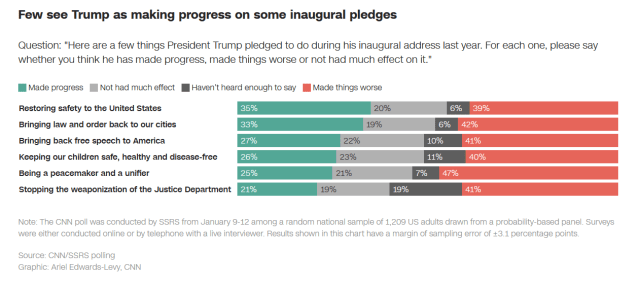
Trump doesn’t understand why his approval rating is underwater (and it is, on every issue, in a CNN Poll conducted by SSRS and released Friday).

“I wish you could explain to me what the hell’s going on with the mind of the public,” he told House Republicans in a speech earlier this month.

Later, he added: “Now, I won’t say, ‘Cancel the election. They should cancel the election,’ because the fake news will say, ‘He wants the elections canceled. He’s a dictator.’”

But Trump did talk about canceling the election in an interview with Reuters this week. He said Republicans have been so successful that “when you think of it, we shouldn’t even have an election.”

White House press secretary Karoline Leavitt later said the president was “joking” and “being facetious” about canceling the election.

If it’s a joke, it’s material he’s been working on for months. Told during an appearance with Ukrainian President Volodymyr Zelensky last September that Ukraine won’t hold an election during a period of martial law during its war with Russia, Trump expressed some envy.

“So you say during the war, you can’t have elections,” Trump said. “So let me just say, three and a half years from now – so you mean, if we happen to be in a war with somebody, no more elections? Oh, that’s good.”

People laughed.

Sometimes they’re jokes, sometimes not

Trump routinely says things that seem like trolls until they don’t. Owning Greenland? Not a joke. However, he seems to have retreated from the oft-repeated idea of an unconstitutional third term.

And for the record, unlike Ukraine, the US has held elections in the midst of multiple wars, when the British had invaded in 1812 and when it was at war with itself in 1864. It held elections during world wars when millions of Americans fought overseas in the 20th century as well.

It makes sense that Trump would dread the November midterms

Trump knows that presidents rarely pick up seats in a midterm. His administration has been moving at breakneck speed to change the government because, as his chief of staff famously said, they know that presidents expect to lose power after their first two years. A net loss of just a handful of seats would give control of the House to Democrats, for instance, requiring their buy-in for spending and giving them power to investigate his administration.

Presidents do not have the power to delay or cancel elections

The Constitution requires that a new Congress be sworn in on January 3, 2027. Election Day is set in law, so it is theoretically feasible for Congress to move it, but not to cancel the election. Elections are supposed to be administered by each state, so state governors and legislatures could, in theory, move their own elections to deal with a major disaster, but there’s no precedent for it. To get into the weeds of all of this, read a report from the Congressional Research Service.

The president’s distrust of US elections is legendary

Trump has also mused about using emergency powers to meddle with elections. He told the New York Times recently that he regrets not directing National Guards to seize voting machines after the 2020 election.

Even the elections he has won, he has said were rigged. There’s still no evidence of any widespread voter fraud, even after all these years of the Trump era.

People are talking about doomsday election scenarios

Election officials say they are thinking very carefully about all of this. Asked about Trump’s musings at an event sponsored by The Atlantic this week, Arizona’s top election official, Secretary of State Adrian Fontes, a Democrat, said this:

“Look, you can’t cancel the election… We’ve got a whole bunch of scenarios that we’re playing through to make sure that we’re prepared for the types of processes that might be necessary to preserve our democracy so that if somebody tries to cancel something, if somebody tries to take some stuff they’re not entitled to, we can go to the courts, get the orders, and hopefully have the backup of law enforcement to make sure that we can move forward through this.”

“The fact that we’re running through these scenarios in the first place should tell you something about the health of our democracy,” Fontes added.

To that end, he would not elaborate on what scenarios they’re preparing for.

“I don’t want to give the bad guys any ideas,” Fontes said.

President Donald Trump speaks during the House Republican Party member retreat at the Kennedy Center in Washington, DC, on January 6, 2026.Mandel Ngan/AFP/Getty Images

What Trump is actually doing about the next election

While Trump might fantasize about canceling the election, the reality is that the election system is already changing in some key ways. Some of them may be enormously consequential.

The redistricting war Trump kicked off continues to rage

Republicans have drawn themselves nine more friendly seats across the country, and Democrats have ended up with six, mostly in California. Republicans see additional opportunity in Florida, while Democrats plan a redistricting ballot initiative in Virginia in April. Read more.

If the Supreme Court decides to further gut the Voting Rights Act, Republicans could in theory redraw maps in many other states. Read takeaways from October’s oral arguments.

Expect a very different House in the near future

The long-term result of more and more political gerrymandering without protections for racial minority-focused districts could be the smothering of minority-party delegations in multiple states, making the House map look increasingly more like the presidential map. Far fewer Democratic districts in Texas. Far fewer Republican districts in California — even though there are millions of both Republicans and Democrats in both states.

Trump wants vastly more control over how states conduct elections

While much of the effort has been stopped, for now, by courts, Trump’s goal is to exert more executive control over elections that are supposed to be governed by Congress and states.

A federal court on Thursday sided with California against the administration’s demand that the state turn over information on its 23 million voters.

The Supreme Court has agreed to decide whether mail-in ballots that are postmarked by, but arrive after Election Day can still be counted. The decision could have serious consequences for the country’s large scale adoption of mail-in voting in recent years. Trump is a loud skeptic of the practice even though he has personally voted by mail. His executive order would also scramble how states use voting machines, another response to phantom voter fraud that could actually drastically slow down the counting of ballots.

Trump has chipped away at election oversight

Early on, his administration scaled back the Cybersecurity and Infrastructure Security Agency, CISA, which is meant to helps states guard their election systems from attack. Homeland Security Secretary Kristi Noem canceled funding for an information sharing network that helped states detect and ward off coordinated hacking attacks, as CNN reported last year.

His Justice Department has rewired the agency’s Civil Rights Division away from its original core mission of civil rights abuses, including those related to elections. One current focus of the division is to help states “clean” voter rolls, although a judge recently ruled that effort was a misapplication of the Civil Rights Act.

Trump’s administration has already tried to change how people vote through executive action, and who they vote for through changing maps.

There’s a lot of time for more gaming the system between now and November, and Trump clearly already has the midterms on the brain.

Continue/Read Original Article Here: No, Trump can’t cancel the midterms. He’s doing this instead | CNN Politics

#CanTCancelMidterms #CancelMidterms #CNN #CNNPolitics #DoingThisInstead #Doomsday #Dread #Jokes #NoPower #OversightOfElections #Redistricting #StateElections #ZacharyBWolf

CNN poll finds majority of Americans say Trump is focused on the wrong priorities – CNN Politics

President Donald Trump looks on as he holds a pen in the Oval Office at the White House in Washington, DC on February 4, 2025. Elizabeth Frantz / Reuters

Politics 5 min read

CNN poll finds majority of Americans say Trump is focused on the wrong priorities

By Ariel Edwards-Levy, Jennifer Agiesta, and Edward Wu, 13 hr ago

Public opinion on nearly every aspect of President Donald Trump’s first year back in the White House is negative, a new CNN poll conducted by SSRS finds, with a majority of Americans saying Trump is focused on the wrong priorities and doing too little to address cost of living.

A majority, 58%, calls the first year of Trump’s term a failure.

There’s hardly any good news in the poll for Trump or the Republican Party entering a critical midterm year, with the president’s handling of the economy looming as the defining issue in key House and Senate races.

Asked to choose the country’s top issue, Americans pick the economy by a nearly two-to-one margin over any other topic. The poll suggests Trump is struggling to prove that he’s addressing it. And it finds broad concerns over Trump’s use of presidential power and his efforts to put his stamp on American culture.

Views of economic conditions have remained stable — and largely negative — for the past two years, with about 3 in 10 rating the economy positively. What’s changed in the latest poll is the increased pessimism about the future: Just over 4 in 10 expect the economy to be good a year from now, down from 56% just before Trump was sworn in last January.

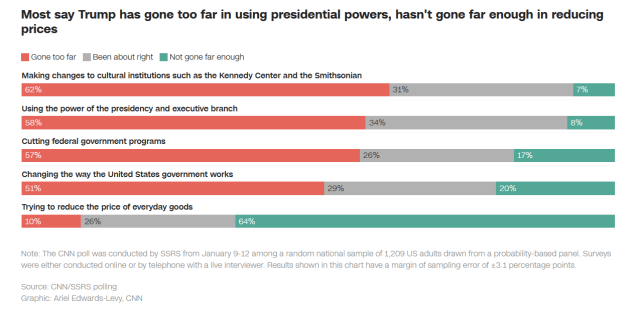
A 55% majority say that Trump’s policies have worsened economic conditions in the country, with just 32% saying they’ve made an improvement. Most, 64%, say he hasn’t gone far enough in trying to reduce the price of everyday goods. Even within the GOP, about half say that he should be doing more, including 42% among Republicans and Republican-leaners who describe themselves as members of the “Make America Great Again” movement.

Much of the public doubts that Trump is prioritizing their interests. Just 36% now say he has had the right priorities, down from 45% near the beginning of his term. Only one-third of Americans now say they believe that Trump cares about people like them, down from 40% last March and the worst rating of his political career.

Only 37% say that Trump puts the good of the country above his personal gain, and 32% say that he’s in touch with the problems ordinary Americans face in their daily lives. That includes more than one-quarter of those who approve of Trump’s presidency overall but don’t feel he’s in touch with their problems.

“Even if he is doing some good in areas, he comes across very self-seeking and (shows a) lack of caring about the common good of our citizens,” wrote one person, an independent from Oklahoma, who responded to the poll.

Fewer than half say that Trump has the stamina and sharpness to serve effectively, and just 35% call him someone they’re proud to have as president.

Trump retains his base but has little support beyond it

Trump’s overall job approval rating now stands at 39%, with public opinion on nearly every aspect of his presidency stagnating in the negative. His ratings, which held around 48% last February, declined within the first 100 days of his second term, and have since remained in the low 40s or high 30s.

In some ways, Trump now faces a political situation not dissimilar from his predecessor, former President Joe Biden, who also struggled to convince Americans he was tackling economic concerns.

Related article CNN Poll: Most Americans are discontented with Biden, the economy and the state of the country 5 min read

In contrast to Biden, who garnered more tepidly positive ratings even among many Democrats, Trump retains robust support within his own base. Nearly 9 in 10 Republicans approve of Trump’s performance, and roughly half strongly approve. Among self-described members of the MAGA movement, which includes roughly 40% of GOP aligned-adults, support for Trump is nearly universal.

“He’s not perfect but he’s actually getting results in what he’s doing,” wrote a Republican from Tennessee who responded to the poll.

But Trump’s approval rating among independents now stands at just 29% and he holds virtually no support among Democrats. Only 30% of Latinos and adults younger than 35 now approve, down from 41% among both typically more Democratic groups near the start of his term.

During his first term, Trump’s approval rating on the economy regularly exceeded his overall performance ratings. At the start of his second term, his numbers on immigration stood out as a positive and it remains a key driver for those who support him. Immigration is the most cited issue when Americans who approve of his handling of the presidency are asked to explain why.

But among the broader public, approval ratings suggest henow lacks a similar signature issue.On every issue tested in the poll – an array that included the economy, immigration, foreign policy, management of the federal government and health care – his rating was within a 3-point range of his overall 39% rating.

Most say Trump’s use of power has gone too far

While Americans call the economy their foremost concern, American democracy ranks as a clear second – and among Democrats, it’s a top issue. It also stands at the top of the list of reasons why Americans disapprove of the president’s performance. About a quarter of those who disapprove of Trump say they do so because of his misuse of presidential power or treatment of American democracy.

A 58% majority of the public says that Trump has gone too far in using the power of the presidency and executive branch, up from 52% near the start of his term last year. Most also say he’s gone too far in trying to change cultural institutions like the Smithsonian and the Kennedy Center (62%) and cutting federal programs (57%), with about half saying he’s gone too far in changing the way that the US government works.

 At the same time, the share who expect Trump’s presidency to fundamentally change America has declined from 52% last April to 41% now. While most still believe that his second term will significantly change the country, increased numbers now say they’re expecting the changes he makes to eventually fade.

The CNN poll was conducted by SSRS online and by phone from January 9-12 among a random national sample of 1,209 adults. Results for the full sample have a margin of sampling error of plus or minus 3.1 percentage points.

Continue/Read Original Article Here: CNN poll finds majority of Americans say Trump is focused on the wrong priorities | CNN Politics

Tags: 58 Per Cent Say He is Failure, Affordability, Base Only Left, CNN, CNN Politics, Cost of Living, Donald Trump, Immigration, Independent Voters, Losing Support, MAGA, Majority of Americans, Politics, Poll, Power Abuse, Say Trump Wrong Priorities, SSRS
#58PerCentSayHeIsFailure #Affordability #BaseOnlyLeft #CNN #CNNPolitics #CostOfLiving #DonaldTrump #Immigration #IndependentVoters #LosingSupport #MAGA #MajorityOfAmericans #Politics #Poll #PowerAbuse #SayTrumpWrongPriorities #SSRS

Analysis: Donald Trump’s top 25 lies of 2025 – CNN Politics

President Donald Trump speaks to members of the media before boarding Marine One on the South Lawn of the White House on April 29. Andrew Harnik / Getty Images/File

Politics,13 min read

Analysis: Donald Trump’s top 25 lies of 2025

By Daniel Dale, Dec 27, 2025

President Donald Trump speaks to members of the media before boarding Marine One on the South Lawn of the White House on April 29. Andrew Harnik / Getty Images / File

It was hard to pick only 25. But it was easier than it used to be.

Just like his first presidency, President Donald Trump’s first calendar year back in the White House was an unceasing parade of lies. In 2025, though, the variety of Trump’s false claims shrunk even as he maintained his trademark staggering frequency.

Trump’s lying has always been characterized by dogged repetition. It became especially repetitive in 2025. While he continued to regularly sprinkle in new lies, he relied on a core set of go-to fabrications he deployed virtually no matter the setting and no matter how many times they had been debunked.

Did you hear the one about how Trump secured $17 trillion or $18 trillion in investment? You probably did if you watched even a few Trump speeches or interviews. Same with the one about how consumer prices have fallen this year, the one about how Trump ended seven or eight wars, and the one about how foreign leaders around the world emptied their prisons and mental institutions to send unwanted citizens across the US border as migrants.

Here is our highly subjective list of Trump’s top 25 lies of 2025. We chose some because the president repeated them particularly often, some because they were about notably consequential topics, and some because they were especially egregious in their distance from reality.

Inflation, tariffs and the economy

Vehicles line a shipping terminal at the Port of Oakland in California, on April 15. Noah Berger / AP/File

Lie: Trump secured $17 trillion or $18 trillion in investment in 2025

The president who loves big numbers, even if they’re fake, had a fictional figure he cited in speech after speech: a claim that he had secured “$17 trillion” in investment in the US in less than a year back in the White House. It didn’t help Trump’s case that the White House’s own website said at the time that it was actually $8.8 trillion – and even that figure was wildly inflated – but he proceeded to increase his claim to “$18 trillion” even though the website still had it under $10 trillion.

Lie: ‘Every price is down’

Trump lied even about subjects that everyday people could themselves see he was lying about. He claimed in the fall that there was “no inflation,” though there was inflation; that “every price is down,” though prices were up on thousands of products; that grocery prices were “way down,” though they were up; and that beef was the only grocery item that had gotten more expensive, though there were dozens of others. Polls showed most Americans weren’t buying his assertions.

Lie: Trump was reducing prescription drug prices by ‘2,000%, 3,000%’

Trump deployed not only implausible figures but impossible figures. He declared on numerous occasions that his “most favored nation” policy was going to bring down the price of prescription drugs by “500%” or more, sometimes “1,400 to 1,500%” or even “2,000%, 3,000%.” These claims are debunked by math itself – a decline of more than 100% would mean that Americans would get paid to acquire their medications – but the president kept making them even though he could have simply touted real (less-than-100%) price reductions on some drugs.

Lie: Foreign countries pay the US government’s tariffs

As consumer prices continued to rise, in part because of Trump’s sweeping tariffs on imported products, Trump clung to his familiar lie that these tariffs are paid by foreign countries, not by people or companies in the US. (The tariff payments to the government are made by US importers, not foreign exporters, and importers often pass on some or all of the added costs to the final consumer.) The president essentially fact-checked himself in November, when he told an interviewer that he would lower Americans’ coffee prices by lowering his tariffs on imported coffee.

Public safety

An anti-ICE protester holds an American flag near the US Immigration and Customs Enforcement building in Portland, Oregon, on October 18. Mathieu Lewis-Rolland / Getty Images / File

Lie: Portland was ‘burning down’

The president repeatedly said an American city was “burning down” or “burning to the ground” even though it was absolutely not burning down or burning to the ground. Sporadic clashes between protesters and law enforcement outside one Immigration and Customs Enforcement building in Portland did not mean a 145-square-mile city was ablaze – as Portland residents, officials and media outlets kept noting as he kept lying.

Lie: Washington, DC had no murders for six months

The president continued his long-established pattern of choosing dramatic untruths over facts that would have been useful to him if he had just stated them accurately. Instead of correctly noting that crime in Washington, DC, declined after his federal takeover of law enforcement there in August, he falsely claimed three times in a November speech that the capital hadn’t had a single murder “in six months.” Washington actually had more than 50 homicides over the six months prior to the speech, police statistics and Washington Post tracking show.

Lie: ‘I invaded Los Angeles and we opened up the water’

Editor’s Note: Read the rest of the story, at the below link.

Continue/Read Original Article Here: Analysis: Donald Trump’s top 25 lies of 2025 | CNN Politics

#2025 #Analysis #CNN #CNNPolitics #DanielDale #December2025 #DonTBelieveTrump #DonaldTrump #Economy #EvenMoreLies #FactsFirst #Inflation #InvadedLosAngeles #Lies #LyingPresident #MoreLies #NeverListenToTrump #Portland #PublicSafety #WashingtonDC

Trump sued over East Wing demolition | CNN Politics

Politics 3 min read

Trump sued over East Wing demolition

By Kevin Liptak

Updated 10 hr ago

An excavator works to clear rubble after the demolition of the East Wing of the White House, on October 23.Eric Lee/Getty Images

The nation’s top historic preservation group is suing the Trump administration to block construction of President Donald Trump’s plans for a massive new White House ballroom until review boards weigh in on the project.

The National Trust for Historic Preservation, a congressionally chartered non-profit tasked with preserving historic buildings, said it was bringing the suit because its previous letter urging a pause on the project had gone unheeded.

The group, which alleges the construction project is “unlawful,” is asking the US District Court for the District of Columbia to halt further activity until the administration complies with review processes, including a public comment period.

“The White House is arguably the most evocative building in our country and a globally recognized symbol of our powerful American ideals. As the organization charged with protecting places where our history happened, the National Trust was compelled to file this case,” said Carol Quillen, the group’s president and CEO.


Continue/Read Original Article Here: Trump sued over East Wing demolition | CNN Politics

#CNN #CNNPolitics #NationalTrustForHistoricPreservation #Sued #Trump

Trump sued over East Wing demolition

The nation’s top historic preservation group is suing the Trump administration to block construction of President Donald Trump’s plans for a massive new White House ballroom until review boards weigh in on the project.

CNN

Roberts and Kagan prepare for another showdown on executive power – CNN Politics

Politics 9 min read

Roberts and Kagan prepare for another showdown on executive power

By Joan Biskupic, CNN Chief Supreme Court Analyst, Dec 5, 2025 See all topics

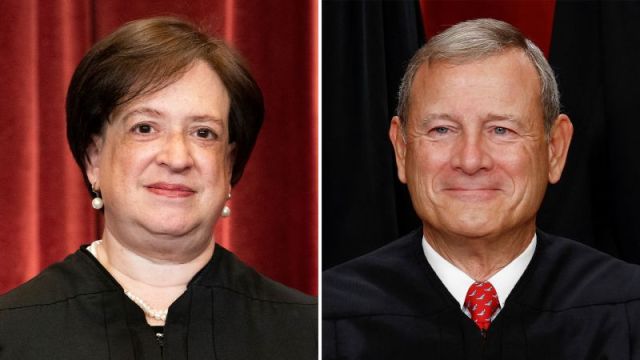
Associate Justice Elena Kagan, left, and Chief Justice John Roberts. Getty Images / Reuters

Chief Justice John Roberts and Justice Elena Kagan are well matched, rhetorically forceful opposites. And they have been clashing for more than a decade over an increasingly relevant question of presidential power: How easy should it be for the president to fire the heads of independent agencies?

That issue, to be aired at the Supreme Court on Monday, has grown more salient as President Donald Trump has attempted to remove multiple officials, including at the Federal Trade Commission, National Labor Relations Board and Federal Reserve.

Their first faceoff occurred in 2009 before Kagan had even joined the court, as she was serving as US solicitor general, standing in the well of the courtroom, with Roberts looking down from the center chair. They tangled over a 1935 precedent that protects agency independence and that now hangs in the balance, Humphrey’s Executor v. United States.

Since his days as a young lawyer in the Ronald Reagan administration, Roberts has argued for vast executive power, including the authority to fire individuals who lead administrative agencies. “Without such power,” Roberts wrote in the 2009 dispute over a corporate auditing board, “the President could not be held fully accountable for discharging his own responsibilities; the buck would stop somewhere else.”

Kagan, in contrast, believes the constitutional separation of powers allows Congress to establish and safeguard certain areas of administrative independence. And she has relied on Supreme Court rulings, including the 1935 milestone, that have allowed Congress to prevent the president from removing independent administrators without sufficient grounds.

Monday’s case was brought by former Federal Trade Commissioner Rebecca Slaughter, who received a March 18 email from Trump saying her “continued service on the FTC is inconsistent with my Administration’s priorities.” (Under the law governing the FTC, commissioners can be removed only for “inefficiency, neglect of duty, or malfeasance in office.”)

The court’s ruling will extend far beyond Slaughter and the FTC and have vast consequences for specialized regulation in an array of financial, environmental and public safety spheres.

In an early phase of Slaughter’s lawsuit, in September, the Roberts majority reversed a lower court order that would have allowed Slaughter to stay in her post. The move was consistent with Roberts’ opinions that have steadily eroded the reach of Humphrey’s Executor v. United States and signaled he considers it a dead letter.

Related article Supreme Court flicks at First Amendment concerns with state’s subpoena of faith-based pregnancy centers

“The majority may be raring to take that action,” Kagan observed as she dissented from that September action. “But until the deed is done, Humphrey’s controls, and prevents the majority from giving the President the unlimited removal power Congress denied him.”

More broadly, the eventual ruling could build on other decisions providing Trump more power as he carries out his second term agenda. Last year, Roberts and his fellow conservatives granted Trump substantial immunity from prosecution as it expanded the concept of a president’s “conclusive and preclusive” authority. Then, earlier this year, the court freed the administration from lower-court nationwide orders against his various policy initiatives.

These decisions have dissolved constraints on the president, and if the court were to reverse the 1935 case, the president would be further unburdened by congressional legislation barring him from removing agency officials without sufficient grounds.

Vanderbilt University political science professor John Dearborn, who has studied the Reagan era development of a “unitary executive theory” and Roberts’ writings, told CNN, “He’s had these kinds of ideas for a long time, that the only way that agencies are accountable is if the president has the power to fire people.”

‘I didn’t say anything bad about Humphrey’s Executor’

Before joining the bench, Roberts and Kagan were first-rate oral advocates with their own, respective, steady and tenacious styles. Roberts served as a deputy US solicitor general during the George H.W. Bush administrations and then appeared frequently at the court in private practice. He argued a total 39 cases before the high court.

Kagan, who hadn’t previously argued a case at the high court, was named US solicitor general in 2009 by President Barack Obama. She went on to argue six cases, including the presidential-removal controversy, before Obama nominated her to the bench in 2010 to succeed retiring Justice John Paul Stevens.

Continue/Read Original Article Here: Roberts and Kagan prepare for another showdown on executive power | CNN Politics

Tags: Chief Justice Roberts, CNN, CNN Politics, Conservative, Executive Branch, Executive Power, Independent Administrators, Justice Kagan, Liberal, President, Remove Officials, Showdown, Sufficient Grounds, U.S. Congress, U.S. President

#ChiefJusticeRoberts #CNN #CNNPolitics #Conservative #ExecutiveBranch #ExecutivePower #IndependentAdministrators #JusticeKagan #Liberal #President #RemoveOfficials #Showdown #SufficientGrounds #USCongress #USPresident

The political danger of the Epstein files for Trump – CNN Politics

Ghislaine Maxwell

The political danger of the Epstein files for Trump

Politics• 4 min read

Analysis by Aaron Blake, 10 hr ago

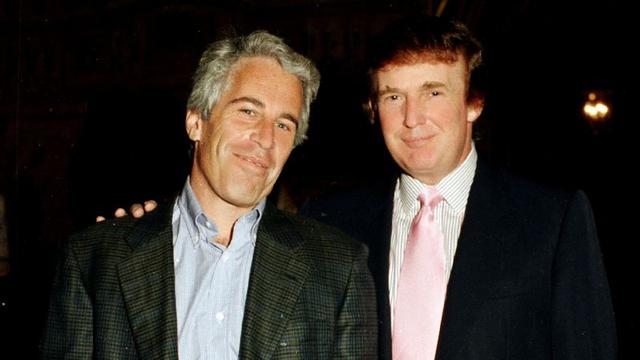
Jeffrey Epstein andDonald Trump pose for a photograph at the Mar-a-Lago estate, Palm Beach, Florida on February 22, 1997. Davidoff Studios Photography / Getty Images.

If President Donald Trump has nothing to hide vis-à-vis Jeffrey Epstein, he sure has a weird way of showing it.

Trump hasn’t been accused of any wrongdoing in connection with the convicted sex offender, but he’s doing a great job of looking suspicious.

And that could be a political problem in and of itself – regardless of whatever ultimately comes from the Epstein files.

A batch of newly released Epstein emails on Wednesday added details about Trump’s past relationship with Epstein but no smoking guns. (The White House said the emails “prove absolutely nothing.”)

In one of those emails from 2011, Epstein expressed surprise to accomplice Ghislaine Maxwell that Trump’s name hadn’t surfaced amid accusations involving Epstein. Epstein added that Trump had at one point spent hours with Epstein victim Virginia Giuffre at Epstein’s house.

Related article Takeaways from the new Epstein emails mentioning Trump

And in 2019, Epstein appeared to signal Trump was quite aware of Maxwell recruiting girls from Trump’s Mar-a-Lago resort in the early 2000s, saying “of course he knew about the girls as he asked ghislaine to stop.”

While some have claimed these emails show Trump had knowledge of or even involvement in Epstein’s crimes, it’s not nearly so evident. Giuffre, who died by suicide in April, has acknowledged meeting Trump and never accused him of wrongdoing. And Trump has acknowledged being aware of Maxwell recruiting employees including Giuffre from Mar-a-Lago. (The big question there is whether Trump had any inkling about what Maxwell was recruiting a minor female like Giuffre for.)

But also notable on Wednesday was Trump’s reaction.

As all this was going down, he and his White House seemed preoccupied with what appeared to an 11th-hour campaign to thwart a House discharge petition that would force a vote on releasing the full Epstein files.

With the petition due to get a decisive 218th signature when a new Democratic member of Congress was sworn in later that day, the White House held a meeting in the Situation Room with a key GOP lawmaker who’d signed on, while another said she was playing phone tag with the president. Both GOP congresswomen later told CNN Trump hadn’t personally lobbied them to remove their names. But the president also publicly pressured Republicans who sided with Democrats on forcing Epstein disclosures.

It was a weird move, to be sure. No Republicans removed their names from the petition, and Speaker Mike Johnson quickly said he would schedule a vote for next week on compelling the Justice Department to release the full files.

Related article Trump is getting pulled deeper and deeper into the Epstein drama

Even if the measure passes in the House, that’s not the end of the story. The GOP-led Senate would still have to take it up, and Trump would still have to sign it. So it’s not like this will cause the imminent release of the documents.

But Trump’s resistance to something his base has long clamored for – and the optics of the Situation Room meeting in particular – would only seem to deepen the huge suspicions that a large number of Americans already harbor about the government covering up Epstein-related matters.

And that gets at the big point here – and the political danger for Trump.

This is merely the latest baffling episode in the administration’s handling of the Epstein files. Among the others:

Even if Trump doesn’t have anything to hide, the danger here is in making it look a whole lot like he does.

Continue/Read Original Article Here: The political danger of the Epstein files for Trump | CNN Politics

#2025 #america #cnn #cnnPolitics #denials #donaldTrump #education #epstein #epsteinFiles #falseClaims #ghislaineMaxwell #health #history #jeffreyEpstein #libraries #library #libraryOfCongress #maxwellInterview #opinion #politics #prison #resistance #science #trump #trumpAdministration #unitedStates

Trump’s free speech backflip was 250 years in the making | CNN Politics


Politics• 8 min read

Trump’s free speech backflip was 250 years in the making

Analysis by Zachary B. Wolf, 6 hr ago

President Donald Trump speaks during a roundtable at the White House on Wednesday. Evelyn Hockstein / Reuters

A version of this story appeared in CNN’s What Matters newsletter. To get it in your inbox, sign up for free here.

“If we don’t have FREE SPEECH, then we just don’t have a FREE COUNTRY,” then-candidate Donald Trump said in a campaign video.

But less than nine months into his second term, he was explaining his administration’s stance this this way:

“We took the freedom of speech away,” he said at a White House event Wednesday as he tried to explain his call to put people who burn the American flag behind bars for years despite a very clear Supreme Court decision that lists flag burning as free speech.

Trump’s complete turnabout on speech is indicative of the contradictions and ironies in the bedrock principle of the American liberties in the Bill of Rights and the First Amendment.

While Trump came to office promising to restore free speech, particularly on college campuses and on social media, he’s now engaged in a multi-front war over what people can say in the US:

► A Ronald Reagan-appointed judge accused Trump’s administration of a “full-throated assault on the First Amendment” for targeting and deporting pro-Palestinian academics.

► Conservative Supreme Court justices were skeptical at oral arguments over a Colorado law that bans debunked LGBT conversion therapy, suggesting it may step on the free speech rights of therapists.

► Trump wants colleges and universities to clamp down on campus speech in exchange for federal funding.

► He applauded his FCC chairman, Brendan Carr, for trying to get Jimmy Kimmel’s show canceled by ABC, an effort that backfired.

► His lawsuits against media companies and law firms, none of which appear to stand on firm legal ground, have nonetheless been wildly successful in extracting settlement payments and sending a message to firms that would oppose him.

► Companies like YouTube have reinstated accounts or made plans to do so for members of his administration, such as FBI Deputy Director Dan Bongino, who were suspended for spreading misinformation during the pandemic.

► His attorney general, Pam Bondi, promised to go after “hate speech” by people who she perceived as celebrating the death of Charlie Kirk.

The hate speech element is particularly concerning to experts because in recent decades, it has become a tenet of Supreme Court cases and free speech advocates that “hate speech” is such a nebulous term that leaving it unprotected would invite exactly the type of selective viewpoint-policing that the administration now stands accused of.

The hate speech in question was not any obviously repugnant White supremacist or racist ideology, but rather comments related to Kirk’s death, potentially including those who celebrated it. But we don’t really know since Bondi has not been specific.

The Alien and Sedition Acts made it a crime to criticize the president, then John Adams. Library of Congress

Congress undercut the First Amendment almost immediately

US history is full of pendulum swings back and forth between freedom and restriction of speech.

The First Amendment, adopted shortly after the Constitution, guarantees Congress shall make no law “abridging the freedom of speech, or of the press.”

But within a few years, Congress passed the Alien and Sedition Acts, which made it a crime to criticize the president, then John Adams, during the undeclared Quasi War between the US and France.

“The sad truth is, free speech has always been a weaponized slogan, right from the outset, when it’s first invented in the early 18th century,” according to Fara Dabhoiwala, a historian at Princeton University and author of the recent book “What is Free Speech? The History of a Dangerous Idea.”

Benjamin Franklin’s grandson Benjamin Franklin Bache was among those arrested for “libeling” Adams under the law. Federalists also threw a Vermont publisher and congressman, Matthew Lyon, in jail for criticizing Adams in print.

(Among other things, Lyon wrote that Adams had “an unbounded thirst for ridiculous pomp,” and, separately, started a fight on the House floor over Adams’ foreign policy. Lyon, attacked with a cane after he spat tobacco juice at a fellow lawmaker, defended himself with fire tongs.)

Far from silencing Lyon, however, the Sedition Act backfired. Lyon ran a successful campaign for Congress from jail. The unpopularity of the clampdown on speech helped lead to Adams’ defeat in the election of 1800.

Running for president from prison

Another wartime restriction on speech, the Sedition Act of 1918, led to the conviction and sentencing to 10 years in prison of the socialist Eugene Debs for his criticism of the draft during World War I.

The Supreme Court upheld his conviction, but Debs ran a presidential campaign from his jail cell in 1920 and got nearly 1 million votes. President Warren G. Harding later commuted Debs’ sentence.

Marketplace of ideas

Courts and people have complex and nuanced views on free speech. Justice Oliver Wendell Holmes wrote the unanimous majority opinion upholding Debs’ conviction, but he also wrote a key dissent in a case involving the conviction of Russian immigrants who distributed leaflets calling for a general strike in the US to interrupt the war effort.

In that 1919 dissent, he espoused what would become a more absolutist view of the benefits of free speech. “The best test of truth is the power of the thought to get itself accepted in the competition of the market,” he wrote.

Students greet Rev. Martin Luther King Jr. at the St. James Baptist Church in Birmingham, Alabama in 1963, after a federal judge enjoined the city school board from expelling them for participating in civil rights demonstrations.Bettmann Archive/Getty Images

Free speech and civil rights

In the US, the evolution of speech has also turned on issues of race.

Editor’s Note: Read the rest of the story, at the below link.

Continue/Read Original Article Here: Trump’s free speech backflip was 250 years in the making | CNN Politics

#2025 #America #CNN #CNNPolitics #DonaldTrump #Education #FirstAmendment #FreeSpeech #Health #History #Libraries #LibraryOfCongress #Opinion #Politics #Resistance #Science #Trump #TrumpAdministration #UnitedStates

October 7, 2025: Attorney General Pam Bondi spars with the Senate Judiciary Committee | CNN Politics

October 7, 2025: Attorney General Pam Bondi spars with the Senate Judiciary Committee

By Hannah Rabinowitz, Holmes Lybrand, Jeremy Herb and Casey Gannon, CNN

Updated 2:37 PM EDT, Tue October 7, 2025

U.S. Attorney General Pam Bondi attends a Senate Judiciary Committee oversight hearing, on Capitol Hill in Washington, D.C., U.S., October 7, 2025. REUTERS /Kent Nishimura Kent Nishimura / Reuters

What we covered here

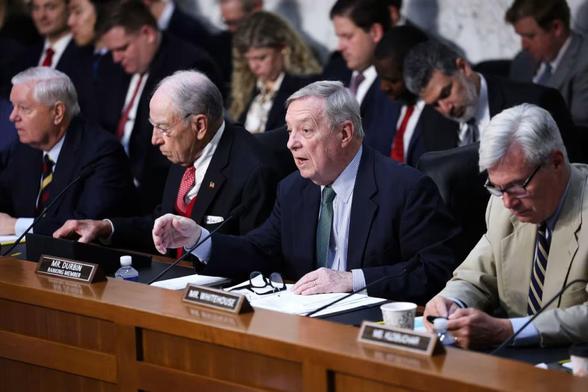
• Attorney General Pam Bondi testified for a contentious 4 and a half hours before the Senate Judiciary Committee on Tuesday.

• Bondi continuously deflected questions from Democrats on controversial issues, including the Jeffery Epstein files, prosecution of former FBI Director James Comey and legal rationale for using the national guard in US cities.

• The hearing comes one day before Comey is set to be arraigned in federal court. His recent indictment by a federal grand jury was an extraordinary escalation in President Donald Trump’s effort to prosecute his political enemies.

20 Posts 5 hr 9 min ago

Our live coverage of the Senate Judiciary Committee hearing has ended for the day. Click here to read the takeaways. 5 hr 9 min ago

Takeaways from Bondi’s 4 and a half hour Senate hearing

From CNN’s Jeremy Herb, Hannah Rabinowitz and Holmes Lybrand

U.S. Attorney General Pam Bondi testifies before the Senate Judiciary Committee today.Alex Wong/Getty Images

Democrats and Republicans repeatedly talked past one another throughout the hearing with Attorney General Pam Bondi, pointing fingers across the aisle over who was to blame for weaponizing the Justice Department.

Here are the key takeaways:

Deflect and attack: Bondi fended off questions on the investigation into accused sex-trafficker Jeffrey Epstein, National Guard deployments, and investigations into Trump’s political enemies, using quick-one liners to deflect and personal attacks to push back against Democrats.

Democrats press Bondi on Trump’s influence: Democrats pointed to numerous examples they say show Bondi has failed to keep the Justice Department independent from the whims and wishes of the president.

Republicans jump on news FBI reviewed senators’ phone records: Several Republican senators pointed to the release of documents the night before Tuesday’s hearing that showed the phone records of eight Republican senators and a House lawmaker were obtained as part of the special counsel’s investigation into Trump and 2020 election interference.

Bondi and GOP defend going after Comey: Bondi and a former Republican chairman of the Senate Judiciary Committee defended the indictment of Comey during Tuesday’s hearing, one day before he’s set to be arraigned on charges that he allegedly lied to Congress in 2020 testimony. Bondi said several times that the Alexandria, Virginia, grand jury that handed up the indictment was a “liberal” one.

Read more.

Editor’s Note: There are a number of blog posts here, and online about Jack Smith. His report is covered. Use this to see the coverage.

Continue/Read Original Article Here: October 7, 2025: Attorney General Pam Bondi spars with the Senate Judiciary Committee | CNN Politics

#2025 #America #Attack #AttorneyGeneral #CNN #CNNPolitics #Contentious #Defect #Delay #DepartmentOfJustice #DOJ #DonaldTrump #Education #FederalTroops #Health #Hearing #History #Ice #Libraries #Library #LibraryOfCongress #Opinion #PamBondi #Politics #Resistance #Science #SparringSenators #Trump #TrumpAdministration #USSenate #UnitedStates