My Thoughts on Bun's Rust Rewrite

Bun의 JavaScript 런타임이 Zig에서 Rust로 AI(Claude) 자동 생성 코드 기반으로 6,755 커밋, 6일 만에 전면 재작성되었다. Zig는 초기 빠른 프로토타이핑과 고성능 구현에 핵심 역할을 했으나, 수동 메모리 관리의 인지 비용이 빠른 개발 문화와 맞지 않아 Rust로 전환했다. 그러나 AI가 작성한 코드가 인간 리뷰 없이 바로 프로덕션에 투입된 점은 장기 유지보수와 예측 불가능한 버그 대응에 큰 위험 요소로 지적된다. 이 사례는 AI 자동 코드 생성의 실무 적용과 신뢰성 문제를 시사한다.

https://en.liujiacai.net/2026/05/16/bun-rust-port/

#bun #rust #zig #aicodegeneration #softwareengineering

My Thoughts on Bun's Rust Rewrite

Before we discuss Rewrite Bun in Rust, there's something that needs to be said, because no one is saying it. Bun stands where it does today because of Zig. Jarred chose Zig back then not because it was "cool," but because Zig enabled a small team to rapidly prototype a high-performance JS runtime without a GC, without a heavy runtime. Zig's low friction, direct memory manipulation, and straightforward C interop were the core reasons Bun could punch above its weight on performance with an extremely small team in its early days. The architecture, data structures, and low-level design of Bun that you see today – that was shaped by Zig.
Jiacai Liu's personal website

Software Development Is Becoming a Factory Job

소프트웨어 개발이 공장 생산 라인처럼 반복적이고 자동화된 작업과 복잡한 문제 해결 작업으로 나뉘고 있다. AI가 명확한 사양을 코드로 변환하는 반복 작업을 대체하면서, 개발자는 AI가 처리하지 못하는 모호한 비즈니스 문제 해석, 아키텍처 결정, 다중 시스템 디버깅 등 고차원적 판단과 설계에 집중해야 한다. 이에 따라 AI 도구를 활용해 자동화 파이프라인을 구축하고 운영하는 능력이 중요해지고 있다. 저자는 AI가 코드 작성부터 검증까지 수행하는 자동화 시스템 'Vroni'를 개발 중이다.

https://www.vincentschmalbach.com/software-development-is-becoming-a-factory-job/

#softwaredevelopment #automation #llm #aicodegeneration #developerroles

Tell HN: Claude claims the AGPLv3 license violates it's content policy

Anthropic의 Claude AI가 AGPLv3 라이선스가 포함된 프로젝트에 대해 콘텐츠 정책 위반을 이유로 코드 생성 및 라이선스 추가를 거부하는 사례가 반복 보고되고 있다. 사용자들은 Claude가 AGPL 코드베이스 작업을 거부하는 것이 의도적인 결정으로 보이며, 이에 따라 Codex 등 다른 AI 모델로 전환을 고려 중이다. 이 문제는 AGPL 코드가 학습 데이터에 포함되었을 가능성에도 불구하고 발생해 사용자들의 불만과 실망을 사고 있다.

https://news.ycombinator.com/item?id=48087073

#anthropic #claude #agplv3 #contentpolicy #aicodegeneration

I Will Never Use AI to Code

전 SKUTOPIA CTO Anthony Manning-Franklin은 AI를 이용한 코딩에 반대하는 이유를 상세히 설명한다. 그는 코딩을 즐기며 AI가 코딩을 대체하면 개발자의 기술이 퇴화하고, 결국 소프트웨어 산업 전반의 역량이 붕괴될 위험이 있다고 경고한다. AI가 전문가의 작업을 대체하면 신규 인재 양성이 중단되고, AI 모델도 점차 품질 저하와 환각 문제에 직면할 수 있다고 지적한다. 또한 AI 기반 코딩은 팀 내 협업과 코드 이해도를 저해하며, 현재 AI 산업이 막대한 부채에 의존해 지속 가능하지 않다고 분석한다.

https://antman-does-software.com/i-will-never-use-ai-to-code-or-write

#ai #softwareengineering #skilldecay #aicodegeneration #aibusiness

AI Is Starting to Build Better AI

AI 분야에서 자기 개선(recursive self-improvement, RSI)이 점차 현실화되고 있다. 현재 LLM 기반 시스템들은 코드 작성과 디버깅 등 AI 개발 과정에 적극 활용되며, 구글 딥마인드의 AlphaEvolve와 같은 프로젝트는 AI가 AI 알고리즘과 하드웨어 설계를 개선하는 데 기여하고 있다. 그러나 완전한 자율적 RSI는 아직 요원하며, 인간의 목표 설정과 평가가 필수적이다. 전문가들은 AI가 점진적으로 더 나은 AI를 만드는 과정이 과학과 기술 혁신에 큰 변화를 가져올 것으로 기대하지만, 비용, 복잡성, 사회적 제약 등 여러 한계도 존재한다고 지적한다.

https://spectrum.ieee.org/recursive-self-improvement

#recursiveselfimprovement #llm #automl #aicodegeneration #deeplearning

Recursive Self-Improvement Edges Closer In AI Labs

Recursive self-improvement is emerging, but humans are still in the loop

IEEE Spectrum

A Grand Challenge for Reliable Coding in the Age of AI Agents
이 논문은 AI 에이전트가 생성하는 코드가 사용자의 의도를 정확히 반영하는지에 대한 근본적인 문제를 다룬다. 비공식적인 자연어 요구사항과 정확한 프로그램 동작 간의 '의도 격차'를 해소하기 위해, 의도를 형식화하여 검증 가능한 명세로 변환하는 것이 핵심 과제로 제시된다. 이를 통해 AI가 생성하는 코드의 신뢰성을 높이고, 다양한 신뢰성 요구에 맞춘 명세 검증 및 상호작용 방식을 연구하는 방향을 제안한다. 또한, 현재 초기 연구 사례들과 함께 향후 연구 과제들을 체계적으로 정리하였다.

https://arxiv.org/abs/2603.17150

#ai #softwareengineering #formalverification #programminglanguages #aicodegeneration

Intent Formalization: A Grand Challenge for Reliable Coding in the Age of AI Agents

Agentic AI systems can now generate code with remarkable fluency, but a fundamental question remains: \emph{does the generated code actually do what the user intended?} The gap between informal natural language requirements and precise program behavior -- the \emph{intent gap} -- has always plagued software engineering, but AI-generated code amplifies it to an unprecedented scale. This article argues that \textbf{intent formalization} -- the translation of informal user intent into a set of checkable formal specifications -- is the key challenge that will determine whether AI makes software more reliable or merely more abundant. Intent formalization offers a tradeoff spectrum suitable to the reliability needs of different contexts: from lightweight tests that disambiguate likely misinterpretations, through full functional specifications for formal verification, to domain-specific languages from which correct code is synthesized automatically. The central bottleneck is \emph{validating specifications}: since there is no oracle for specification correctness other than the user, we need semi-automated metrics that can assess specification quality with or without code, through lightweight user interaction and proxy artifacts such as tests. We survey early research that demonstrates the \emph{potential} of this approach: interactive test-driven formalization that improves program correctness, AI-generated postconditions that catch real-world bugs missed by prior methods, and end-to-end verified pipelines that produce provably correct code from informal specifications. We outline the open research challenges -- scaling beyond benchmarks, achieving compositionality over changes, metrics for validating specifications, handling rich logics, designing human-AI specification interactions -- that define a research agenda spanning AI, programming languages, formal methods, and human-computer interaction.

arXiv.org

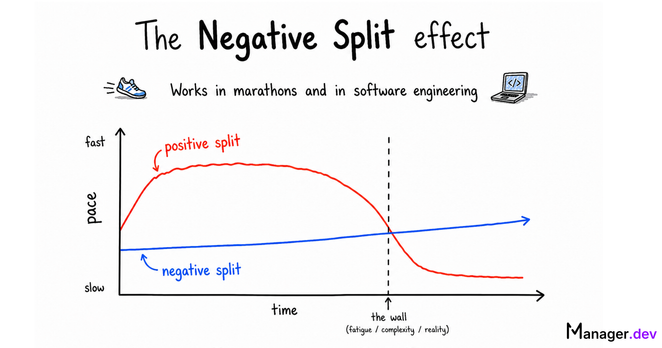
The "Negative split" software engineering effect
이 글은 소프트웨어 엔지니어링에서 '네거티브 스플릿(negative split)' 전략을 적용하는 중요성을 설명한다. 마라톤에서 후반부에 속도를 높이는 전략처럼, 개발팀도 초기에는 속도를 조절하며 기술 부채를 줄이고 장기적으로 더 나은 성과를 내야 한다고 강조한다. AI 코딩 도구 활용 시에도 충분한 컨텍스트 제공과 품질 높은 코드 작성에 집중해야 하며, 단기적 속도보다 장기적 안정성과 품질이 중요하다는 점을 사례와 함께 설명한다. 이는 AI 도입과 팀 관리에 있어 매우 중요한 통찰을 제공한다.

https://newsletter.manager.dev/p/the-negative-split-software-engineering-effect

#softwareengineering #aicodegeneration #technicaldebt #teammanagement #negativesplit

The "Negative split" software engineering effect

Engineering teams don't need to 'just go faster' - the technique behind the sub-2-hour marathon

manager.dev
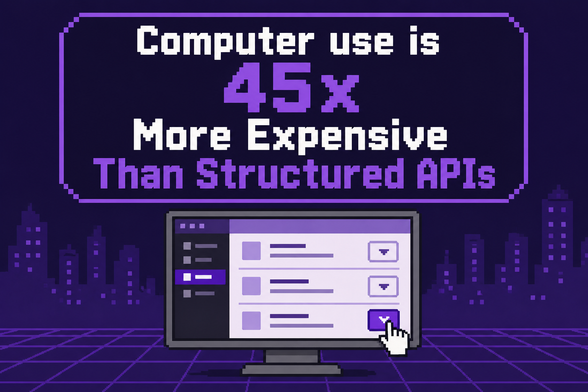
🤔 Apparently, using a computer is like burning money compared to some magical "structured APIs" 🪄💸. But fear not! #Reflex will solve all your problems with AI-powered code generation and no JavaScript. Because why not trust a company that can't decide if it's an OS or just a random buzzword generator? 🚀🙄
https://reflex.dev/blog/computer-use-is-45x-more-expensive-than-structured-apis/ #structuredAPIs #AIcodeGeneration #techbuzzwords #noJavaScript #HackerNews #ngated
Computer use is 45x More Expensive Than Structured APIs

We benchmarked computer use against auto-generated API endpoints on the same admin panel. 53 steps and 551k tokens vs 8 calls and 12k tokens.