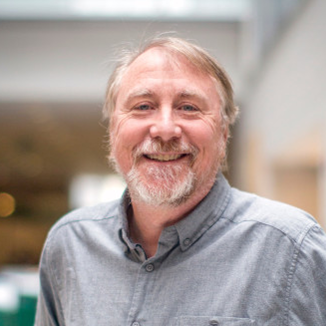
@micromindy

20 Followers
106 Following
17 Posts
Assistant Professor at the Medical University of South Carolina. Lab focuses on microbe-host interactions in the intestine! 1 of 3 scientist sisters @amyengevik @kengevik
InstitutionMedical University of South Carolina
ResearchMicrobe-host interactions

Evolution of a cross-feeding interaction following a key innovation in a long-term evolution experiment with Escherichia coli

https://www.microbiologyresearch.org/content/journal/micro/10.1099/mic.0.001390

Caroline B. Turner, Zachary D. Blount, Daniel H. Mitchell, and Richard E. Lenski

#evolution #adaptation #experimental_evolution
#ecology #microbiology
#LTEE #OA #science

Evolution of a cross-feeding interaction following a key innovation in a long-term evolution experiment with Escherichia coli

The evolution of a novel trait can profoundly change an organism’s effects on its environment, which can in turn affect the further evolution of that organism and any coexisting organisms. We examine these effects and feedbacks following the evolution of a novel function in the Long-Term Evolution Experiment (LTEE) with Escherichia coli . A characteristic feature of E. coli is its inability to grow aerobically on citrate (Cit−). Nonetheless, a Cit+ variant with this capacity evolved in one LTEE population after 31 000 generations. The Cit+ clade then coexisted stably with another clade that retained the ancestral Cit− phenotype. This coexistence was shaped by the evolution of a cross-feeding relationship based on C4-dicarboxylic acids, particularly succinate, fumarate, and malate, that the Cit+ variants release into the medium. Both the Cit− and Cit+ cells evolved to grow on these excreted resources. The evolution of aerobic growth on citrate thus led to a transition from an ecosystem based on a single limiting resource, glucose, to one with at least five resources that were either shared or partitioned between the two coexisting clades. Our findings show that evolutionary novelties can change environmental conditions in ways that facilitate diversity by altering ecosystem structure and the evolutionary trajectories of coexisting lineages.
microbiologyresearch.org

Let's celebrate the amazing world inside a #Cell with this video of the #organelles: ER, mitochondria & nucleus

(If things continue like this #CellBiology might reach the final of the #ScienceBattles #ScienceShowdown organized by @AnhHLe2702 )

#scicomm @cellcommlab @Mito_News
---
RT @AnhHLe2702
Semi-final 2: Tissue/Organismal group: This will be the battle between #Neuroscience, #Immunology, #DevelopmentalBiology and #CellBiology. Vot…
https://twitter.com/AnhHLe2702/status/1619442290870857728

Hoang Anh Le (aka Anh), PhD 🏳️‍🌈 on Twitter

“Semi-final 2: Tissue/Organismal group: This will be the battle between #Neuroscience, #Immunology, #DevelopmentalBiology and #CellBiology. Vote away! #ScienceBattles #ScienceShowdown”

Twitter
RT @bykriscampbell
On Wednesday I hope to tune in to @gibbological speaking at the Microbes & Social Equity speaker series hosted by @drsueishaq lab:
https://sueishaqlab.org/microbes-and-social-equity-working-group/mse-speaker-series-spring-2023/
MSE speaker series, spring 2023

“The Microbes and Social Equity Speaker Series 2023” Spring 2023; Jan 18 – May 3, Wednesdays from 11:00 AM – 12:00 PM EST. Presented over Zoom. This series is concluded and …

The Ishaq Lab
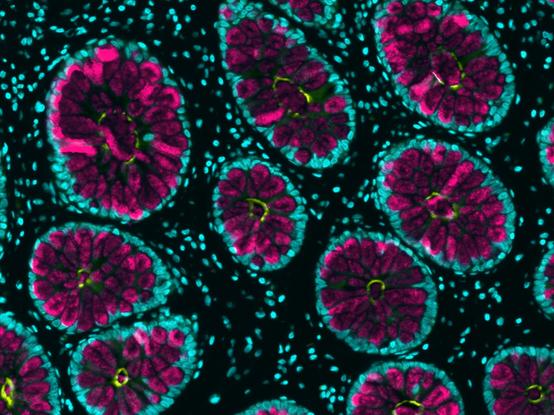
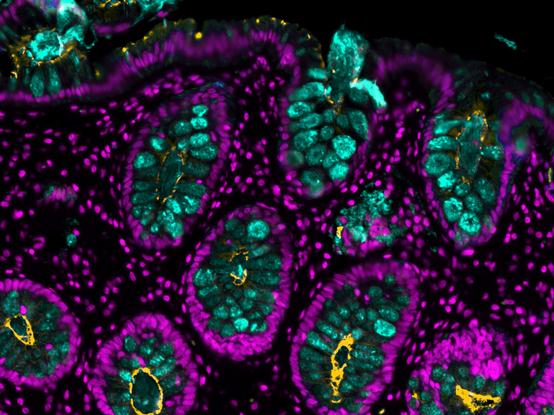
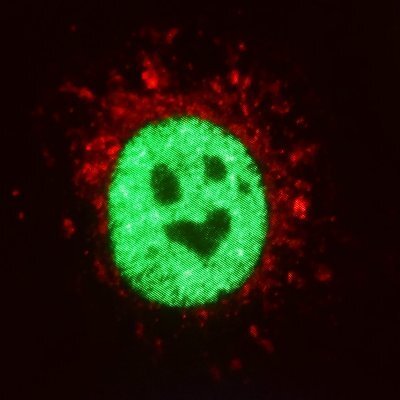
Happy 1st #MicroscopyMonday and #MucusMonday of the year! May your 2023 be filled with papers and grants 😋! #bioart #sciart #mucusmatters #gobletcells #intestine #gut

The historic MBL Physiology Course is now accepting applications! If you're interested in learning more about the course and the application process, be sure to join us on Friday, January 13 at 9 AM PT for a virtual open house (https://berkeley.zoom.us/meeting/register/tJIlc-6gpjgjEt3OkOiHp6MCLgLm1HQiPOX6).

More info about the course is available here: https://www.mbl.edu/education/advanced-research-training-courses/course-offerings/physiology-modern-cell-biology-using-microscopic-biochemical-and-computational-approaches

Welcome! You are invited to join a meeting: 2023 MBL Physiology Open House. After registering, you will receive a confirmation email about joining the meeting.

Welcome! You are invited to join a meeting: 2023 MBL Physiology Open House. After registering, you will receive a confirmation email about joining the meeting.

Zoom

New preprint from the Salomon lab - A new class of polymorphic #T6SS effectors and tethers. #Vibrio #T6SS

https://www.biorxiv.org/content/10.1101/2022.10.27.514009v1

RT @StevenXGe
A comprehensive review paper (https://arxiv.org/abs/1904.02101), and blog on R packages for exploratory analysis (EDA). Some auto generate reports.
Top 4 packages:
1. summarytools
2. DataExplorer
3. visdat
4. funModeling
Deep Exploratory Data Analysis (EDA) in R https://yuzar-blog.netlify.app/posts/2021-01-09-exploratory-data-analysis-and-beyond-in-r-in-progress/
The Landscape of R Packages for Automated Exploratory Data Analysis

The increasing availability of large but noisy data sets with a large number of heterogeneous variables leads to the increasing interest in the automation of common tasks for data analysis. The most time-consuming part of this process is the Exploratory Data Analysis, crucial for better domain understanding, data cleaning, data validation, and feature engineering. There is a growing number of libraries that attempt to automate some of the typical Exploratory Data Analysis tasks to make the search for new insights easier and faster. In this paper, we present a systematic review of existing tools for Automated Exploratory Data Analysis (autoEDA). We explore the features of twelve popular R packages to identify the parts of analysis that can be effectively automated with the current tools and to point out new directions for further autoEDA development.

arXiv.org

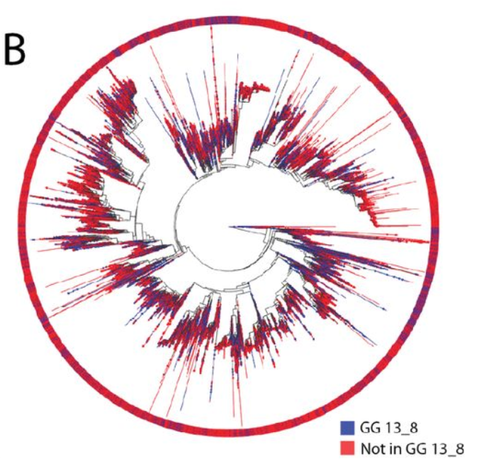
Greengenes 2 arrives, about a decade after the last release. In red, you can see the new stuff- seems about right.

Honestly, the methods updating the database here I am basically a fan of. If you haven't done 16S in the last 5+ years, we've learned since that much of the historical failings of 16S were due to terrible databases / classifiers, not intrinsic to the assay itself. 16S misses far fewer taxa these days, at least with the most recent SILVA.

https://www.biorxiv.org/content/10.1101/2022.12.19.520774v1.full