
Lars Barquist

140 Followers
255 Following
74 Posts
Research group leader at the Helmholtz Institute for RNA-based Infection Research. Pathogen systems biology/informatics/functional genomics. New Hampshirite. Drink Moxie.
Lab Webpagehttps://www.helmholtz-hiri.de/en/research/organisation/teams/team/integrative-informatics-for-infection-biology/
Google Scholarhttps://scholar.google.com/citations?hl=en&user=9MYn5q8AAAAJ&view_op=list_works&sortby=pubdate
ORCIDhttps://orcid.org/0000-0003-4732-2667

With brilliant collaborators, our paper is out on a microbiome nested within another microbiome, video abstract here:

https://www.wibbitz.com/watch/b65e0514db02947239ffd9a056cb3235b/?cl=#7f8790&cl4=%2315324e&lg=8132e369779d4f878702ab25f531c8cf&type=produced

I am most proud of getting two separate Dune references into it.

Guts within guts: the roundworm A. suum microbiome is derived but distinct from the host m

Intestinal roundworms infect multitudes of humans and animals globally. While these worms are parasitic eukaryotic members of the host’s microbiome, they also contain their own gut microbiome. But there is currently almost no data on the microbiomes of these prevalent parasites. So, to narrow this gap, researchers recently examined the microbiomes of Ascaris suum and their pig hosts . In the section of the intestine where they reside, the jejunum, the worms were associated with reduced host microbiome diversity . Further, the A. suum microbiome contained bacterial taxa derived from the host microbiome, but was less diverse and had its own signature . suggesting that the Ascaris intestine supported the growth of low abundance microbes from the host gut . While this is just one parasite-host pairing and more research is needed, these results suggest that A. suum impacts the host’s microbiome. and that the Ascaris gut is a selective niche harboring bacteria derived from the host’s gut . Understanding these parasite-microbiome interactions could lead to new disease prediction and parasite control tools . Midha et al.

Wibbitz

Our new #bacterial #scRNAseq preprint is out, building on the Vogel lab's MATQ-seq approach. We automate to increase cell numbers, increase sensitivity, and deplete rRNA using #Cas9, before applying this to gene expression heterogeneity along the #Salmonella growth curve.

https://www.biorxiv.org/content/10.1101/2022.11.28.518171v1

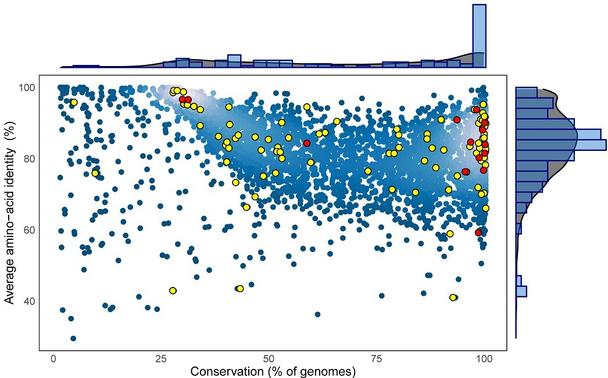
proGenomes3: approaching one million accurately and consistently annotated high-quality prokaryotic genomes https://doi.org/10.1093/nar/gkac1078 #microbiology #bioinformatics
proGenomes3: approaching one million accurately and consistently annotated high-quality prokaryotic genomes

Abstract. The interpretation of genomic, transcriptomic and other microbial ‘omics data is highly dependent on the availability of well-annotated genomes. As th

OUP Academic
An introduction:
We are a group of microbiologists, biochemists and structural biologists at the University of Sheffield studying the molecular basis of bacterial cell physiology, virulence and pathogen-host interactions
https://www.sheffield.ac.uk/biosciences/research/areas/molecular-microbiology
Molecular Microbiology: Biochemistry to Disease

The University of Sheffield

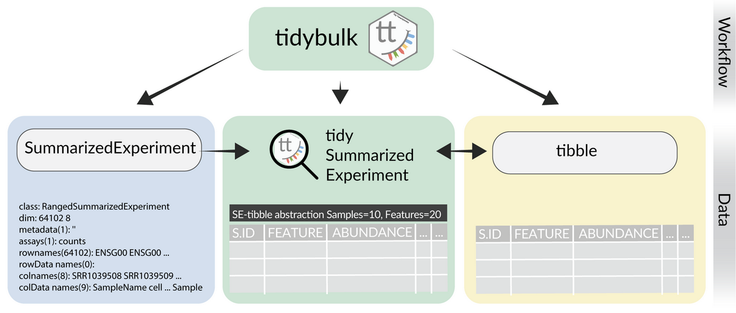
Stefano Mangiola and I are planning a zoom tutorial on "Tidy Genomic Analysis":

Dec 12, 4:30 PM EST
Dec 13, 8:30 AM AEDT
60 min + 30 min Q/A

- Tidy single-cell and bulk transcriptomics
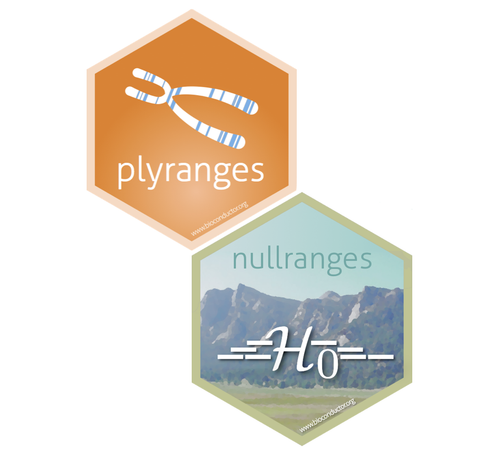
- Tidy enrichment with plyranges and nullranges

Sign up:
https://unc.zoom.us/meeting/register/tJIoduypqzkoEtCKxHGyW01DOdaIUrGPxmro

#tidy #RStats #Bioconductor #genomics

Welcome! You are invited to join a meeting: Tidy Genomic Analysis. After registering, you will receive a confirmation email about joining the meeting.

Welcome! You are invited to join a meeting: Tidy Genomic Analysis. After registering, you will receive a confirmation email about joining the meeting.

Zoom

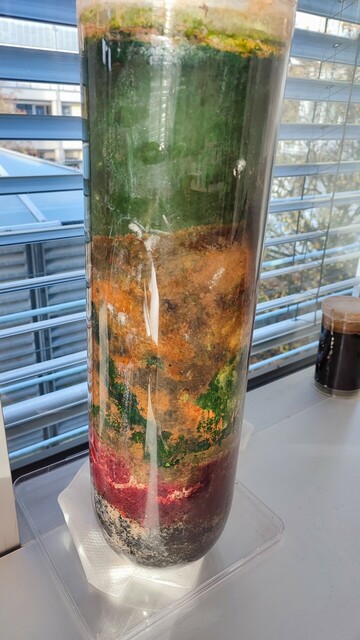
Our #Winogradsky column at this beautiful autumn morning.

#microbiology

Another nail in the coffin for AMR one health from Ed Feil’s incredible JPIAMR project

https://www.nature.com/articles/s41564-022-01263-0

A large-scale genomic snapshot of Klebsiella spp. isolates in Northern Italy reveals limited transmission between clinical and non-clinical settings - Nature Microbiology

Genomic analyses of Klebsiella isolates sampled from multiple human, animal and environmental sources in Northern Italy explore Klebsiella population diversity and show that transmission of multidrug-resistant clones between clinical and environmental settings is scarce.

Nature
Are #AntibioticResistance mechanisms the same in hypermutator strains as in wild-type #bacteria? Study shows that MMR-deficient #Pseudomonas aeruginosa can evolve novel mechanisms of resistance to 2 last-line, broad spectrum #antibiotics #PLOSBiology https://plos.io/3AuoqK8
Hypermutator strains of Pseudomonas aeruginosa reveal novel pathways of resistance to combinations of cephalosporin antibiotics and beta-lactamase inhibitors

Hypermutation can accelerate the development of antibiotic resistance in bacteria, but are the mechanisms the same in hypermutator strains as in wild-type cells? This study shows that mismatch repair-deficient Pseudomonas aeruginosa can evolve novel mechanisms of resistance to two last-line, broad spectrum antibiotics, characterizing one such mechanism involving mutations in the chromosomal RND efflux pump, MexVW.

Time for my #introduction ! I’m an Assistant Professor at the Institute of Microbiology and Infection, University of Birmingham. Me and my team study #AMR in G-ves, mostly E. Coli & #Klebsiella. We look at plasmid mediated AMR such as #ESBLs and carbapenamases, understanding their fundamental biology and looking at how we can stop them! Still learning this platform!

It's database update season (thanks to the NAR database issue)!

Progenomes 3 (>1 million annotated prokaryotic genomes, led by Daniel Mende): https://doi.org/10.1093/nar/gkac1078 https://progenomes.embl.de

eggNOG v6 (orthologs across 12k species, led by Jaime Huerta-Cepas) https://doi.org/10.1093/nar/gkac1022 http://eggnog6.embl.de

STRING v12 (protein–protein ixn networks across the same set of 12k species, led by Christian von Mering) https://doi.org/10.1093/nar/gkac1000 https://string-db.org

proGenomes3: approaching one million accurately and consistently annotated high-quality prokaryotic genomes

Abstract. The interpretation of genomic, transcriptomic and other microbial ‘omics data is highly dependent on the availability of well-annotated genomes. As th

OUP Academic