444 Followers
165 Following
218 Posts
Professor of microbial genomics University of Birmingham

A new comparative #ExperimentalEvolution paper with @alanmcn1 lab

Diverse #Ecoli strains adapt to gaining an MDR #plasmid by mutations in metabolic genes

Also shows key roles for IS-element insertions, HNS, and altered plasmid conjugation rate enabling genomic assimilation of a new MDR plasmid

#antimicrobialresistance #AMR

https://journals.asm.org/doi/10.1128/msystems.00713-22

Billionaires should not set climate policy.
Billionaires should not set water policy.
Billionaires should not be setting any policy.
Billionaires should not be platformed to give opinion on crises & injustices they helped create & have financial stakes in monopolizing policies on.
Billionaires should not exist.

Ok, do not buy this “ breaking” bs. Yes, moderna and other groups all over the world were working on this in january. This was possible because the sequence if SARS COV 2 was shared on jan 11, 2020, 2 weeks after first notification. That was our luck

RT @[email protected]

🚨BREAKING — Moderna CEO Admits On Live Air At Davos They Were Making A COVID-19 Vaccine In January Of 2020 Before SARS-CoV-2 Even Had A Name https://t.co/SMKH74NgGi

🐦🔗: https://twitter.com/healthbyjames/status/1615891388264058881

James Cintolo, RN FN CPT on Twitter

“🚨BREAKING — Moderna CEO Admits On Live Air At Davos They Were Making A COVID-19 Vaccine In January Of 2020 Before SARS-CoV-2 Even Had A Name”

Twitter
RT @MicrobiomDigest
Whoa.
Manuscript sent to @sciencedirect's International Journal of Hydrogen Energy gets desk-rejected because it did not have enough citations from its own journal.
That is one way to get an impact factor of 7.

Interesting paper: 'Large-scale genomic analysis of global Klebsiella pneumoniae plasmids reveals multiple simultaneous clusters of carbapenem-resistant hypervirulent strains'

https://genomemedicine.biomedcentral.com/articles/10.1186/s13073-023-01153-y

'In most cases, clusters of Kp isolates are the result of hypervirulence genes entering classic strains, instead of carbapenem resistance genes entering canonical hypervirulent ones.'

Large-scale genomic analysis of global Klebsiella pneumoniae plasmids reveals multiple simultaneous clusters of carbapenem-resistant hypervirulent strains - Genome Medicine

Background Klebsiella pneumoniae (Kp) Gram-negative bacteria cause nosocomial infections and rapidly acquire antimicrobial resistance (AMR), which makes it a global threat to human health. It also has a comparatively rare hypervirulent phenotype that can lead to severe disease in otherwise healthy individuals. Unlike classic Kp, canonical hypervirulent strains usually have limited AMR. However, after initial case reports in 2015, carbapenem-resistant hypervirulent Kp has increased in prevalence, including in China, but there is limited understanding of its burden in other geographical regions. Methods Here, we examined the largest collection of publicly available sequenced Kp isolates (n=13,178), containing 1603 different sequence types (e.g. ST11 15.0%, ST258 9.5%), and 2174 (16.5%) hypervirulent strains. We analysed the plasmid replicons and carbapenemase and siderophore encoding genes to understand the movement of hypervirulence and AMR genes located on plasmids, and their convergence in carbapenem-resistant hypervirulent Kp. Results We identified and analysed 3034 unique plasmid replicons to inform the epidemiology and transmission dynamics of carbapenem-resistant hypervirulent Kp (n=1028, 7.8%). We found several outbreaks globally, including one involving ST11 strains in China and another of ST231 in Asia centred on India, Thailand, and Pakistan. There was evidence of global flow of Kp, including across multiple continents. In most cases, clusters of Kp isolates are the result of hypervirulence genes entering classic strains, instead of carbapenem resistance genes entering canonical hypervirulent ones. Conclusions Our analysis demonstrates the importance of plasmid analysis in the monitoring of carbapenem-resistant and hypervirulent strains of Kp. With the growing adoption of omics-based technologies for clinical and surveillance applications, including in geographical regions with gaps in data and knowledge (e.g. sub-Saharan Africa), the identification of the spread of AMR will inform infection control globally.

BioMed Central

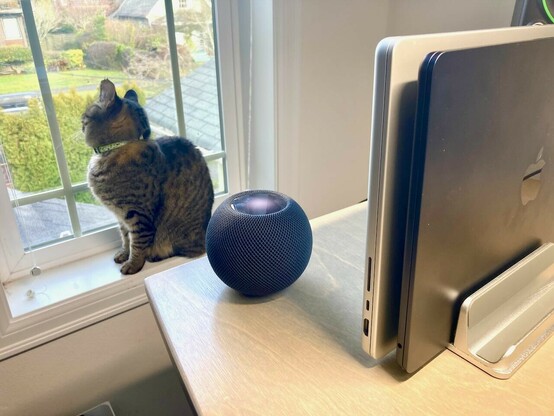
The cat just went over to the HomePod mini on my desk, meowed at it, and Siri said "sure here is some music for you" and the cat perched on the window sill listening to Garbage and Elliott Smith.

I just want to know how long this has been going on.

Are you an #editor with expertise in #neuroscience? Come join our team!
This might be the right next step for you -we are looking for our next Neurobiology Section Manager, key position in the @PLOSBiology team

Apply at http://plos.io/3kh5ARD (considered upon receipt)
#careers

Job opportunity at - 170-100 Plos Biology - Sr Editor, Team Manager

RT @GillesvanWezel
I am very pleased to announce that Akos Kovacs @EvolvedBiofilm will join @LeidenBiology as Professor of Microbiome Ecology, as of 1 July 2023. He is a world-leading expert on biofilms and will complement our expertise in host-microbe interactions. Welcome to @LeidenScience Akos!
Excellent new review of the molecular mechanisms of #AntibioticResistance #AMR from the Blair and Webber labs: https://www.nature.com/articles/s41579-022-00820-y
Molecular mechanisms of antibiotic resistance revisited - Nature Reviews Microbiology

In this Review, Blair, Webber and colleagues explore our understanding of the mechanisms of antibiotic resistance, including reduced permeability, antibiotic efflux, modification or alteration of the antibiotic target, modification or destruction of the drug itself, and bypass of metabolic pathways. They also discuss how this information can aid in developing the next generation of antimicrobial therapies.

Nature