11 Followers
81 Following
111 Posts
Galaxies, Machine Learning, Roman Space Telescope. Assistant Astronomer at STScI, Associate Research Scientist at JHU. Husband and dad. Opinions my own.
Websitehttps://jwuphysics.github.io
Pronounshe/him/his
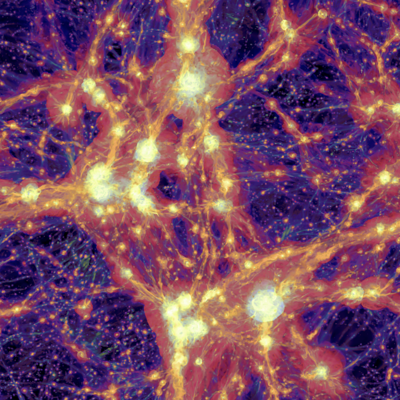
As in most simulated cluster, the combination of minor and major accretions launches shock waves and boosts dynamo amplification at all times.
This is the evolving temperature and magnetic field in a plane crossing an upper half of it.
(10Gyr look fast)

Hello #Astrodon

I'm a gravitational-wave astronomer researching the formation and evolution of black holes and neutron stars

I primarily work on LIGO–Virgo–KAGRA data analysis, inferring source properties, but I'm also interested in space-based observatories like LISA

I enjoy #SciComm (I want to get back into blogging https://cplberry.com/blog/), and I'm currently a member of the community-science Gravity Spy project https://gravityspy.org/

I also like cake

#Introduction

Christopher Berry

Gravitational-wave astronomer

Christopher Berry
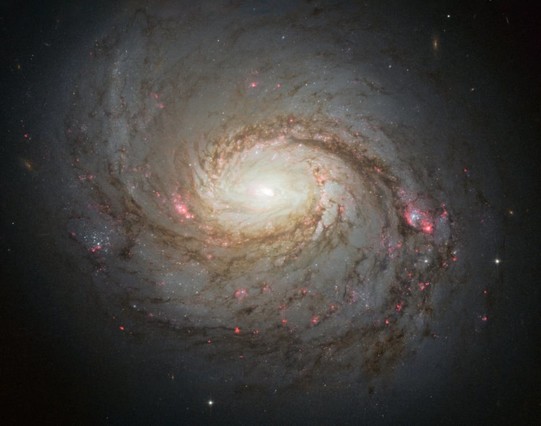
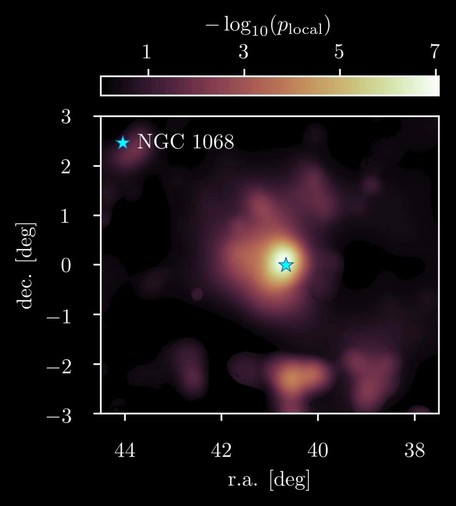
Behold: An image of neutrinos streaming from the black hole at the center of galaxy NGC 1068 (right). Neutrinos!
This is the first resolved image of a galaxy in neutrino "light," a milestone in probing the unseen universe. https://icecube.wisc.edu/news/press-releases/2022/11/icecube-neutrinos-give-us-first-glimpse-into-the-inner-depths-of-an-active-galaxy/
IceCube neutrinos give us first glimpse into the inner depths of an active galaxy

For the first time, an international team of scientists have found evidence of high-energy neutrino emission from NGC 1068, also known as Messier 77, an active galaxy in the constellation Cetus and one of the most familiar and well-studied galaxies to date. First spotted in 1780, this galaxy, located 47 million light-years away from us, ...

IceCube

Hey #Astrodon folks! I see a lot of yous are migrating to the astrodon instance (and that's great) but PLEASE PLEASE keep using the #Astrodon hashtag somewhere in your posts as some of us might stay on more general servers and I STILL WANT TO FIND YOUR STUFF! 🖤✨

Have a Galactic Day!

Hello #astrodon! I feel like I just walked into a party, and I don’t know anyone. So here’s my #introduction: I’m an astronomer at UC Santa Cruz where I’m growing an astrobiology program and studying exoplanet demographics using data from Kepler, TESS, Keck, and JWST.

My #introduction post was so long ago that I've changed jobs and Tootsville has blown up, so #AllowMeToReintroduceMyself

Professionally, I'm an astronomer at Harvard & Smithsonian studying black holes at the dawn of time and working on the #Chandra X-Ray observatory. #Astronomy #Astrophysics #Astrodon

Personally, I like #running, #hiking, #climbing, #camping, etc.

Lately, I've been on a real big #PublicTransit #Rail #Transit kick on here -- #Trains and #Mastodon both go Toot Toot!

Greetings #astrodon world!

I am Matthias, I am director of the Leibniz Institute for Astrophysics Potsdam (AIP) and professor at U Potsdam.

I love stars and galaxies, in particular Galactic archeology, galaxy formation, large surveys and big simulations.

Astronomy is not only very cool science, but also part of our culture, and I find science history fascinating.

I also enjoy doing astrophotography (www.astrobin.com/users/GalacticRAVE)

so to make it short: a space nerd.

#introduction

#PaperDay – published today in the #AstronomicalJournal: “The #Arecibo #Galaxy Environment Survey. XII. Optically Dark HI Clouds in the Leo I Group” Taylor et al. 2022. The latest paper from the AGES survey, which I’m PI of. AGES detects radio emission from neutral atomic hydrogen (HI) in galaxies and intergalactic clouds.

The image (figure 5 in the paper) shows the HI clouds between the galaxies M95 and M96.

https://iopscience.iop.org/article/10.3847/1538-3881/ac96e8

#Astronomy #Astrodon

Hello #astrodon. Just little old me, JWST Ops Project Scientist, AAS Trustee, dissector of gravitationally lensed galaxies, employee of one of the better space agencies. I have no idea how mastodon works.

Wow, this is already my 100th post ("toot") into the Fediverse!

I've really had good vibes here, especially with the #astrodon and #astronomy community. Am still considering migrating to astrodon.social but I've figured out a few tips that work for me:

- you can (and may want to) follow hashtags!

- boosts are really helpful for connecting newcomers

- I like https://fedifinder.glitch.me/ better than the "twitodon" tool, but both can help you find accounts you may have followed on the bird site

Fedifinder

Fediverse accounts of your X/Twitter followings