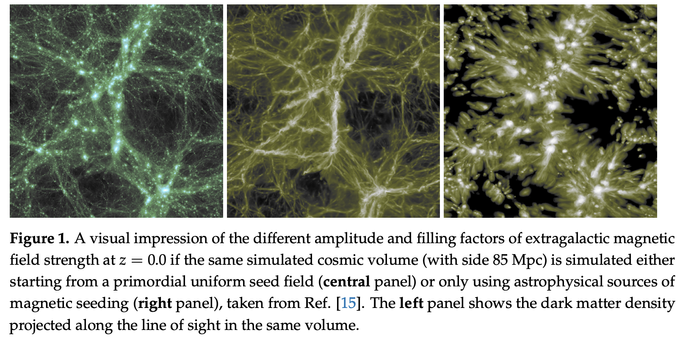
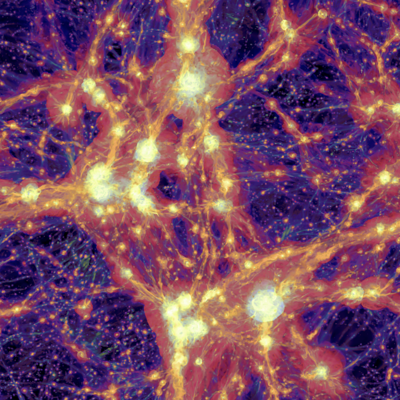
 franco_vazza
"Cosmological simulation of radio synchrotron bridge between
pre-merging galaxy clusters" by K. Nishiwaki, Brunetti, myself and Gheller
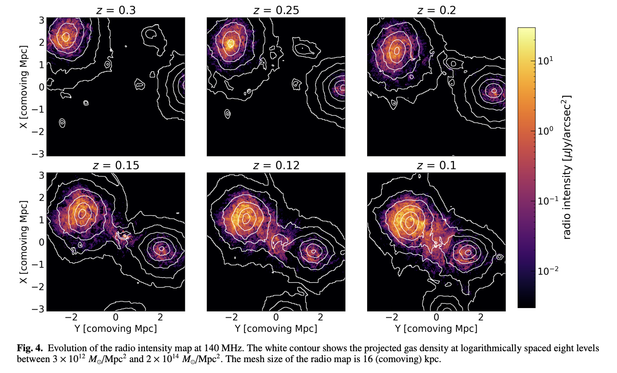
"Cosmological simulation of radio synchrotron bridge between
pre-merging galaxy clusters" by K. Nishiwaki, Brunetti, myself and Gheller
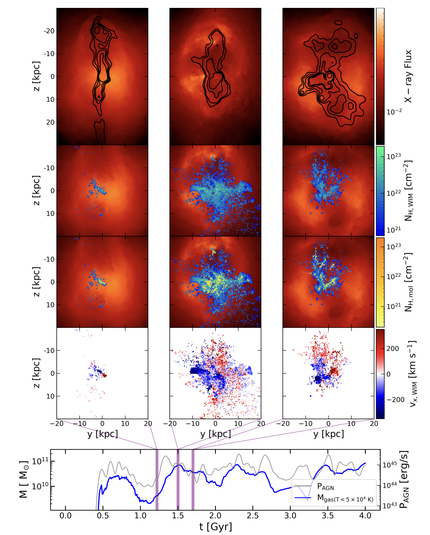
"Cold gas formation triggered by active galactic nuclei jet
feedback in galaxy cluster cores" by Stefano Sotira (PhD student with me at University of Bologna), and others, https://arxiv.org/pdf/2601.14391, submitted.
It presents a sophisticated analysis of the formation of cold clumps forming stars, as an effect of "positive" feedback by AGN jets. Simulations using the moving mesh code AREPO.
#paperday
"Magnetic field spreading from stellar and galactic dynamos into the exterior" by A. Brandenburg, O. Ghosh, myself and A. Neronov
https://arxiv.org/pdf/2512.17770
It is the direct numerical simulation, using the PENCIL code, of how magnetic fields produced by the mean-field dynamo in (very idealised) galaxies distribute over large distances (i.e. potentially into voids).

#paperday on #astroph
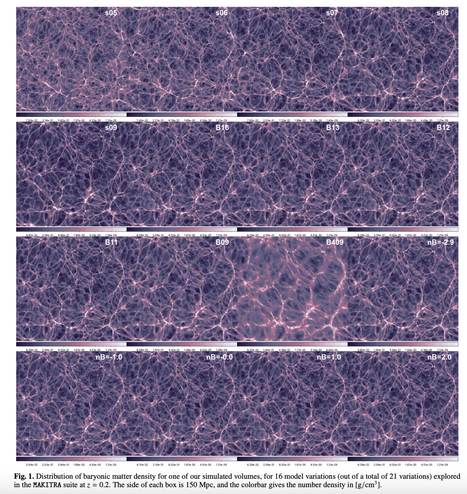
"The network analysis of the cosmic web as a tool to constrain
cosmology and cosmic magnetism"
by Anton Rudakovskyi, myself and M. Tsizh (@mtsizh )
https://arxiv.org/pdf/2511.22573
It's the exploration, using new (many) cosmological simulations, if the presence of large-scale primordial magnetic fields, or variations in the initial cosmological parameters, can be detected using #ComplexNetwork analysis of the cosmic web.
#science #astronomy #Ukraine 🇺🇦
#paperday on #astroph:
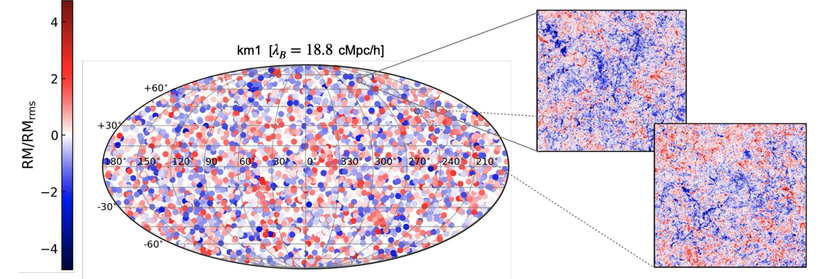
"Simulated rotation measure sky from primordial magnetic fields" by S. Mtchedlidze, myself et al.
https://arxiv.org/abs/2511.19508
discussing the little explored use of the **average** Faraday Rotation from background polarised radio sources as a tool to constrain large scale (primordial?) magnetic fields in between galaxies and filaments.
#paperday (sort of): here is the final accepted version of our
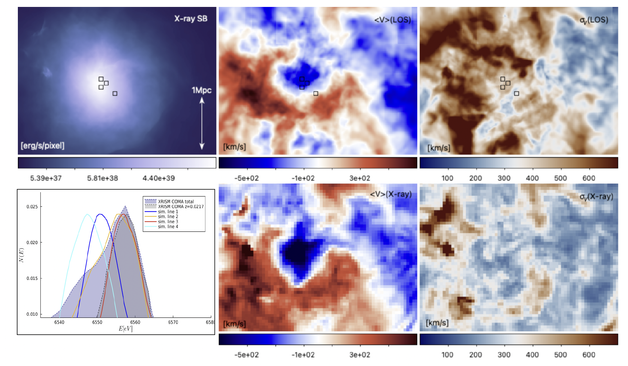
"On the interpretation of XRISM X-ray measurements of #turbulence in the intracluster medium: a comparison with cosmological simulations" by myself and G. Brunetti
https://arxiv.org/abs/2507.04727
I did an earlier thread here: https://mastodon.social/@franco_vazza/114816701059679474
The paper only have a useful appendix, which explains why homogenous kolmogorov turbulent models are useful, until they get too simplistic! #astrophysics #astronomy #science
"Can galactic magnetic fields diffuse into the voids?"
(answer: NO!)
https://arxiv.org/abs/2510.26918 by O. Ghosh et al., (including me) on #astroph today .
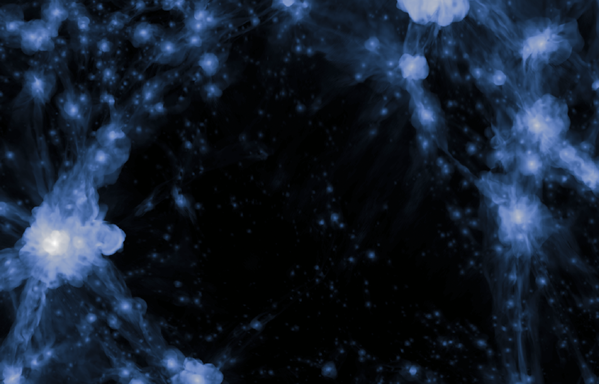
It is a necessary rebuttal to a recent paper (https://arxiv.org/abs/2505.14774) who claimed the possible magnetisation of voids by propagating a dipole solution for the magnetic fields of galaxies, assuming cosmic voids are textbook "vacua"
Not good at all!
#paperday on #astroph
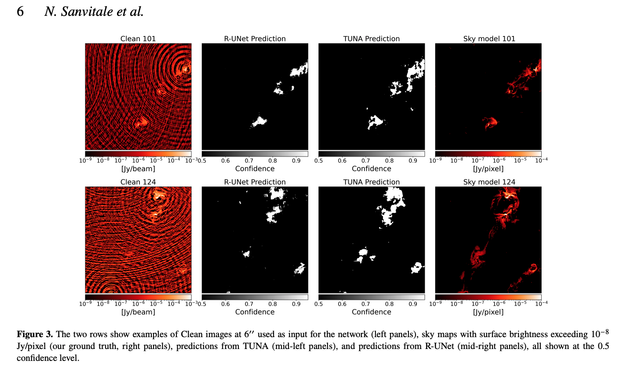
"Mapping Diffuse Radio Sources Using TUNA: A Transformer-Based Deep
Learning Approach" 🐟
https://arxiv.org/pdf/2507.11320
by N. Sanvitale et al., including myself
...not really within my comfort zone, it presents the results of new and more powerful Machine Learning approach to identify very diffuse radio emission structures in existing LOFAR images, using my simulations to train the algorithm.
#paperday (submitted to A&A) on #astroph:
"On the interpretation of XRISM X-ray measurements of turbulence in the intracluster medium: a comparison with cosmological simulations" by myself and G. Brunetti.
https://arxiv.org/abs/2507.04727
It's short reaction paper to the latest (cool) XRISM measurements of gas motions in the Coma cluster (and others), which were interpreted as evidence of weak and much-steeper-than-Kolomogorov turbulence.
We think this is wrong..
#science #astrodon #astronomy
“Radio Observations as a Probe of Cosmic Web Magnetism” written with four hands with Ettore Carretti, on #astroph today
https://arxiv.org/abs/2505.18619
and also open.-access here: https://www.mdpi.com/2218-1997/11/5/164
We review the current state of affairs in using radio observations of cosmic magnetic fields (from synchrotron emission and through the Faraday Rotation effect) to constrain the origin of cosmic magnetism.
#astrodon #astronomy #science #physics