 Amber Griffiths HAS MOVED!
Dipped into the bird site for work for 5 mins and wow boiling frogs
| Position | CMDI Early Career Award Fellow |
| Location | Georgia Tech, Atlanta, USA |

| Position | CMDI Early Career Award Fellow |
| Location | Georgia Tech, Atlanta, USA |
I *should* be writing my dissertation...
Instead I just released gcplyr v1.3.0 on github
gcplyr is an #RStats package that makes it easy to wrangle and do model-free analyses of #microbial growth curve data
v1.3.0 includes:
- new methods to calculate lag time and doubling time
- improved warnings for common situations
- improved documentation
https://mikeblazanin.github.io/gcplyr/
#microbiology #MicrobialEcology #MicrobialEvolution #ggplot2 #tidyverse #dplyr #data
Easy import, manipulation, and model-free analysis of microbial growth curve data, as commonly output by plate readers. Tools for reshaping common plate reader outputs into tidy formats and merging them with design information, making data easy to work with using gcplyr and other packages. Also streamlines common growth curve processing steps, like smoothing and calculating derivatives, and facilitates model-free characterization and analysis of growth data. See methods at <https://mikeblazanin.github.io/gcplyr/>.
#Bacteriophages playing nice: Lysogenic bacteriophage replication stable in the human gut #microbiota: iScience
Exciting new paper in @PLOSBiology — we show that plasmids use translational global regulators to rewire host cells including expression of key ecological traits, like metabolism and motility, whilst also boosting horizontal transmission of the plasmid
This was a big collaborative effort with colleagues at John Innes Centre, Birmingham, Sheffield & Liverpool
#plasmid #HGT #MobileGeneticElements
https://journals.plos.org/plosbiology/article?id=10.1371/journal.pbio.3001988

Plasmids contain homologs of bacterial signaling proteins and use them to manipulate host cells to their benefit. This study describes a widespread plasmid-borne translational regulator that subverts ecological traits in soil bacteria, inducing community organization and promoting plasmid transmission.
The coordination of #anti-phage #immunity mechanisms in #bacterial cells |
#phage

Bacteria are equipped with diverse immune strategies to fight bacteriophage infections, including restriction nucleases, abortive infection and CRISPR-Cas systems. Here, Arias et al. use mathematical models of immune responses in individual bacterial cells to highlight the importance of the timing and coordination of different antiviral systems, and present hypotheses that may inspire future research.

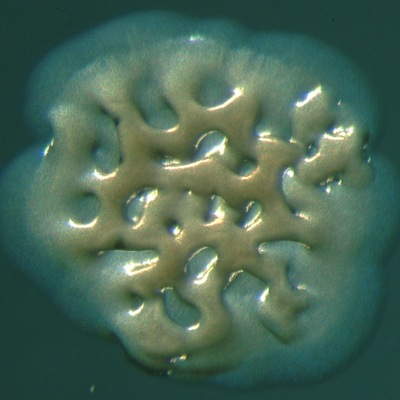
Bacteria and their viruses coexist and coevolve in nature, but maintaining them together in the lab is challenging. Here, a spatially structured environment allowed prolonged coevolution, with bacteria and phage diversifying into multiple ecotypes, uncovering gene mechanisms affecting phage-bacteria interactions.

Fitness landscapes largely shape the dynamics of evolution, but it is unclear how they shift upon ecological diversification. By engineering genome-wide knockout libraries of a nascent bacterial community, Ascensao et al. show how ecological and epistatic patterns combine to shape adaptive landscapes.
 Mike Blazanin
 Vivek Mutalik
 Michael Brockhurst
 Jamie Hall
 Richard Lenski