LAKE BACTERIA SHED GENETIC CARGO

Scientists found lake bacteria in Michigan are shedding half their genes to survive. This helps them live with less energy and reproduce faster. What does this mean for the lake's ecosystem?

#LakeBacteria, #GenomicStreamlining, #MichiganScience, #MicrobialEvolution, #SAR11

https://newsletter.tf/lake-bacteria-shed-genes-michigan-survive-better/

Scientists in Michigan observed lake bacteria shedding half their genetic code. This is like a car getting rid of extra parts to become lighter and faster.

#LakeBacteria, #GenomicStreamlining, #MichiganScience, #MicrobialEvolution, #SAR11
https://newsletter.tf/lake-bacteria-shed-genes-michigan-survive-better/

Lake Bacteria Shed Half Genes in Michigan to Survive Better

Scientists found lake bacteria in Michigan are shedding half their genes to survive. This helps them live with less energy and reproduce faster. What does this mean for the lake's ecosystem?

NewsletterTF

5,000-Year-Old Bacterium Found in Ice Is Resistant to Antibiotics.

A team of researchers has identified an ancient bacterium frozen for approximately 5,000 years in the Scărișoara Ice Cave, Romania, exhibiting remarkable resistance to several antibiotics currently used in medicine.

Read more: https://omniletters.com/5000-year-old-bacterium-found-in-ice-is-resistant-to-antibiotics/

#AntibioticResistance #AntimicrobialResistance #AncientBacteria #MicrobialEvolution #FrontiersInMicrobiology #Psychrobacter #IceCaveResearch

5,000-Year-Old Bacterium Found in Ice Is Resistant to Antibiotics

A bacterium frozen for 5,000 years in the Scărișoara Ice Cave (Romania) shows resistance to multiple antibiotics.

Omni Letters

Bacteria under stress don’t break—they evolve. A new study reveals how energy crises help E. coli become superbugs. #AntibioticResistance #MicrobialEvolution #Bioenergetics

https://geekoo.news/e-coli-on-the-edge-of-evolution/

E. coli on the Edge of Evolution | Geekoo

Bacteria under stress don’t break—they evolve. This Rutgers study reveals how metabolic chaos fuels resistance and persistence in E. coli.

Geekoo
Exciting update for biologists! #SynTracker introduces a fresh perspective on genome data and microbial communities, revealing structural variations for in-depth species-specific analysis. Delve deeper into the data: https://t.ly/vbxVG
@natureportfolio.bsky.social #Research #MicrobialEvolution #MPG

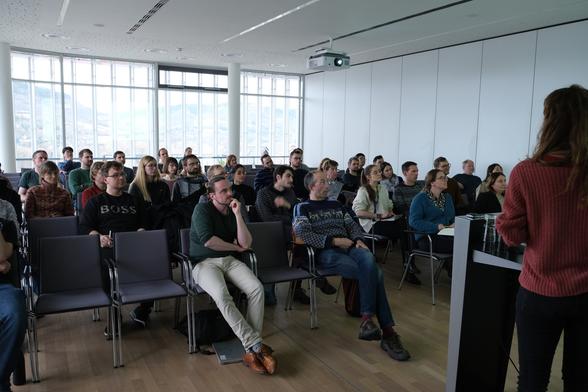
Many thanks to everyone who attended this year’s WSS-Paleobiotechnology colloquium on Monday!🙌
Our guests and experts gave us some truly inspiring insights into their exciting research in the fields of microbial #paleogenomics and the emerging field of #paleobiotechnology!🧡

#aDNA #ancientDNA #NaturalProducts #MicrobialEvolution #Evolution

@jfy133

📢We are happy to announce the second WSS-Palaeobiotechnology colloquium on ’Genomic Evolution of Microbial Functions: past to present’ on January 22, 2-4 pm!🧬

Don't miss this exciting opportunity to meet your science heroes and dive into the world of microbial paleogenomic research and the emerging field of paleobiotechnology!🙌

👉All infos here: https://leibniz-hki.de/en/event/genomic-evolution-of-microbial-functions-past-to-present.html
or contact @jfy133 for further information

#aDNA #ancientDNA #NaturalProducts #MicrobialEvolution #Evolution

Genomic Evolution of Microbial Functions: Past to present - Leibniz-HKI

The Department of Palaeobiotechnology (Leibniz-HKI) and Microbiome Sciences group (Max Planck Institute for Evolutionary Anthropology) are happy to invite you to the second event of the ‘Werner Siemens Palaeobiotechnology Kolloquium’ Advances in high throughput sequencing and computational metagenomics are opening up dramatic new opportunities for understanding the structure and complex functions of diverse microbiomes. At the same time, the rise of paleogenomics is enabling the study of microbial communities deeper and deeper into the past. It is now possible, for the first time, to combine these advances to investigate microbiome functional evolution over the past 100,000 years in high resolution. This colloquium brings together diverse experts in microbial genomics, computational biology, evolutionary biology, and archaeology to explore and imagine the future of microbial paleogenomic research and the emerging field of paleobiotechnology. Keywords: natural products, microbial evolution, phylogenomics, biosynthetic gene clusters, metagenomics, ancient DNA, disease dynamics, pathogens, epidemiology, We will have four speakers giving short lectures and a question round on ‘Genomic Evolution Of Microbial Functions: Past To Present’ and then a graduate-only social coffee break to allow free discussions with the speakers in an informal setting. If you are a graduate student (M.Sc/Ph.D. or equivalent), and would like the chance to informally meet, network, or ask questions directly to any of the speakers, registrations for the graduate coffee session event can be made here. In this event, we will hear from: Elke Dittmann (University of Potsdam, DE) Denise Kühnert (Robert Koch Institute, DE; MPI of Geoanthropology, DE) Marnix Medema (Wageningen University, NL) Thomas Booth (Technical University of Denmark, DK) For further information, please contact James Fellows Yates ([email protected])

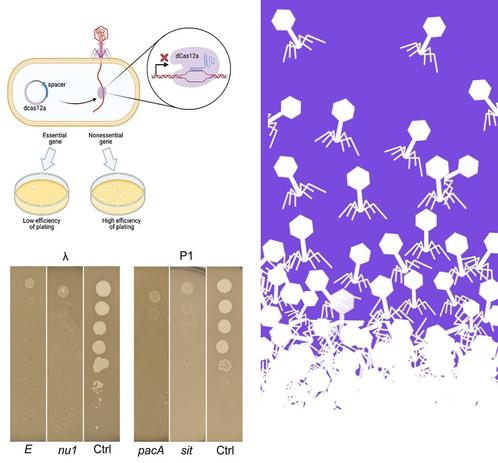
#Phages are key drivers of #MicrobialEvolution, but many #phage genes are poorly understood. @denish_piya @AdamArkinLab @vivek_mutalik &co use arrayed genome-wide #CRISPRi to map gene the essentiality landscape in the iconic coliphages λ & P1. #PLOSBiology https://plos.io/3uLtzgU
Systematic and scalable genome-wide essentiality mapping to identify nonessential genes in phages

In this work, authors use an arrayed genome-wide CRISPR interference assay to map gene essentiality landscape in the canonical coliphages λ and P1.

ASM Microbe | Session Proposals

ASM Microbe 2023 showcases the best microbial sciences in the world, and provides a one-of-a-kind forum to explore everything from basic microbiology to translation and application.

ASM.org