241 Followers
110 Following
520 Posts
Head of Data Analytics and Partnerships working for the NHS. #realworldevidence, #vaccines, #virology, #health, #covidorigins, #science, #sciencehistory, #fedi22. Views entirely my own. He/him.

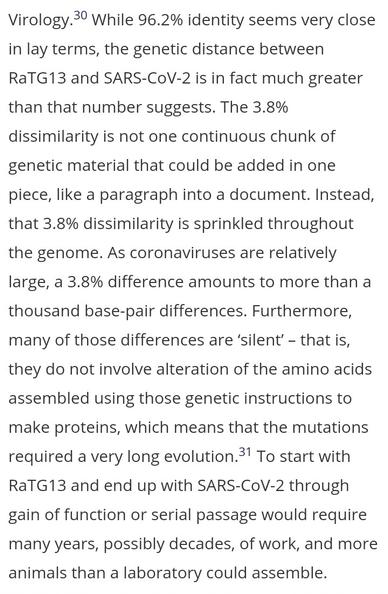
49/ Gigi Gronvall's paper on #covidorigins needs a special highlight, as it covers so many angles so well. Please read through carefully - each point is backed by work from teams of researchers. She points out a common misunderstanding of the 1977 flu origin, and she explains why RatG13 is NOT the progenitor of #SarsCoV2 :

📌https://www.tandfonline.com/doi/full/10.1080/00396338.2021.2006442

The Contested Origin of SARS-CoV-2

This article describes what is known about the origin of SARS-CoV-2, with implications for policy, biological research and public-health surveillance. Theories about the origin include a natural em...

Taylor & Francis

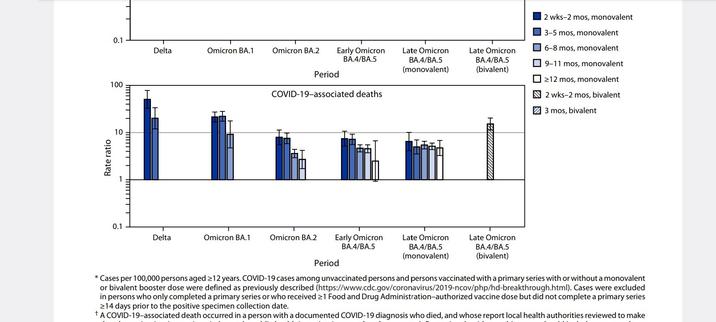
Stunning #data.

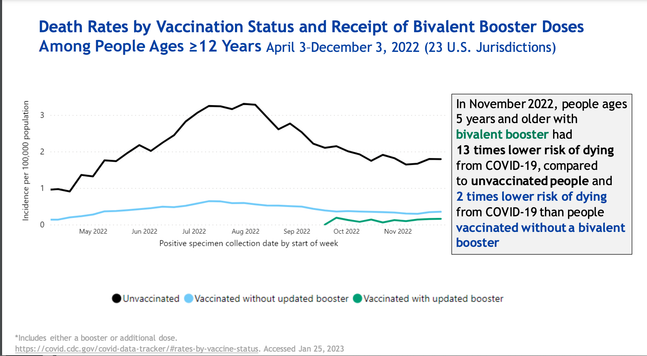
Rates of death for unvaccinated versus booster recipients: these data should be posted everywhere.

#COVID19 Incidence and Mortality Among #Unvaccinated and #Vaccinated Persons Aged ≥12 Years by Receipt of Bivalent #Booster Doses and Time Since #Vaccination — 24 U.S. Jurisdictions, October 3, 2021–December 24, 2022 | MMWR
https://www.cdc.gov/mmwr/volumes/72/wr/mm7206a3.htm

COVID-19 Incidence and Death Rates Among Unvaccinated ...

This report describes higher protection against COVID-19 infection and death among people who received an updated booster than people who received a monovalent booster.

Centers for Disease Control and Prevention

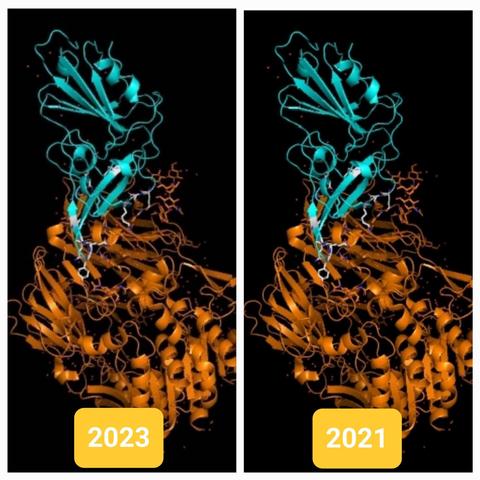
Really strange how "similar" novel unreported infectious clones in 2023 are to those also "found" in 2021. In 2021, the format was that of a Nipah Henipahvirus, but that changed to a BAC in 2023?

Huh?

2023: https://www.biorxiv.org/content/10.1101/2023.02.12.528210v2

2021:
https://arxiv.org/abs/2104.01533

#SarsCoV2 #covidorigins #OriginOfCovid

#Nobel prize?? Pffft.

I'm now only impressed with anyone else that's put together the #Lego #Encanto casita (alongside a 6-year-old AND a 2-year-old)

What an interesting little pub in #london #niceday

From a study that finds 2 doses of #mrna #vaccine in children aged 5-11 halves the risk of infection with or without symptoms, halves symptomatic infections, and cuts hospitalisation risk by 2/3 (each compared with unvaxxed), this is what full on anti-vax Joseph Lapado announces to his anti-vax followers 👇

What an abuse of #realworldevidence and #scicomm

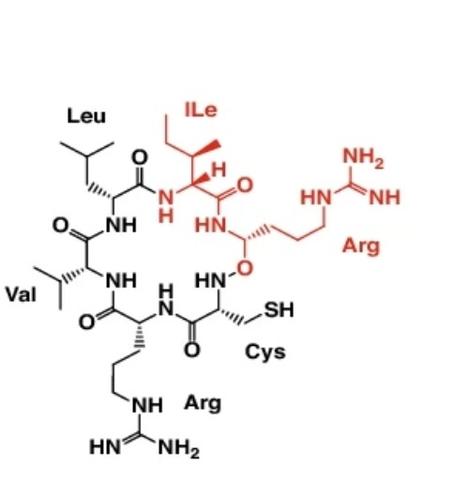
Would appreciate a boost here - my wife synthesised all of these amazing cyclic peptides, which specifically block the interactions between p110α-RBD and KRAS, an important target for #cancer drugs. #science #scicomm #peptides #proteins #scientificreports #nature #openaccess

📌https://www.nature.com/articles/s41598-023-28756-0

Characterisation of a cyclic peptide that binds to the RAS binding domain of phosphoinositide 3-kinase p110α - Scientific Reports

P110α is a member of the phosphoinositide 3-kinase (PI3K) enzyme family that functions downstream of RAS. RAS proteins contribute to the activation of p110α by interacting directly with its RAS binding domain (RBD), resulting in the promotion of many cellular functions such as cell growth, proliferation and survival. Previous work from our lab has highlighted the importance of the p110α/RAS interaction in tumour initiation and growth. Here we report the discovery and characterisation of a cyclic peptide inhibitor (cyclo-CRVLIR) that interacts with the p110α-RBD and blocks its interaction with KRAS. cyclo-CRVLIR was discovered by screening a “split-intein cyclisation of peptides and proteins” (SICLOPPS) cyclic peptide library. The primary cyclic peptide hit from the screen initially showed a weak affinity for the p110α-RBD (Kd about 360 ÂµM). However, two rounds of amino acid substitution led to cyclo-CRVLIR, with an improved affinity for p110α-RBD in the low µM (Kd 3 ÂµM). We show that cyclo-CRVLIR binds selectively to the p110α-RBD but not to KRAS or the structurally-related RAF-RBD. Further, using biophysical, biochemical and cellular assays, we show that cyclo-CRVLIR effectively blocks the p110α/KRAS interaction in a dose dependent manner and reduces phospho-AKT levels in several oncogenic KRAS cell lines.

Nature

Exciting new paper on #mrna delivery specifically to islet cells, AND it gives a wonderful example of how to visualise log distributions. #science #scicomm

https://www.science.org/doi/10.1126/sciadv.ade1444

I've seen this paper going around, explaining that the relative risk of #myocarditis from #covid is ~7x greater than the risk from the #vaccine - and how antivaxxers ignore this.

But another issue is that most people don't understand or care what it means for something to be seven times bigger.

It's good to use simple examples, e.g. a bison is about 7x bigger than an average person

#scicomm

https://www.frontiersin.org/articles/10.3389/fcvm.2022.951314/full

Myocarditis in SARS-CoV-2 infection vs. COVID-19 vaccination: A systematic review and meta-analysis

BackgroundThis study aimed to compare the incidence of myocarditis in COVID-19 vaccines and in severe acute respiratory syndrome-coronavirus 2 (SARS-CoV-2) infection groups.MethodsElectronic databases (MEDLINE, Scopus, Cochrane Central Register of Controlled Trials, Cochrane Database of Systematic Reviews, and the WHO Global Literature on Coronavirus Disease) and trial registries were searched up to May 2022, for randomized controlled trials and observational cohort studies reporting the risk of myocarditis associated with the COVID-19 vaccines and the risk associated with SARS-CoV-2 infection. We estimated the effect of COVID-19 infection and vaccines on rates of myocarditis by random-effects meta-analyses using the generic inverse variance method. Meta-regression analyses were conducted to assess the effect of sex and age on the incidence of myocarditis.ResultsWe identified 22 eligible studies consisting of 55.5 million vaccinated cohorts and 2.5 million in the infection cohort. The median age was 49 years (interquartile range (IQR): 38–56), and 49% (IQR: 43 to 52%) were men. Of patients diagnosed with myocarditis (in both vaccination and COVID-19 cohort) 1.07% were hospitalized and 0.015% died. The relative risk (RR) for myocarditis was more than seven times higher in the infection group than in the vaccination group [RR: 15 (95% CI: 11.09–19.81, infection group] and RR: 2 (95% CI: 1.44-2.65, vaccine group). Of patients who developed myocarditis after receiving the vacc...

Frontiers