Gonna do some new #introductions via various stuff I’ve work on over the next few days to help find my scene!

My first serious personal project was about 10 years ago when I wrote this video codec for the Apple II, which played short looping animations converted from animated gifs. You load em off of a standard 5.25” 140k floppy!

Here’s the hackaday on it:
https://hackaday.com/2013/07/22/animated-gifs-on-an-apple-ii/

#introduction #vintagecomputer #retrocomputing #maker #programming #appleii

Animated GIFs On An Apple II

Before the Internet, computer enthusiasts needed to get their cat pictures, image macros, and animated gifs somehow. If only [Nate] was writing code back in the 80s: he created a video player for t…

Hackaday
More #introduction content!
I’m also somewhat known porting a C. elegans nervous system model (connectome) to the Arduino Uno, so it could be used in very low cost or resource constrained platforms.
Yes, this is a robot that thinks it’s a worm, lol
Hackaday article:
https://hackaday.com/2017/10/13/nematoduino-a-roundworm-neural-model-on-an-arduino/
#introductions #stem #eduction #robotics #arduino #maker #biology #science
Nematoduino: A Roundworm Neural Model On An Arduino

When it comes to building a neural network to simulate complex behavior, Arduino isn’t exactly the first platform that springs to mind. But when your goal is to model the behavior of an organ…

Hackaday
#introduction content continued! as a follow on to nematoduino, I made nematode.farm, which is a (very) simple browser based game where the “opponent” is many instances of the emulated C. elegans nematode. I think this may be the first game ever where enemy AI is based on an emulated organism.
written in C, SDL2, and compiled in webassembly 
can play here (need arrow keys)
https://nematode.farm/#stem #biology #gamedev #science #programming #robotics #introductions
nematode.farm

Next in my #introduction posts featuring Stuff I’ve Made:

This is the Chernobyl Dice: a Cold War era themed quantum RNG. It uses the clicks of a Geiger counter nestled next to an array of uranium glass marbles to generate random bits displayed on Nixie tubes.

This is a *disgustingly fair* dice and I’ve run the tests to prove it, lol

Hackaday article:
https://hackaday.com/2020/01/02/roll-the-bones-chernobyl-style/

#intrductions #arduino #maker #stem #ttrpg #nuclear #physics

Roll The Bones Chernobyl Style

We’re suckers for the Fallout aesthetic, so anything with a post-apocalyptic vibe is sure to get our attention. With a mid-century look, Nixie tubes, a brushed metal faceplate, and just a tou…

Hackaday

‘Nother #introduction poast! As you can probably tell I’m a bit of a hardware hacker, and (extremely) amateur electrical engineer

During the long summer of 2020 one of my projects was to build a custom layout mechanical keyboard completely from scratch. I did the PCB layout, designed the case, and wrote the firmware. It doesn’t have a name but the working project title was “BattleChunk,” which I might keep haha.

#introductions #maker #keyboards #mechanicalkeyboards #kicad #arduino

Wow lots of new followers from these #introduction posts! Thanks for joining me!

The next project I’d like to discuss is more recent and ongoing. It’s also, to put it mildly, my most ambitious—an solar powered off-grid radio telescope capable of doing meaningful SETI work.

That’s right, I’ll be looking for aliens in my front yard!

(Attached is a plot of the Milky Way hydrogen spectrum that it can see)

#introductions #maker #astrodon #astronomy #radio #RaspberryPi #sdr

okay final #introduction post!

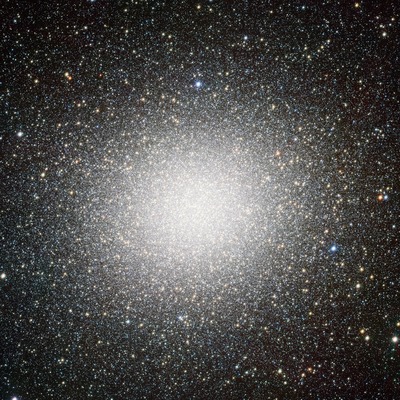
these days when I’m not building a gadget or playing with a radio, i tend to be taking photos. either with a telescope or a long lens. so expect this account to be chock full of birds and galaxies and planets and shit!

here are some photos from 2022 that I’m proud of

#introductions #space #BirdWatching #photography #wildlife #birds #astrophotography #astronomy #astrodon

@ComradeRobot

DIY SETI is the best. I'm still troubleshooting my first dish to get it working.

@ComradeRobot , can you elaborate on how are you building your radio-telescope? curious if I could do something similar... 🤓 📡
@ComradeRobot nice job! Stacked acrylic (or whatever) makes for a real solid enclosure
@madrush thank you! yeah i found it more than adequate for that use case, with some metal on the top and bottom for flair
@ComradeRobot very cool! Could also use radium watch hands.

@ComradeRobot

How awesome !!

It might take some time to play with it a few games of https://en.wikipedia.org/wiki/Dice_10000 , with a group of friends in the coziness of a fireplace, though.

Dice 10000 - Wikipedia

@ComradeRobot it'll take *forever* to roll the 1's out of that!
@ComradeRobot Wait, you are using Nixies to display binary ? And waste the lovely curvy 8s and 9's (sob).
Seriously, it is a lovely project - the switches are the icing on the cake!
@steely_glint if you look on YouTube you can find a demo—it really does use all the digits!
@ComradeRobot Thanks, that brings back memories of TTL 5v to Nixie drivers - Except I think my tubes had the pins at the bottom and were more bottle shaped.
It has been a _long_ time.

@ComradeRobot whoah, this is THE ultimate Nixie gadget! :>

Now get some blacklight shinin' onto these blocks!

@ComradeRobot itay be random, but it seems not to be secret at all. Are you running Monte Carlo simulations or generating key material?
@noplasticshower nope it’s a toy and very slow. think: “extremely absurdly high quality randomness board game dice”

Could be useful for the popular game played on the #GreatestGen podcast "The Game Of Buttholes: Will of the Prophets" as a dice roll generator. #CHULA!

#StarTrek
#GreatestTrek
#FriendOfDesoto
#FOD

@ComradeRobot

@ComradeRobot can you make that but as an MP3 player or music streaming device? i don't have much uranium laying around
@ComradeRobot This is also something I would like to replicate for a while now. Sadly I aim to my trng on a pcie card into a laptop. Radiation detection with semiconductors appear to be harder. Noise is a problem when signal from a photodiode is so faint. It wasn't so easy to stick 3 photodiode with Am241 and call it a day. I still want to go back to this project at some point (=.
@ComradeRobot "After some adjustment for the bias toward zeroes due to the relative rarity of decay events" why not use the approach of "measure the time difference between three decay events, '0' if first longer than second, '1' otherwise"?
@numist that would work! (at least in theory—real sensors have all sorts of unexpected bias). unclear to me right now whether or not your suggested algorithm would generate “one bit for click”—it obviously could if you just roll it forward but id be slightly concerned by the time correlation that would persist (again, real world microcontrollers and sensors)
@ComradeRobot You'd need two clicks per bit, but it would be bias-free with no corrections needed.
@numist yeah this thing already takes a few seconds to make a single byte haha. also im not sure id trust the microcontroller clock to be bias free or stable. with more radiation and a seriously stable clock that would probably be the way to go though
@ComradeRobot Love it. I could use that as a set piece in #POSERS. I have an LCD Nixie tube clock instead. 😎 ☢️
@ComradeRobot Holy shit that is RIDICULOUSLY cool! 😮
@ComradeRobot That's fucking cool. Can the nematodes navigate in 3D, or does the simulation assume flatland?