 ideaPDish
Useful brain fart...
I was thinking about tree ring counting and estimating the age of a wood thing.
It occurred that the farther away from the core of the tree a ring is, the shallower the arc over a given distance and angle and average distance between rings.
Extrapolating, it may not be necessary to count each and every ring of a tree to estimate it's age. It can even be used on furnature.
#treeRing #dendrochronology
 Journal of Plant Ecology
【💡High Cited 2020-2022 】
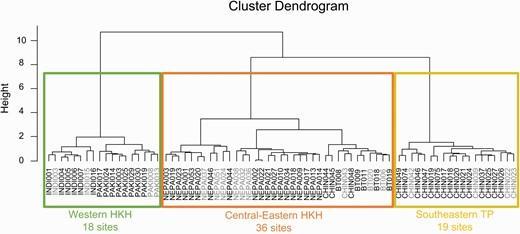
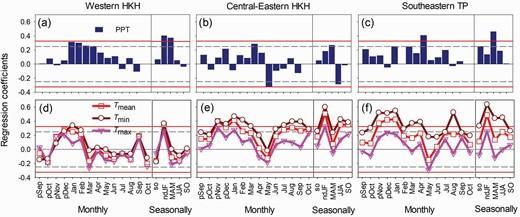
#High-altitude tree growth responses to climate change across the Hindu Kush Himalaya
Experimental samples:
Abies, Juniperus and Picea
#TreeRing | #KeyClimateFactors | #GrowthTrends | #CimateSensitivity
 Ronald Visser
I have written a small R-script to download all tree-ring data from the ITRDB (measurements and chronologies). Anyone can create a local copy, just in case the data might not be available anymore from @noaa.gov

 💧🌏 Greg Cocks
A Fire Deficit Persists Across Diverse North American Forests Despite Recent Increases In Area Burned
--
https://doi.org/10.1038/s41467-025-56333-8 <-- shared paper
--
#GIS #spatial #mapping #spatialanalysis #spatiotemporal #fire #wildfire #bushfire #NorthAmerica #USA #Canada #management #planning #mitigation #climatechange #NAFSN #treering #firescar #forest #tree #vegetation #contemporary #model #severity #loss #cost #economics #ecosyastems #humanlife #infrastructure #risk #hazard #lossoflife #water #watersupply #waterresources
--
https://doi.org/10.1038/s41467-025-56333-8 <-- shared paper
--
#GIS #spatial #mapping #spatialanalysis #spatiotemporal #fire #wildfire #bushfire #NorthAmerica #USA #Canada #management #planning #mitigation #climatechange #NAFSN #treering #firescar #forest #tree #vegetation #contemporary #model #severity #loss #cost #economics #ecosyastems #humanlife #infrastructure #risk #hazard #lossoflife #water #watersupply #waterresources


 Niels de Winter
Cool study using #treering analysis to study precipitation variability over the past 4 centuries and aiding in the prediction of #extreme precipitation events and #droughts under future climate scenarios
https://www.sciencedirect.com/science/article/pii/S003101822500183X
https://www.sciencedirect.com/science/article/pii/S003101822500183X
 arthurgessler
New view on #treering analysis: Shining a new light on the classical concepts of carbon‐isotope dendrochronology https://nph.onlinelibrary.wiley.com/doi/10.1111/nph.20258
 Jim Stagge
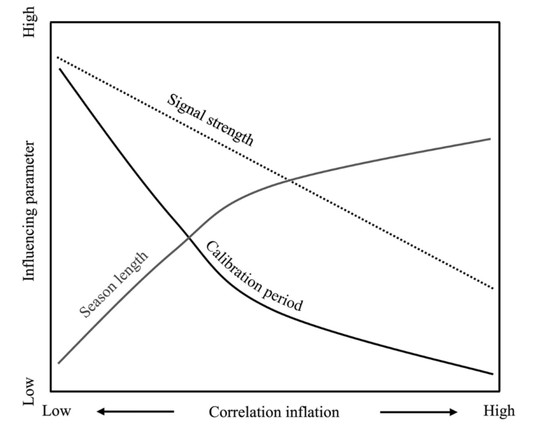
New publication. Risk of inflating correlation for repeated regressions in tree-ring reconstructions #research #treering
 anlomedad
"Forests moderate local climate by keeping their local environments cool. They do this partly by shading the land, but also by releasing moisture from their leaves. This process, called transpiration, requires energy, which is extracted from the surrounding air, thus cooling it. A single tree can transpire hundreds of liters of water in a day. Each hundred liters has a cooling effect equivalent to two domestic air conditioners for a day, calculates Ellison."
https://e360.yale.edu/features/how-deforestation-affecting-global-water-cycles-climate-change
It's now part of my new #Tegtmeier project: figure out how much eg. European and American land use change has impacted local, regional and continental weather. See above posting where I asked this question, too.
So I plot #treering widths alongside d18O from #speleothem (eg. stalagmite). Both proxies are precisely dated and (can) have annual resolution.
I would expect to see a warming =
trees grow more when, at locations from where "their weather comes", other forests are felled .
And a drying =
d18O increase in speleothems.
I use #GoogleEarth and my rudimentary history knowledge to determine certain locations in Australia, New Zealand, USA and Europe. tbc.🍿

Rivers in the Sky: How Deforestation Is Affecting Global Water Cycles
A growing body of evidence indicates that the continuing destruction of tropical forests is disrupting the movement of water in the atmosphere, causing major shifts in precipitation that could lead to drought in key agricultural areas in China, India, and the U.S. Midwest.
#treering #18O #VPD #human #atmosphere #dry #forestry #agricultural #health #climatechange #drought
here is the link for full access: https://rdcu.be/duzAw
here is the link for full access: https://rdcu.be/duzAw
Recent human-induced atmospheric drying across Europe unprecedented in the last 400 years - combined #treering #18O analyses, Earth System model simulations and observations of the water vapour pressure deficit (#VPD) of the air show that this is due to #human influence. If the #atmosphere continues to #dry, impacts on natural ecosystem services, the #forestry and #agricultural sector and human #health are anticipated.
Recent human-induced atmospheric drying across Europe unprecedented in the last 400 years | Nature Geoscience
The vapor pressure deficit reflects the difference between how much moisture the atmosphere could and actually does hold, a factor that fundamentally affects evapotranspiration, ecosystem functioning, and vegetation carbon uptake. Its spatial variability and long-term trends under natural versus human-influenced climate are poorly known despite being essential for predicting future effects on natural ecosystems and human societies such as crop yield, wildfires, and health. Here we combine regionally distinct reconstructions of pre-industrial summer vapor pressure deficit variability from Europe’s largest oxygen-isotope network of tree-ring cellulose with observational records and Earth system model simulations with and without human forcing included. We demonstrate that an intensification of atmospheric drying during the recent decades across different European target regions is unprecedented in a pre-industrial context and that it is attributed to human influence with more than 98% probability. The magnitude of this trend is largest in Western and Central Europe, the Alps and Pyrenees region, and the smallest in southern Fennoscandia. In view of the extreme drought and compound events of the recent years, further atmospheric drying poses an enhanced risk to vegetation, specifically in the densely populated areas of the European temperate lowlands. The atmosphere has dried across most regions of Europe in recent decades, a trend that can be attributed primarily to human impacts, according to tree ring records spanning 400 years and Earth system model simulations.