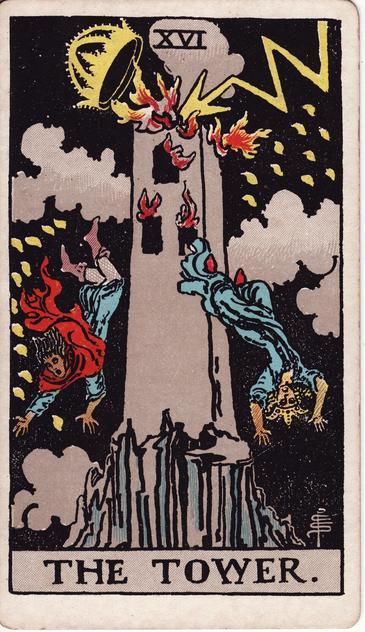
Know what I just realized, I'm surely the second last to realize it, it must be a common theme, is that the enshittification of the internet is the goddam Tower of Babel all over again - and it wasn't God this time
.
#TowerOfBabel #Philosophy #Enshittification

I recently finished reading Richard Wollheim's "Painting As An Art".

I found much of it stimulating in the close attention paid to particular pictures and thought provoking with regard to his theory of "seeing in" as the way to understand our perception of paintings.

On the other hand, his use of psychoanalytic theory left me with questions.

Surprisingly, his use of this theory reminded of some recent reading of mine in evolutionary psychology. Both Wollheim and the evolutionary psychologists stress the significance of a common human nature and are inclined to downplay the importance of systems of symbols or culture in general.

I do think that a substantive concept of human nature makes sense, and I am open to the possibility of evolutionary psychology and psychoanalytical theory contributing to an understanding of of human nature.

Altogether less agreeable to me is the tendency of these theories to smuggle in a social ontology in which culture is merely the creation of atomized individuals. One can believe in the evolved nature of the mind and allow for the possibility of certain kinds of psychic forces at work in the individual without denying the importance, still less the existence, of social facts. Thinking about languages as at once learned and used by individuals but also existing as entities external to those individuals is helpful here.

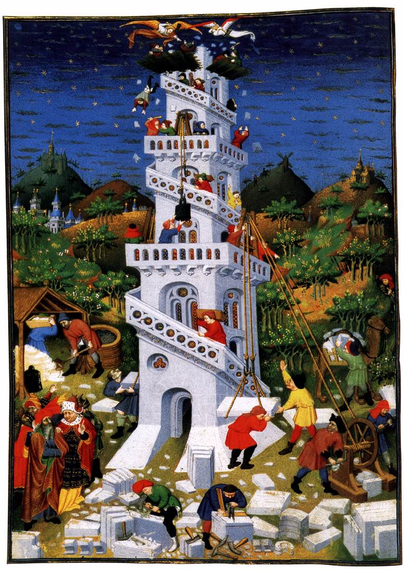
Image: The Construction of the Tower of Babel -- Folio xvii, The Bedford Book of Hours -- 1423 - 30 - The British Library.

#Wollheim #RichardWollheim #PaintingAsAnArt #EvolutionaryPsychology #Psychoanalysis #SocialOntology #Art #Philosophy #IlluminatedManuscript #BookOfHours #BedfordBBookOfHours #15thCenturyArt #TowerOfBabel

The Tower We Keep Rebuilding

On Second Thought

There is something deeply attractive about the phrase “I did it my way.” It appeals to our longing for autonomy, dignity, and control over our own lives. Yet when Scripture places that instinct under the light of God’s revelation, it exposes both its strength and its danger. Genesis 10–11 presents humanity at a moment of remarkable unity. The people share a language, a vision, and a collective determination. On the surface, the Tower of Babel looks like progress—organization, cooperation, and ambition woven together into a single project. But beneath that impressive coordination lies a restless dissatisfaction with God’s design. Humanity is no longer content to live before God; it wants to reach Him on its own terms.

The builders of Babel were not atheists. They were deeply religious in a distorted way. Their tower was not meant to replace God but to force proximity—to ensure visibility, significance, and security apart from obedience. The text makes this clear when they say, “Come, let us build ourselves a city and a tower with its top in the heavens, and let us make a name for ourselves” (Genesis 11:4, italics added). The Hebrew emphasis rests on ourselves and our name. This is not humility reaching upward in worship; it is pride reaching upward in demand. Ironically, the very unity they celebrated became a threat—not to God, but to themselves. Unchecked human ambition, even when cooperative, can turn destructive when severed from submission.

God’s response often feels jarring to modern readers. “Come, let us go down and there confuse their language” (Genesis 11:7). Yet, this act of judgment is also an act of restraint and mercy. A single-minded humanity bent on self-exaltation would only spiral further into alienation and self-destruction. The scattering of languages interrupts the illusion that unity alone is redemptive. Scripture reminds us that unity without truth, and cooperation without obedience, ultimately fractures rather than heals. As Ecclesiastes later observes, “I hated all my toil in which I toil under the sun, seeing that I must leave it to the man who will come after me” (Ecclesiastes 2:18). Human achievement, detached from God, cannot bear the weight of lasting meaning.

Against this backdrop, the ministry of Jesus in Matthew 9 feels deliberately countercultural. Rather than building monuments, Jesus builds relationships. Rather than gathering power, He gives Himself. He heals, forgives, eats with sinners, and calls the weary to rest. When His disciples ask how to pray, He does not teach them how to summon God downward but how to surrender upward: “Our Father in heaven… your will be done” (Matthew 6:9–10, italics added). The kingdom Jesus announces does not rise through towers but through trust. It does not secure God’s presence by force; it receives God’s presence by grace.

The coming of the Holy Spirit completes what Babel could never accomplish. In John 16:4–15, Jesus promises a Helper who will dwell within God’s people, guiding them into truth. At Pentecost, the confusion of Babel is not erased but redeemed. Languages remain, cultures remain, yet understanding is restored through the Spirit’s work. God does not flatten humanity into sameness; He unites diversity through shared submission to Christ. The presence humanity once tried to reach by brick and mortar is now given freely, dwelling within believers. The tower is replaced by the temple of the heart.

Frank Sinatra’s lyric—“If I didn’t have myself, then I’d have naught”—sounds convincing until Scripture reframes the question. Ecclesiastes confronts us with unsettling honesty: self-possession without God leads to exhaustion, not fulfillment. The Teacher’s reflections are not cynical; they are sober. Pleasure, productivity, legacy—none of them can anchor the soul when God is pushed to the margins. God’s invitation is not to erase the self, but to reorient it. “Whoever wants to save their life will lose it, but whoever loses their life for me will find it” (Matthew 16:25). Doing things God’s way is not self-annihilation; it is self-restoration.

God’s alternative to Babel is not passivity but service. True unity is found not in shared ambition but in shared obedience. Jesus shows us that serving God always flows outward toward serving others. Love, respect, and self-sacrifice are not add-ons to faith; they are its visible shape. The tower impulse still lives in us—in our need to be noticed, to be right, to be in control. Yet Christ gently dismantles those towers, brick by brick, replacing them with a life grounded in trust.

On Second Thought

On second thought, the most surprising paradox in the story of Babel is this: humanity was never closer to losing itself than when it was most united in purpose. We often assume fragmentation is our greatest enemy, that if only we could think alike, speak alike, and act alike, the world would finally heal. Yet Scripture suggests something more unsettling. Unity detached from humility can become just as dangerous as chaos. The tower builders were not divided; they were aligned. What they lacked was not cooperation, but reverence.

On second thought, perhaps the problem is not that we want to reach heaven, but that we want to do so without being changed. Babel was an attempt to ascend while remaining the same—to bring God closer without surrendering control. That impulse persists whenever faith becomes a strategy for self-fulfillment rather than a path of transformation. We pray, plan, and build, yet quietly insist that God bless what we have already decided. The paradox is that God’s “no” at Babel was actually a deeper “yes”—yes to protecting humanity from itself, yes to a slower, humbler redemption.

On second thought, the gospel does not ask us to abandon ambition, but to relocate it. Instead of making a name for ourselves, we are invited to bear Christ’s name. Instead of building upward in defiance, we are called to build outward in love. The Holy Spirit does not erase difference; He sanctifies it. God’s way feels smaller at first—service instead of spectacle, faithfulness instead of fame—but it is the only way that endures. When we stop insisting on “my way,” we finally discover that God’s way is not restrictive, but freeing.

FEEL FREE TO COMMENT, SUBSCRIBE, AND REPOST, SO OTHERS MAY KNOW


#biblicalUnity #ChristianHumility #doingLifeGodSWay #Genesis11Devotion #prideAndObedience #spiritualFormation #TowerOfBabel

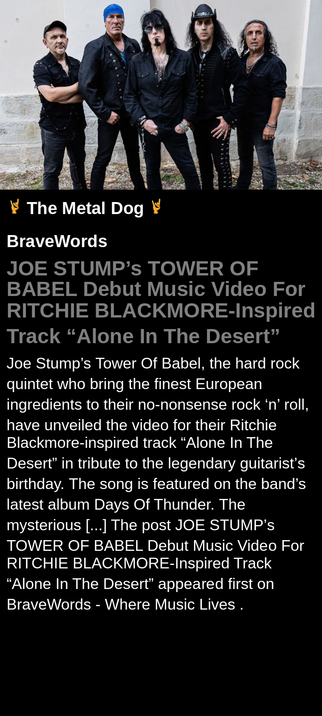
#NowPlaying the recent album "Days of Thunder" by the band #JoeStumps #TowerOfBabel from the #USA #Germany #Italy #France

#HardRock #AlbumsOf2025

Personal Rating: 4 / 10

Recommended Tracks: "Days of Thunder", "In the Heat of the Night", "Blind are your Eyes"

Random guy just asked me, as far as I can tell, in Spanish if I speak Italian. Did exasperated sigh and big eye roll when I responded with “Sorry, no I don’t”.

Bruh.

#Leiden #TowerOfBabel #PolyglotOrNot #Languages #Spanish #Italian

Today's pick: The Tower of Babel (1563) - Pieter Bruegel the Elder. #art #Bruegel #TowerOfBabel

https://www.artbible.info/art/large/296.html

(Irish) Milesians

The Milesians represent the Irish people. They’re Gaels who sailed from Iberia (Hispania) after spending hundreds of years travelling the Earth. When they landed in Ireland, they contend with the Tuatha De Danann, who represent the Irish pantheon of gods.

The 2 groups agree to divide Ireland between them: the Milesians took the world above, while the Tuatha De Danann took the world (the Otherworld).

The 9th century Latin work Historia Brittonum (History of the Britons) says that Ireland was settled by 3 groups of people from the Iberian Peninsula. The 1st are the people of Partholon, who all died of plague.

The 2nd are the people of Nemed, who eventually return to Iberia. The last group is led by 3 sons of a warrior or soldier from Hispania (miles Hispaniae), who sail to Ireland with 30 ships, each carrying 30 wives.

They see a glass tower in the middle of the sea with men on top of it. But the men don’t answer their calls. They set out to take the tower, but when they reach it, all but 1 of their ships are sunk by a great wave.

Only 1 ship is saved, & its passengers are the ancestors of all the Irish. In later Irish texts, it’s the people of Nemed who are drowned while trying to capture a tower by the sea.

The Labor Gabala Erenn (The Book of the Taking of Ireland), an Irish work which was 1st compiled in the 11th century AD by an anonymous writer, purports to be a history of Ireland & the Irish (the Gaels).

It tells us that all mankind is descended from Adam through the sons of Noah, & that a Scythian king named Fenius Farsaid (descendant of Noah’s son, Japheth) is the forebearer of the Gaels. Fenius, a prince of Scythia, is described as 1 of 72 chieftains who built the Tower of Babel. His son, Nel, Weds Scota (daughter of an Egyptian pharaoh). They have a son named Goidel Glas.

Goidel crafts the Goidelic (Gaelic) language from the original 72 languages that arose after the confusion of tongues. Goidel’s offspring, the Goidels (Gaels), leave Egypt at the same time as the Exodus of the Israelites & settle in Scythia.

After some time, they leave Scythia & spend 440 years wandering the Earth, undergoing a series of trials & tribulations similar to those of the Israelites, who were said to have spent 40 years wandering in the wilderness.

In some versions of the Lebor Gabala, there was a succession dispute between Refloir & Mil (also called Galam) over the kingship of Scythia. Mil kills Refloir, & is exiled for this kin-slaying. Eventually, Mil & his followers reach Iberia/Hispania by sea & conquer it.

There, Goidel’s descendant Breogan founds a city called Brigantia, & builds a tower from the top of which his son, Ith, glimpses Ireland. Brigantia refers to Corunna (then known as Brigantium) in modern-day Galicia in Spain, & Breogan’s tower is likely to have been based on the Tower of Hercules, which was built at Corunna by the Romans.

Ith sails to the island with a group of men. He’s welcomed by its 3 kings: Mac Cuill, Mac Cecht, & Mac Greine. These 3 are members of the Tuatha De Danann, which ruled Ireland at the time. With is then killed by unnamed attackers Ith’s brother, Mil (also called Mil Espaine, “of Hispania”), lead an invasion force to avenge his death & take Ireland.

After they land, they fight against the Tuatha De Danann & make for Tara, the royal capital. The hill of Tara is a hill & ancient ceremonial & burial site near Skryne in County Meath, Ireland. Tradition identifies the hill as the inauguration place & seat of the High-Kings of Ireland.

On the way, they are met on 3 mountains by Banba, Fodla, & Eriu, the wives of Ireland’s 3 kings. They’re believed to have been a trio of land goddesses. Each woman says that the Gaels will have good fortune if they name the land after her. One of the Gaels, Amergin, promises that it shall be so.

At Tara, they meet the 3 kings, who defend their claim to the joint kingship of the land. They ask that there be a 3-day truce. During which the Gaels must stay a distance of 9 waves from land. The Gaels agree. But once their ships are 9 waves from Ireland, the Tuatha De Danann conjure up a great wind that prevents them sailing back to land.

However, Amergin calms the wind by reciting a verse. The surviving ships return to land & the 2 groups agree to divide Ireland between them. The Gaels take the world above, while the Tuatha De Danann take the world below (the Otherworld) & enter the sidhe, the ancient burial mounds the dot the Irish landscape.

Amergin divides the kingship between Eremon, who rules the northern 1/2 of Ireland, & Eber Finn, who rules the southern 1/2. The Lebor Gabala then traces Ireland’s dynasties back to Milesian Gaels such as Eremon & Eber.

One-Time Monthly Yearly

Make a one-time donation

Make a monthly donation

Make a yearly donation

Choose an amount

$1.00 $5.00 $10.00 $1.00 $5.00 $10.00 $5.00 $10.00 $15.00

Or enter a custom amount

$

Your contribution is appreciated.

Your contribution is appreciated.

Your contribution is appreciated.

DonateDonate monthlyDonate yearly

#11thCentury #9thCentury #amergin #banba #breogan #brigantia #brigantium #christian #corunna #countyMeathIreland #earth #eberFinn #egypt #eremon #eriu #exodus #fenius #gaelic #gaels #galam #goidelGlas #goidelicLanguage #highKings #hillOfTara #hispania #historiaBrittonum #historyOfTheBritons #iberia #iberianPeninsula #ireland #irish #israelites #ith #japheth #latin #leborGabalaErenn #macCecht #macCuill #macGreine #medieval #mil #milEspaine #milesians #nel #nemed #noah #otherworld #partholon #refloir #romans #scota #scythian #skryne #tara #theBookOfTheTakingOfIreland #towerOfBabel #towerOfHercules #tuathaDeDanann2

Shedim

Romanized name: Sedim; singular: Sed.

These are spirits or demons in Tanakh & Jewish mythology. Shedim weren’t considered evil demigods. But the gods of foreigners. They were envisaged as evil only in the sense that they weren’t THE Hebrew god.

They show up 2x in the Tanakh (Psalm 106:37 & Deuteronomy 32:17). In both passages, the text deals with child or animal sacrifices. With the translation of Hebrew texts into Greek, with the influence of Zoroastrian dualism, shedim was translated into Greek as daimonia with negative connotations. Later, in Judeo-Islamic culture, shedim became the Hebrew word for jinn.

According to 1 legends, the shedim are descendants of serpents, or of demons in serpent form. This may be an allusion to the story of the serpent in Eden as told in Genesis. Another view is that they’re the offspring of Lilith. This is from her union with Adam or with other men.

While a 3rd version says that God created them on the 6th day, starting to fashion their bodies but failed to finish the job because he was observing the Sabbath. Even after the Sabbath, He left them as they were to show that when the Sabbath comes, all work still unfinished at the beginning of the Sabbath must afterward be viewed as complete.

As a result, the shedim have souls like humans, but don’t have bodies to contain them. Yet a 4th story says that the shedim have their origins with the builders of the Tower of Babel. In this 4th story, these beings were divided by their motivations into 3 groups of which the 3rd & worst comprised of those who sought actively to wage war against God & were punished for their sacrilegious hubris by transforming into the shedim. Finally, the Zohar describes them as offspring of the demons Azazel & Naamah.

According to Rashi, shedim like lillin (We mentioned these entities in our post about Lilith.), has a human form. Although no human body. They eat & drink as mortals do. They can cause sickness & misfortune, follow the dead, & fly around graves.

1 is admonished not to do anything that could invoke the shedim, such as whistling or even saying the word: shedim. The shedim aren’t always malicious creatures. They can be helpful. Some are said to be even able to live according to the Torah, like Asmodeus.

Conjuring shedim isn’t necessarily forbidden. Depending on whether the theologian discusses the topic views such as summoning to constitute sorcery. Even if summoning shedim is an act of sorcery & thus forbidden, consulting shedim conjured by a non-Jew would be permissible.

In early midrashim, shedim are corporeal beings. They take the form of men, but have no shadow, 7-headed dragons. If a man could see them, he would see them he would lack the strength to face them.

Although he can see them by throwing the ashes of the fetus of a black cat around his eyes, or by scattering ashes around his bed he can trace their footprints similar to those of roosters in the morning.

To see if the shedim were present, ashes were thrown to the ground or floor, which rendered their footsteps visible. Shedim can shape shift. Sometimes assuming a human form, the Talmud tells how Asmodeus assumed King Solomon’s form & ruled in his place for a time.

Make a one-time donation

Your contribution is appreciated.

Donate

Make a monthly donation

Your contribution is appreciated.

Donate monthly

Make a yearly donation

Your contribution is appreciated.

Donate yearly

#Adam #Asmodeus #Azazel #Demons #Deuteronomy3217 #Dualism #Eden #Genesis #Greek #Hebrew #Jewish #Jinn #JudeoIslamic #KingSolomon #Lilith #Midrashim #Naamah #Psalm10637 #Rashi #Sabbath #Sed #Sedim #Serpents #Shedim #Talmud #Tanakh #Torah #TowerOfBabel #Zohar #Zoroastrian

MEHERCVLE!

In the days when all people spoke a single tongue — homophonoi —
they came together to build a tower that would reach the heavens.

But the gods, displeased, blew a mighty wind that toppled the tower and scattered them with a confusion of languages.
~Antiquities of the Jews~

🖊️ Programming Languages and the Tower of Babel — A Universal Language for Humankind

If you're curious, feel free to take a peek!
https://introvert-path.com/en/embracing-e/work-tech-e/20250811-1/

#programming #coding #technology #languages #towerofbabel