The Rocks Cry Out, The Sun Veils Its Face

798 words, 4 minutes read time.

Now from the sixth hour there was darkness over all the land unto the ninth hour.

Matthew 27:45

And the graves were opened; and many bodies of the saints which slept arose… and went into the holy city, and appeared unto many.

Matthew 27:52–53

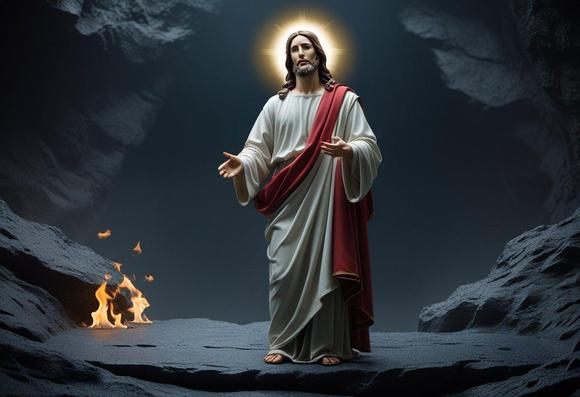
When the Messiah yielded His spirit, the natural order did not merely witness a death; it registered a rupture. The solar darkness—that mysterious, unnatural veiling of the sun for three hours—was a divine response to a human tragedy.

There is a profound, stinging irony in this darkness. The authorities had conducted their secret trials under the cover of night, working in the shadows to subvert justice and extinguish the “Light of the World.” They believed that by operating in the dark, they could hide their “murderous paths” from the public eye. But when the darkness fell at high noon on Friday, God “out-darkened” them. He took the very element they used for their conspiracy—the dark—and turned it into a cosmic sign of judgment. It was as if the heavens were declaring: “You wanted to operate in the shadows? Here is a darkness you cannot control.”

The Conflict: While the heavens turned dark and the earth split, the Roman Empire and the Temple elite were busy attempting to tighten their grip, placing a cold, official wax seal on the tomb of Jesus. They operated under a profound delusion: that death could be contained, managed, and silenced by human authority.

They needed the news of the resurrected saints suppressed. If the people they killed did not stay dead, the state’s primary tool of control—fear—would vanish. They chose the “murderous path”—the path of suppression, censorship, and denial—to keep their grip on a world that was already beginning to slip away.

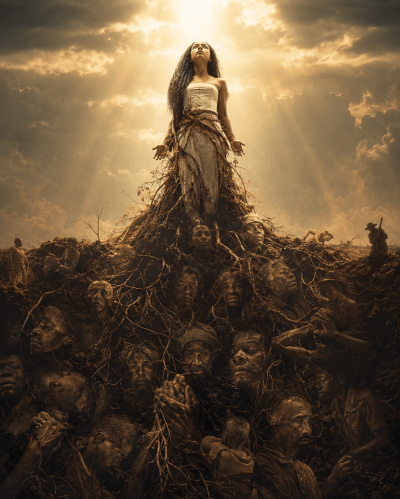
The Living Witnesses: While the authorities stood guard over their cold, sealed tomb—the symbol of their attempt to lock God away—the opened tombs of the saints became places of sudden, thunderous praise. I like to imagine those saints not as silent specters, but as a divine delegation loudly praising God for being raised, testifying that the era of death was ending, and proclaiming that Jesus would soon emerge as the victor. Their worship was the ultimate subversion of authority, transforming graves from places of “unclean” death into sanctuaries of sacred witness. The seal Rome placed on Jesus tomb was designed to keep the dead in, but the praise of the saints made it clear that the life of God was coming out.

The Transformation: The disciples spent those three days in the Upper Room, paralyzed by the same fear the authorities hoped would keep the world quiet. But the Resurrection—the light that broke through the darkness and the power that shattered the stone—changed them. They realized that if the sun itself obeyed the Creator, if the earth itself cried out at His death, and if the graves themselves could not hold the righteous, their fear of the state was unfounded. They moved from the shadows to the public square, turning a “hiding” movement into a battle for the truth.

The Application: Today, we are told that the system is in control and that death is the final authority. The world still tries to enforce its own “darkness” of silence, making us fear the power of the state or the finality of the grave. But the solar darkness and the seismic shaking are a reminder that the physical world is fundamentally responsive to the spiritual reality of Christ’s victory. We are not meant to be a private group of people hiding in an upper room. We are meant to bring the light of the Resurrection into the public square—even when the authorities want to keep it a secret.

Prayer:

Lord,

Thank You for the witnesses in the sky, the earth, and the empty tombs. Thank You for showing us that no human darkness or Roman seal can ever fully contain the power of Your life. You took the darkness of the trial and turned it into the light of judgment and victory. Give us the courage to be witnesses in the streets, to speak of Your triumph even when the world prefers the safety of silence. Remind us that the physical world—from the sun in the heavens to the rocks beneath our feet—is a monument to Your finished work. Help us to refuse to be silenced.

Amen.

To help your readers move from merely reading about these events to deeply contemplating their implications, here is a list of thought-provoking reflections and questions. You can include these at the end of your devotional to guide the reader’s meditation.

Reflection: Digging Deeper

  • The Conflict of Wills: When the authorities placed their official seal on the tomb, they were trying to define the limits of reality. What are the “seals” you place in your own life to keep God’s truth from unsettling your plans?
  • The Power of Sound: We imagined the saints not as silent figures, but as a living choir of praise. If the most fearful moments of your life were suddenly transformed into moments of public praise, how would that change the way you view your current struggles?
  • The Choice of Darkness: The religious leaders chose the “darkness” of secret trials to maintain their control. When we are faced with a difficult truth, are we tempted to retreat into our own “shadows” to hide from what God is doing?
  • The Seismic Reality: The earthquake and the opened graves were physical evidence that the old way of death had lost its grip. In what areas of your life are you waiting for God to “shake” the foundations and open the graves of old fears, habits, or losses?
  • The Shift from Hiding to Witness: The disciples went from cowering in the Upper Room to standing in the public square. What is the difference between believing in the Resurrection and living as if you have seen it with your own eyes?
  • The Final Word: History may be silent on the miracle of the opened graves, but the rocks and the earth kept the record. When you feel like your witness is being ignored or silenced by the world, how does it help to know that God’s truth remains written in the very fabric of creation?

Call to Action: Refusing the Seal of Silence

If the Roman authorities were desperate to keep the tomb sealed and the story buried, it is because they feared what would happen if the light of the Resurrection touched the world. They wanted a “period” at the end of the story, but God provided an “exclamation point.”

Today, I challenge you to break your own “seal of silence.”

  • Identify Your “Upper Room”: What is the area of your life where you have been hiding out of fear, skepticism, or a desire for safety?
  • Speak the Truth: The disciples did not remain in the shadows. They went to the public square and testified to what they had seen. This week, pick one person or one situation where you are being nudged to stand for the truth—even if it is unpopular or goes against the “official” narrative of the world.
  • Become a Living Witness: You are not a spectator to this history; you are a participant in its continuation. Just as the saints arose to witness to the power of God, choose one way to live today that demonstrates that death is not the final word—whether through an act of radical forgiveness, sacrificial love, or unshakeable hope in a hopeless situation.
  • The world will always try to tell you that the tomb is sealed. Your job is to prove them wrong. Step out of the Upper Room, leave the shadows behind, and live like you have seen the grave opened.

    SUPPORTSUBSCRIBECONTACT ME

    D. Bryan King

    Sources

    Disclaimer:

    The views and opinions expressed in this post are solely those of the author. The information provided is based on personal research, experience, and understanding of the subject matter at the time of writing. Readers should consult relevant experts or authorities for specific guidance related to their unique situations.

    Related Posts

    Rate this:

    #BattleOfRealities #BiblicalArchaeology #biblicalCommentary #biblicalSignsAndWonders #biblicalStudies #ChristianDevotional #ChristianWitness #crucifixionOfJesus #defianceOfStatePower #disciplesInTheUpperRoom #divineJudgment #divineRupture #EasterReflections #endingOfDeath #EyewitnessTestimony #faithAndSociety #faithInThePublicSquare #GospelOfMatthewAnalysis #historicalJesusResearch #historicalMystery #HolyCityJerusalem #JesusAgainstRome #JesusResurrection #lightVsDarknessTheology #matthew27 #openingOfTheGraves #overcomingFear #PentecostTransformation #powerOfTheCross #resurrectionPower #RomanSealOnJesusTomb #saintsRaisedFromTheDead #scriptureMeditation #SecondTemplePeriod #seismicSignsOfCrucifixion #spiritualResilience #theologicalIronies #theologicalReflection #witnessToTheResurrection
    The question 'Why Did Jesus Go to Hell?' sparks deep theological discussion. This article offers a thoughtful exploration, moving beyond simple answers to consider the profound significance. Was it a journey of punishment, or a triumphal act demonstrating victory over death and proclaiming freedom to those held captive? It's a cornerstone of Christian understanding worth reflecting on. #JesusChrist #TheologicalReflection #VictoryOverDeath #ChristianFaith

    🔗 https://www.midsouthpresbytery.org/why-did-jesus-go-to-hell/

    The Ascendents

    Ancestry, Memory, Humanity, and the Upward Calling of the Living

    Ascendent by kmls

    We have been taught to say that we are descended from those who came before us.

    The word is not wrong. It is genealogically useful. It traces the stream from the spring, the branch from the trunk, the child from the parent, the living from the dead. It tells us that we are not self-made, not self-originating, not isolated sparks floating in the void. We come from somewhere. We are carried into being by names, bloodlines, migrations, accidents, loves, wounds, prayers, hungers, wars, fields, fires, and forgotten hands.

    Yet the word troubles me.

    For to say that we are descended may also suggest a downward motion, as though we have fallen from some ancestral height. It can feel as if the past stands above us in solemn judgment, and we, the living, are merely the lower remainder: diminished copies, scattered seed, thin-blooded heirs of stronger people.

    We speak of descent as if we are always coming down.

    Down from the fathers.
    Down from the mothers.
    Down from the old country.
    Down from Eden.
    Down from glory.
    Down from the dead.

    But what if the truth is not only that we descend from them?

    What if we ascend from them?

    What if we are not the falling away of our ancestors, but their rising continuation?

    What if we are the place where the buried become conscious, where the forgotten become remembered, where the unfinished become possible, where the dead are not merely behind us but beneath us — not as a weight dragging us downward, but as roots pressing life upward through the dark?

    To be human is not simply to be descended.

    To be human is to be ascendent.

    Not ascendant in the arrogant sense. Not ascendant as empire is ascendant, not as a conqueror ascends a throne, not as a nation ascends by trampling another underfoot, not as wealth ascends by feeding upon the poor, not as the celebrated ascend by making the nameless disappear.

    That is false ascendancy.

    That is Babel.

    That is the tower built upward by those who refuse to look downward at the bodies embedded in its bricks.

    The ascendancy I mean is humbler, older, stranger, and holier. It is the rising of life from soil. It is the green blade through the graveyard. It is memory becoming mercy. It is grief becoming wisdom. It is ancestry becoming vocation.

    We are not above our ancestors because we are better than they were.

    We are above them because they are beneath us as foundation.

    The child stands higher than the parent only because the parent has bent low.

    The living stand higher than the dead only because the dead have become earth.

    Every generation is lifted by those who are no longer visible.

    This is the first doctrine of the Ascendents: we rise from what has been buried.

    We rise from bodies and stories. We rise from names spoken and names erased. We rise from villages burned and fields planted. We rise from ships, cabins, kitchens, trenches, meetinghouses, reservations, prisons, refugee roads, hospital rooms, schoolhouses, barns, factories, cemeteries, and quiet beds where the dying whispered blessings no one wrote down.

    We rise from all of it.

    Not only from glory.
    Not only from virtue.
    Not only from noble sacrifice.

    We rise also from sin.

    This is what makes ascent morally dangerous.

    For our ancestors do not hand us only wisdom. They hand us wounds. They do not give us only courage. They give us cowardice disguised as prudence, prejudice disguised as tradition, violence disguised as necessity, greed disguised as providence, silence disguised as peace.

    To be ascendent is not to romanticize the past.

    It is to redeem it by telling the truth.

    A person who worships their ancestors remains trapped beneath them. A person who despises their ancestors cuts themselves off from their own roots. But a person who honors their ancestors truthfully becomes capable of rising.

    Honor is not flattery.

    Honor is not nostalgia.

    Honor is the severe mercy of remembrance.

    To honor those before us is to receive what was good, repent of what was evil, grieve what was broken, and carry forward what was unfinished.

    We are the living edge of their becoming.

    We are their unresolved sentence.

    We are their prayer still traveling.

    We are their question still being answered.

    This means that the past is not dead in the simple way we imagine. It is not gone merely because the bodies are gone. The past continues to move through us as habit, language, land, fear, blood pressure, lullaby, recipe, doctrine, posture, accent, suspicion, hope, inheritance, and unexamined reflex.

    History does not stay in books.

    History enters the nervous system.

    A war may end, yet its tremor continues in the children of the children of those who survived it. A displacement may be recorded as an event, yet the hunger for home may live for centuries. A massacre may be omitted from the official monument, yet the ground remembers. A church may repent in words while its architecture still faces the wrong direction. A family may never speak of grief, yet every child learns how to lower the voice around sorrow.

    The dead are not silent.

    They speak in us.

    The question is whether we will listen.

    The Ascendent is one who listens downward in order to live upward.

    This is not ancestor worship. It is ancestor responsibility.

    Nor is it progressivism in its shallow form. Progress, as commonly preached, often imagines time as a ladder on which the present naturally stands above the past. It assumes that because we come later, we must be wiser. This is foolishness. Chronology is not sanctification. The future can be more brutal than the past. Technology can amplify barbarism. A people may move forward in time while moving backward in soul.

    No, ascent is not automatic.

    Humanity does not rise merely by surviving.

    We rise only when remembrance becomes transformation.

    We rise when the grief of one generation becomes the compassion of the next.

    We rise when the violence of one generation becomes the refusal of the next.

    We rise when the silence of one generation becomes the testimony of the next.

    We rise when the buried cries of the forgotten become the moral hearing of the living.

    “The blood of your brother cries out from the ground.”

    That ancient sentence is the foundation of all history.

    The ground is not mute. The earth is not neutral. Soil is archive. Dust is witness. Every field has its dead. Every town has its omitted chapter. Every nation has its sanctified lie. Every family has its locked room. Every monument has a shadow. Every victory has a graveyard of the unnamed.

    The Ascendent does not merely ask, “Who were my ancestors?”

    The Ascendent asks, “Whose blood is beneath my feet?”

    Not because guilt is the final word.

    Guilt alone can paralyze. Shame alone can distort. Accusation alone can become another form of vanity, where the living make themselves dramatic by endlessly displaying the wounds of the dead.

    The purpose of remembering is not to become impressive in our sorrow.

    The purpose of remembering is to become faithful in our living.

    To be ascendent is to understand that I am not an isolated self. I am a crossing point. I am a confluence. I am made of many streams, some clear, some polluted, some holy, some poisoned, all meeting in the temporary river of my life.

    My task is not to pretend the waters are pure.

    My task is to help them run cleaner through me.

    This may be the deepest meaning of repentance: not self-hatred, but generational purification. Not the rejection of one’s people, but the healing of what one has received from them. Not a descent into despair, but an ascent into truth.

    Repentance is how ancestry becomes possibility.

    Without repentance, inheritance becomes repetition.

    Without remembrance, repentance becomes vague.

    Without love, remembrance becomes accusation.

    Without courage, love becomes sentiment.

    The Ascendent must hold all four together: remembrance, repentance, love, and courage.

    Only then can the past become seed rather than chain.

    There is also a personal meaning here.

    Each of us carries within ourselves earlier selves. The child, the adolescent, the wounded one, the ambitious one, the ashamed one, the hopeful one, the foolish one, the frightened one, the one who failed, the one who survived. We often speak as if we have descended from those selves into disappointment. We look back and say, “I was once more alive. I was once more promising. I was once closer to what I might have been.”

    But perhaps we also ascend from our former selves.

    Perhaps every earlier self, even the embarrassed and broken ones, is part of the root system.

    I rise from the child who dreamed.

    I rise from the young person who misunderstood.

    I rise from the failure that humbled me.

    I rise from the wound that opened me.

    I rise from the grief that deepened me.

    I rise from the fear that taught me how much I needed grace.

    Nothing is wasted if it can be transfigured.

    This does not mean everything was good. Some things were evil. Some things should not have happened. Some wounds are not secret blessings. Some suffering does not ennoble; it damages. Some losses remain losses.

    But even what cannot be justified may still be gathered.

    Even what cannot be called good may still be refused the final word.

    The Ascendent does not say, “All things were good.”

    The Ascendent says, “Even here, I will rise.”

    Not by denial.

    By truth.

    Not by domination.

    By integration.

    Not by forgetting.

    By carrying.

    This is why ascent is not escape. It is not floating away from the earth into disembodied purity. True ascent is rooted ascent. The tree rises because it goes down. The mountain ascends because it is grounded. The resurrected body still bears scars.

    Any spirituality that rises by abandoning the wounded is not ascent but evasion.

    Any politics that rises by erasing the poor is not ascent but conquest.

    Any theology that rises by despising the body is not ascent but contempt.

    Any family story that rises by silencing the inconvenient dead is not ascent but propaganda.

    The true Ascendent rises with scars visible.

    This is where humanity stands.

    We are a species that has learned to fly but not yet learned to kneel. We have ascended into the air, into orbit, into code, into machines of astonishing power, yet our moral imagination often remains tribal, fearful, acquisitive, and easily bewitched by idols. We can split the atom and still cannot share bread. We can map the genome and still cannot honor the stranger. We can remember data forever and forget the dead almost instantly.

    So the question is not whether humanity is technologically ascendant.

    The question is whether humanity is morally ascendent.

    Will we rise from our ancestors or merely repeat them with better tools?

    Will we carry forward their wisdom or only refine their weapons?

    Will we remember the forgotten or continue to build monuments to the victorious?

    Will we become more human, or only more powerful?

    The Ascendents are not those who dominate history.

    They are those who redeem memory.

    They are the ones who refuse to let the common dead remain common in the sense of disposable. They remember the foot soldier beside the general, the farmer beside the statesman, the Indigenous village beneath the colonial map, the mother beneath the family name, the enslaved beneath the plantation ledger, the child beneath the statistic, the refugee beneath the border argument, the prisoner beneath the ideology, the enemy beneath the uniform.

    They understand that every human being is an ancestor of the future.

    This is a terrifying thought.

    How will the future ascend from us?

    What soil are we becoming?

    Will our lives be root or rubble?

    Will those who come after us have to heal from us, or will they be strengthened by us?

    Surely both.

    We too will hand down contradiction. We too are mixed. We too are capable of tenderness and harm, courage and cowardice, insight and blindness. The Ascendent is not pure. The Ascendent is accountable.

    Perhaps that is the most we can ask of any generation: not purity, but accountability; not perfection, but faithful transformation; not innocence, but the courage to become better ancestors.

    To be an Ascendent, then, is to live with one’s face turned in two directions.

    One face turns downward toward the dead and says:

    I remember you.
    I receive you.
    I grieve you.
    I forgive what can be forgiven.
    I name what must be named.
    I will not pretend you were gods.
    I will not pretend you were monsters only.
    I will carry what was holy.
    I will heal what was harmed.
    I will not let your suffering vanish.
    I will not let your sins rule me.

    The other face turns upward toward the unborn and says:

    I am trying.
    I am unfinished.
    I am clearing what I can.
    I am planting what I may never see.
    I am refusing some inheritance so you need not bear it.
    I am preserving some inheritance so you may be nourished by it.
    I am becoming soil for your rising.

    This is the holy middle place of the living.

    We are between the buried and the unborn.

    We are the narrow bridge of breath between memory and hope.

    We are the Ascendents.

    Not because we have arrived.

    Because we are called upward.

    Not upward away from the world, but upward into fuller humanity.

    Upward into mercy.

    Upward into truth.

    Upward into responsibility.

    Upward into reconciliation.

    Upward into the difficult radiance of becoming worthy of the dead.

    And perhaps this is why the dead haunt us.

    They do not haunt us merely because they are restless.

    They haunt us because we are.

    They haunt us because something in them remains unfinished in us. They haunt us because the lie has not yet been confessed, the grave has not yet been marked, the name has not yet been spoken, the wound has not yet become wisdom, the inheritance has not yet become blessing.

    The haunting is not only terror.

    It is vocation.

    The dead rise in us so that we may rise from them.

    And if we listen closely enough, beneath every field, beneath every town, beneath every family tree, beneath every national myth, beneath every human triumph, there is a murmuring from the ground. It is not only accusation. It is not only lament. It is also invitation.

    Remember us.

    Tell the truth.

    Rise better.

    Become what we could not.

    Carry us toward the light.

    So let us no longer say only that we are descended.

    Let us say also that we are ascended from.

    Ascended from dust.
    Ascended from grief.
    Ascended from labor.
    Ascended from women whose names were not recorded.
    Ascended from men who did not know how to speak their sorrow.
    Ascended from children who died too soon.
    Ascended from migrants, prisoners, farmers, singers, sinners, saints, cowards, prophets, fools, and friends.
    Ascended from the blood that cried out.
    Ascended from the prayers that rose before us.
    Ascended from the earth that holds us all.

    And let us become, for those who follow, not a ceiling but a root.

    Not a burden but a blessing.

    Not a curse but a calling.

    Not the final height, but one more living terrace on the long climb of mercy.

    For humanity is not yet finished.

    We are still rising.

    We are still being judged by the dead.

    We are still being summoned by the unborn.

    We are still becoming the answer to our ancestors’ unanswered prayers.

    We are The Ascendents.

    #ancestors #ancestry #ascendents #becoming #creativeNonfiction #generationalHealing #grief #Hope #humanEvolution #Humanity #inheritance #memory #moralImagination #philosophy #PropheticEssay #reflection #remembrance #roots #sacredMemory #soilAndSpirit #SpiritualReflection #theDead #theUnborn #theologicalReflection #vocation

    8.21.25 Beardcast on Luke 13:10-17

    This week on the Beardcast Matt and Zach look at Luke 13:10-17. Check out their thoughts on orthodoxy (right belief) vs orthopraxy (right practice). Connect with the Bearded Theologians at You can find the Beardcast on Youtube, Stitcher, Apple, Spotify, Castbox, or wherever else you listen to Podcast. #BeardedTheologians #Beardcast #Theology #TheologicalDiscussion #TheologicalReflection #Podcast #Vodcast #ReligiousDiscussion #Faith

    http://beardedtheologians.com/2025/08/21/8-21-25-beardcast-on-luke-1310-17/?utm_source=mastodon&utm_medium=jetpack_social

    8.21.25 Beardcast on Luke 13:10-17

    This week on the Beardcast Matt and Zach look at Luke 13:10-17. Check out their thoughts on orthodoxy (right belief) vs orthopraxy (right practice). Connect with the Bearded Theologians at You can …

    Bearded Theologians