 Bryan King
The Rocks Cry Out, The Sun Veils Its Face
798 words, 4 minutes read time.
Now from the sixth hour there was darkness over all the land unto the ninth hour.
Matthew 27:45And the graves were opened; and many bodies of the saints which slept arose… and went into the holy city, and appeared unto many.
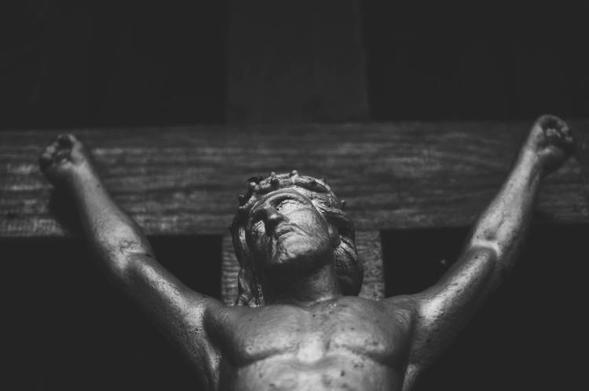
Matthew 27:52–53When the Messiah yielded His spirit, the natural order did not merely witness a death; it registered a rupture. The solar darkness—that mysterious, unnatural veiling of the sun for three hours—was a divine response to a human tragedy.
There is a profound, stinging irony in this darkness. The authorities had conducted their secret trials under the cover of night, working in the shadows to subvert justice and extinguish the “Light of the World.” They believed that by operating in the dark, they could hide their “murderous paths” from the public eye. But when the darkness fell at high noon on Friday, God “out-darkened” them. He took the very element they used for their conspiracy—the dark—and turned it into a cosmic sign of judgment. It was as if the heavens were declaring: “You wanted to operate in the shadows? Here is a darkness you cannot control.”
The Conflict: While the heavens turned dark and the earth split, the Roman Empire and the Temple elite were busy attempting to tighten their grip, placing a cold, official wax seal on the tomb of Jesus. They operated under a profound delusion: that death could be contained, managed, and silenced by human authority.
They needed the news of the resurrected saints suppressed. If the people they killed did not stay dead, the state’s primary tool of control—fear—would vanish. They chose the “murderous path”—the path of suppression, censorship, and denial—to keep their grip on a world that was already beginning to slip away.
The Living Witnesses: While the authorities stood guard over their cold, sealed tomb—the symbol of their attempt to lock God away—the opened tombs of the saints became places of sudden, thunderous praise. I like to imagine those saints not as silent specters, but as a divine delegation loudly praising God for being raised, testifying that the era of death was ending, and proclaiming that Jesus would soon emerge as the victor. Their worship was the ultimate subversion of authority, transforming graves from places of “unclean” death into sanctuaries of sacred witness. The seal Rome placed on Jesus tomb was designed to keep the dead in, but the praise of the saints made it clear that the life of God was coming out.
The Transformation: The disciples spent those three days in the Upper Room, paralyzed by the same fear the authorities hoped would keep the world quiet. But the Resurrection—the light that broke through the darkness and the power that shattered the stone—changed them. They realized that if the sun itself obeyed the Creator, if the earth itself cried out at His death, and if the graves themselves could not hold the righteous, their fear of the state was unfounded. They moved from the shadows to the public square, turning a “hiding” movement into a battle for the truth.
The Application: Today, we are told that the system is in control and that death is the final authority. The world still tries to enforce its own “darkness” of silence, making us fear the power of the state or the finality of the grave. But the solar darkness and the seismic shaking are a reminder that the physical world is fundamentally responsive to the spiritual reality of Christ’s victory. We are not meant to be a private group of people hiding in an upper room. We are meant to bring the light of the Resurrection into the public square—even when the authorities want to keep it a secret.
Prayer:
Lord,
Thank You for the witnesses in the sky, the earth, and the empty tombs. Thank You for showing us that no human darkness or Roman seal can ever fully contain the power of Your life. You took the darkness of the trial and turned it into the light of judgment and victory. Give us the courage to be witnesses in the streets, to speak of Your triumph even when the world prefers the safety of silence. Remind us that the physical world—from the sun in the heavens to the rocks beneath our feet—is a monument to Your finished work. Help us to refuse to be silenced.
Amen.
To help your readers move from merely reading about these events to deeply contemplating their implications, here is a list of thought-provoking reflections and questions. You can include these at the end of your devotional to guide the reader’s meditation.
Reflection: Digging Deeper
- The Conflict of Wills: When the authorities placed their official seal on the tomb, they were trying to define the limits of reality. What are the “seals” you place in your own life to keep God’s truth from unsettling your plans?
- The Power of Sound: We imagined the saints not as silent figures, but as a living choir of praise. If the most fearful moments of your life were suddenly transformed into moments of public praise, how would that change the way you view your current struggles?
- The Choice of Darkness: The religious leaders chose the “darkness” of secret trials to maintain their control. When we are faced with a difficult truth, are we tempted to retreat into our own “shadows” to hide from what God is doing?
- The Seismic Reality: The earthquake and the opened graves were physical evidence that the old way of death had lost its grip. In what areas of your life are you waiting for God to “shake” the foundations and open the graves of old fears, habits, or losses?
- The Shift from Hiding to Witness: The disciples went from cowering in the Upper Room to standing in the public square. What is the difference between believing in the Resurrection and living as if you have seen it with your own eyes?
- The Final Word: History may be silent on the miracle of the opened graves, but the rocks and the earth kept the record. When you feel like your witness is being ignored or silenced by the world, how does it help to know that God’s truth remains written in the very fabric of creation?
Call to Action: Refusing the Seal of Silence
If the Roman authorities were desperate to keep the tomb sealed and the story buried, it is because they feared what would happen if the light of the Resurrection touched the world. They wanted a “period” at the end of the story, but God provided an “exclamation point.”
Today, I challenge you to break your own “seal of silence.”
The world will always try to tell you that the tomb is sealed. Your job is to prove them wrong. Step out of the Upper Room, leave the shadows behind, and live like you have seen the grave opened.
SUPPORTSUBSCRIBECONTACT MED. Bryan King
Sources
- Matthew 27:51–53: Meaning, Genre, Intertextuality, Theology, and Reception History
- Is Matthew 27:51-53 Historical? – Evidence Unseen
- Jesus, the Temple, and the Chief Priests (Cambridge University Press)
- New Light on Jesus’ Last Week (Our Rabbi Jesus)
- God and Empire: Jesus Against Rome, Then and Now (John Dominic Crossan)
- Against Empire: A Yoderian Reading of Romans
- Wicked Priest (Dead Sea Scrolls Context)
- Jesus the Wicked Priest: Book Analysis
- Ancient Jewish Tombs and Burial Customs (Cambridge University Press)
- Matthew 27:51-53 (Biblical Text)
- The Crucifixion of Jesus (Biblical Archaeology Society)
- The Death of the Messiah: A Commentary (Raymond E. Brown)
- Jesus and the Ossuaries (Craig A. Evans)
- Stone and Dung, Oil and Spit: Jewish Daily Life in the Time of Jesus (Jodi Magness)
- Roll Back the Stone: Death and Burial in the World of Jesus (Byron McCane)
- Ancient Jewish and Christian Perceptions of Crucifixion (David Chapman)
- The Necropolis of Jerusalem in the Second Temple Period (Amos Kloner and Boaz Zissu)
- Second Temple Period Judaism (Oxford Bibliographies)
- Dead Sea Scrolls (Encyclopaedia Britannica)
- The Second Temple Period (Jewish Virtual Library)
- Temple Priests (Bible Odyssey)
- Baker Exegetical Commentary on the New Testament: Matthew (David Turner)
- Matthew (New International Greek Testament Commentary) (John Nolland)
- The Historical Figure of Jesus (E.P. Sanders)
- A Marginal Jew: Rethinking the Historical Jesus (John P. Meier)
- Jesus and the Victory of God (N.T. Wright)
- The Resurrection of the Son of God (N.T. Wright)
- The Historical Jesus: The Great Debate (Various Authors)
- Ancient Jewish Burial Customs (Various Academic Reviews)
- Jewish Burial Practices in the Second Temple Period (Brill Academic)
Disclaimer:
The views and opinions expressed in this post are solely those of the author. The information provided is based on personal research, experience, and understanding of the subject matter at the time of writing. Readers should consult relevant experts or authorities for specific guidance related to their unique situations.
Related Posts
Rate this:
#BattleOfRealities #BiblicalArchaeology #biblicalCommentary #biblicalSignsAndWonders #biblicalStudies #ChristianDevotional #ChristianWitness #crucifixionOfJesus #defianceOfStatePower #disciplesInTheUpperRoom #divineJudgment #divineRupture #EasterReflections #endingOfDeath #EyewitnessTestimony #faithAndSociety #faithInThePublicSquare #GospelOfMatthewAnalysis #historicalJesusResearch #historicalMystery #HolyCityJerusalem #JesusAgainstRome #JesusResurrection #lightVsDarknessTheology #matthew27 #openingOfTheGraves #overcomingFear #PentecostTransformation #powerOfTheCross #resurrectionPower #RomanSealOnJesusTomb #saintsRaisedFromTheDead #scriptureMeditation #SecondTemplePeriod #seismicSignsOfCrucifixion #spiritualResilience #theologicalIronies #theologicalReflection #witnessToTheResurrection
 freebiblestudyhub
 Intentional Faith