 Steve Dustcircle 🌹
In a Landmark Study, #Scientists Discover Just How Much #Earth’s Temperature Has Changed Over Nearly 500 Million Years
Researchers show the average #surfacetemperature on our #planet has shifted between 51.8 to 96.8 degrees Fahrenheit
In a Landmark Study, #Scientists Discover Just How Much #Earth’s Temperature Has Changed Over Nearly 500 Million Years
Researchers show the average #surfacetemperature on our #planet has shifted between 51.8 to 96.8 degrees Fahrenheit
Does anyone know if there is historical temperature comparison data anywhere for the Greek islands?
Climate stripes exist for "all of Greece" and "Athens", but not for any of the larger islands. Everything else I can find is just "this is what the climate is like there" info for tourists, without a temporal axis.
I would ideally like to compare Rhodes in the 80s to today, or the last decade.
#data #surfaceTemperature #airTemperature #greece #greek #rhodes #rhodos #greekIslands #Ρόδος #Ελλάδα
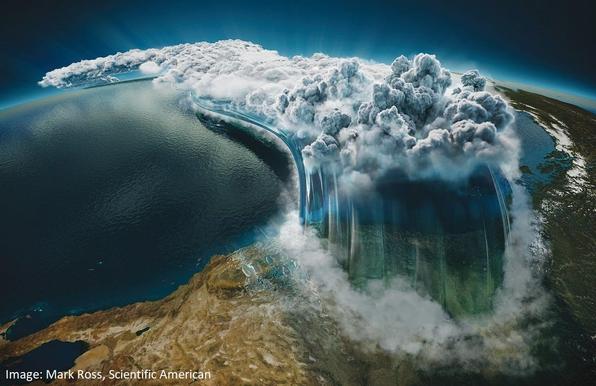
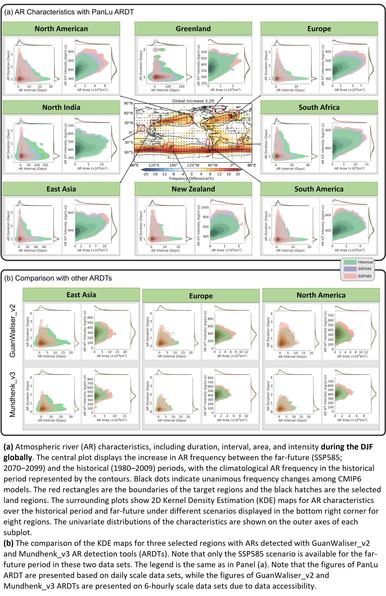
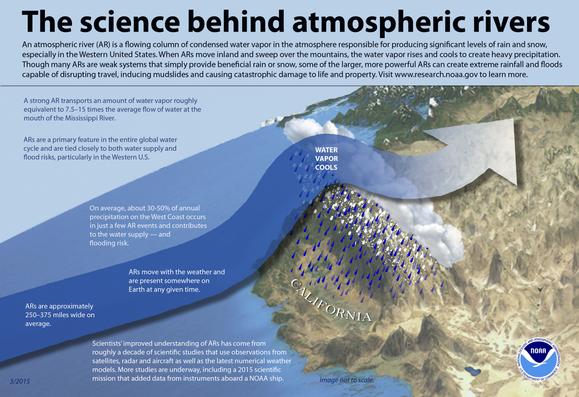
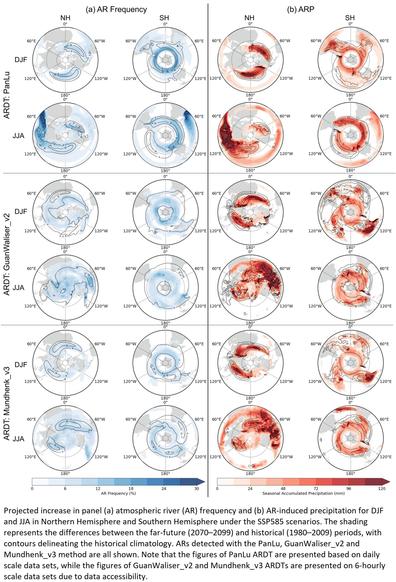


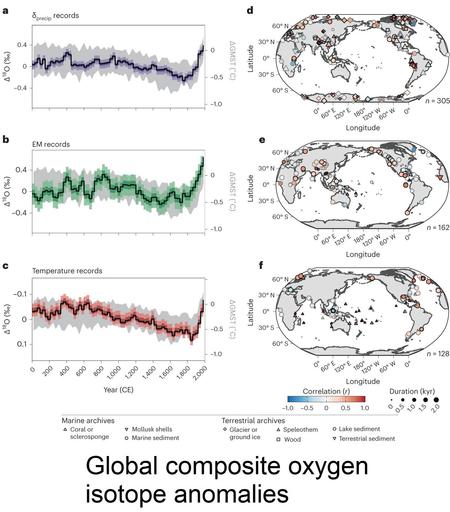
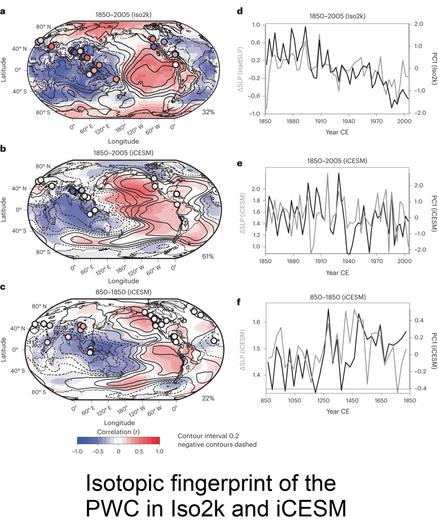

Global temperature fluctuations during the last 2,000 years caused consistent changes in ocean evaporation and atmospheric moisture condensation processes, reflected in coherent water isotope signals in a large compilation of proxy records.
"Record shattering: #Earth had its #hottest #July in 174 years -
Global sea surface temperature hit record high for 4th-consecutive month
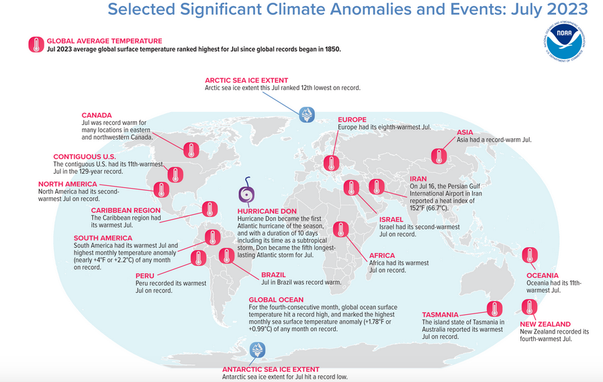
Earth just roasted under its hottest July on record, according to scientists from NOAA’s National Centers for Environmental Information (NCEI). For the fourth-consecutive month, the global ocean surface temperature also hit a record high.
#Climate by the numbers - July 2023 - The average global surface temperature in July was 2.02 degrees F (1.12 degrees C) above average, ranking it as the warmest July in NOAA’s 174-year record. Because July is the globe’s warmest month of the year from a climatological perspective, July 2023 was also likely Earth’s warmest month on record.
July 2023 was the first time an average July temperature exceeded 1.8 degrees F (1.0 degree C) above the long-term average. Also of note, last month was 0.36 of a degree F (0.20 of a degree C) warmer than the previous July record from 2021. July 2023 marked the 47th-consecutive July and the 533rd-consecutive month with temperatures above the 20th-century average.
For the fourth-consecutive month, the global ocean surface temperature hit a record high as El Niño conditions that emerged in June continued into July. Globally, July 2023 set a record for the highest monthly sea surface temperature anomaly — which indicates how much warmer or cooler temperatures are from the long-term average — of any month in NOAA’s climate record, with an anomaly of 1.78 degrees F or 0.99 of a degree C. On July 13, NOAA’s Climate Prediction Center issued a statement announcing a greater than 95% chance that El Nino will continue through winter in the Northern Hemisphere.
https://www.noaa.gov/news/record-shattering-earth-had-its-hottest-july-in-174-years
#ClimateEmergency #ClimateCrisis #Klima #Klimakrise #Climate #ClimateDiary #SurfaceTemperature #SeaSurfaceTemperature #SST #Oceans #Ocean #OceanWarming #GlobalWarming
#Klimaneutralität #Klimaschutz #ClimateCrisis #Weltmeere #Erwärmung #Erderwärmung #Ozeane #Briefing 204 #KER #Klima #Energie #Report #USA #China #Germany #Guyana #Bhutan #CO2 #Treibhausgase #Methan #Artenvielfalt #Korallenriffe #NOAA #SurfaceTemperature
Die schleichende Erwärmung der Weltmeere (Statista + Kommentar) +++ Welche Länder wollen bis wann klimaneutral sein? | Briefing 204 | Wirtschaft, Klima-Energie-Report
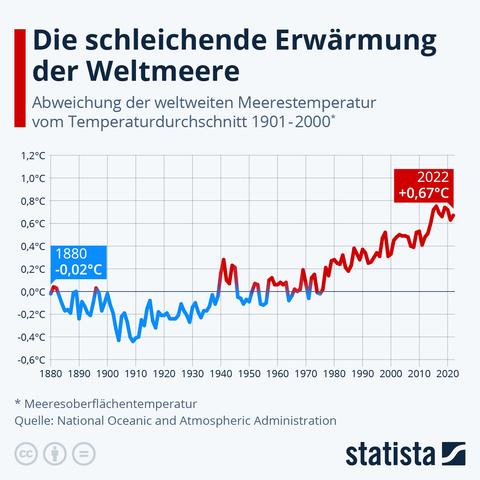

Briefing 204 | KER, Wirtschaft, Klimaneutralität, Erwärmung der Weltmeere In einigen Bundesländern ist heute Feiertag, herzlichen Gruß an unsere Freund:innen, die davon profitieren. In Berlin ist k…
‘Headed off the charts’: world’s #ocean #SurfaceTemperature hits record high | Oceans | The Guardian
#Environment #GlobalWarming #ClimateChange #Biodiversity #Ecology
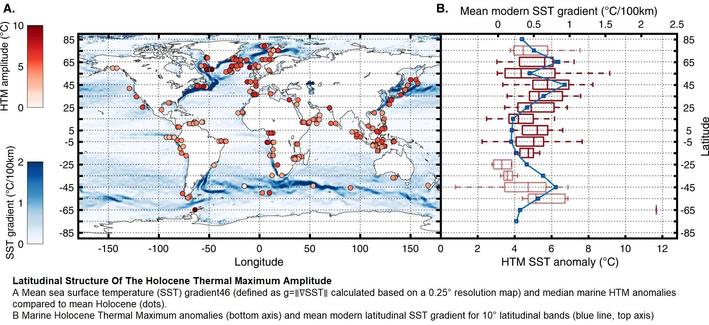
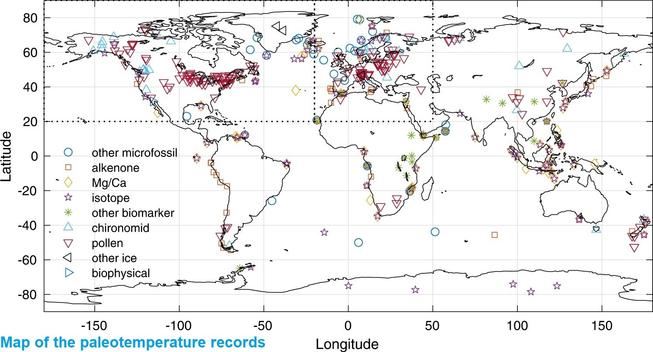

We rely on climate models to predict the future, but models cannot be fully tested as climate observations rarely extend back more than 150 years. Understanding the Earth's past climate history across a longer period gives us an invaluable opportunity to test climate models on longer timescales and reduce uncertainties in climate predictions.
 dasgrueneblatt
 💧🌏 Greg Cocks
 Ariadne
 Der Wahlberliner
 Khurram Wadee ✅