The #depaving groups reclaiming #UrbanGreenSpace

by Jennifer Cole, Mar 21, 2026

"It took two years, but finally, in 2025, Jean Norwood’s dream of turning the parking lot at #MorningstarMissionary Baptist Church in #PortlandOR, into a play area for children and a #FoodGarden with #FruitTrees came true. Working with Norwood to bring her vision to reality was #DepavePortland. Since 2008, the Portland-based nonprofit has been digging up paved surfaces, freeing the trapped soil underneath and #regreening the newly reclaimed space.

"There are an estimated 2 billion parking places in the United States, an area comparable in size to the entire state of Vermont. That figure does not include #sidewalks, schoolyards or other paved surfaces, which, along with #CarParks, trap heat, intensifying the urban #HeatIsland effect in some cases by up to 10 degrees Fahrenheit compared with surrounding areas. '#Asphalt makes your space hotter in the summertime, and colder in the wintertime,' Norwood says.

"When asphalt is removed and the soil beneath is exposed, those dynamics begin to reverse. The ground can absorb and store #carbon, and #rainwater is able to filter into the soil rather than running off into sewers. #Trees and #gardens can be planted that provide shade and a #habitat is created for #birds, #insects and other #wildlife.

"This was Norwood’s dream for the parking lot at Morningstar. Going from concrete to fruit trees, though, takes patience. 'First,' she says, 'there was about six months of planning and submitting requests for permitting.'

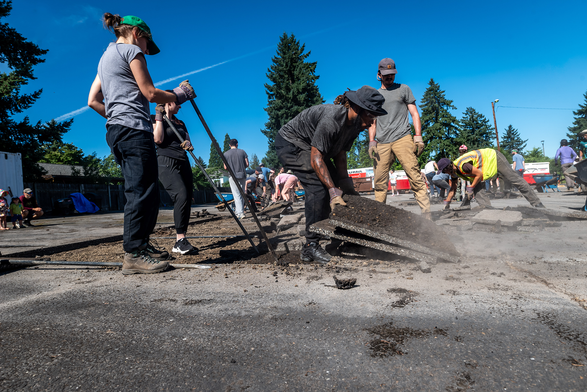
"Depave guided Norwood and the church through all of it, even seeking out grants to help cover costs. When it came time to depave the parking lot, volunteers recruited by Depave used crowbars, shovels, bare hands and wheelbarrows to lift out the pavement and daylight the soil beneath. Depave also worked with Morningstar on finding contractors to build the play area and raised #GardenBeds, and on choosing the plants for each newly #regreened space. It’s a process Depave has perfected at more than 82 sites across Portland."

https://www.rewildingmag.com/the-depaving-groups-reclaiming-urban-green-space/

#SolarPunkSunday #MoreGreenCities #GreenerCities #RewildingCities #MoreParksLessParkingLots #WildlifeHabitat

The Depaving Groups Reclaiming Urban Green Space

These forward-thinking organizations have depaved parking lots – and turned them into paradise.

Rewilding Magazine
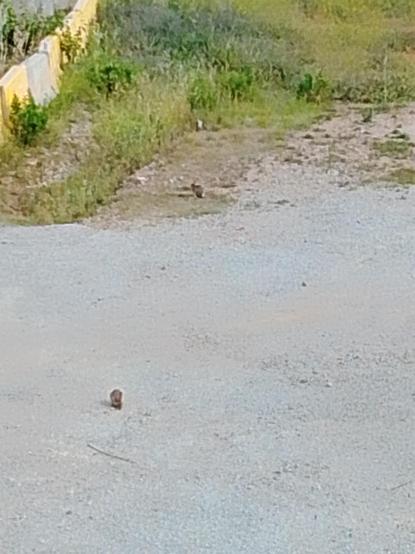
Papallones poques, peró fa dues setmanes vaig veure una polla d'aigua als jardins de Palau reial i avui conills al costat de la Maquinista. CONILLS, en plural o.o
#rewildingcities
@CianKelly Welcome to the Mastodon universe. Enjoy the views. Your people are here representing the wildlife of the world. #rewilding, #rewildingcities.

8 Cities #Rewilding Their Urban Spaces

by Linnea Harris, Jun 15, 2021

"In the midst of a massive, global loss of nature, cities around the world are finding ways to protect and expand open spaces and '#rewild' their communities.

"Between 2001 and 2017, the United States alone lost 24 million acres of natural area – or the equivalent of nine Grand Canyon national parks – largely due to housing sprawl, agriculture, energy development, and other anthropogenic factors, according to a 2019 Reuters report. Every day, 6,000 acres of open space – parks, forests, farms, grasslands, ranches, streams, and rivers – are converted for other uses.

"Rewilding restores an area to its original, uncultivated state, shifting away from the centuries-long practice of controlling and managing nature for human need. It incorporates both the old and the new, allowing wildness to reclaim an area and/or incorporating new elements of architectural or landscape design, like growing greenery on the facades of buildings.

"The practice of rewilding is frequently carried out in wild areas; many projects aim to restore biodiversity in an ecosystem, often by reintroducing animal species that are high on the food chain, which in turn stabilizes lower species. One of the most famous cases of rewilding is the reintroduction of wolves to Yellowstone National Park in 1995.

"Cities too have begun rewilding; but, although these were spaces were once as wild as Yellowstone, introducing apex predators to New York City or Tokyo might not be the best method for success. Rewilding in urban areas might instead include reintroducing native plant species, building parks on empty lots, incorporating more biophilic design when building new structures, or simply allowing nature to reclaim space. A major draw to rewilding in urban areas is the proven positive impact of nature on human health – particularly for city-dwellers with less access to outdoor spaces."

Read more:
https://www.ecowatch.com/cities-rewilding-2653383263.html
#RewildingCities #GreenCities #Greenspace #SolarPunkSunday

8 Cities Rewilding Their Urban Spaces - EcoWatch

In the midst of a massive, global loss of nature, cities around the world are finding ways to protect and expand open spaces and "rewild" their communities. Between 2001 and 2017, the United States alone lost 24 million acres of natural area – or the equivalent of nine Grand Canyon national parks – largely due to housing sprawl...

EcoWatch
US launches $1bn tree-planting scheme to mitigate effects of climate crisis

Federal effort will focus on marginalized areas in all parts of country and aims to reduce extreme heat and benefit health

The Guardian