#Michigan - Oakland County #RainSmart program expected to keep millions of gallons of #water out of #sewer - here's how

By Amber Eikenberry
Published January 27, 2026 12:51pm

OAKLAND COUNTY, Mich. (FOX 2) - "Two years of helping Oakland County residents install green infrastructure is expected to keep 1.4 million gallons of stormwater out of the sewer system annually.

"During the two-year RainSmart Rebates pilot program, residents located in the George W. Kuhn Drain Drainage District were able to receive money to install rain gardens, rain barrels, and native trees to their yards.

Participants were able to install one garden, up to two trees, and two rain barrels after an evaluation of their property to determine which infrastructure would work best.

By the numbers:

According to Oakland County Water Resources Commissioner Jim Nash, the second year of the program, which started in 2024 and just wrapped up, saw a 22% increase in participation from 2024.

This past year, 379 rain barrels, 199 native trees, and 105 rain gardens were installed.

In 2024, there were 159 rain barrels, 98 trees, and 49 rain gardens installed.

Since the pilot began, nearly 300 residents have participated. A total of more than $176,000 rebates were distributed, with the average participant receiving $500 for their projects.

Why it matters:

Flooding is a major issue in many parts of #MetroDetroit, especially in cities that are part of the #GeorgeWKuhnDrain Drainage District, including all or part of Berkley, Beverly Hills, Birmingham, Clawson, Ferndale, Hazel Park, Huntington Woods, Madison Heights, Oak Park, Pleasant Ridge, Royal Oak, Royal Oak Township, Southfield, and Troy,

This is because it is a combined sewer system. In a combined system, #wastewater and #stormwater both flow through the same pipes, known as gray infrastructure, and go to a wastewater treatment plant.

This means that during periods of intense rain like Metro Detroit has been seeing more frequently, the system can get overwhelmed. The result? Flooded streets and backups into homes.

Also, there is a greater likelihood of contaminants making it into the system. This is a concern even for homes not on a combined sewer system.

Rain barrels, trees, and native plant gardens all help reduce the amount of rainwater that makes it to the sewer system."

Read more:
https://www.fox2detroit.com/news/oakland-county-rainsmart-program-expected-keep-millions-gallons-water-out-sewer-heres-how

#SolarPunkSunday #WaterCollection #Rainbarrels #NativePlants #NativeTrees #RainGardens #TreePlanting
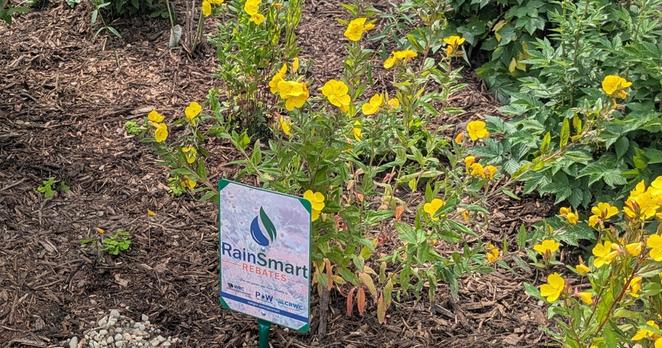
Oakland County RainSmart program expected to keep millions of gallons of water out of sewer - here's how

During the two-year RainSmart Rebates pilot program, Oakland County residents installed hundreds of trees, rain gardens, and rain barrels that will greatly reduce how much stormwater makes it to the sewer system.

FOX 2 Detroit
Punkin and I enjoying the best weather watching spot on our property. #garden #bloomscrolling #rain #louisiana #dogsofmastodon #RainGardens #bromeliads

Bioswale barriers: Better built bicycle protection

While in Nashville we saw numerous bike lanes in the city, particularly near the campuses of Vanderbilt, Belmont, and Lipscomb Universities. Though many were “protected” by striping and reflectors, there was a notable and exciting exception.

Along portions of 12th Avenue South are bike lanes protected by not only concrete curbs, but also bioswales (rain gardens). The bioswales/gardens varied between roughly three and six feet in width with concrete curbs on all sides, except small areas that allowed rainwater to infiltrate into them from the street.

As an avid cyclist who has shied away from street bicycling in recent years due to the ever-present dangers and from knowing far too many fellow riders who have been injured by vehicles, this was the first protective application that appears to truly be “protective.” The average vehicle would have a hard enough time scaling two curbs, let alone making it through the bioswale/rain garden too.

Granted, such a protective format would be more pricey than just striping and reflectors, or simply using bumper stops. But, this design solves multiple issues – cyclist safety, storm water retention, roadside aesthetics, traffic calming,  and heat island reduction.

I sincerely hope Nashville continues to add such protective bioswale barriers throughout the city and that other cities begin employing this type of barrier as well. Kudos to all involved in Nashville for such a great idea and a job well done.

Peace!

#bikes #biking #bioswales #cities #design #Nashville #planning #rainGardens #safety #Tennessee #traffic #transportation

Now that the hibiscus's (hibisci?)have stopped shouting, the various gingers would like your attention #garden #gardening #bloomscrolling #ginger #tropical #RainGardens

How are #NaturalDisaster-resistant design elements integrated into #Solarpunk buildings?

Publication date: 2023-09-02

"In Solarpunk buildings, natural disaster-resistant design elements are integrated through a combination of passive and active design strategies. Here are a few ways in which these elements can be incorporated:

1. Site selection and orientation: Solarpunk buildings are typically situated in areas that are less susceptible to natural disasters like #floods, #earthquakes, or #tsunamis. Careful evaluation of the site's history and potential risks helps in choosing locations that are more resilient. Additionally, the building orientation can be optimized to maximize #NaturalLight and minimize exposure to prevailing #winds or #storms.

2. Structural reinforcements: Solarpunk buildings embrace resilient construction techniques to withstand natural disasters. This may include reinforced foundations, earthquake-resistant designs, hurricane-resistant materials, and robust structural systems that can withstand high winds, seismic activity, or even #ExtremeWeather events.

3. #GreenRoofs and #RainwaterHarvesting: Green roofs, which incorporate vegetation on the rooftop, offer several benefits when it comes to natural disaster resilience. They can help mitigate stormwater runoff, reducing the strain on existing drainage systems during heavy rainfalls or floods. Additionally, rainwater harvesting systems can be implemented to collect and store rainwater for future use, serving as an alternative water source during emergencies.

4. Passive climate control: Solarpunk design emphasizes #PassiveCooling and heating strategies to reduce energy consumption and reliance on mechanical systems. Natural ventilation through well-placed windows, louvers, or #RoofVents can help regulate indoor temperatures. By not relying heavily on air conditioning units, Solarpunk buildings can maintain habitability even during power outages caused by natural disasters.

5. #RenewableEnergy systems: Solarpunk buildings integrate renewable energy systems like solar panels or wind turbines to generate electricity on-site. This reduces dependence on centralized energy grids, making the building more self-sufficient and resilient in the face of power disruptions caused by natural disasters. Battery storage systems can also be incorporated to store excess energy and provide backup power during emergencies.

6. Water management and flood-resistance: Solarpunk buildings employ strategies such as permeable paving, #RainGardens, and water retention ponds to manage stormwater. These features help minimize the risk of flooding and prevent damage caused by heavy rains or #ExtremeWeather events.

"By combining these design elements, Solarpunk buildings aim to create sustainable and resilient structures that can better withstand the challenges posed by natural disasters."

Source:
https://houses-apartments.com/en/architecture/solarpunk-architecture/how-are-natural-disaster-resistant-design-elements-integrated-into-solarpunk-buildings

#SolarPunkSunday #Architecture #ClimateChange #ArchitecturalDesign

How are natural disaster-resistant design elements integrated into Solarpunk buildings?

In Solarpunk buildings, natural disaster-resistant design elements are integrated through a combination of passive and active design strategies. Here are

How are natural #DisasterResistant design elements integrated into #Solarpunk buildings?

Publication date: 2023-09-02

"In Solarpunk buildings, #NaturalDisaster-resistant design elements are integrated through a combination of passive and active design strategies. Here are a few ways in which these elements can be incorporated:

1. Site selection and orientation: Solarpunk buildings are typically situated in areas that are less susceptible to natural disasters like floods, earthquakes, or tsunamis. Careful evaluation of the site's history and potential risks helps in choosing locations that are more resilient. Additionally, the building orientation can be optimized to maximize natural light and minimize exposure to prevailing winds or storms.

2. Structural reinforcements: Solarpunk buildings embrace resilient construction techniques to withstand natural disasters. This may include reinforced foundations, #earthquake-resistant designs, #hurricane-resistant materials, and robust structural systems that can withstand high winds, seismic activity, or even #ExtremeWeather events.

3. Green roofs and rainwater harvesting: Green roofs, which incorporate vegetation on the rooftop, offer several benefits when it comes to natural disaster resilience. They can help mitigate stormwater runoff, reducing the strain on existing drainage systems during heavy rainfalls or floods. Additionally, rainwater harvesting systems can be implemented to collect and store rainwater for future use, serving as an alternative water source during emergencies.

4. Passive climate control: Solarpunk design emphasizes #PassiveCooling and heating strategies to reduce energy consumption and reliance on mechanical systems. Natural ventilation through well-placed windows, louvers, or roof vents can help regulate indoor temperatures. By not relying heavily on air conditioning units, Solarpunk buildings can maintain habitability even during power outages caused by natural disasters.

5. #Renewable energy systems: Solarpunk buildings integrate renewable energy systems like solar panels or wind turbines to generate electricity on-site. This reduces dependence on centralized energy grids, making the building more self-sufficient and resilient in the face of power disruptions caused by natural disasters. Battery storage systems can also be incorporated to store excess energy and provide backup power during emergencies.

6. Water management and flood-resistance: Solarpunk buildings employ strategies such as permeable paving, #RainGardens, and water retention ponds to manage #stormwater. These features help minimize the risk of #flooding and prevent damage caused by heavy rains or extreme weather events.

"By combining these design elements, Solarpunk buildings aim to create sustainable and resilient structures that can better withstand the challenges posed by natural disasters."

Source:
https://houses-apartments.com/en/architecture/solarpunk-architecture/how-are-natural-disaster-resistant-design-elements-integrated-into-solarpunk-buildings
#BuildingTechniques #BuildingForClimateChange #BuildingDesign #SolarPunkSunday #ClimateChangeAdaptation

How are natural disaster-resistant design elements integrated into Solarpunk buildings?

In Solarpunk buildings, natural disaster-resistant design elements are integrated through a combination of passive and active design strategies. Here are

Cleaned out a rain garden this afternoon. Did not expect to find a pair of adult-sized pants, or the empty plastic packaging for a dildo, but there they were.

#NYC #Queens #JacksonHeights #trash #raingardens

Rain gardens completed on Glasgow's Argyle Street | Project Scotland

Urban Movement RAIN gardens forming part of Glasgow's Avenues project are now operational on the city's Argyle Street. Delivered by Urban Movement ...