
Intrahost HA #polymorphisms and culture #adaptation shape antigenic profiles of #H3N2 #influenza viruses

Loss of a morph is associated with asymmetric character release in a radiation of woodland salamanders - preLights
A biological phenomenon triggers faster evolution rates in woodland salamanders

Ecology and sexual conflict drive the macroevolutionary dynamics of female-limited colour polymorphisms
Sexual conflict over mating has been documented in many species, both in the field and in experimental studies. In pond damselflies (family Coenagrionidae), sexual conflict maintains heritable female colour polymorphisms, with one female morph typically being a male mimic. However, it is not known whether sexual conflict can also explain the evolutionary origin of female-limited colour morphs, and if so, what ecological factors play a role in this macroevolutionary transition, by modulating the strength of the conflict. Furthermore, the effects of sexual conflict on phylogenetic diversification remain controversial, in particular, whether sexual conflict elevates speciation rates, extinction rates, or both. Here, we use phylogenetic comparative methods to show that female colour polymorphisms are more likely to evolve when population densities at breeding sites are high, and that these demographic conditions are more common at high latitudes and in open landscapes. We show that female-limited polymorphisms typically evolve from sexually dimorphic ancestors through the addition of a male-like female morph, consistent with the hypothesis of selection for male mimicry. Female colour polymorphisms increase both speciation and extinction rates, leading to higher evolutionary turnover of polymorphic lineages. We conclude that female colour polymorphisms evolve in a predictable fashion, and are likely driven by ecological conditions that increase the rate of pre-mating interactions and thus the intensity of sexual conflict. The effects of female colour polymorphisms on extinction differ from previous intraspecific studies and indicate contrasting long-term effects of sexual conflict at micro- and macroevolutionary scales.
### Competing Interest Statement
The authors have declared no competing interest.

Top 10 discoveries about ancient people from DNA in 2023
This year's highlights include ways of finding ancient relatives, how some phenotypes evolved in ancient people, and trace evidence from artifacts.

Autism Linked With DNA Our Ancestors Inherited From Neanderthals
Some time deep in our evolutionary past, most likely more than once, a significant amount of Neanderthal DNA became mixed in with our own, influencing everything from how we now fight illness to even our appearance.
Hi all! I've come here as part of the #twittermigration , and am excited to see what #ScienceMastodon is like!
I'm Shikhara, I'm in the final year of my BS-MS degree at IISER Pune, #india
I'm broadly interested in theoretical evolutionary #ecology and I'm currently particularly interested in #polymorphisms and #PopGen. My MS dissertation is on using #math to look at how demographic stochasticity affects #evolution and evolutionary branching
#esebfolks #smbefolks #followforpopgenback #ecoevo
 Giuseppe Michieli
 Stefan F. Wirth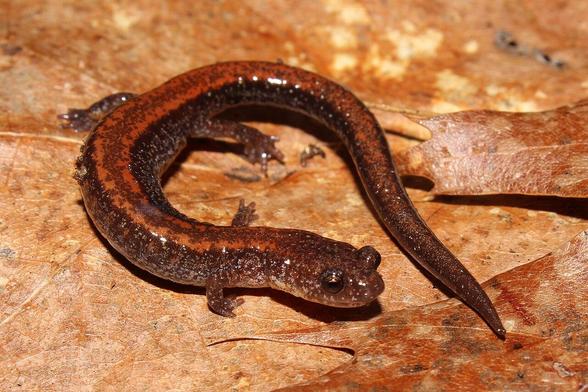
 Erik Svensson
 Victoria Stuart 🇨🇦 🏳️⚧️
 Matt Willemsen
 shikharabhat