Estudio revela devastador declive de corales en Isla del Caño por El Niño y el cambio climático

Estudio revela devastador declive de corales en Isla del Caño por El Niño y el cambio climático
San José, 26 nov (elmundo.cr) – Un nuevo estudio cie [...]

#AlgasDeCésped #Arrecifes #CalentamientoGlobal #CambioClimático #Conservación #Corales #CostaRica #Destacada #EcosistemasMarinos #ElNiño #Innoceana #IslaDelCaño #PeerJ #PenínsulaDeOsa #RestauraciónMarina #TurismoSostenible

https://elmundo.cr/costa-rica/estudio-revela-devastador-declive-de-corales-en-isla-del-cano-por-el-nino-y-el-cambio-climatico/

Estudio revela devastador declive de corales en Isla del Caño por El Niño y el cambio climático

Estudio revela devastador declive de corales en Isla del Caño por El Niño y el cambio climático Costa Rica - El Mundo CR

El Mundo CR

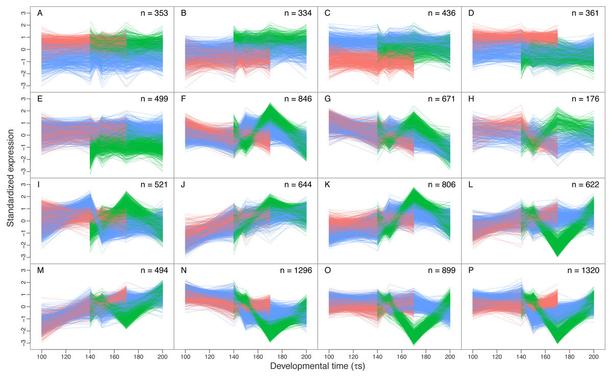
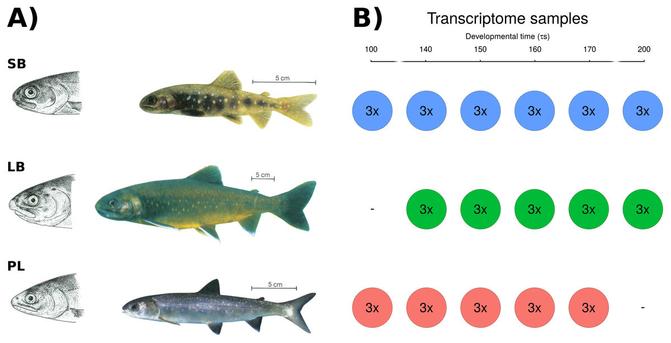
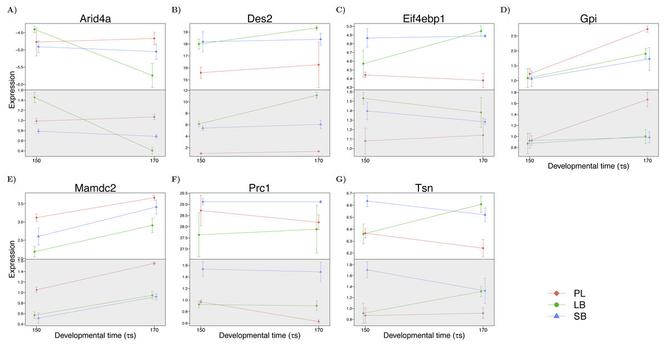
Differential gene expression during early development in recently evolved and sympatric Arctic charr morphs

old paper on the development of sympatric morphs

#arcticcharr #transcriptome #rnaseq #fish #evolution #sympatry
#peerj #biology
https://peerj.com/articles/4345/

In our latest Article Spotlight ‘Future climate-driven habitat loss and range shift of the Critically Endangered #whitefin #swellshark’ watch an interview with author Kerry Brown, University of Plymouth

See more https://bit.ly/3XOqvMA

#PeerJ

Article Spotlight: Future climate-driven habitat loss and range shift of the Critically Endangered whitefin swellshark Cephaloscyllium albipinnum | PeerJ Blog

@PeerJ Well done to everyone involved in getting us to this point! #PeerJ #OpenAdvances #Zoology
New #paper out: « Code #stylometry vs formatting and minification » https://peerj.com/articles/cs-2142/ , where we show how much current code stylometry techniques (i.e., how to automatically detect the author of a source code snippet) are resistent to automatic code formatting and minification. (Spoiler: quite a bit, authors can still be identified after those source-to-source transformations.) Available #openaccess on #PeerJ CS.
Code stylometry vs formatting and minification

The automatic identification of code authors based on their programming styles—known as authorship attribution or code stylometry—has become possible in recent years thanks to improvements in machine learning-based techniques for author recognition. Once feasible at scale, code stylometry can be used for well-intended or malevolent activities, including: identifying the most expert coworker on a piece of code (if authorship information goes missing); fingerprinting open source developers to pitch them unsolicited job offers; de-anonymizing developers of illegal software to pursue them. Depending on their respective goals, stakeholders have an interest in making code stylometry either more or less effective. To inform these decisions we investigate how the accuracy of code stylometry is impacted by two common software development activities: code formatting and code minification. We perform code stylometry on Python code from the Google Code Jam dataset (59 authors) using a code2vec-based author classifier on concrete syntax tree (CST) representations of input source files. We conduct the experiment using both CSTs and ASTs (abstract syntax trees). We compare the respective classification accuracies on: (1) the original dataset, (2) the dataset formatted with Black, and (3) the dataset minified with Python Minifier. Our results show that: (1) CST-based stylometry performs better than AST-based (51.00%→68%), (2) code formatting makes a significant dent (15%) in code stylometry accuracy (68%→53%), with minification subtracting a further 3% (68%→50%). While the accuracy reduction is significant for both code formatting and minification, neither is enough to make developers non-recognizable via code stylometry.

PeerJ Computer Science
Innovative Open Research Publisher PeerJ Joins Taylor & Francis | PeerJ Blog

@tullney @nemobis @PeerJ

I planned to submit to #PeerJ for the first time. I guess that will not happen now.

Maybe we should be "delighted and excited" that at least it's not #elsevier

Disappointing move, @PeerJ.

Oh my, what big eyes you have!

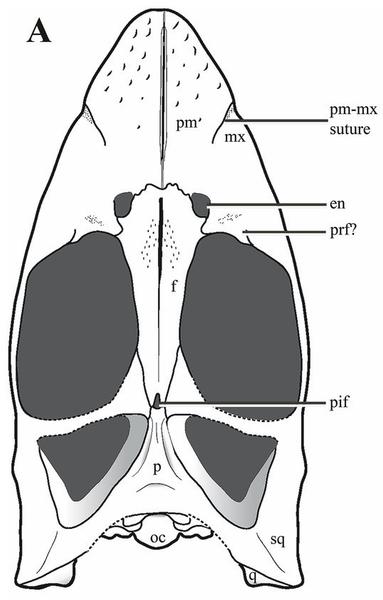
The orbital openings of the plesiosaur Ophthalmothule make up a massive 29% of its skull length. The orbits are the big grey ovals in this illustration. What a googly-eyed creature it must've been in life.

The full paper describing Ophthalmothule by Roberts et al. (2020) is open access on #PeerJ https://peerj.com/articles/8652/

#plesiosaur #plesiosaurs #paleontology #skull #science #MarineReptiles

A new plesiosaurian from the Jurassic–Cretaceous transitional interval of the Slottsmøya Member (Volgian), with insights into the cranial anatomy of cryptoclidids using computed tomography

Cryptoclidids are a major clade of plesiosauromorph plesiosaurians best known from the Middle—Late Jurassic, but little is known regarding their turnover into the Early Cretaceous. Of the known cryptoclidid genera, most preserve only a limited amount of cranial material and of these Cryptoclidus eurymerus, displays the most complete, but compressed cranium. Thus, the lack of knowledge of the cranial anatomy of this group may hinder the understanding of phylogenetic interrelationships, which are currently predominantly based on postcranial data. Here we present a nearly complete adult cryptoclidid specimen (PMO 224.248) representing a new genus and species Ophthalmothule cryostea gen et sp. nov., from the latest Jurassic to earliest Cretaceous part of the Slottsmøya Member, of central Spitsbergen. The holotype material preserves a complete cranium, partial mandible, complete and articulated cervical, pectoral and anterior to middle dorsal series, along with the pectoral girdle and anterior humeri. High resolution microcomputed tomography reveals new data on the cranial anatomy of this cryptoclidid, including new internal features of the braincase and palate that are observed in other cryptoclidids. A phylogenetic analysis incorporating new characters reveals a novel tree topology for Cryptoclididae and particularly within the subfamily Colymbosaurinae. These results show that at least two cryptoclidid lineages were present in the Boreal Region during the latest Jurassic at middle to high latitudes.

PeerJ

Genetic structure and relatedness of brown trout (Salmo trutta) populations in the drainage basin of the Ölfusá river, South-Western Iceland - is now published in #PeerJ
#popgen #BrownTrout #Iceland #Thingvallavatn

Phd student Marcos Lagunas

ddRadseq got ~3000 SNPs

Spanning dosens of locations

1. Clear population structure
1/n

Genetic structure and relatedness of brown trout (Salmo trutta) populations in the drainage basin of the Ölfusá river, South-Western Iceland - is now published!

Our article has been published today in @PeerJLife https://peerj.com/articles/15985 #Aquaculture,
#FisheriesandFishScience #Biodiversity #ConservationBiology #Genetics #FreshwaterBiology
#BrownTrout #PeerJ

Genetic structure and relatedness of brown trout (Salmo trutta) populations in the drainage basin of the Ölfusá river, South-Western Iceland

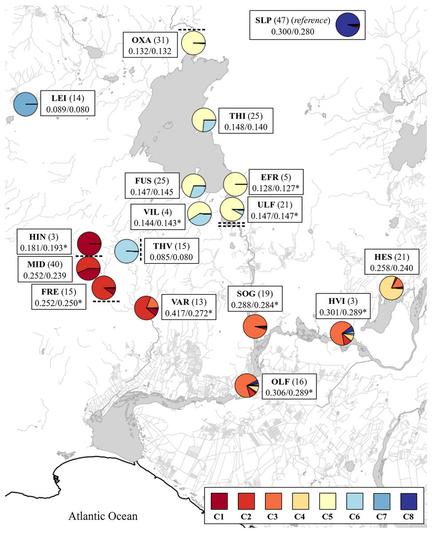
Background Lake Þingvallavatn in Iceland, a part of the river Ölfusá drainage basin, was presumably populated by brown trout soon after it formed at the end of the last Ice Age. The genetic relatedness of the brown trout in Þingvallavatn to other populations in the Ölfusá drainage basin is unknown. After the building of a dam at the outlet of the lake in 1959 brown trout catches declined, though numbers have now increased. The aim of this study was to assess effects of geographic isolation and potential downstream gene flow on the genetic structure and diversity in brown trout sampled in several locations in the western side of the watershed of River Ölfusá. We hypothesized that brown trout in Lake Þingvallavatn constituted several local spawning populations connected by occasional gene flow before the damming of the lake. We also estimated the effective population size (NE) of some of these populations and tested for signs of a recent population bottleneck in Lake Þingvallavatn. Methods We sampled brown trout inhabiting four lakes and 12 rivers within and near the watershed of River Ölfusá by means of electro- and net- fishing. After stringent data filtering, 2,597 polymorphic loci obtained from ddRADseq data from 317 individuals were ascertained as putative neutral markers. Results Overall, the genetic relatedness of brown trout in the Ölfusá watershed reflected the connectivity and topography of the waterways. Ancestry proportion analyses and a phylogenetic tree revealed seven distinct clusters, some of which corresponded to small populations with reduced genetic diversity. There was no evidence of downstream gene flow from Lake Þingvallavatn, although gene flow was observed from much smaller mountain populations. Most locations showed low NE values (i.e., ~14.6 on average) while the putative anadromous trout from River Sog and the spawning population from River Öxará, that flows into Lake Þingvallavatn, showed notably higher NE values (i.e., 71.2 and 56.5, respectively). No signals of recent population bottlenecks were detected in the brown trout of Lake Þingvallavatn. Discussion This is the first time that the genetic structure and diversity of brown trout in the watershed of River Ölfusá have been assessed. Our results point towards the presence of a metapopulation in the watershed of Lake Þingvallavatn, which has been influenced by restoration efforts and is now dominated by a genetic component originated in River Öxará. Many of the locations studied represent different populations. Those that are isolated in headwater streams and lakes are genetically distinct presenting low genetic diversity, yet they can be important in increasing the genetic variation in downstream populations. These populations should be considered for conservation and direct management.

PeerJ