 KillBait News
Republican Rep. Mike Flood faces criticism over Trump policies at Nebraska town hall
📰 Original title: GOP lawmaker hammered with questions about Trump by angry town hall attendees
🤖 IA: It's clickbait ⚠️
👥 Users: It's clickbait ⚠️
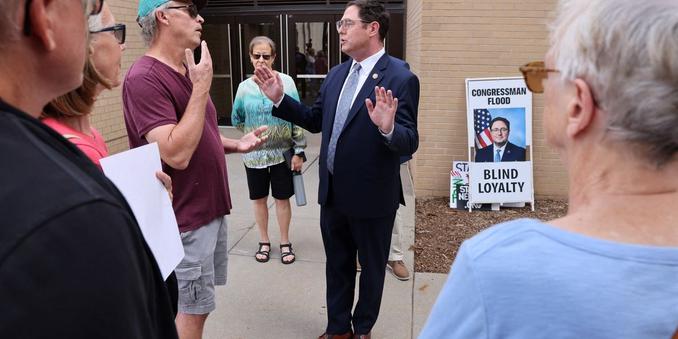
Republican Rep. Mike Flood faces criticism over Trump policies at Nebraska town hall
Republican U.S. Representative Mike Flood of Nebraska faced intense scrutiny during a town hall meeting in Norfolk, where constituents repeatedly challenged him over his support for policies associated with President Donald Trump. The event, reported by NOTUS and CNN, highlighted growing frustration among attendees regarding federal spending priorities, foreign policy issues, and domestic economic concerns. Voters confronted Flood on a range of topics, including a controversial $1.8 billion Department of Justice compensation program that critics described as a “weaponization slush fund,” as well as broader concerns about rising food and gas prices. Some attendees questioned how the federal government could justify spending on projects such as White House renovations, immigration enforcement initiatives, and other large-scale infrastructure or security expenditures while everyday costs continued to rise for ordinary citizens. Flood was also pressed on foreign policy matters, including the Iran conflict, allegations related to President Trump’s ties to Jeffrey Epstein, and discussions about potential U.S. actions involving Greenland. In response, Flood rejected the idea of a U.S. invasion of Greenland and stated he would meet with the country’s ambassador in early June. Regarding the DOJ fund, he expressed skepticism and emphasized the need for congressional oversight before supporting any related measures. When questioned about the Epstein files, Flood argued that if any incriminating evidence involving Trump existed, it would have already been released by previous Department of Justice leadership. The town hall underscored increasing political tension, with CNN noting that similar confrontations may become more common as lawmakers return to their districts ahead of upcoming election cycles.
 KillBait
 EpiscoGrrl
 John E Bartley III (D) K7AAY📎
 Christine LuBean
 MJ Muse
 Dave Thacker
 Solarbird
 Spocko

 U.S. Politics in Real Time