Genetic Differentiation and Evolutionary Transition-Transversion Bias in Vertebrates by the Example of the CYTB Gene with Emphasis on Mammals and Primates - #microevolution #macroevolution #transitiontransversionbias #mutationprocess #geneticsaturation #generegulation - https://link.springer.com/article/10.3103/S0095452724060045
Genetic Differentiation and Evolutionary Transition-Transversion Bias in Vertebrates by the Example of the CYTB Gene with Emphasis on Mammals and Primates - Cytology and Genetics

Abstract A negative answer to the question about the reducibility of genetic processes at the level of macroevolutionary events to microevolutionary ones has been obtained by analyzing the evolutionary transition-transversion bias and estimating the rates of molecular transformations in a number of vertebrates by the example of the CYTB gene. As a result, it has been established that, at a divergence at a level below families, the frequency of transitions sustains “a jump,” due to which the rate of molecular evolutions increases by an order of magnitude, whereas there occurs a slight predominance of transversion frequencies with a synchronous linear increase in the frequency of different nucleotide substitutions at the levels of orders and higher. An obvious reason for distinctions between the genetic processes of micro- and macroevolution is the leading role of spontaneous mutations in the formation of species. Their canalization results in stable morphological distinctions formed during postnatal ontogenesis. At the same time, the stages of macroevolution are associated with the transformation of organogenesis to be fixed with by changes in the sets of genes governing the nature of gene regulation and the interaction of genes in development.

SpringerLink
Derek Turner - Philosophy of Evolutionary Biology

YouTube

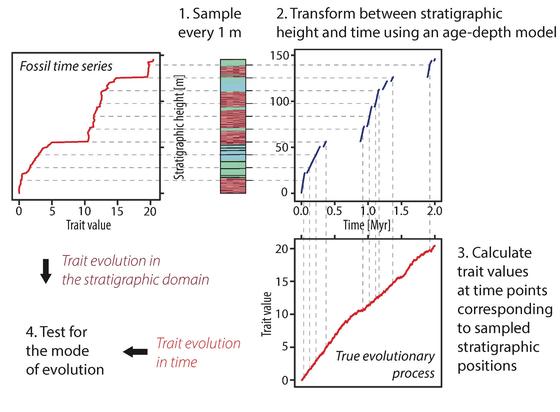
Many people think the history of the Earth is hard to decipher. The geological record jumbles everything up. We set out to fact-check this in my ERC Starting Grant MindTheGap. Focusing on the mode of evolution, because that is something that we can only glean from long records, longer than anything accessible to observation or experimentation today.

Thanks to collaboration with Peter Burgess we used forward models to simulate formation of carbonate rocks and see how completeness and stratigraphic resolution affect the reconstructions. Guess what! The geological record is 👌🏻 With a bit of understanding of #sedimentology and #physics we can test is with computer experiments and it turns out even very patchy rock strata will let us reconstruct the correct mode of evolution. This opens a lot of possibilities, especially for the #microfossil community: your data is priceless to understand #microevolution.

Check out the results at https://lnkd.in/eeiSuRwP

Also a big shoutout to an excellent review process at PCI Paleo, the thoughtful editors and reviewers, and to the lead author Niklas Hohmann for #code #reproducibility effort that meets the most stringent standards. Check out our software at https://lnkd.in/eJkwhhuh

#evolution #paleontology #paleobiology #UtrechtUniversity

LinkedIn

This link will take you to a page that’s not on LinkedIn

Microevolution can be used to predict longer term evolution, new study shows - fullSTEAMahead365

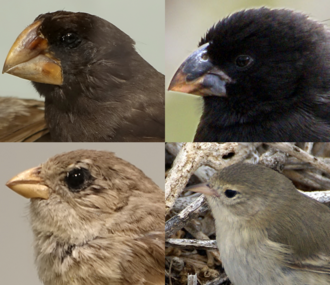
A new study in Science reveals that evolvability—populations' rapid adaptation ability—sheds light on macroevolution influenced by fluctuating environmental conditions. Using fossil and contemporary data, researchers highlight how genetic variation helps populations and species diverge under environmental pressures.

fullSTEAMahead365

Deeply honoured for this invitation and to be able to present my research in front of an Indian scientific audience. Hopefully, I will be able to deliver!

#India #Odonata #macroevolution #microevolution #insects #Darwin #Wallace #evolution

Excited about this new preprint by my colleague Stephen De Lisle and myself about (the lack of) time-dependency across both micro- and macroevolutionary scales:

https://www.biorxiv.org/content/10.1101/2023.12.02.569704v1

#macroevolution #microevolution #EvolutionaryBiology #Evolution

New NIOO publication: SEED: A framework for integrating ecological #stoichiometry and eco-evolutionary dynamics. #carbon #climatechange #phosphorus #nitrogen #nutrients #microevolution
https://doi.org/10.1111/ele.14285
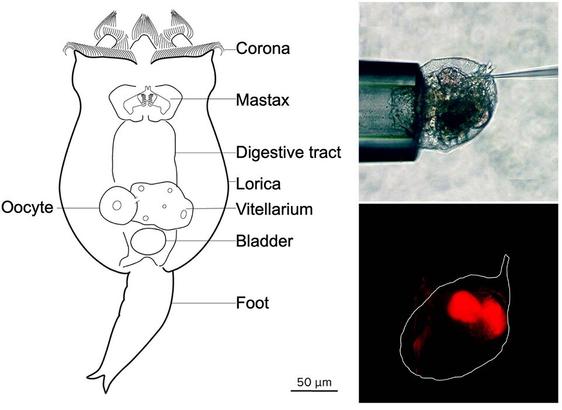
#Rotifers have been studied for >100 years re #microevolution, #EcologicalDynamics & #ecotoxicology. This study presents a #CRISPR-based method for KO mutation of 1 or 2 alleles, and KI mutations, in rotifers with high efficiency @MBLscience #PLOSBiology https://plos.io/3Kb8CAC
Highly efficient CRISPR-mediated gene editing in a rotifer

Rotifers have been studied in the laboratory and field for over 100 years in investigations of microevolution, ecological dynamics and ecotoxicology. This study presents a CRISPR/Cas9-based method for achieving knockout mutations of one or both alleles and knockin mutations in rotifers with high efficiency.

#Evolution refers to change in a biological population's inherited traits from generation to generation. All species on Earth originated by the mechanism of evolution, through descent from common ancestors. Evolution occurs as changes accumulate over generations. Charles Darwin recognized evolution by natural selection, also called "descent with modification", as the fundamental process underlying all of life, whether viewed at a large scale above the level of species (#macroevolution — in terms of formation of new species, changes within lineages, and extinction), or at a small scale within a species (#microevolution — in terms of change in gene frequency). In a nutshell, evolution by natural selection can be simplified to the following principles: 1) Variability 2) Differential Fitness 3) Heredity

#commondescent #naturalselection #charlesdarwin #RationalWiki
https://rationalwiki.org/wiki/Evolution

#Evolution of the #snow #algae genus Raphidonema suggests divergence from a cosmopolitan genus to endemic phylotypes since the last ice age by #microevolution

New research in the ISME Journal on:

https://www.nature.com/articles/s41396-023-01359-3

#microbiology #biodiversity

Evolution of snow algae, from cosmopolitans to endemics, revealed by DNA analysis of ancient ice - The ISME Journal

Recent studies of microbial biogeography have revealed the global distribution of cosmopolitans and dispersal of regional endemics, but little is known about how these processes are affected by microbial evolution. Here, we compared DNA sequences from snow/glacier algae found in an 8000-year-old ice from a glacier in central Asia with those from modern snow samples collected at 34 snow samples from globally distributed sites at the poles and mid-latitudes, to determine the evolutionary relationship between cosmopolitan and endemic phylotypes of snow algae. We further applied a coalescent theory–based demographic model to the DNA sequences. We found that the genus Raphidonema (Trebouxiophyceae) was distributed over both poles and mid-latitude regions and was detected in different ice core layers, corresponding to distinct time periods. Our results indicate that the modern cosmopolitan phylotypes belonging to Raphidonema were persistently present long before the last glacial period. Furthermore, endemic phylotypes originated from ancestral cosmopolitan phylotypes, suggesting that modern regional diversity of snow algae in the cryosphere is a product of microevolution. These findings suggest that the cosmopolitans dispersed across the world and then derived new localized endemics, which thus improves our understanding of microbial community formation by microevolution in natural environments.

Nature