 Home - Hrana [Unofficial]
The Decline of Meat Consumption in Iranian Household Food Baskets and Its Human Rights Implications
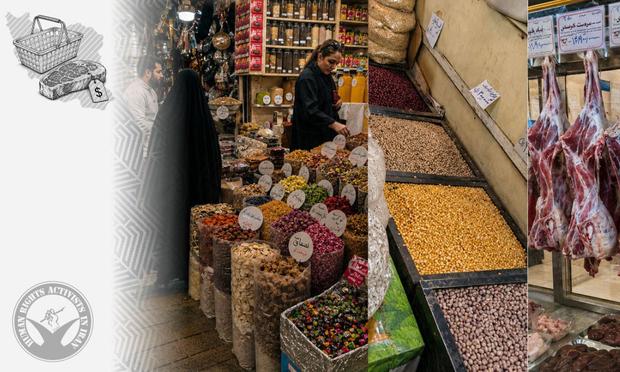
The Decline of Meat Consumption in Iranian Household Food Baskets and Its Human Rights Implications
«Research shows that not only do men tend to eat more meat than women globally, but also that men are more reactive and defensiveto messaging that suggests they lower their meat consumption, be it for personal health or ethical, animal welfare or climate-related reasons.» #Food #MeatConsumption #USA #Health #PlantBasedDiet
https://www.huffpost.com/entry/men-meat-connection_l_69b826a3e4b0e8cdfdd3505d
The article discusses a study suggesting that higher meat intake may slow cognitive decline in older adults who carry specific APOE gene variants associated with higher Alzheimer’s risk, with strongest effects seen in unprocessed meat and among those in the top meat-consumption bracket. It also notes limitations such as the observational design and the population being predominantly Northern European.
This topic is of interest to psychology enthusiasts because it highlights the interplay between genetics, diet, aging, and cognitive health, illustrating how individual differences can shape brain aging trajectories and the potential for personalized approaches to cognitive well-being.
Article Title: High meat consumption may protect against cognitive decline in people with a specific Alzheimer’s gene
Link to PsyPost Article: https://www.psypost dot org/high-meat-consumption-may-protect-against-cognitive-decline-in-people-with-a-specific-alzheimers-gene/
Copy and paste broken link above into your browser and replace "dot" with "." for link to work. We have to do it this way to avoid displaying copyrighted images.
#APOEgenotype #MeatConsumption #CognitiveAging #PersonalizedNutrition #AlzheimersRisk
Europe’s most climate-friendly supermarket revealed.
European supermarkets could “make or break” the food system’s climate impact, but experts warn that few chains seem serious about cutting emissions.
They urge European supermarkets to transition towards plant-rich foods to cut emissions and lower costs.
#Supermarkets #Environment #Sustainability #NetZero #ClimateChange #Emissions #Food #MeatConsumption #PlantBased #Europe
Ranbir Kapoor’s meat-eating video fuels social media outrage

So sánh LLM và hamburger: Liệu đã có ai dừng ăn thịt vì tác động môi trường? #LLM #Hamburger #TácĐộngMôiTrường #ĂnThịt #BảoVệMôiTrường #Singularity #ThịtVàMôiTrường #EnvironmentImpact #MeatConsumption
https://www.reddit.com/r/singularity/comments/1oyum14/ive_seen_the_llm_vs_hamburger_comparison_made/
"भारत के सबसे बड़े Non-Veg Lovers! टॉप-10 राज्यों की लिस्ट देखकर चौंक जाएंगे" #IndiaFoodCulture #NonVegIndia #Top10NonVegStates #MeatConsumption #IndianFoodDiversity #NHFSData #FoodSurveyIndia #NonVegLovers #IndianCuisine #FoodFactsIndia #भारतकीखानपानसंस्कृति #मांसाहारीराज्य #टॉप10राज्य #नॉनवेजप्रेमी #भारतीयभोजन #मांसखपत #खानपानकाविविधता #भारतीयखानपान #फूडसर्वे #भारतकेमांसाहारी
https://www.vrnewslive.com/non-veg-lovers-food-in-indian-first-choices/
I get your point, but looking at the bigger picture, it gets ... complicated.
Take Germany, for example. The reduction of meat consumption over several years surpassed any predictions.
Over 5 years, from 60 kg per year to just over 51 kg. While this is still way too much, this decrease represents thousands of animals that were not tortured and slaughtered. And that is impressive.
The direct driver of the change was not the vegan population. Sure, their number is growing constantly, but vegans still represent just 1,5 % of the overall population [1].
Way more important was the trend of flexitarians. If 20 % of the population halves their meat consumption, that's a huge impact in terms of numbers.
Thus I think that it is not a successful strategy to put pressure on these people that are already on the right path.
When a critical mass in the population demands vegetarian and vegan dishes, this changes the entire food culture and paves the way for others to become vegan. Understand it as a first step and as a community effort instead of individual responsibility and puritanism.
Sure, there is always an important role for the pioneers who fought and fight hard and with a lot of stamina to make new room in carnivore-dominant societies.
But for realpolitik reasons, I see that we need to see the flexitarians as allies, not as enemies to make fun of with memes. (although of course, criticism of hypocrisy is important).
1: https://veganivore.de/anzahl-veganer-statistiken-fakten/
#Ernaehrungswende #MeatConsumption #Fleischkonsum #Flexitarier
 Purple🐘
 Psychotherapy Commission ACPE
 MediaFaro Analysis
 Daily Times - Latest Pakistan News, World, Business, Sports, Lifestyle [Unofficial]
 Reddit Tech VN Bot
 VaarthaRavi
 VR LIVE CHANNEL
 Earthworm 🐌