Depression is not caused by a lack of serotonin.
The lie of the serotonin hypothesis and how decolonizing also means letting go of bioessentialism

https://healthselfdefense.substack.com/p/depression-is-not-caused-by-a-lack

Over the last century, the disease-centered model for addressing “depressive behaviors” has become just another problem to solve, rather than the appealing solution it appears to be for the general population. We say appealing because for many people, evading responsibility by claiming that “it’s not me, or our circumstances, the problem is your brain” is a huge relief for protecting our short-term self-esteem.

It seems that asserting, without any evidence, that the problem of our excessive sadness and anhedonia lies in the brain poses no problem for anyone. Students have to make less effort to understand the phenomenon, professionals must treat most patients the same way, without considering their life context, and for the general population, it’s a great way to easily explain problems they are likely partly responsible for.

WHAT IS THE “SEROTONIN HYPOTHESIS”?

The serotonergic hypothesis posits that one of the main causes of depression (depressive responses) is related to a significant deficiency or absence of the neurotransmitter/biomolecule serotonin in the brain. The context of the monoamine hypothesis (dopamine, serotonin, norepinephrine, etc.) emerged in 1963 when Carlsson and Lindqvist discovered that neuroleptic drugs tested for the treatment of schizophrenia increased the turnover and quantity of dopamine in the brains of rodents.

However, despite serotonin being a chemical neurotransmitter traditionally associated with mood regulation in the nervous system, and despite the significant scientific advancements in its research, all efforts to empirically validate the serotonin hypothesis for depression have failed.

THE CONSEQUENCES OF PSYCHOLOGISTS’ LACK OF SELF-CRITICISM
Supporting a disease-centered model, and the biological alteration of serotonin as the cause of “depressive” behaviors, does not help students and professionals critically review the full range of theoretical approaches, while ignoring vast areas of theory and research and contradicting the principles of social work ethics and practice, including the crucial role of families and culture, client strengths and empowerment, and the individualized approach to each case.

The only certainty we have about the “serotonin hypothesis” is that things are always happening in the brain, no matter what we do. Interestingly, in many psychology and psychiatry clinics, they simply use questions and descriptions about our behavior, about whether we have been suffering excessively in recent months, to diagnose “depression,” without performing biological tests that demonstrate brain deficits of serotonin, which is supposedly where “depression” originates and resides. “An explanation is not more scientific simply because it is expressed in neurobiological terms.”

GENETIC STUDIES DISMANTLE THE “SEROTONIN THEORY”
If there truly were a lack of serotonin (or if serotonin receptors were less sensitive), genetic studies of serotonin-related biomolecules should demonstrate an alteration associated with high levels of homovanillic acid in cerebrospinal fluid, which has not been demonstrated in any conclusive study. Similarly, hormonal studies are inconclusive, having shown no abnormalities or differences in growth hormone and prolactin levels in subjects diagnosed with “depression.”

And most importantly, there are no conclusive studies linking an imbalance between serotonin 5-HT1A receptors and SERT (serotonin transporter) levels. As an explanation for these failures, we can say that, at the outset of the hypothesis, it was probably not foreseen that we would currently possess the tools to detect imbalances in the genes involved in serotonin production.

PSYCHOTROPIC MEDICATIONS ARE NOT PROOF OF ANYTHING
In general, any psychological and psychiatric treatment should always begin with the assumption that psychotropic medications are only a “complementary treatment” for people’s suffering, and not a sole and definitive treatment. However, the irresponsible and widespread use of “antidepressant” psychotropic medications has been justified by the idea that they act by correcting underlying biological abnormalities that produce suffering and behavioral problems. Although, as we have already seen, there is no evidence of such biological abnormalities in the brain of a person labeled with “depression.”

Unfortunately, therapeutic manipulation, a lack of information about the side effects of psychotropic drugs, censored accounts of lives ruined by SSRIs, and the prescription of “drug cocktails” are commonplace. Despite the fact that, in most cases, after taking an “antidepressant,” what is observed is simply the effect of the drug, and not relief or a change in the psychological root of the patient’s problem. “Antidepressants don’t solve your problems, they put them on ‘pause.’”

THE PHILOSOPHY OF SCIENCE DISMANTLES THE “SEROTONIN HYPOTHESIS”
According to Popper, the “serotonin hypothesis” has low falsifiability due to its lack of specificity (even abstraction). In this case, if one prediction about serotonin was not confirmed, another easily took its place, making it almost indestructible. According to Kuhn, we can assume that the “serotonin paradigm” has endured because a sufficiently prominent and more successful alternative hypothesis was never developed, so there has never been a real crisis that would incentivize an update and conversion of that paradigm.

According to Lakatos, the “serotonin hypothesis” is more accurately described as a degenerative than a progressive research program, due to its numerous failed predictions and many ad hoc alterations to the main hypothesis, resulting in the hypothesis’s core being excessively distorted.

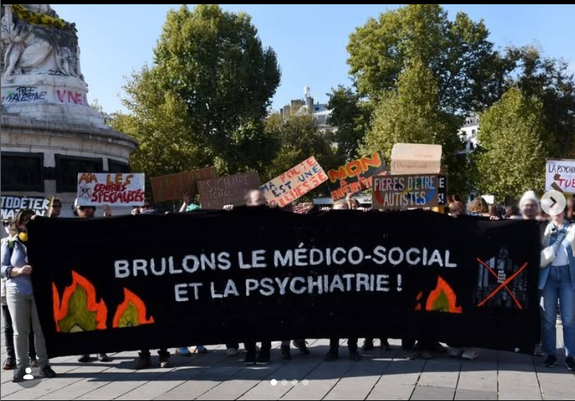
#madpride

Depression is not caused by a lack of serotonin.

The lie of the serotonin hypothesis and how decolonizing also means letting go of bioessentialism

health self defense

Decolonizing also means letting go of bioessentialism

https://wokescientist.substack.com/p/psychiatric-diagnoses-and-bioessentialism

“As I began to see the structural and systemic roots of our distress, I increasingly moved away from “born this way” thinking. The more I prioritized intentional community building and reconnecting to my cultural roots, the more impossible it became to see my pain as separate from other people’s struggles. It’s all interconnected and psychiatric labels simply failed to capture these nuances that collectivist communities are built on.

The more I anchored into the collective, the less attached I was to even the redefined, radical derivates of these labels. The diagnoses that were always foreign to my community, imposed on us by our colonizers, were again feeling foreign to me. Though I see the power in reclaiming some things that have been used to oppress you, I don’t see the utility in everyone reforming and repackaging every aspect of colonialism. If anything, I see the global north’s obsession with spreading colonial models of mental health, including psychiatric diagnoses, to the the global south as being one wing of modern day colonialism.

Psychiatric labels AND the neurodiversity framework do not speak to majority of the people in my community or to majority of people in the world.

This does not mean that I think it is bad if someone is empowered by these labels. But folks in neurodivergent spaces in the global north need to think about the fact that they may have a lot to learn from collectivist communities who have always had all-encompassing, transformative, land-preserving, care systems. These life-sustaining approaches to medicine were violently destroyed or are currently undergoing colonial erasure. Colonized people are criminalized, punished and killed for attempting to continue their traditions.

Decolonizing also means letting go of bioessentialism

Maybe we shouldn’t assume anything of people who do or don’t carry a neurodivergent label. Maybe someone identifying as neurodivergent or NOT won’t help you understand much about them or circumvent the process of getting to know them with care, over time. Maybe we should let people open our world to new worlds.

Colonialism brainwashes people into thinking they are “individuals” or atomized beings separate from everything, separate from each other, the land, the trees, the birds and the rest of our kin. These systems have concocted ridiculous bioessentialist boxes and categories to convince us that we are alone, separate, distinct, and unrelated.

If terms under the umbrella of neurodivergence are important to you, then know that I’m not asking you to abandon them, nor am I framing them unilaterally as “bad”. I’m asking you to look beyond them, to be aware of how they can be leveraged for harm and to recognize that there are other ways for communities to make sense of their distress without these labels. I’m asking you to embrace complexity and create space for it. The rest of the world should not have to speak this precise language. The language of colonial psychiatry should never have been forced upon the global south and it shouldn’t be today, including any reclaimed version within the neurodiversity framework.” Psychiatric diagnoses & bioessentialism will not liberate us

#madpride

Psychiatric diagnoses & bioessentialism will not liberate us

Letting go of my attachment to individual diagnostic labels is part of my decolonizing journey

Cosmic Anarchy
Roots-Up Abolition & Psychiatric Systems ; Psychiatric Force 2025: The Year In Review https://rootsup.podbean.com/
#madpride #mentalillness #anti-carceral #psychiatricsurvivor #Health
@empathyforward
Roots Up! | Roots Up

The Roots Up! podcast will cover a variety of topics relevant to psychiatric survivors, allies, accomplices and others interested in anti-force, anti-oppression, abolition, alternative crisis approaches and changing the world! </p>

Not weird, just wired differently.

#FediArt #MadPride #NeuroSpicy #Vintage

@PeacefulEdna des gens avaient fait tout un drive de ressources ouf sur l'anti psychiatrie et la mad pride :

https://drive.google.com/drive/mobile/folders/122cDsDgZj3qkyakmxfkl6oKI6of-jWuv

Je crois que tu peux notamment y trouver On our Own de chamberlin qui est un des bouquins qui a aidé à formaliser et transmettre les réflexions d'autogestion folle

Ici des ressources notamment une sauvegarde d'un super site de brochures Zinzinzine
https://linktr.ee/antipsych

(Et j'ai fait une petite série de trois articles sur une série très Mad pride :D
https://zephdangles.wordpress.com/2024/01/15/takin-over-the-asylum-1-tracer-la-limite-entre-la-folie-et-les-sains-desprit/ )

#MadPride #AntiPsychiatrie

MAD DRIVE – Google Drive

Google Drive

Après la Mad Pride Autonome 2025, Wow Une Dinguerie (WUD) : Podcast politique en cours de production qui lance un appel à témoignages : https://wowunedinguerie.wixsite.com/accueil

https://www.youtube.com/watch?v=25G9h8ZmgpM
#antipsychiatrie #Madpride

Wow Une Dinguerie [WUD]

Présentation du podcast des fiertés Mad : Wow Une Dinguerie (WUD) qui présente la paroles des personnes folles, psychiatrisées, handi, crip, traumatisées, survivantes de violences, etc. dans leur beauté et leur singularité, dans une perspective antipsychiatrique et intersectionnelle.

Wow Une Dinguerie
#ArtAdventCalendar - December 21

Psychophobia drives me batty.

Available as a free/open price DL at https://ko-fi.com/s/50f4ec0f8d

Available as homemade prints at https://boutique.lokipropagand.art/produit/neurodivergent-bat/

🦇🦇🦇

#FediArt #FediGiftShop #GiftIdeas #Linocut #Bats #NeuroSpicy #MadPride #Anarchy
‘No Graphic Detail: The Injustice of Being Silenced’
By Sera Davidow - August 12, 2019
“What makes my need to share less important than your need not to hear it?” – Stephanie Gimeno
https://www.madinamerica.com/2019/08/no-graphic-detail/
#MadPride #MentalHealth
No Graphic Detail: The Injustice of Being Silenced

As much as some fear the 'graphic detail' of what we've survived, so many of us need to be able to speak our full truths in order to heal.

Mad In America

EL CALLEJÓN SIN SALIDA DE LOS DERECHOS CIVILES
MARTA RUSSELL Y RAVI MALHOTRA
Aunque pueda parecer contradictorio que un presidente republicano de los Estados Unidos (que representa al Partido Republicano que, después de todo, es la voz reaccionaria del capital) firmara la Ley de Estadounidenses con Discapacidades de 1990 (ADA) los objetivos de la ADA están completamente en línea con la política neoliberal y de la Tercera Vía que enfatiza el fin de la dependencia y el aumento de la productividad. Ha habido una convergencia de los discursos neoliberales y de la Tercera Vía, lo que resulta en el mantra de que "los derechos conllevan responsabilidades". Ambos discursos adoptan la teoría del lado de la oferta de que la economía está agobiada por mercados laborales rígidos y disposiciones de bienestar excesivamente generosas. En este espíritu, el ex presidente Clinton declaró que la "era del gran gobierno ha terminado y pidió "más empoderamiento, menos derechos". Existe un gran interés del gobierno en las políticas que desplazarán a los desempleados de larga duración y los desfavorecidos hacia el empleo

Estas políticas se subrayan en la propia legislación de la ADA. El Congreso especificó tres objetivos principales cuando promulgó la ADA: eliminar las barreras arbitrarias que enfrentan las personas con discapacidad, poner fin a la desigualdad de oportunidades y reducir la dependencia innecesaria y la productividad no realizada. La ADA promueve la inclusión de personas discapacitadas en la fuerza laboral mayoritaria a través del establecimiento de leyes y regulaciones constitucionales que están orientadas a crear "igualdad de oportunidades" en el mercado laboral para los solicitantes de empleo discapacitados al "nivelar el campo de juego" y exigir a los empleadores que acomoden las deficiencias en el trabajo, a menos que hacerlo cause una "dificultad excesiva" para el negocio, lo que hace que el "derecho" a la vivienda no tenga ningún derecho en absoluto.

#orgullodisca #madpride #orgulloloco

MOVIMIENTOS POR LOS DERECHOS DE LAS PERSONAS CON DISCAPACIDAD: PERSPECTIVAS Y LIMITACIONES
MARTA RUSSELL Y RAVI MALHOTRA
En la medida en que la adaptación generalizada a las necesidades de los trabajadores discapacitados transformaría necesariamente el lugar de trabajo y desafiaría las expectativas de unas tasas de productividad cada vez mayores, el movimiento por los derechos de los discapacitados puede considerarse radicalmente democrático y contrahegemónico en potencial y alcance. Hay que hacer una importante distinción analítica entre las organizaciones benéficas creadas para personas discapacitadas, a veces por padres de hijos discapacitados, y las organizaciones controladas directamente por personas discapacitadas. En la primera categoría, las organizaciones, que suelen basarse en una categoría diagnóstica vinculada a la deficiencia, no reflejan necesariamente las opiniones y experiencias de las propias personas discapacitadas, a pesar de que puedan realizar ocasionalmente una labor beneficiosa.

De hecho, la agenda ideológica implícita de estas organizaciones paternalistas es que las personas discapacitadas son incapaces de abogar en su propio nombre. Además, el hecho de que su mandato se base en categorías de diagnóstico generalmente arbitrarias pone un énfasis injustificado en las cuestiones médicas y no lo suficiente en las barreras impuestas por el entorno físico y el sistema de clases. La fragmentación resultante, dividiendo a las personas con discapacidad en literalmente cientos de categorías diferentes, también funciona para hacer que la solidaridad entre personas con discapacidad sea mucho más difícil. Igualmente importante, estas organizaciones, al igual que las ONG en otros sectores, a menudo están directamente vinculadas al estado a través de acuerdos de financiación.

En consecuencia, están extremadamente limitados en su capacidad para criticar la política gubernamental, incluso si así lo quisieran, por temor a perder fondos y acceso a los tomadores de decisiones. De hecho, las organizaciones dirigidas a personas discapacitadas superan dramáticamente en número a las controladas por personas discapacitadas y reciben fondos mucho más generosos. Las severas limitaciones de su política no deberían sorprender, dado el historial cuestionable y cooptado de las ONG en todos los contextos.

En marcado contraste, las organizaciones dirigidas por personas discapacitadas tienen al menos el potencial para una política más radical. A fines de la década de 1960, el movimiento Independent Living (IL)—el movimiento de Vida Independiente (MVI)—surgió en Berkeley, California, encabezado por un grupo de estudiantes discapacitados conocido como The Rolling Quads. Su objetivo era promover el empoderamiento de las personas con discapacidad y centró la atención en las barreras estructurales impuestas por el entorno construido, no en las deficiencias de las personas. El primer Movimiento de Vida Independiente (MVI), basado en el modelo sociopolítico de discapacidad, se fundó en Berkeley y buscó ampliar las luchas por el empoderamiento para incluir a estudiantes y no estudiantes por igual. (…)

El surgimiento del MVI fue sin duda un paso adelante para el movimiento por los derechos de las personas con discapacidad. El sentido compartido de conciencia fomentado por la acción colectiva es un primer paso importante en la construcción de cualquier movimiento social. Al redefinir como cuestiones políticas que requieren reparación por parte de la sociedad en general lo que anteriormente había sido considerado por la mayoría de la gente como problemas privados (tal como lo había hecho el movimiento de mujeres), el MVI proporcionó una base para un movimiento social vital; y la vitalidad del movimiento de mujeres, el movimiento por los derechos civiles de los negros, el movimiento gay y lésbico, el movimiento chicano y otros nuevos movimientos de justicia social crearon una apertura en la que el caso para erradicar la opresión de la discapacidad también podría obtener una audiencia.

Sin embargo, había y hay serias contradicciones en la filosofía del MVI. Por un lado, pretende promover la autonomía y la autodeterminación de las personas discapacitadas. Por otro, acepta implícitamente los fundamentos de la ideología del libre mercado al plantear el debate en términos del derecho de las personas discapacitadas como consumidores a recibir el mismo trato en el mercado. La capacidad de acceder al mercado es un consuelo frío para la enorme proporción de personas discapacitadas que viven en condiciones de pobreza o casi pobreza. En una sociedad capitalista, después de todo, el acceso al mercado se basa en tener poder adquisitivo para comprar los servicios en cuestión.

Una estrategia política de liberación de la discapacidad que dependa totalmente de ese poder adquisitivo es tan pobre que sólo puede ayudar a una pequeña parte de los discapacitados más privilegiados. También tiende a marginar las preocupaciones de las mujeres y las minorías. Al aceptar los principios del libre mercado como un hecho, el MVI socavó su potencial radical para empoderar realmente a las personas discapacitadas. En el peor de los casos, algunos centros de MVI, temerosos de hacer tambalearse el barco y perder la financiación estatal, se han convertido en poco más que lugares para el asesoramiento entre iguales y la organización de picnics. Sólo cuestionando las bases mismas de las reglas del mercado puede haber liberación para las personas discapacitadas.

(…) incluso las organizaciones de discapacidad más populares tanto en los Estados Unidos como en Gran Bretaña parecen teóricamente ambiguas en sus formulaciones ideológicas. Todavía tienen que adoptar una agenda anticapitalista que vea la discapacidad como un producto del sistema de clases. Además, tanto en los Estados Unidos como en Gran Bretaña, la aprobación de la legislación sobre los derechos de las personas con discapacidad, que es individualista en su base, elimina un elemento de coherencia de la praxis política incluso de las organizaciones de derechos de las personas con discapacidad más militantes.

Si no se perciben sus vínculos comunes con otros miembros marginados de la sociedad, como el ejército de reserva de los desempleados, los beneficiarios de la asistencia social, el segmento cada vez más amplio de la sociedad que trabaja a tiempo parcial o en empleos que no pagan un salario digno, y otros, puede que se desperdicie la promesa de los diversos movimientos por los derechos de los discapacitados en los escollos de la política de identidad o, peor aún, en el discurso posmoderno cuyos teóricos se niegan a nombrar el capitalismo como causa de su opresión. Lo que más necesitan los movimientos por los derechos de los discapacitados es un giro hacia la política de clases y el materialismo histórico, con pleno conocimiento de sus riesgos y limitaciones.

#orgullodisca #disabledpride #madpride #orgulloloco