 Hacker News
Nabokov's pale fire: the lost 'father of all hypertext demos'? (2011)
https://dl.acm.org/doi/pdf/10.1145/1995966.1996008
#HackerNews #Nabokov #Hypertext #Literature #DigitalArt #LiteraryAnalysis
Nabokov's pale fire: the lost 'father of all hypertext demos'? (2011)
https://dl.acm.org/doi/pdf/10.1145/1995966.1996008
#HackerNews #Nabokov #Hypertext #Literature #DigitalArt #LiteraryAnalysis
A Statistical Examination of Similes in Popular Fiction
📰 Original title: Analysis of similes in literature
🤖 IA: It's not clickbait ✅
👥 Users: It's not clickbait ✅
View full AI summary: https://en.killbait.com/a-statistical-examination-of-similes-in-popular-fiction.html?utm_source=mastodon_world&utm_medium=social&utm_campaign=killbait.mastodon_world
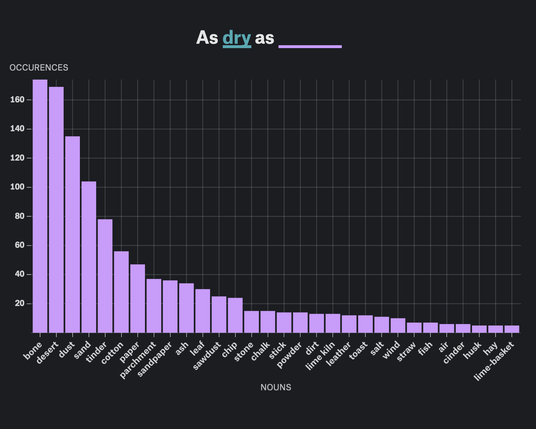
Russell Samora, with design and illustration by Shelly Tan, conducted an in-depth study of similes used across popular fiction for The Pudding. Moving beyond simple word counts, the analysis explores the types of words employed, unexpected outliers, and instances of ironic usage. One particularly notable focus is the simile pattern “___ as hell.” The earliest recorded use in the exact structure was found in the 1954 novel The Refuge, where the phrase is used to describe a character's attractiveness. Interestingly, while most nouns in similes represent tangible concepts or traits, “hell” in this context functions simply as an intensifier equivalent to “very,” making it a unique entry in the dataset. The analysis offers insights into how writers creatively employ language and how certain expressions gain popularity over time. This study contributes to understanding patterns in literary expression, highlighting both conventional and surprising choices in figurative language. Readers interested in statistical visualization and the nuances of fiction writing will find this examination both informative and engaging. Additional related analyses include word usage on NYC streets, trends in romance novel covers, and decade-specific language in Billboard song titles.
A Statistical Examination of Similes in Popular Fiction
📰 Original title: Analysis of similes in literature
🤖 IA: It's not clickbait ✅
👥 Users: It's not clickbait ✅
View full AI summary: https://en.killbait.com/a-statistical-examination-of-similes-in-popular-fiction.html?utm_source=mastodon_social&utm_medium=social&utm_campaign=killbait.mastodon_social
Russell Samora, with design and illustration by Shelly Tan, conducted an in-depth study of similes used across popular fiction for The Pudding. Moving beyond simple word counts, the analysis explores the types of words employed, unexpected outliers, and instances of ironic usage. One particularly notable focus is the simile pattern “___ as hell.” The earliest recorded use in the exact structure was found in the 1954 novel The Refuge, where the phrase is used to describe a character's attractiveness. Interestingly, while most nouns in similes represent tangible concepts or traits, “hell” in this context functions simply as an intensifier equivalent to “very,” making it a unique entry in the dataset. The analysis offers insights into how writers creatively employ language and how certain expressions gain popularity over time. This study contributes to understanding patterns in literary expression, highlighting both conventional and surprising choices in figurative language. Readers interested in statistical visualization and the nuances of fiction writing will find this examination both informative and engaging. Additional related analyses include word usage on NYC streets, trends in romance novel covers, and decade-specific language in Billboard song titles.
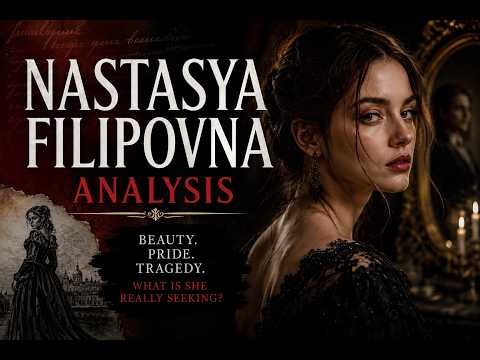
The version everyone remembers is the edited one. The 1740 original is a novella written, more or less literally, to prepare a young woman to be handed to a frightening older stranger. Camille Paglia and Judith Butler are usually treated as enemies. On the ending of this story they agree, and what they agree on is that it is a lie.
https://www.youtube.com/watch?v=bI1Z7J93N1k
#dostoevsky #TheIdiot #NastasyaFilippovna #russianliterature #traumapsychology #classicliterature #existentialism #booktube #literaryanalysis #unpopularbookopinions #ControversialBookTakes #BookTokCritique
Finding Yourself is the ULTIMATE Victory!
The true victory lies in the journey of self-discovery. For this protagonist, personal growth overshadows all else, proving that inner transformation is the ultimate reward.
Drop your take in the comments below: https://youtu.be/yq_lJFDKe50 Link in Bio
Book Review: Yinka, Where Is Your Huzband? by Lizzie Damilola Blackburn
#SelfDiscovery #CharacterArc #BookEnding #LiteraryAnalysis

A definitive guide to the American political dystopia — from Fahrenheit 451's burning books to Octavia Butler's eerily prescient 2024, Philip K. Dick's manufactured realities, Ursula Le Guin's anarchist ambiguity, and N.K. Jemisin's enslaved geological workers. Why these five writers share a single tradition, and what that tradition demands of the reader.

The villain announces himself. The informant already has your key. Why betrayal is dystopian fiction's most devastating structural move — Orwell, Atwood, Zamyatin, Levi.
The villain announces himself. The informant already has your key. Why betrayal is dystopian fiction's most devastating structural move — Orwell, Atwood, Zamyatin, Levi.
Lyrical Ballads by Wordsworth and Coleridge
Origins
Lyrical Ballads (1798) stands as one of the most transformative publications in English literary history, marking the formal beginning of the Romantic Age in English literature. Its origins lie in the remarkable friendship and creative collaboration between William Wordsworth and Samuel Taylor Coleridge, who became neighbours in Somerset in 1797.
The immediate catalyst for the collection was financial and practical — the two poets needed money to fund a walking tour of Germany. However, the deeper intellectual roots ran far more profound. Wordsworth and Coleridge had been engaged in intense discussions about the nature of poetry, imagination, and the relationship between humanity and nature. These conversations crystallised into a shared poetic vision that challenged the dominant Augustan aesthetics of the 18th century, particularly the polished, formal verse associated with Alexander Pope and his contemporaries.
The two poets divided their creative labour deliberately. As Coleridge later recalled in Biographia Literaria (1817), Wordsworth was to write about ordinary subjects — rural life, common people, everyday experience — and invest them with the wonder of the imagination. Coleridge, on the other hand, would write about supernatural subjects and attempt to make them feel psychologically real and believable. This division of labour produced two of the most celebrated poems in the English language: Wordsworth’s “Lines Written a Few Miles above Tintern Abbey” and Coleridge’s “The Rime of the Ancient Mariner”, both of which appeared in the first edition.
The Preface and Poetic Manifesto
The 1800 second edition included Wordsworth’s celebrated Preface, which became the manifesto of Romanticism. In it, Wordsworth made several radical declarations:
These ideas struck at the heart of neoclassical poetic theory and opened the door to the deeply personal, nature-centred, and emotionally honest poetry that would define the Romantic movement for the next half century.
Significance
1. Launch of English Romanticism
Lyrical Ballads is widely regarded as the founding text of the Romantic Movement in England. It shifted attention from reason and order (values of the Enlightenment) to feeling, intuition, imagination, and nature as the primary sources of poetic truth.
2. Democratisation of Poetry
By choosing subjects from ordinary rural life — beggars, shepherds, abandoned mothers, and simple villagers — Wordsworth challenged the aristocratic and classical subject matter that had dominated English poetry. Poetry was brought to the people and, in a sense, given back to them.
3. The Power of Nature
The collection established Nature as a moral and spiritual force, not merely a scenic backdrop. Particularly in Wordsworth’s poems, landscapes become teachers, healers, and sources of transcendence — a vision that would deeply influence later Romantic poets like Keats, Shelley, and Byron.
4. The Supernatural and the Psychological
Coleridge’s contributions, especially The Rime of the Ancient Mariner and the fragment Kubla Khan, explored guilt, sin, the unconscious, and the uncanny. This opened new psychological dimensions in English poetry that anticipated later literary movements including Gothic fiction and even aspects of Modernism.
5. Influence on Later Literature
The impact of Lyrical Ballads extended far beyond poetry. Its emphasis on individual experience, the dignity of common life, and the primacy of imagination influenced the 19th-century novel (Dickens, Hardy, George Eliot), American Transcendentalism (Emerson, Thoreau, Whitman), and the broader tradition of nature writing that persists to this day.
6. A New Critical Language
Wordsworth’s Preface also inaugurated a new way of talking about poetry — in terms of emotion, imagination, and organic form rather than adherence to classical rules. This critical vocabulary remains foundational to literary studies.
Conclusion
Lyrical Ballads was far more than a slim volume of verse — it was a revolutionary act of literary imagination. Born from friendship, conversation, and a shared dissatisfaction with the poetic conventions of their age, Wordsworth and Coleridge created a work that redefined what poetry could be, who it could speak to, and what truths it could tell. Its echoes have never ceased to resound through English literature and beyond.
The book for free download here:
https://ia800202.us.archive.org/22/items/lyricalballads00worduoft/lyricalballads00worduoft.pdf
#EnglishLiterature #LiteraryAnalysis #LiteraryHistory #LyricalBallads #NatureInPoetry #Poem #Poetry #RomanticPoetry #Romanticism #SamuelTaylorColeridge #TheRimeOfTheAncientMariner #WilliamWordsworth KillBait News
 KillBait
 N-gated Hacker News
 Lost Quotes
 PWC & SITM Podcasts
 Boldly.Blue
 Know Thyself