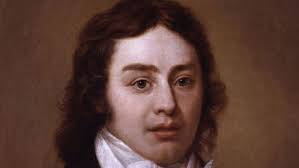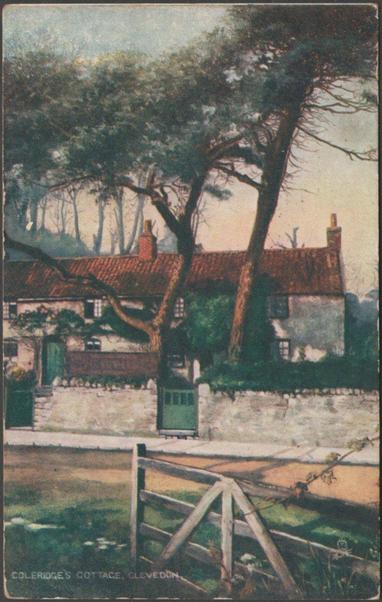
🇺🇦 #NowPlaying on BBC #Radio3's #ClassicalLive Samuel Taylor Coleridge & Chineke! Orchestra: 🎵 Nonet in f minor, Op. 2 #BBCRadio3 #SamuelTaylorColeridge #Chineke!Orchestra
Lyrical Ballads by Wordsworth and Coleridge


Origins

Lyrical Ballads (1798) stands as one of the most transformative publications in English literary history, marking the formal beginning of the Romantic Age in English literature. Its origins lie in the remarkable friendship and creative collaboration between William Wordsworth and Samuel Taylor Coleridge, who became neighbours in Somerset in 1797.

The immediate catalyst for the collection was financial and practical — the two poets needed money to fund a walking tour of Germany. However, the deeper intellectual roots ran far more profound. Wordsworth and Coleridge had been engaged in intense discussions about the nature of poetry, imagination, and the relationship between humanity and nature. These conversations crystallised into a shared poetic vision that challenged the dominant Augustan aesthetics of the 18th century, particularly the polished, formal verse associated with Alexander Pope and his contemporaries.

The two poets divided their creative labour deliberately. As Coleridge later recalled in Biographia Literaria (1817), Wordsworth was to write about ordinary subjects — rural life, common people, everyday experience — and invest them with the wonder of the imagination. Coleridge, on the other hand, would write about supernatural subjects and attempt to make them feel psychologically real and believable. This division of labour produced two of the most celebrated poems in the English language: Wordsworth’s “Lines Written a Few Miles above Tintern Abbey” and Coleridge’s “The Rime of the Ancient Mariner”, both of which appeared in the first edition.

The Preface and Poetic Manifesto

The 1800 second edition included Wordsworth’s celebrated Preface, which became the manifesto of Romanticism. In it, Wordsworth made several radical declarations:

  • Poetry should be written in “the real language of men”, not the elevated, artificial diction of the classical tradition.
  • The proper subjects of poetry were humble and rustic life, where human passions exist in a purer, more natural state.
  • Poetry was defined memorably as “the spontaneous overflow of powerful feelings” recollected in tranquillity.
  • The poet was not a craftsman following rules, but a person of exceptional sensitivity and imaginative power speaking to common human experience.

These ideas struck at the heart of neoclassical poetic theory and opened the door to the deeply personal, nature-centred, and emotionally honest poetry that would define the Romantic movement for the next half century.

Significance

1. Launch of English Romanticism

Lyrical Ballads is widely regarded as the founding text of the Romantic Movement in England. It shifted attention from reason and order (values of the Enlightenment) to feeling, intuition, imagination, and nature as the primary sources of poetic truth.

2. Democratisation of Poetry

By choosing subjects from ordinary rural life — beggars, shepherds, abandoned mothers, and simple villagers — Wordsworth challenged the aristocratic and classical subject matter that had dominated English poetry. Poetry was brought to the people and, in a sense, given back to them.

3. The Power of Nature

The collection established Nature as a moral and spiritual force, not merely a scenic backdrop. Particularly in Wordsworth’s poems, landscapes become teachers, healers, and sources of transcendence — a vision that would deeply influence later Romantic poets like Keats, Shelley, and Byron.

4. The Supernatural and the Psychological

Coleridge’s contributions, especially The Rime of the Ancient Mariner and the fragment Kubla Khan, explored guilt, sin, the unconscious, and the uncanny. This opened new psychological dimensions in English poetry that anticipated later literary movements including Gothic fiction and even aspects of Modernism.

5. Influence on Later Literature

The impact of Lyrical Ballads extended far beyond poetry. Its emphasis on individual experience, the dignity of common life, and the primacy of imagination influenced the 19th-century novel (Dickens, Hardy, George Eliot), American Transcendentalism (Emerson, Thoreau, Whitman), and the broader tradition of nature writing that persists to this day.

6. A New Critical Language

Wordsworth’s Preface also inaugurated a new way of talking about poetry — in terms of emotion, imagination, and organic form rather than adherence to classical rules. This critical vocabulary remains foundational to literary studies.

Conclusion

Lyrical Ballads was far more than a slim volume of verse — it was a revolutionary act of literary imagination. Born from friendship, conversation, and a shared dissatisfaction with the poetic conventions of their age, Wordsworth and Coleridge created a work that redefined what poetry could be, who it could speak to, and what truths it could tell. Its echoes have never ceased to resound through English literature and beyond.

The book for free download here:

https://ia800202.us.archive.org/22/items/lyricalballads00worduoft/lyricalballads00worduoft.pdf

#EnglishLiterature #LiteraryAnalysis #LiteraryHistory #LyricalBallads #NatureInPoetry #Poem #Poetry #RomanticPoetry #Romanticism #SamuelTaylorColeridge #TheRimeOfTheAncientMariner #WilliamWordsworth

Daunting, inspiring, comforting, terrifying: the writers who can make silence as eloquent as words

From the hush of medieval lullabies to striking poems about Grenfell, great authors know how to deploy the power of silence

The Guardian

He is the best physician who is the most ingenious inspirer of hope.
-- Samuel Taylor Coleridge

#Wisdom #Quotes #SamuelTaylorColeridge #Physicians

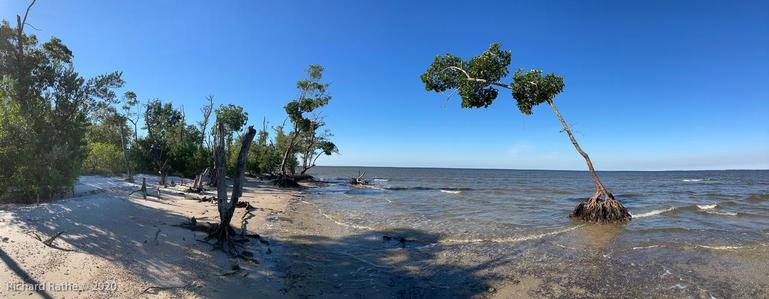
#Photography #Panorama #Mangrove #RabbitKey #Everglades #Florida

He is the best physician who is the most ingenious inspirer of hope.
-- Samuel Taylor Coleridge

#Wisdom #Quotes #SamuelTaylorColeridge #Physicians

#Photography #Panorama #MississippiRiver #PikesPeak #Iowa

El escritor mediocre. Samuel Taylor Coleridge

El costumbrismo y las escenas pintorescas son el sello del escritor mediocre. Todo es tan detallista, tan copiado del natural, tan pegado a los datos sensibles que nos preguntamos por qué el artista se ha decidido a emplear las palabras en lugar de recurrir a la pintura.

Samuel Taylor Coleridge

#SamuelTaylorColeridge

Musicologist-pianist Samantha Ege: ‘The music of Florence Price was a revelation!’

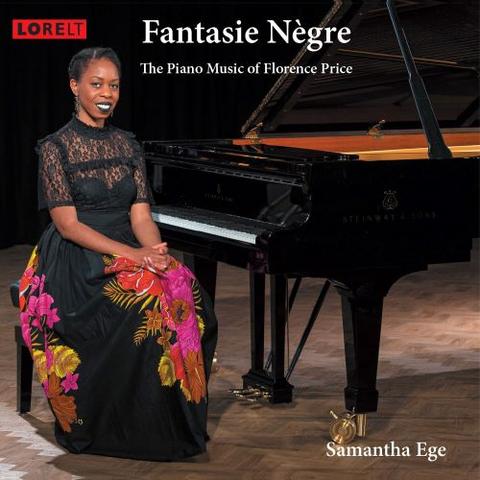
Samantha Ege did not know any black composers until she heard music by Florence Price in 2009. In 2020 she completed her musicology studies with a thesis on Price, a year later saw the release of her CD Fantasie nègre, featuring all 4 Fantasies.

The album is named after the first piece Samantha Ege (1989) ever heard by Florence Price (1887-1953). ‘That was in 2009, when I was studying at McGill University in Canada on an exchange scholarship. During a lecture about the early twentieth century, our teacher played her Fantasie nègre No. 1 in E minor.’ Ege was deeply impressed by this piece for solo piano from 1929: ‘So refined, expressive and colourful! I had never heard anything like it in the classical world.’

Suppressed musical heritage

‘My education had overemphasised George Gershwin as the only composer who drew influence from Black creativity. When I heard Price’s music, this illusion was completely shattered. Although I have been playing the piano since I was three and have always been interested in classical music, it was only in 2009 that I first came across a female composer with African roots. It was also my first encounter with classical repertoire that goes back to Black folk music from a period before jazz and the blues: Price incorporated influences from the spiritual songs of the enslaved.’

The discovery was an eye-opener: ‘It was important for my view of classical music, Florence Price became a role model. It turned out that there is a long history of Afro-American composers who incorporate their cultural heritage into their work. They drew inspiration from slave songs and wanted to give an uplifting voice to an incredibly painful past. Their history had always been suppressed in my musical education. – When I heard Price’s Fantasie nègre No.1, I did not even know there were three more fantasies. I only found this out once I had decided to devote my PhD research to her.’

Stars not yet aligned

This was about six years ago: ‘I was so impressed by her music that I wanted to learn to play it myself. Moreover, I had enormous admiration for Price, because she was a pioneer. In 1933, she was the first black woman to have her work performed by a national orchestra, when the Chicago Symphony Orchestra premiered her First Symphony. As I studied her Fantasy, I soon decided to devote the dissertation for my doctorate at York University to her. But somehow I was not yet “ready” for this piece. – Sometimes it’s as if the stars have to align in a certain way when I choose my repertoire.’

Instead of the Fantasy, she turned to the Sonata in E minor from 1932. ‘I studied it extensively and recorded it on my Four Women CD. I also performed the Sonata in cities like Chicago, Arkansas and Boston, which were important to Price. That is how I came to understand her pianistic voice, the way she approaches form, melody and modulation.’

BLACK Renaissance

‘Her music has a distinctly romantic sound, which resonates with Schumann, Liszt and Chopin. This also goes for black contemporaries such as Samuel Taylor-Coleridge, Nora Holt and Margaret Bonds, who also incorporated Negro spirituals. This anchors her firmly in the aesthetics of the Black Renaissance, a movement in the 1920ies that celebrated the beauty of Afro-African folk traditions.’

Ege played the Fantasy No. 1 in Chicago for the first time in the spring of 2019, at the local Cultural Centre: ‘A place with a rich history, where Price had often spent time herself in the past. I had a wonderful audience, many of whom were familiar with her music. Additionally, I programmed works by Chicago composers Dolores White and Regina Harris Baiocchi, who attended the concert. The atmosphere was magical, and I felt very much part of this history. I think this was the beginning of my next chapter as a musicologist-pianist, for at that moment the stars began to align for an album of all four Fantasies.’

SCATTERED Manuscript pages

That sounds more obvious than it was, because for decades only the First Fantasy had been known. The other three were only found by chance in 2009 in a dilapidated house in Illinois. ‘They had never appeared in print, and were partly scattered around the room as loose manuscript pages.’ Thanks to her thorough knowledge of music theory and Price’s style, Ege managed to reconstruct the pieces in their original form.

All four Fantasies are based on a pentatonic theme, a feature of much folk music. Ege: ‘The First is based on the negro spiritual Sinner, Please Don’t Let This Harvest Pass, the music continuously circles around the five notes E-G-A-B-D. For the Second, Price chose her own five-note theme, in which she links the melancholy of the spiritual to romantic figurations. All four Fantasies have majestic chords, but the Fourth is the most impressive. Price immediately builds up tension with a ceremonious opening, followed by a folk theme that is worked out in expansive variations.’

With substitute pride, Ege concludes: ‘This Fantasy No. 4 in B minor best reflects the diverse and unfettered palette of Price’s artistic expression. It was not without reason that she received an honourable mention for it in 1932.’

This article first appeared in the May issue of the Dutch music magazine Luister.

https://www.youtube.com/watch?v=ByWhkwFwOfo

My blog is listed one of 60 best classical music blogs worldwide on Feedspot. Support, however small, is welcome through PayPal (friends option), or transfer to my bank account: T. Derks, Amsterdam, NL82 INGB 0004 2616 94. Thanks!

#DoloresWhite #FlorencePrice #MargaretBonds #NoraHolt #ReginaHarrisBaiocchi #SamanthaEge #SamuelTaylorColeridge

"Prelude to the Rime of the Ancient Mariner"

https://eidon.bandcamp.com/track/prelude

For guitar, cello, harp, ney flute, double bass, and... Orson Welles.

#Coleridge
#samueltaylorcoleridge
#rimeoftheancientmariner

Prelude, by Eidon

from the album Unknow

Eidon