Cisco Tests AI for Incident Reports, Finds Mixed Results

Cisco's experiment with AI-generated incident reports yielded mixed results, with large language models producing significant inaccuracies, unusual conclusions, and inconsistent writing styles when used for long-form technical content. The findings revealed four predictable failure modes, highlighting the need for guardrails…

https://osintsights.com/cisco-tests-ai-for-incident-reports-finds-mixed-results?utm_source=mastodon&utm_medium=social

#ArtificialIntelligence #LargeLanguageModels #IncidentResponse #AiTesting #CiscoTalos

Cisco Tests AI for Incident Reports, Finds Mixed Results

Discover how Cisco tested AI for incident reports, finding mixed results and four predictable failure modes, and learn why LLMs need guardrails - read now.

OSINTSights

Crikey | The literary uncanny valley will not last, and publishing knows it by Jack Callil

AI generated summary, Read the full article for complete information.

The article “The literary uncanny valley will not last, and publishing knows it” by Sami Shah (May 22 2026) observes that readers can currently sense a distinct, uneasy feeling when encountering AI‑generated prose—a “literary uncanny valley” akin to the robotics concept where near‑human artifacts feel off. The piece argues that this unsettling perception is temporary; as large language models improve and the publishing industry adapts, the gap between human‑like writing and machine output will narrow, ultimately eliminating the uncanny sensation.

Read more: https://www.crikey.com.au/2026/05/22/literary-uncanny-valley-writing-publishing-artificial-intelligence/

#ChatGPT #Artificialintelligence #largelanguagemodels #technology #writing

The literary uncanny valley will not last, and publishing knows it

The future of how we grapple with AI in writing is Friction and Non-Friction.

Crikey

From answer engines to learning engines — Why fast answers are like fast food

People crave fast answers. But the purpose of information systems is to help people gain knowledge. So we should seek better questions.

https://duncanstephen.net/from-answer-engines-to-learning-engines-why-fast-answers-are-like-fast-food/

Two AI-based science assistants succeed with drug-retargeting tasks Both tools generate hypotheses; one goes on to analyze some of the data. https://s.faithcollapsing.com/hxjxc#ai #computer-science #futurehouse #google #hypothesis #hypothesis-testing #large-language-models #science

The New Republic | The AI Backlash Is an Opportunity for Democrats by Monica Potts

AI generated summary, Read the full article for complete information.

Residents from coast to countryside are mobilizing against the rapid, often secretive construction of energy‑intensive data centers, arguing that these facilities drain water, raise electricity costs, and lack community safeguards. The growing opposition—seen in hearings in Idaho, protests in Memphis, a moratorium veto in Maine, and even the ousting of town councilors in Missouri—highlights a broader unease with Big Tech’s expanding influence and the societal impacts of AI, especially large‑language models. While both parties claim to care about rising energy bills and job security, Democrats have yet to weave these concerns into a cohesive mid‑term platform, leaving an opening for them to champion regulation of AI and data‑center growth, hold tech companies accountable, and connect class‑based, affordability‑focused messaging with the mounting anger over unregulated tech expansion.

Read more: https://newrepublic.com/article/210602/ai-backlash-opportunity-democrats

#Democrats #BigTech #Artificialintelligence #Datacenters #largelanguagemodels

The AI Backlash Is an Opportunity for Democrats

All around the country, residents are fighting data centers. When will Democratic politicians realize the potential here?

The New Republic
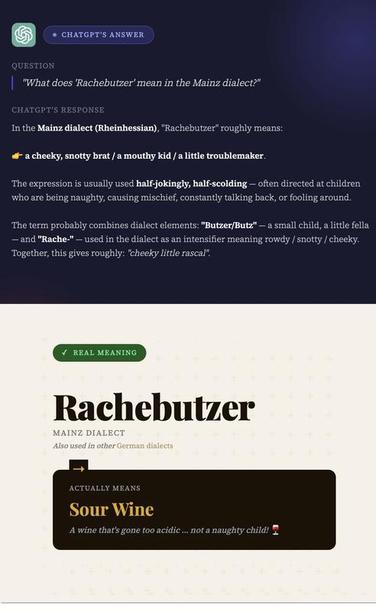
Artificial intelligence struggles to understand the Mainz dialect

Artificial intelligence struggles to understand the Mainz dialect: New study of #MainzUniversity finds that language models misinterpret words in regional varieties 👉 https://press.uni-mainz.de/artificial-intelligence-struggles-to-understand-the-mainz-dialect/

#ArtificialIntelligence #AI #LargeLanguageModels #LLMs #dialects #ComputationalLinguistics #dialect

Künstliche Intelligenz versteht Mainzer Dialekt nicht: Neue Studie der #UniMainz zeigt, dass Sprachmodelle Wörter in lokalen Varianten missinterpretieren 👉 https://presse.uni-mainz.de/ki-versteht-mainzer-dialekt-nicht/

#KünstlicheIntelligenz #Sprachmodelle #LargeLanguageModels #LLMs #Computerlinguistik #Dialekte #Dialekt

On the Use of Generative AI

We’ve reached the time of year at Maynooth when academic staff are busy grading projects of various kinds. This year we have to be much mindful of the use of Large Language Models (such as ChatGPT) in written reports as these are much more commonplace now. We anticipated this at the start of the academic year, but now we have to see whether are policies work in practice. In the case of the Computational Physics projects that I have to mark, this also extends to the use of Generative AI in writing code. The approach I take there is that I don’t place an absolute ban, but I require students to declare the use and, crucially, describe what steps they used to test and validate the output. By the time they’ve done that they might as well have written the code themselves!

As well as its effect on teaching, GenAI is having a huge impact on research. In my role as Managing Editor of the Open Journal of Astrophysics I have seen a large increase in submissions of papers in which AI plays some role. These vary from pure “slop” – nonsense papers not worthy of serious consideration – to articles that use AI tools in a perfectly reasonable way to speed up certain aspects of the analysis. I think this is the case for most scientific journals.

The approach we have adopted is similar to the policy on teaching outlined above. It is described by the following section we have added to our “For Authors” page:

Use of Generative AI. We do not operate a blanket ban on the use of Large Language Models (LLMs) or other forms of Generative AI. If you do use such tools, however, you must declare it in the acknowledgments section of your paper. Furthermore, if GenAI methods are used for any form of calculation, analysis, or data visualization you must include an account of what steps you have taken to test and validate these methods. Articles containing direct evidence of the use of GenAI, such as hallucinated references or prompts embedded in the text, will not be accepted.

Since the Open Journal of Astrophysics is an arXiv-overlay journal I should also pass on the information that arXiv is itself developing a policy on the use of LLMs. Although it has yet to appear on the arXiv website, a recent communication on social media states:

If there is incontrovertible evidence of LLM slop in a paper, this means the authors did not take the time to read the LLM output and we can’t trust anything else in the paper. Penalty is 1 year ban from arXiv followed by a requirement that subsequent arXiv submissions must first be accepted at a reputable peer-reviewed venue.

This will be tantamount to a one-year ban from publishing in OJAp, so urge authors should be be very careful in their use of such methods.

It is likely that these policies will have to be extended as the use of GenAI spreads.

#GenAI #generativeAI #LargeLanguageModels #llm #Projects #researchPapers #TheOpenJournalOfAstrophysics