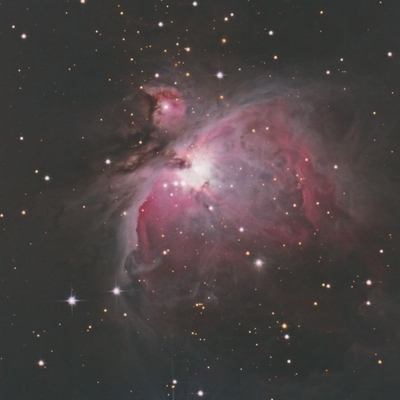
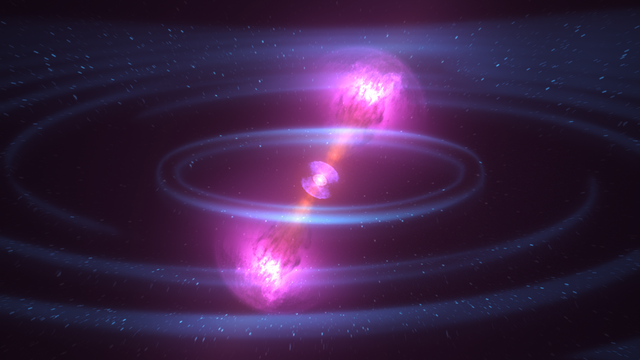
[#MultiMessenger Astrophysics] The very first colloquium of the #astrophysics Center for Multimessenger Studies in Europe (#ACME) is being held this week in Toulouse. It brings together numerous specialists in #GRB, #kilonovae, compact #binaries and more. These are the main transient and periodic sources of gravitational waves that travel through our #Universe, and which numerous experimental devices are attempting to intercept - from both ground and space.

More info: https://acme-grav-waves.sciencesconf.org/
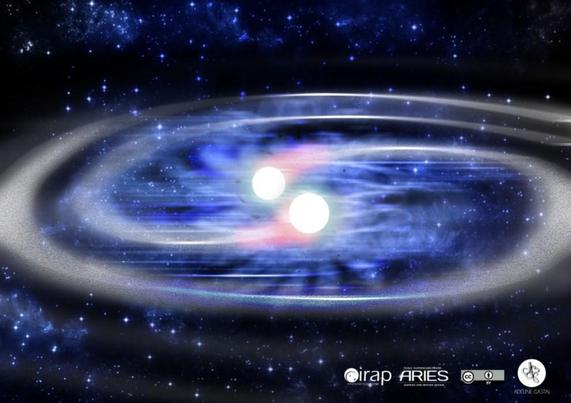
First ACME workshop on the gravitational wave sky and complementary observations - Sciencesconf.org

[Astrophysique #multimessager] Le tout premier colloque du Centre d'#astrophysique pour les études multimessagers en Europe (#ACME) se tient cette semaine à Toulouse. Il rassemble de nombreux spécialistes des #SursautsGamma, des #kilonovae, des #binaires compactes, etc. Autant de sources transitoires et périodiques d'ondes gravitationnelles qui parcourent notre #Univers, et que de nombreux dispositifs expérimentaux tentent d'intercepter - depuis le sol et l'espace.

Infos+ : https://acme-grav-waves.sciencesconf.org/
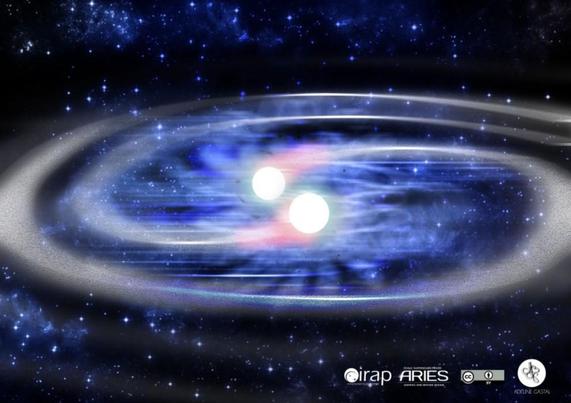
First ACME workshop on the gravitational wave sky and complementary observations - Sciencesconf.org

[Multi-messenger #Astronomy] The first-ever #ACME (Astrophysics Centre for Multi-messenger studies in Europe) workshop will be held in Toulouse, France, from April 7 to 11. It will be dedicated to the detection, monitoring and analysis of #GravitationalWaves and transient events (#GRB, #kilonovae, compact binaries, etc).

The deadline for abstract submission is January 24, 2025.
Registration is still open ...

Infos+ : https://acme-grav-waves.sciencesconf.org/
#MultiMessenger #Astrophysics #GRB #Cosmology

First ACME workshop on the gravitational wave sky and complementary observations - Sciencesconf.org

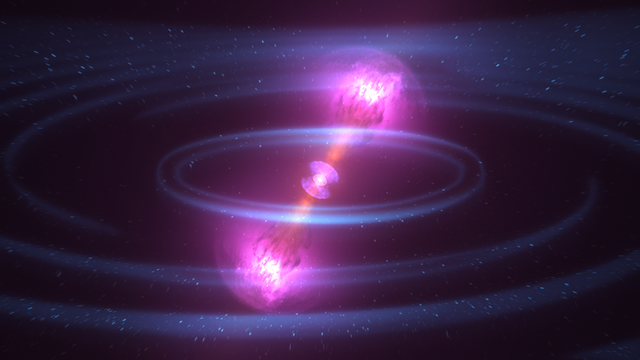
[#Astronomie multi-messagers] Le tout premier atelier #ACME (Astrophysics Centre for Multi-messenger studies in Europe) se tiendra à Toulouse, du 7 au 11 avril prochains. Il sera dédié à la détection, au suivi et à l'analyse des #OndesGravitationnelles et des événements transitoires (#SursautsGamma, #kilonovae, binaires compacts, etc).

La date limite de soumision des abstracts a été fixée au 24 janvier 2025.
Les inscriptions sont encore ouvertes ...

Infos+ : https://acme-grav-waves.sciencesconf.org/
#MultiMessenger #Astrophysics #GRB #Cosmology

First ACME workshop on the gravitational wave sky and complementary observations - Sciencesconf.org

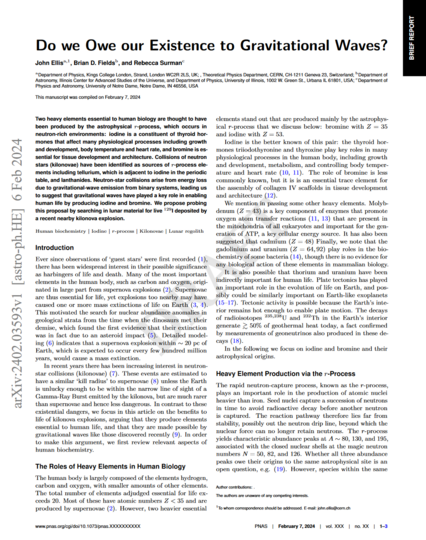
Do we Owe our Existence to Gravitational Waves?

Two heavy elements essential to human biology are thought to have been produced by the astrophysical $r$-process, which occurs in neutron-rich environments: iodine is a constituent of thyroid hormones that affect many physiological processes including growth and development, body temperature and heart rate, and bromine is essential for tissue development and architecture. Collisions of neutron stars (kilonovae) have been identified as sources of $r$-process elements including tellurium, which is adjacent to iodine in the periodic table, and lanthanides. Neutron-star collisions arise from energy loss due to gravitational-wave emission from binary systems, leading us to suggest that gravitational waves have played a key role in enabling human life by producing iodine and bromine. We propose probing this proposal by searching in lunar material for live $^{129}$I deposited by a recent nearby kilonova explosion.

arXiv.org
Synthese von Seltenerdelementen in Kilonovae bestätigt | astropage.eu

Eine Forschungsgruppe hat erstmals sogenannte Seltenerdelemente identifiziert, die durch die Verschmelzung von Neutronensternen produziert wurden. Die Einzelheiten dieses Meilensteins wurden am 26. Oktober 2022 im Astrophysical Journal veröffentlicht. Wenn sich zwei Neutronensterne spiralförmig aufeinanderzubewegen, produziert die resultierende Explosion eine große Menge schwerer Elemente, aus denen unser Universum besteht. Das erste bestätigte Beispiel dieses Prozesses war

astropage.eu
Astronomers Find a Star That Contains 65 Different Elements

Scientists found a star that contains 65 elements. By studying the star, they're learning more about the source of the elements.

Universe Today
Ondes gravitationnelles : une collision d'étoiles à neutrons aurait produit un trou noir

En août 2017, les instruments Ligo et Virgo avaient détecté des ondes gravitationnelles issues de la fusion de deux étoiles à neutrons. Mais quel monstre céleste ce phénomène a-t-il engendré ? une...