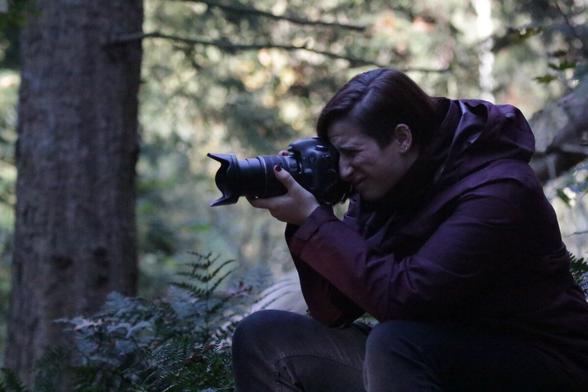
Linda, her very first time seriously holding a camera—one of mine. Knowing how much she loves animals, I took her to a park known for its squirrels. First the birds arrived, giving her time to learn the basics: point, focus, shoot. Step by step. An hour later, after spotting her first squirrel, I handed her a better lens. And there she was, smiling behind the camera. Lesson one: have fun.

#Photography #LearningPhotography #WildlifePhotography #Squirrels #BirdPhotography #NaturePhotography #PhotographyMentor #CanonPhotography #Telephoto #BeginnerPhotographer #CreativeJourney #NatureLovers #InTheField #OutdoorPhotography #AnimalLovers #TeachingPhotography #FirstSteps #PhotographyLife #PointAndShoot #NatureObservation #FieldMoments #BehindTheScenes #HappyPhotographer #WildlifeMoments #CreativeGrowth #ThroughTheLens #ByMaikeldeBakker #MaikeldeBakkerPhotography #WonderingLens
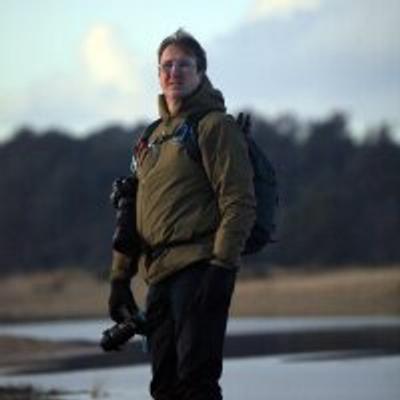
Another protégé. Another lesson.

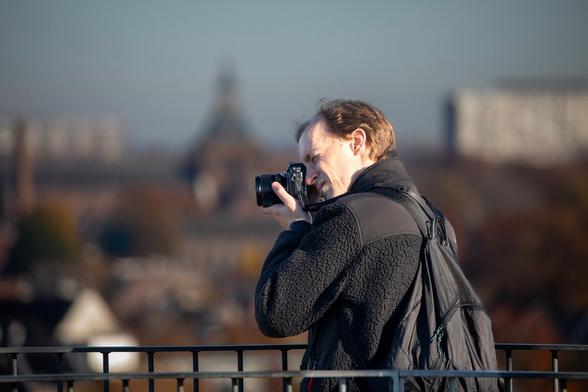
This time high above the Spoorpark in Tilburg, standing on a viewing tower swaying gently in the wind. Kevin is already a capable street photographer, comfortable in the rhythm of the streets below. But this lesson was about something different: perspective.

As we looked out over the city, I told him something unexpected.

“Look down.”

You could almost see the question marks appear above his head.

From a bird’s-eye view, the city changes completely. Streets become lines, people become patterns, cars become movement through geometry and light. A perspective many street photographers rarely explore, because we naturally see the world from eye level.

And that’s exactly why it matters.

Photographing from that height wasn’t easy. The tower moved with every gust of wind, making stability a challenge—especially with longer focal lengths. While I prepared a camera with a telelens for Kevin to use, he started experimenting on his own. That moment—his curiosity, his concentration—is when I took this shot.

When I handed him the camera, I showed him some of the compositions I had seen from above. And almost immediately, he understood the lesson.

Not just how to photograph a city.

But how changing your position changes the story entirely.

Sometimes growth in photography is not about better gear or settings.

Sometimes it’s simply about standing somewhere different.

#StreetPhotography #Spoorpark #Tilburg #PhotographyMentor #LearningPhotography #UrbanPhotography #BirdsEyeView #CityPhotography #Perspective #Composition #CanonPhotography #Telephoto #VisualStorytelling #PhotographyJourney #StreetPhotographer #CreativeGrowth #UrbanGeometry #LeadingLines #CityLife #OutdoorPhotography #ExploreTilburg #PhotographyLessons #InTheField #ArchitecturePhotography #SeeingDifferently #HumanPatterns #ThroughTheLens #ByMaikeldeBakker #MaikeldeBakkerPhotography #WonderingLens
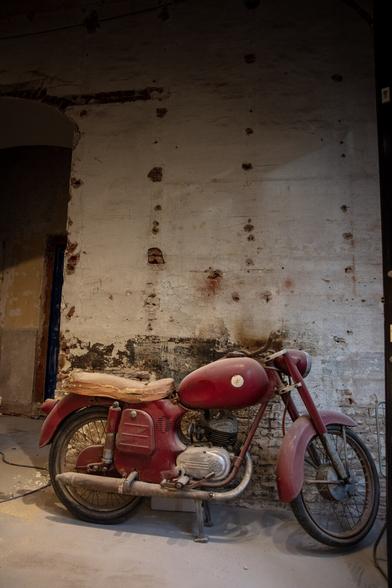
Covered in dust.

During a walk, we passed an old store where two men were restoring what time had slowly taken apart—cleaning, repairing plaster, bringing fragments back to life. In a corner sat a bale of hay. And behind it, something hidden.

A motorcycle.

Curiosity pulled us closer. The owner noticed, came outside, and struck up a conversation. I asked if I could take a photo. The bike itself couldn’t be moved—but the hay bale could. With a bit of effort, it revealed a vintage Hungarian Danuvia 125, dating back to the early 1960s. Dark red, covered in dust, draped in spiderwebs. Forgotten, but not gone.

Captured with a Canon 5DSR and Sigma 24–70mm Art, I chose a natural perspective—wide enough to include context, close enough to hold detail. Dust particles, worn paint, the quiet texture of time itself.

Machines like this tell a different kind of story. Built in an era where simplicity and function defined design, the Danuvia 125 was a lightweight, practical motorcycle—engineered for everyday use, not display. And yet here it was, decades later, preserved unintentionally.

I didn’t want to take too much of the man’s time. I thanked him for his openness and hospitality, and we moved on.

But for a moment, time stood still in that corner.

#Danuvia125 #VintageMotorcycle #ClassicBike #HungarianMotorcycle #MotorcyclePhotography #AbandonedBeauty #DustAndTime #Canon5DSR #Sigma2470Art #VintageMachines #OldTimer #HiddenStories #Patina #RusticCharm #MechanicalHistory #Restoration #InTheField #OutdoorPhotography #StorytellingPhotography #ForgottenPlaces #VisualNarrative #TimeCapsule #OldWorkshop #BehindTheScenes #TravelMoments #ThroughTheLens #ByMaikeldeBakker #MaikeldeBakkerPhotography #WonderingLens
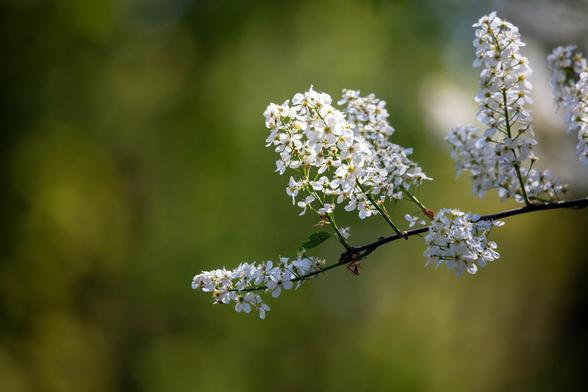
Bird cherry (*Prunus padus*, vogelkers), captured at 400mm with a Canon 5D Mark IV and Sigma 100–400mm. A pleasant image at first glance—but look closer. A small traveler reveals itself: likely a weevil (superfamily snuitkevers *Curculionoidea*). These tiny details transform a scene, reminding us that nature’s stories often hide in plain sight.

#PrunusPadus #Vogelkers #BirdCherry #Weevil #Curculionoidea #Snuitkever #MacroDetail #NaturePhotography #WildlifePhotography #Canon5DMarkIV #Sigma100400 #Telephoto #CloseUpNature #TinyWorlds #HiddenNature #NatureLovers #InTheField #OutdoorPhotography #PlantScience #Botany #InsectLife #Biodiversity #NatureObservation #FieldMoments #LookCloser #SmallDetails #VisualStorytelling #ByMaikeldeBakker #MaikeldeBakkerPhotography #WonderingLens #snuitkevers
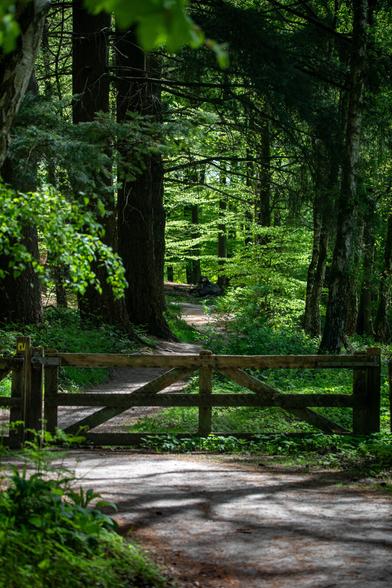
A few weeks ago, near the Sint-Jansberg close to Nijmegen, we found a path that felt like an invitation.

A winding dirt trail leading to a sturdy wooden gate. Beyond it, the path continued into a lush green forest, where sunlight filtered through the canopy in shifting beams. Patches of light moved gently across leaves and ground, shaped by the wind above.

Captured with a Canon 5DSR and Sigma 24–70mm Art, I chose a wider perspective to hold the structure of the scene—the leading lines, the contrast between shadow and light, the quiet depth of the forest beyond the gate.

But the image only tells part of the story.

We stood there for a while. Not photographing. Just listening. The soft rustle of leaves, birds calling from unseen branches, the warmth of sunlight breaking through the shade. A moment that exists beyond what a camera can record.

From a scientific perspective, forests like these create their own microclimates—cooler air, higher humidity, filtered light. It shapes not just the vegetation, but the entire sensory experience.

And that’s the part a photograph cannot fully capture.

So perhaps this image is not the moment itself—but an invitation to imagine it.

#SintJansberg #Nijmegen #ForestPath #NaturePhotography #LandscapePhotography #Canon5DSR #Sigma2470Art #WideAngle #LeadingLines #LightAndShadow #ForestLight #DutchNature #NatureLovers #InTheField #OutdoorPhotography #Woodland #GreenSpaces #NatureWalk #QuietMoments #VisualStorytelling #EarthPerspective #NaturalBeauty #ExploreNature #ForestLife #Microclimate #NatureObservation #ThroughTheLens #ByMaikeldeBakker #MaikeldeBakkerPhotography #WonderingLens
A small bird, a familiar song—and a moment of doubt.

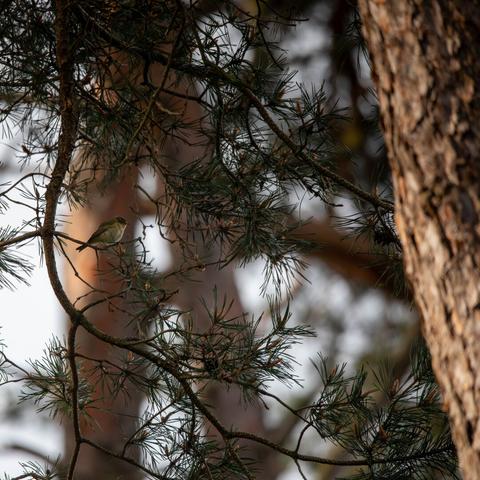
Perched in a pine tree, singing softly, this little warbler caught my attention. At first glance, I thought it might be a grauwe fitis (*Phylloscopus trochiloides*, commonly known as the Greenish Warbler). But something didn’t quite match—no clear wing bar, slightly different tones. Then the thought shifted: could it be a Siberian chiffchaff (*Phylloscopus collybita tristis*), a rare visitor in the Netherlands?

Or… just a very typical chiffchaff.

That’s the challenge with these species. Subtle differences in plumage, song, and structure. Easy to question, difficult to confirm. If you know, I’d genuinely like to hear your thoughts.

Captured with my usual setup—Canon 5D Mark IV and Sigma 100–400mm—this was less about the perfect shot and more about observation. Listening, watching, waiting until the bird revealed itself.

And all of this unfolding during an unusual period. Weeks of warm, dry, sunny weather have changed the feel of the landscape. Pine trees releasing their scent into the air. Early-season wildfires appearing more frequently. Things that used to be rare are becoming less so.

Thankfully, the rain has returned these past days.

Nature needed it.

And maybe, so did we.

#Chiffchaff #SiberianChiffchaff #PhylloscopusCollybita #PhylloscopusCollybitaTristis #GreenishWarbler #PhylloscopusTrochiloides #Tjiftjaf #BirdPhotography #WildlifePhotography #NaturePhotography #Canon5DMarkIV #Sigma100400 #Telephoto #BirdWatching #BirdID #DutchNature #RareBird #InTheField #NatureObservation #BirdLovers #SpringBirds #ForestLife #PineTrees #ClimateChange #DrySeason #Wildfires #NatureMoments #ByMaikeldeBakker #MaikeldeBakkerPhotography #WonderingLens
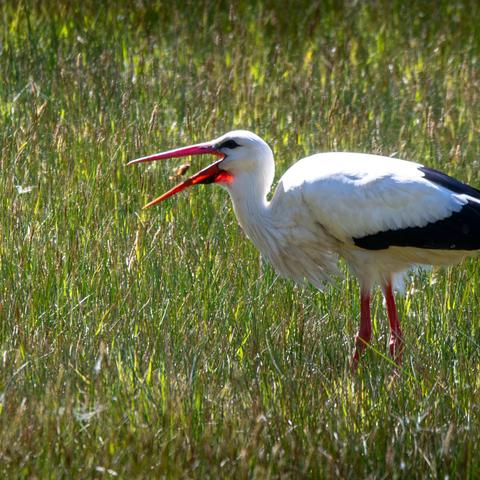
The unlucky frog.

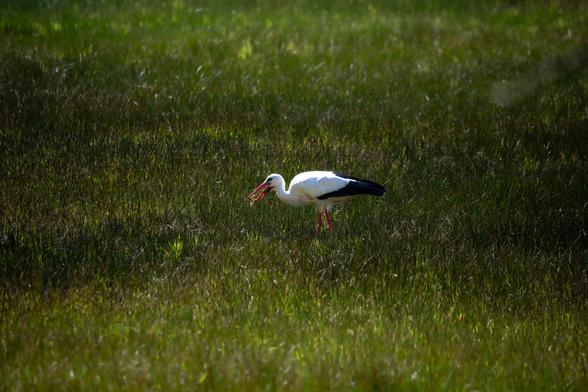
During a walk through the Chaamse Bossen, we spotted a stork moving methodically through tall grass in a swampy area. At first, it seemed calm—almost slow. But then it struck.

Curious, I picked up my Canon 5D Mark IV with the Sigma 100–400mm to see what was happening. What followed was intense. The stork had found a feeding ground, and it was relentless. One after another, frogs were flushed from the grass, briefly airborne… and then gone.

It felt harsh to witness. There’s something about seeing a life end so directly, so efficiently, that stays with you. And yet, this is nature in balance. Frogs lay hundreds, sometimes thousands of eggs, knowing that only a fraction will survive. Predation isn’t failure—it’s part of the system.

From a photographic perspective, moments like this are unpredictable. Fast movement, shifting focus, and the need to react instantly. There’s no time to perfect settings, only to observe and capture what unfolds.

It’s easy to romanticize nature when it’s still and quiet.

But out here, life and death exist side by side—unfiltered, unsentimental, and real.

#Stork #Frog #Predation #WildlifePhotography #NaturePhotography #Canon5DMarkIV #Sigma100400 #Telephoto #ChaamseBossen #DutchNature #InTheWild #NatureIsRaw #CircleOfLife #Ecology #FoodChain #Biodiversity #Wetlands #SwampLife #WildlifeMoments #InTheField #OutdoorPhotography #NatureObservation #RealNature #Untamed #LifeAndDeath #AnimalBehavior #ThroughTheLens #ByMaikeldeBakker #MaikeldeBakkerPhotography #WonderingLens
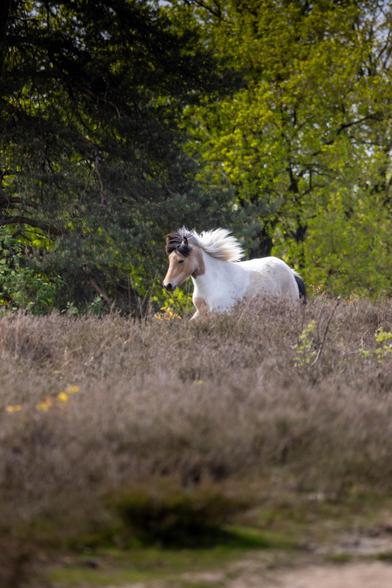
In the Dutch wilderness of the Herikhuizerveld near Arnhem, you don’t always see them—but if you’re lucky, you might hear them first.

We had just climbed out of a dense forest into the open hills, the sun suddenly strong, the heat rising fast. And then—galloping. I looked up, and there it was: a Fjord horse, white and brown, moving across the landscape with quiet power.

I grabbed my Canon 5D Mark IV with the Sigma 100–400mm, reacting more than thinking. A fleeting moment like this doesn’t wait.

Only later did I realize the settings were still dialed in for the forest: 1/250 sec, f/6.2, ISO 1200. Just a bit too slow for motion like this. If you look closely, there’s a slight blur.

And honestly—that’s okay.

Because this image isn’t about technical perfection. It’s about presence. About catching a moment that exists for seconds and then disappears again into the landscape.

Fjord horses, originally from Norway, are often used in Dutch nature reserves as natural grazers, helping maintain open ecosystems and biodiversity. They belong here now, shaping the land as much as they move through it.

Sometimes you get the perfect shot.

Sometimes you get the moment.

#FjordHorse #WildHorses #Herikhuizerveld #Arnhem #DutchNature #NaturePhotography #WildlifePhotography #Canon5DMarkIV #Sigma100400 #Telephoto #InTheField #NatureWalk #OutdoorPhotography #WildlifeMoments #MotionBlur #ImperfectBeauty #NatureLovers #GrazingAnimals #Ecology #Biodiversity #LandscapeLife #SpontaneousShot #FieldMoments #NatureObservation #ThroughTheLens #EarthPerspective #VisualStorytelling #ByMaikeldeBakker #MaikeldeBakkerPhotography #WonderingLens
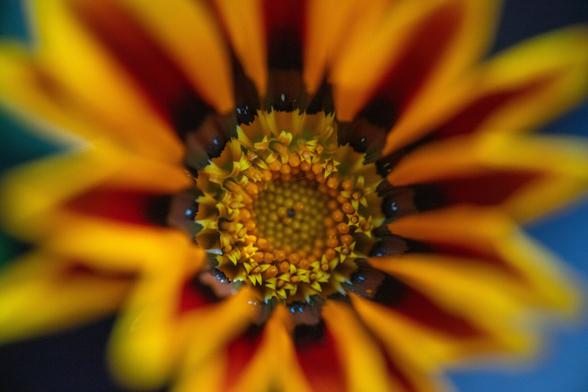
A close encounter with the treasure flower, or African daisy (Gazania). Captured with a Canon 5DSR and MP-E 65mm, revealing structures the eye often misses. These sun-loving flowers open with light, maximizing pollinator attraction through bold contrast and symmetry.

#Gazania #TreasureFlower #AfricanDaisy #MacroPhotography #ExtremeMacro #Canon5DSR #MPE65 #FlowerPhotography #NaturePhotography #CloseUpNature #TinyWorlds #Botany #PlantScience #Pollinators #FloralPatterns #NatureLovers #InTheField #OutdoorPhotography #SpringColors #NaturalDesign #Biodiversity #VisualDetails #MacroWorld #ThroughTheLens #NatureObservation #HiddenBeauty #ByMaikeldeBakker #MaikeldeBakkerPhotography #WonderingLens
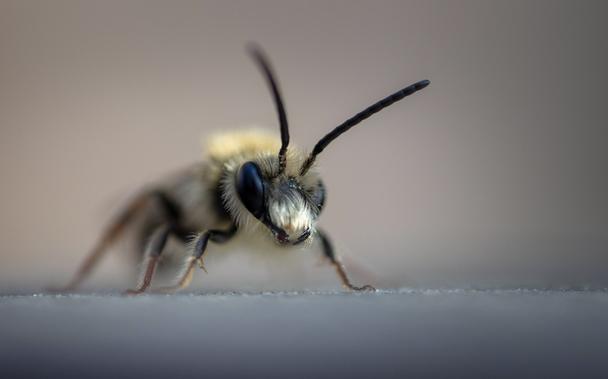
Before heading back to our hotel, we returned to ’t Zwaantje—good food, warm light, and a well-earned rest after a long day. Sitting outside in the spring sun, something small joined us at the table: a mining bee, genus Andrena (metselbij in Dutch).

While most would simply enjoy the moment, I saw an opportunity.

My Canon 5DSR was within reach—as usual—so I quickly swapped from the Sigma 24–70mm Art to the Canon MP-E 65mm. From that moment on, it became a different kind of scene. I dropped low and went full paparazzi.

Christel laughed. “Are you trying to kill it?” she joked, watching me fire shot after shot.

And honestly, I understood how it looked.

But macro at this level is unforgiving. At high magnification, depth of field becomes razor-thin—sometimes less than a millimeter. Every breath, every slight movement shifts focus from perfect to lost. Shooting in bursts isn’t excess; it’s necessity.

Andrena bees are solitary ground-nesters, often overlooked compared to honeybees, yet essential pollinators in early spring ecosystems.

So there I was—chasing sharpness on a creature most people wouldn’t even notice.

A quiet moment at a table, turned into a study of life at the smallest scale.

#MiningBee #Andrena #Metselbij #MacroPhotography #ExtremeMacro #Canon5DSR #MPE65 #InsectPhotography #NaturePhotography #WildlifePhotography #CloseUpNature #TinyWorlds #DepthOfField #MacroLife #SpringSun #Pollinators #BeePhotography #NatureLovers #InTheField #OutdoorMoments #BehindTheScenes #PhotographyLife #PatienceAndPractice #NatureObservation #HiddenNature #FieldMoments #VisualStorytelling #ByMaikeldeBakker #MaikeldeBakkerPhotography #WonderingLens