#ApacheStronghold 'We Are Still Fighting'

Statement from Dr. #WendslerNosie Sr.
March 20, 2026

"Many of you have heard that on Friday, the Ninth Circuit again refused to stop the Government from giving #OakFlat to #ResolutionCopper for destruction. This is sad news. But we will never stop fighting to protect Oak Flat and each place that is sacred to our people. And we are still fighting—in the courts, in Congress, and, most importantly, spiritually.

In the courts, there are still four lawsuits seeking to protect Oak Flat. All four cases are still going. And any one of these cases could still put a stop to the Government’s and Resolution’s plans to destroy Oak Flat:

- In Lopez v. United States, on the day after Friday’s ruling, seven brave Apache women filed an emergency appeal in the U.S. Supreme Court, asking the Court to stop the mine and protect Oak Flat. The Supreme Court could rule on that appeal any day. The women in that case can also ask the Ninth Circuit to reconsider its ruling in their case. The deadline to ask for reconsideration is April 27, 2026. That case focuses on religious freedom.
- In #SanCarlosApache Tribe v. United States, also part of Friday’s ruling, the Tribe can also ask the Ninth Circuit to reconsider its ruling and/or appeal to the Supreme Court. That case focuses on the Tribe’s rights, tribal consultation, and the inadequacy of the government’s decision-making process.
- In Arizona #Mining Reform Coalition v. United States, also part of Friday’s ruling, several environmental groups and the Inter-Tribal Association of Arizona can also ask the Ninth Circuit to reconsider its ruling and/or appeal to the Supreme Court. That case focuses on the government’s unfair appraisal of Oak Flat and inadequate #EnvironmentalReview.
- Apache Stronghold v. United States, which is our case, has been 'stayed' (or temporarily put on hold) waiting for the Ninth Circuit’s ruling, which came on Friday. Now that the Ninth Circuit has ruled, our case will start again in the district court. We will continue making every possible legal claim to protect Oak Flat.

In Congress, on Tuesday, Representative #AdelitaGrijalva introduced legislation to preserve public lands in the Chí’chil Biłdagoteel Historic District and fight back against the proposed mine. This bill is an important part of the fight to protect Oak Flat.

But even more than legally and politically, we are continuing to fight spiritually. This fight has never been primarily about law or politics. It is about who we are as human beings, religiously and spiritually. If we allow sacred places to be destroyed for profit, we are saying that nothing is truly sacred. We are losing something essential about our humanity—our ability to respect #MotherEarth, to honor what is holy, and to live in balance with the world around us.

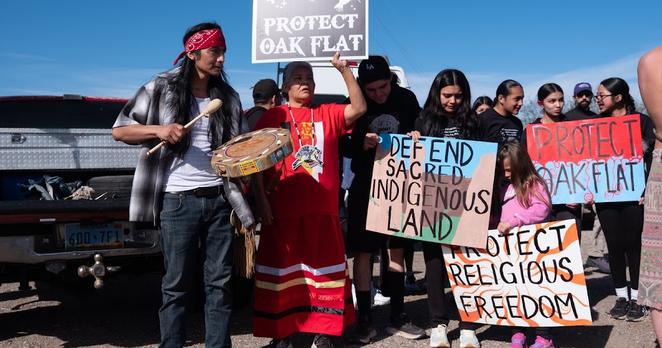
That is why we are calling on all people to continue raising their voices, in prayer and protest, to protect Oak Flat—to protect the sacred. We, the Apache Stronghold, invite you to an upcoming spiritual gathering on March 28-29, 2026 at Oak Flat.

The legal system may try to reduce our struggle to questions of ownership and profit. But our connection to Mother Earth predates those systems. It is something each one of us is born into, something we carry in our prayers, our songs, and our way of life. No matter what the courts rule, no matter what the government tries to do, we will never stop fighting to preserve our sacred places. We will not lose our connection to the Creator."

Source:
https://bsnorrell.blogspot.com/2026/03/apache-stronghold-we-are-still-fighting.html

#ChíchilBiłdagoteel #ProtectOakFlat #SanCarlosApache #ResolutionCopper #Arizona #RioTinto #SaveOakFlat #CopperMining #Fight4OurExistance #SacredLand #TontoNationalForest #WesternApaches #ProtectTheSacred #IndigenousNews #IndigenousActivism #CorporateColonialism #DefendTheSacred #CensoredNews #ReaderSupportedNews

Apache Stronghold 'We Are Still Fighting'

Censored News is a service to grassroots Indigenous Peoples engaged in resistance and upholding human rights.

#OakFlat March and Run: #ApacheStronghold Photos

By Apache Stronghold, Censored News, Feb. 9, 2026

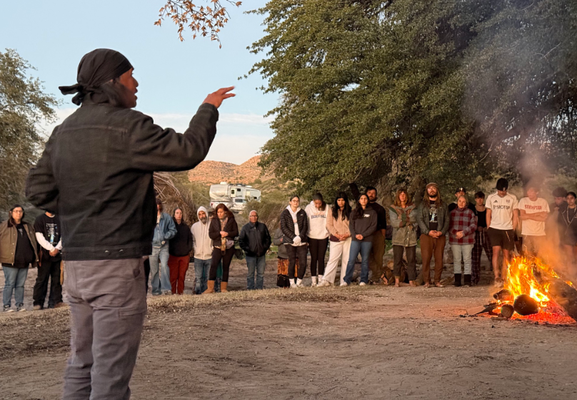
"12th Annual #OakFlatMarch/Run. The final day of the run, Saturday, February 7, 2026, the experienced runners passed through the final corridor, ending at the Oak Flat campground. The annual gathering followed, with speakers representing many tribes, backgrounds, and ages sharing their thoughts on Oak Flat and the importance of protecting this sacred and irreplaceable site. Photos by Molly Peters.

Apache Stronghold is battling to protect Oak Flat from becoming the gigantic crater of a copper mine, that would destroy the Sacred Ceremonial Place, seize and pollute the water, and poison the air and land."

Source (includes photos):
https://bsnorrell.blogspot.com/2026/02/oak-flat-march-and-run-apache.html

#ProtectOakFlat #SanCarlosApache #ResolutionCopper #Arizona #ChichilBildagoteel #RioTinto
#SaveOakFlat #CopperMining
#Fight4OurExistance #SacredLand #TontoNationalForest #WesternApaches #ProtectTheSacred #IndigenousNews #IndigenousActivism #CorporateColonialism #DefendTheSacred #OakFlatRun #CensoredNews #ReaderSupportedNews

Oak Flat March and Run: Apache Stronghold Photos

Censored News is a service to grassroots Indigenous Peoples engaged in resistance and upholding human rights.

Indigenous Peoples Fight Climate Change

In the wake of the worst wildfires in living memory in Mexico and Central America in 2024, news outlets were looking for someone to blame. Howler monkeys and many species of parrots perished in the blazes. Slash and burn farming practices by Belize‘s indigenous communities were singled out as a primary cause. Yet this knee-jerk reaction is not evidence based and doesn’t take into account forces like corporate landgrabbing for mining and agribusinesses like meat, soy and palm oil.

Belize’s indigenous Maya communities are rebuilding stronger based on the collective notion of se’ komonil: reciprocity, solidarity, traditional knowledge, gender equity, togetherness and community.

In the wake of horrific #wildfires in #Belize and #Mexico caused by #climatechange, #indigenous #Maya are rebuilding using the notion of se’ komonil: reciprocity #community and solidarity. #indigenousrights #landrights #BoycottPalmOil @palmoildetect https://wp.me/pcFhgU-924

Share to BlueSky Share to Twitter

Written by James Stinson, Senior Research Associate and Evaluation Specialist, Young Lives Research Lab, Faculty of Education, York University, Canada and Lee Mcloughlin, PhD student, Global Sociocultural Studies, Florida International University This article is republished from The Conversation under a Creative Commons license. Read the original article.

Driven by extreme heat and drought, some of the worst wildfires in living memory raged across Mexico and Central America through April and May 2024.

News agencies reported howler monkeys dropping dead from trees, and parrots and other birds falling from the skies.

In Belize, a state of emergency was declared as wildfires burned tens of thousands of hectares of highly bio-diverse forest. Farmers suffered huge losses as fires destroyed crops and homes, and communities across the country suffered from hazardous air quality and hot, sleepless nights. Many risked their lives to fight off the approaching fires.

As the wildfire crisis subsided with rains in June, public attention shifted toward identifying the causes and allocating blame. Many singled out the “slash and burn” farming practices in Belize’s Indigenous communities as the primary cause. This simple knee-jerk reaction ignores the underlying causes of the climate crisis, are scientifically unfounded and stoke resentment of Indigenous Peoples.

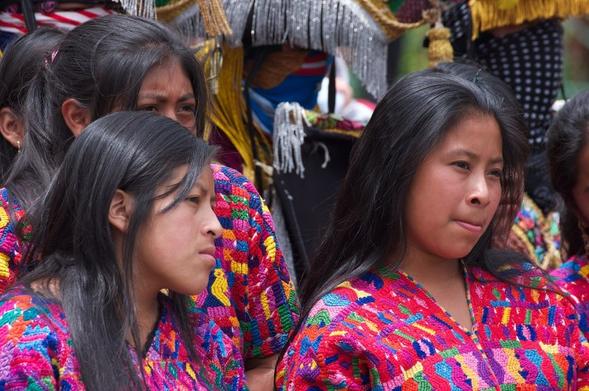
Young Mayan women. Image source: Wikipedia

Fanning the flames

On June 5, one of Belize’s major news networks ran a story with the headline “Are Primitive Farming Techniques Responsible for Wildfires?” The story placed blame for Belize’s wildfires on “slash-and-burn farming”, arguing that “there has to be a shift away from this destructive means of agriculture.”

The story was followed by an op-ed published online asserting that “because of the increased amounts of escaped agricultural fires, aided by climate change, global warming and drought, slash and burn has become more of a problem than the solution it once was.” This sentiment was further reinforced by Belize’s prime minister, who declared that “slash аnd burn has to be something of the past.”

While some of the recent fires in Belize were connected to agricultural burning — and poorly managed fire-clearing practices can have negative air-quality impacts — blaming “slash and burn” for the wildfire crisis ignores the larger context and conditions that made it possible, namely global warming.

May 2024 was the hottest and driest month in Belize’s history. This extreme heat is part of a broader global trend, with June 2024 marking the 13th consecutive “hottest month on record” globally.

More fundamentally, these statements confuse other forms of slash-and-burn agriculture with the distinct “milpa” systems employed by Indigenous people in Belize.

Indigenous knowledge undermined

Throughout Belize, Indigenous Maya farmers commonly practise a form of agriculture referred to as milpa in which fire is used to clear fields and fertilize the soil. Within this system, small areas of forest are chopped down, burned, and planted with maize, beans, squash and other crops. After being cultivated for a year or two, the field is then left fallow and allowed to regenerate back to forest cover while the farmers move on to a new area within a cyclical pattern where areas are reused after a regenerative period.

https://youtu.be/ok787HRp_gA

Commonly derided as slash-and-burn farming, milpa has long been perceived as environmentally destructive. This perspective has been perpetuated by long-standing myths and misconceptions that portray the farming practices of non-Europeans, and specifically the use of fire, as wasteful and irrational.

In Belize, this negative view of slash and burn has driven many colonial and post-colonial interventions to modernize Maya farming practices.

Recent research, however, has shown that the lands of Indigenous Peoples around the world have reduced deforestation and degradation rates relative to non-protected areas. The southern Toledo district of Belize, where the majority of Maya communities are located, boasts a forest cover rate of 71 per cent, significantly higher than the national average of 63 per cent.

Further research has found that the species composition of contemporary Mesoamerican forests has been shaped by the agricultural practices of ancient Maya farmers.

In Belize, fire has been found to play a role in promoting ecosystem health and resilience and intermediate levels of forest disturbance caused by milpa can increase species diversity. Well-managed milpa farming can support soil fertility, result in long-term carbon sequestration and enriched woodland vegetation.

Research has also shown that previous studies of deforestation in southern Belize significantly overestimated the rate of deforestation due to milpa agriculture by not accounting for its rotational process.

Many researchers now believe that milpa is a more benign alternative, in terms of environmental effects, than most other permanent farming systems in the humid tropics. Indeed, findings such as these have led to a growing appreciation for the role of Indigenous Peoples in advancing nature-based and life-enhancing climate solutions.

Unfortunately, research in the region has also found that climate change is undermining the ecological sustainability of milpa farming by forcing farmers to abandon traditional practices and adopt counterproductive measures in their struggle to adapt. In some cases, this has resulted in a decrease in the biodiversity and ecological resilience of the milpa system. This issue is compounded by the decreasing participation of young people, resulting in a further generational loss of traditional ecological knowledge.

Together, these issues are serving to alter and undermine a livelihood strategy that has proven sustainable for thousands of years. However, rather than call for Maya farmers to abandon slash and burn, we encourage support for the self-determined efforts of Maya communities to adapt to this changing climate. https://www.youtube.com/embed/ok787HRp_gA?wmode=transparent&start=0 A video documenting the Maya response to the 2024 wildfire crisis.

Planting seeds of collaboration

Since winning a groundbreaking land rights claim in 2015, Maya communities in southern Belize have been working to promote an Indigenous future based on principles of reciprocity, solidarity, traditional knowledge, gender equity and, most significantly, se’ komonil, the Maya notion of togetherness and community.

Led by a collaboration of Maya leaders and non-governmental organizations, work toward this has included efforts to revitalize traditional institutions and governance systems, as well as the development of an Indigenous Forest Caring Strategy and fire-permitting system. In an effort to encourage and support the participation of youth in this process, Maya leaders have collaborated with the Young Lives Research Lab at York University to develop the Partnership for Youth and Planetary Wellbeing.

Building on previous research with Maya youth, the project has produced innovative youth-led research and education on the impacts of climate change, the importance of food sovereignty, traditional ecological knowledge and the struggle to secure Indigenous land rights in Maya communities. This work has been shared with global policymakers at the United Nations and local audiences in Belize.

Rather than fanning the flames of climate blame, we must work together to revitalize Indigenous knowledge systems and plant seeds of climate collaboration and care.

Written by James Stinson, Senior Research Associate and Evaluation Specialist, Young Lives Research Lab, Faculty of Education, York University, Canada and Lee Mcloughlin, PhD student, Global Sociocultural Studies, Florida International University This article is republished from The Conversation under a Creative Commons license. Read the original article.

ENDS

Read more about human rights abuses and child slavery in the palm oil and gold mining industries

Indigenous Peoples Fight Climate Change

After wildfires, Belize’s indigenous people rebuild stronger based on “se’ komonil”: reciprocity, solidarity, gender equity, togetherness and community.

Read more

SOCFIN’s African Empire of Colonial Oppression: Billionaires Profit from Palm Oil and Rubber Exploitation

Investigation by Bloomberg exposes that despite being RSPO members, #SOCFIN plantations in #WestAfrica are the epicentre of #humanrights abuses, sexual coercion, environmental destruction, and #landgrabbing. Operating in #Liberia, #Ghana, #Nigeria, and beyond, SOCFIN’s…

Read more

Palm Oil Threatens Ancient Noken Weaving in West Papua

Colonial palm oil and sugarcane causing the loss of West Papuans’ cultural identity. Land grabs force communities from forests, threatening Noken weaving

Read more

Family Ties Expose Deforestation and Rights Violations in Indonesian Palm Oil

An explosive report by the Environment Investigation Agency (EIA) details how Indonesia’s Fangiono family, through a wide corporate web, is linked to ongoing #deforestation, #corruption, and #indigenousrights abuses for #palmoil. Calls mount for…

Read more

West Papuan Indigenous Women Fight Land Seizures

Indigenous Melanesian women in West Papua fight land seizures for palm oil and sugar plantations, protecting their ancestral rights. Join #BoycottPalmOil

Read more

Load more posts

Something went wrong. Please refresh the page and/or try again.

Take Action in Five Ways

1. Join the #Boycott4Wildlife on social media and subscribe to stay in the loop: Share posts from this website to your own network on Twitter, Mastadon, Instagram, Facebook and Youtube using the hashtags #Boycottpalmoil #Boycott4Wildlife.

Enter your email address

Sign Up

Join 3,171 other subscribers

2. Contribute stories: Academics, conservationists, scientists, indigenous rights advocates and animal rights advocates working to expose the corruption of the palm oil industry or to save animals can contribute stories to the website.

Wildlife Artist Juanchi Pérez

Read more

Mel Lumby: Dedicated Devotee to Borneo’s Living Beings

Read more

Anthropologist and Author Dr Sophie Chao

Read more

Health Physician Dr Evan Allen

Read more

The World’s Most Loved Cup: A Social, Ethical & Environmental History of Coffee by Aviary Doert

Read more

How do we stop the world’s ecosystems from going into a death spiral? A #SteadyState Economy

Read more

3. Supermarket sleuthing: Next time you’re in the supermarket, take photos of products containing palm oil. Share these to social media along with the hashtags to call out the greenwashing and ecocide of the brands who use palm oil. You can also take photos of palm oil free products and congratulate brands when they go palm oil free.

https://twitter.com/CuriousApe4/status/1526136783557529600?s=20

https://twitter.com/PhillDixon1/status/1749010345555788144?s=20

https://twitter.com/mugabe139/status/1678027567977078784?s=20

4. Take to the streets: Get in touch with Palm Oil Detectives to find out more.

5. Donate: Make a one-off or monthly donation to Palm Oil Detectives as a way of saying thank you and to help pay for ongoing running costs of the website and social media campaigns. Donate here

Pledge your support

#belize #boycottPalmOil #boycottpalmoil #childLabour #childSlavery #climatechange #community #goldMining #humanRights #hunger #indigenous #indigenousActivism #indigenousKnowledge #indigenousRights #indigenousrights #landRights #landgrabbing #landrights #maya #mexico #palmOil #poverty #slavery #wildfires

Artist and Indigenous Rights Advocate Barbara Crane Navarro

Barbara Crane Navarro: In Her Own Words

Artist, Writer, Environmental & Indigenous Rights Activist

Bio: Barbara Crane Navarro

Barbara Crane Navarro is a French-American artist, writer, Indigenous and animal activist who lives near Paris. From 1968 to 1973 she studied at Rhode Island School of Design, then she went on to study at the San Francisco Art Institute in San Francisco, California, for a BFA.

Her work over many decades has been informed and inspired by time spent with indigenous communities. She took various study trips devoted to the exploration of techniques and natural pigments of different indigenous communities including the Dogon of Mali, West Africa, and the Yanomami communities in Venezuela and Brazil.

Over many years, during the winters, she studied the techniques of traditional Bogolan painting. Hand woven fabric is dyed with boiled bark from the Wolo tree or crushed leaves from other trees, then painted with mud from the Niger river which oxidizes in contact with the dye. Through the Dogon and the Yanomami, her interest in the multiplicity of techniques and supports for aesthetic expression influenced her artistic practice.

Her voyages to the Amazon Rainforest have informed several series of paintings created while living among the Yanomami. The support used is roughly woven canvas prepared with acrylic medium then textured with a mixture of sand from the river bank and lava. This supple canvas is then rolled and transported on expeditions into the forest. These are then painted using a mixture of acrylic colors and Achiote and Genipap, the vegetal pigments used by the Yanomami for their ritual body paintings and on practical and shamanic implements. Barbara is deeply concerned about the ongoing devastation of the Amazon Rainforest and this has inspired many of her films, installation projects and children’s books.

Palm Oil Detectives is honoured to interview to Barbara Crane Navarro about her fascinating work, indigenous activism, the devastation of deforestation and land-grabbing from gold mining on the Indigenous Yanomami people

Great Green Macaw Ara ambiguus

Behind the insatiable appetite for buying #gold is a dark secret of money laundering, illegal #mining, #ecocide, sex #slavery and human misery for the #Yanomami people of #Venezuela & #Brazil. @BarbaraNavarro #BoycottGold4Yanomami

Tweet

Read more: Illegal gold mining and the Yanomami’s fight for their land

‘Illegal mining in the Amazon hits record high amid Indigenous protests’, Jeff Tollerson, Nature 2021.

FinCEN Files investigations into the gold trade from around the world. Kyra Guerny, International Consortium of Investigative Journalists, 2020.

Five Golden Rings and an Environmental Dilemma, Wake Forest University, 2018.

Gold mining leaves deforested Amazon land barren for years, find scientists’ The Conversation, July 1, 2020.

Mercury: Chasing the Quicksilver by InfoAmazonia

‘Pictures from outer space reveal the extent of illegal gold mining in Peru’, The Conversation, May 7, 2021.

‘Sex trafficking ‘staggering’ in illegal Latin American gold mines: researchers’, Reuters, 2016.

Yanomami: Povos Indigenas Brasil

Yanomami, Wikipedia

Help Barbara’s movement to #BoycottGold4Yanomami

1. By regularly sharing out these tweets below…

2. By following the #BoycottGold4Yanomami hashtag on Twitter and share out other people’s tweets

“I wrote Rainforest Magic, children’s stories about Yanomami children Namowë and Meromi to honour the Yanomami families I love and to raise awareness of the disappearing Amazon” #BoycottGold4Yanomami @BarbaraNavarro

Tweet

It’s important that consumers know – every item we buy affects the lives of people and animals. #Gold #mining and #palmoil directly impacts Indigenous peoples. #Boycottpalmoil #BoycottGold4Yanomami #Boycott4Wildlife @BarbaraNavarro

Tweet

#Yanomami children as young as 12 are forced into prostitution for illegal miners that take over their rainforest home for gold mining. Fight back against this with your wallet and refuse to buy gold! #BoycottGold4Yanomami @BarbaraNavarro

Tweet

Top Brazil gold exporter leaves a trail of criminal probes and illegal mines! Please #Boycott4Wildlife #BoycottGold4Yanomami! @ScarpullaA @barbaranavarro https://news.mongabay.com/2021/11/top-brazil-gold-exporter-leaves-a-trail-of-criminal-probes-and-illegal-mines/ via @Mongabay

Tweet this

L’amico a sorpresa del ragazzo Yanomami nella giungla!  #BoycottGold4Yanomami #Boycott4Wildlife @ScarpullaA @barbaranavarro https://barbara-navarro.com/2021/12/24/ital-dec-24-lamico-a-sorpresa-del-ragazzo-yanomami-nella-giungla/

Tweet this

Amigo surpresa do menino Yanomami na selva!  #BoycottGold4Yanomami #Boycott4Wildlife @barbaranavarro @ScarpullaA https://barbara-navarro.com/2021/12/23/amigo-surpresa-do-menino-yanomami-na-selva/

Tweet this

The Art of #Greenwashing by Luxury Merchants of the Death #BoycottGold4Yanomami #Boycott4Wildlife @barbaranavarro @ScarpullaA https://barbara-navarro.com/2020/12/07/the-art-of-greenwashing-by-the-luxury-merchants-of-the-death-of-nature-and-indigenous-peoples-in-their-own-words-the-people-of-gold-and/

Tweet this

#Indigenous knowledge could be the answer to stopping #Climate Change! #ClimateEmergency @ScarpullaA @barbaranavarro #Boycott4Wildlife and #BoycottGold4Yanomami and save the forests, animals and indigenous peoples of South America! https://barbara-navarro.com/2021/12/25/indigenous-knowledge-could-be-the-answer-to-climate-change-the-st-andrews-economist/

Tweet this

Amigo surpresa do menino Yanomami na selva!  Boicote todos os produtos resultantes do desmatamento; ouro, óleo de palma, carne, soja, madeiras exóticas, pedras preciosas #BoycottGold4Yanomami #Boycottpalmoil #Boycott4Wildlife @BarbaraNavarro @ScarpullaA https://barbara-navarro.com/2021/12/23/amigo-surpresa-do-menino-yanomami-na-selva/

Tweet this

@Cartier Foundation uses #greenwashing “art” to sell their business model as eco-friendly. This is #greenwashing! #Yanomami people and #animals are dying for #gold! @BarbaraNavarro @ScarpullaA #BoycottGold4Yanomami #Boycott4Wildlife https://barbara-navarro.com/2020/10/11/the-cartier-foundation-epitomizes-the-insidious-practice-of-using-an-art-foundation-to-seduce-the-public-into-believing-that-its-merchandise-and-business-model-is-actually-the-opposite-of-its-true/

Tweet this

My Exhibition “Pas de Cartier: Yanomami and Trees” Gold mining by @Cartier @Bulgariofficial and COVID-19 are killing the #Yanomami people. This is why we #BoycottGold4Yanomami @BarbaraNavarro @ScarpullaA https://barbara-navarro.com/2020/08/04/exhibition-pas-de-cartier-yanomami-and-trees-gold-mining-and-gold-luxury-items-covid-19-propagated-by-gold-miners/

Tweet this

“When you cut down the trees, you assault the spirits of our ancestors. When you dig for minerals you impale the heart of the Earth” Cacique Raoni Metuktire Illegal gold mining is why we #BoycottGold4Yanomami #Boycott4Wildlife @BarbaraNavarro @ScarpullaA https://barbara-navarro.com/2020/06/27/gold-fever-covid-19-and-the-genocide-of-the-yanomami-update/

Tweet this

“In the Venezuelan and Brazilian Amazon, I witnessed the destruction of nature from deforestation and gold mining worsen as I returned year after year”

Barbara Crane Navarro

The Yanomami communities I spent time with were very worried about this situation and the shamans worked to fight against it, but this has been in vain so far.

Since my birth, I was always an artist and spent my childhood drawing and painting

I want to understand why people in indigenous societies spend so much time and effort creating art and with such an incredible variety of supports and substances.

“Since 2005, I’ve created a performance and film project: Fire Sculpture, to bring urgent attention to rainforest destruction. And to protest against the continuing destruction of the Yanomami’s territory. I’ve publicly set fire to my totemic sculptures. These burning sculptures symbolise the degradation of nature and the annihilation of indigenous cultures that depend on the forest for their survival.”

~ Barbara Crane Navarro

The idea of burning the sculptures was to make a symbolic point about how Yanomami and other indigenous communities are endangered by our consumerism which creates chaos and destruction where they live, in their ancestral home.

I wrote Amazon Rainforest Magic, two stories of Yanomami children Namowë, a Yanomami boy and Meromi, a Yanomami girl in honour of the families I know and love

Several of the Yanomami children and their families I know well are among the characters in the two books of the series.

I self-published my books with CreateSpace years ago which was subsequently bought by Amazon’s KDP. Now my books are only available on Amazon or here at my gallery near Paris, where my artwork is also available.

The two books are available from Barbara Crane Navarro’s Amazon page in English, Spanish and French.

Buy Vol. 1 Buy Vol. 2

“Amazon Rainforest Magic” presents a world that at first might seem whimsical, where people, animals, and plants joke, conspire, and argue with each other. The serious point is that humans are no more important than any of the other creatures – all are mutually dependent, some are just more aware of it than others. 

The plants and the animals, each with special knowledge, accompany the hero, Namowë, as he embarks on a life-saving quest for a cure for his ailing youngest sister. When he embarks on this exciting journey through the jungle, he has already taken a big step toward maturity.

Behind the charming artwork and story is a clear message that we humans are not separate from our environment and that to put ourselves above nature is arbitrary and ultimately counter-productive.

Review by John L. Pope

Illustration by Barbara Crane Navarro from her book “Amazon Rainforest Magic – The adventures of Meromi, a Yanomami girl

All of the various indigenous communities along the rivers in the Amazon are very alarmed at the acceleration of the devastation of the forests.

https://www.youtube.com/watch?v=yd3GoL5MeAg

“I discovered that much of the Yanomami’s art is about venerating nature and the spirits of the forests, sky, water and the animals.”

~ Barbara Crane-Navarro

Tundra project/Nature Morte

The repercussions of the 2019 fires in the Amazon and Arctic regions continue to impact forests, water, the atmosphere and indigenous communities. This art is an artistic dialogue between two territories and two geomorphologies. Each have a planetary resonance.

It’s important consumers know that every shopping choice we make has repercussions on the lives of people in other parts of the world

I try to eat only local and in-season vegetables grown nearby. What I grow myself I keep as jam and conserve to eat in the winter months.

Many different indigenous communities in the nine countries of the Amazon region are devastated by gold mining with its resulting deforestation, violence against indigenous peoples, mercury poisoning and Covid-19 propagated by gold miners.

Amazonian gold mine

https://twitter.com/PersonalEscrito/status/1432750926004170755?s=20

https://twitter.com/BarbaraNavarro/status/1350098960954892288?s=20

https://twitter.com/PattyLaya/status/1161291783084621827?s=20

Merchants of Gold, Greed and Genocide

Hunger for Gold in the Global North is fuelling a living hell in the Global South

Here are 13 reasons why you should #BoycottGold4Yanomami

Image: ‘llegal gold that undermines forests and lives in the Amazon’ by Igarapé Institute

Behind the insatiable appetite for #gold is a dark secret of money laundering, illegal #mining, environmental damage and human misery. #BoycottGold4Yanomami @BarbaraNavarro

Tweet

1. Gold mining = greenwashing of crime and corruption

2. Even the world’s biggest gold-importing nations don’t properly monitor the origins of their gold

3. Laundering crimes using gold is easy

4. Gold is a legal version of cocaine

5. Gold mining causes massive deforestation

6. Indigenous people have no rights

7. Brazil’s racist President, Bolsonaro allows land-grabbing to continue

8. Indigenous women and children are forced into sex slavery

9. Violence and murder in gold mining is common

10. Mercury kills ecosystems, people and animals

11. Ecosystems rarely recover from the damage – they are dead

12. Jewellery and electronics companies and criminals are the only ones who benefit from gold

13. Over a million children are forced to work in gold mines

How can I help?

Forests and rivers are a spiritual and practical necessity for Indigenous people

However their access to food and water is removed by palm oil and soy plantations, cattle grazing and gold mining, which contaminates the water and kills the fish. Forest wildfires are happening in the Amazon due to degraded and destroyed forests and rivers.

Deforestation by fire for palm oilDeforestation by Sean Weston https://seanweston.co.uk

Dirty Gold War: A documentary about gold mining

The gold industry is overflowing with corruption:

If there’s a crackdown in Peru, you just smuggle the gold across the border to Chile. Or if there’s a crackdown all across Latin America, then you can simply sell your gold through the Emirates, where there are very few controls. It’s a very difficult industry to completely eliminate the opportunities for money laundering, because it’s so global and you can just keep shifting your business.

‘‘Dirty Gold’ chases ‘three amigos’ from Miami to Peru and beyond’:
International Consortium of Investigative Journalists

https://youtu.be/hzrJ9I3AJAQ

Nobody needs to use gold jewelry or watches to decorate themselves. There are so many less destructive and non-destructive options. Small elements of gold are in phones and other electronic items. We should replace them as seldom as possible.

Barbara Crane Navarro

We all need to boycott palm oil, soy, meat, exotic wood, gold and any other product of deforestation.

The #Boycott4Wildlife movement has the same goals as the #BoycottGold4Yanomami movement

Indigenous peoples know that their well-being depends on healthy forests and ecosystems. They see the evidence of that truth around them every day.

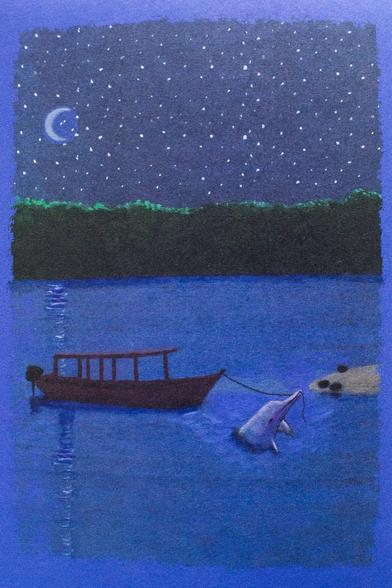
Mining incursions in the Amazon jungle. Maned Three-toed Sloth Bradypus torquatusThe Dolphin and the gold miners’ boat at twilight, from my children’s book series- Amazon Rainforest Magic, the adventures of Meromi, a Yanomami girl

The future well-being of people in the West will be determined by how soon we realise that we must respect nature and not take more than we need, just as indigenous peoples do.

“If we continue to treat nature as a commodity, all the living world, including us, will suffer”

~ Barbara Crane Navarro

Every effort, even the smallest effort, is important

I can’t predict the outcome, but I believe that we have to fight every day in order to mitigate the damage we’re doing.

Did you know that #gold #mining #palmoil and cattle grazing is destroying the last great swathes of the Amazon jungle? This land belongs to #Indigenous people! So #BoycottGold4Yanomami and #Boycottpalmoil @BarbaraNavarro

Tweet

“I was born in 1950 and we are no longer living in the world that I knew when I was young”

I was 20 when humans began using more resources every year than the earth could replenish.

~ Barbara Crane Navarro

“It has been heart wrenching to witness the decline of nature
and to grieve for what has disappeared.”

Barbara Crane Navarro

[Before] The pristine Amazon rainforest. [After] Absolute devastation following gold mining in the Yanomami territory at the border of Venezuela and Brazil.

There are many rainforest animals that I love that make the Amazon rainforest absolutely enchanting. The monkeys, pink river dolphins, giant river otters, capybaras, tapirs, macaws and so many birds and butterflies are some of my favourites.

Here are a few of the 1000’s of animals disappearing forever due to out-of-control extractive mining, palm oil and meat deforestation in the Amazon jungle

Southern Pudu Pudu puda

Keep reading

Blonde Capuchin Sapajus flavius

Keep reading

Savage’s Glass Frog Centrolene savagei

Keep reading

Andean condor Vultur gryphus

Keep reading

Brazilian three-banded armadillo Tolypeutes tricinctus

Keep reading

Orange-breasted Falcon Falco deiroleucus

Keep reading

Glaucous Macaw Anodorhynchus glaucus

Keep reading

Nancy Ma’s Night Monkey Aotus nancymaae

Keep reading

Maned Wolf Chrysocyon brachyurus

Keep reading

Sloth Bear Melursus ursinus

Keep reading

Andean Mountain Cat Leopardus jacobita

Keep reading

Bush Dog Speothos venaticus

Keep reading

Marsh Deer Blastocerus dichotomus

Keep reading

Alta Floresta titi monkey Plecturocebus grovesi

Keep reading

Colombian Red Howler Monkey Alouatta seniculus

Keep reading

Margay Leopardus wiedii

Keep reading

Northern Muriqui Brachyteles hypoxanthus

Keep reading

Brown Howler Monkey Alouatta guariba

Keep reading

Andean Night Monkey Aotus miconax

Keep reading

Spiny-headed Tree Frog Triprion spinosus

Keep reading

White-Nosed Saki Chiropotes albinasus

Keep reading

Amazon River Dolphin Inia geoffrensis

Keep reading

Buffy-tufted-ear Marmoset Callithrix aurita

Keep reading

Spectacled Bear Tremarctos ornatus

Keep reading

If you want to make a difference to the lives of Indigenous people in the Amazon, there are some NGOs to avoid, and others that are really making a difference…

Some NGOS such as Survival claim to be helping indigenous people are great pretenders. They spread awareness but don’t offer practical on the ground support for people like the Yanomami.

These NGOS that allegedly work for Indigenous Rights simply lobby to governments to recognise indigenous land rights. They write and talk about issues affecting Indigenous peoples without having any real, tangible impact.

I donate as often as possible to a Brazilian NGO, APIB: The Articulation of Indigenous Peoples of Brazil.

APIB on the other hand are taking the Brazilian government to court! They have an emergency campaign now concerning gold mining, deforestation and Covid.

Please donate to APIB:

With the funds they will take the Brazilian government to court for this disgraceful ecocide and genocide!

Donate

Help the Yanomami

Photography, Art: Barbara Crane Navarro, PxFuel, Creative Commons, Wikipedia, Greenpeace, Sean Weston, Igarapé Institute.

Words: Barbara Crane Navarro

I welcome you to connect with me, you can find me here on Twitter @BarbaraNavarro

https://twitter.com/BarbaraNavarro/status/1457330048181186564?s=20

https://twitter.com/BarbaraNavarro/status/1429423517070766086?s=20

https://twitter.com/BarbaraNavarro/status/1463827100738236420?s=20

https://twitter.com/BarbaraNavarro/status/1445658455713349632?s=20

#BoycottGold4Yanomami

Buy vintage jewellery instead

Find out more

Image: ‘llegal gold that undermines forests and lives in the Amazon’ by Igarapé Institute

#Amazon #animals #art #BarbaraCraneNavarro #Boycott4wildlife #BoycottGold4Yanomami #BoycottPalmOil #Brazil #Christmas #Climate #ClimateEmergency #corruption #CreativesForCoolCreatures #deforestation #ecocide #gold #goldMining #greenwashing #indigenous #IndigenousActivism #indigenousRights #investigativeJournalism #jewellery #mining #palmoil #rainforestConservation #slavery #Valentine #Venezuela #Yanomami

Facing Defunding, Indigenous Cultural Workers Say They Cannot Be Suppressed

The proposed elimination of the National Endowment for the Humanities threatens Indigenous libraries and arts programs.

https://murica.website/2025/09/facing-defunding-indigenous-cultural-workers-say-they-cannot-be-suppressed/

Facing Defunding, Indigenous Cultural Workers Say They Cannot Be Suppressed – The USA Potato

Indigenous Empowerment to Reverse Amazonia’s Mineral Demand

Illegal #mining for minerals like #gold and cassiterite, the latter used for renewable energy, is driving #deforestation in Indigenous #Amazonia. Countries like #Brazil, #Suriname and #Guyana face the challenge of conserving forests, protecting #indigenous peoples, biodiversity whilst also meeting international resource demands. Empowering indigenous peoples to care for biodiversity rich areas of Amazonia is key to saving them for future generations. Act now to protect Indigenous lands and wildlife. #BoycottGold4Yanomami #Boycott4Wildlife.

The drive for #mineral #mining in #Amazonia is driving #indigenous peoples and endangered #animals towards #extinction. Help and fight for them when you #BoycottGold4Yanomami #Boycott4Wildlife @palmoildetect @barbaranavarro https://wp.me/pcFhgU-8TF

Share to BlueSky Share to Twitter

Key to tempering #Amazonia’s mineral #mining demand for #gold and other metals is prioritising #Indigenous #empowerment #landrights and indigenous sovereignty #BoycottGold4Yanomami #Boycott4Wildlife @barbaranavarro @palmoildetect https://wp.me/pcFhgU-8TF

Share to BlueSky Share to Twitter

Written by Yolanda Ariadne Collins, Lecturer, International Relations, University of St Andrews. This article is republished from The Conversation under a Creative Commons license. Read the original article.

Mining for gold in Suriname. Yolanda Ariadne Collins, CC BY-NC-ND

Illegal mining for critical minerals needed for the global renewable energy transition is increasingly driving deforestation in Indigenous lands in the Amazon.

In recent years, these illegal miners, who are often self-employed, mobile and working covertly, have expanded their gold mining operations to include cassiterite or “black gold”, a critical mineral essential for the renewable energy transition. Cassiterite is used to make coatings for solar panels, wind turbines and other electronic devices. Brazil, one of the world’s largest exporters of this mineral, is now scrambling to manage this new threat to its Amazon forests.

The need for developing countries such as Brazil to conserve their forests for the collective global good conflicts with the increasing demand for their resources from international markets. To complicate matters further, both the renewable energy transition and the conservation of the Amazon are urgent priorities in the global effort to arrest climate change.

But escalating deforestation puts these forests at risk of moving from a carbon sink – with trees absorbing more carbon dioxide from the atmosphere than they release – to a carbon source, whereby trees release more carbon dioxide than they absorb as they degrade or are burnt.

Indigenous and other forest-dwelling communities are central to forest conservation. In 2014, I spent a year living in Guyana and Suriname, two of the nine countries that share the Amazon basin. I studied the effectiveness of international policies that aim to pay these countries to avoid deforestation.

I met with members of communities who were bearing the brunt of the negative effects of small-scale gold mining, such as mercury poisoning and loss of hunting grounds. For decades, mining for gold, which threatens communities’ food supply and traditional ways of life, has been the main driver of deforestation in both countries.

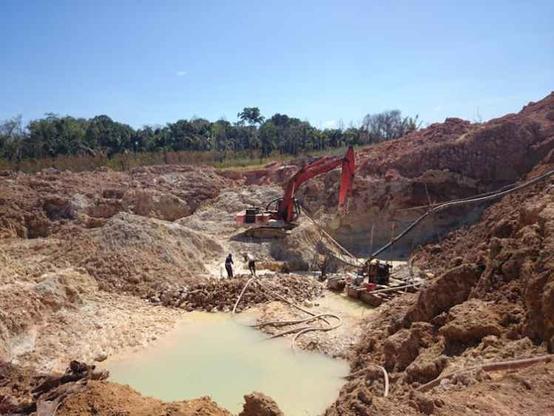
Small-scale mining operations can damage both communities and the natural world. Gold mining, which generates gold for export used for jewellery and electronics, usually begins with the removal of trees and vegetation from the topsoil, facilitated by mechanical equipment such as excavators. Next, the miners dig up sediment, which gets washed with water to extract any loose flecks of gold.

Miners usually then add mercury, a substance that’s known to be toxic and incredibly damaging to human health, to washing pans to bind the gold together and separate it from the sediment. They then burn the mercury away, using lighters and welding gear. During this process, mercury is inhaled by miners and washed into nearby waterways, where it can enter the food chain and poison fish and other species, including humans.

My new book, Forests of Refuge: Decolonizing Environmental Governance in the Amazonian Guiana Shield, highlights the colonial histories through which these countries were created. These histories continue to inform the land-use practices of people and forest users there. Having seen the dynamics firsthand, I argue that these unaddressed histories limit the effectiveness of international policies aimed at reducing deforestation.

Some of the policies’ limitations are rooted in their inattentiveness to the roughly five centuries of colonialism through which these countries were formed. These histories had seen forests act as places of refuge and resistance for Indigenous and Afro-descendant communities. I believe that power structures created by these histories need to be tackled through processes of decolonisation, which includes removing markets from their central place in processes of valuing nature, and taking seriously the worldviews of Indigenous and other forest-dependent communities.

But since 2014, small-scale mining-led deforestation in the Amazon has persisted, and even increased. The increase in mining worldwide, driven partly by the renewable energy transition, indicates that these power structures might be harder to shift than ever before.

Added pressure

When crackdowns on illegal gold mining took place in Brazil in the 1970s and ’80s, miners moved en masse to nearby Guyana and Suriname, taking their environmentally destructive technologies with them. Illegal miners of cassiterite are now following a similar pattern, showing that the global effort to reduce deforestation cannot simply focus on a single commodity as a driver of deforestation on the ground.

My work shows that the challenge of mining-led deforestation in the Amazon is rooted in historically informed, global power structures that position the Amazon and its resources as available for extraction by industries and governments in wealthier countries. These groups of people are now seeking to reduce their disproportionately high emissions through technological solutions and not through behavioural change.

These tensions also have roots in the readiness of governments and forest users in postcolonial countries, like Brazil and Guyana, to respond positively and unquestioningly to international demand for these resources.

In the Amazon, outcomes are affected by whether different groups of people have access to livelihoods that do not drive deforestation, such as those based on non-timber forest products. The situation is further shaped by the extent to which governments can work together to ensure that crackdowns in one part of the Amazon, such as Brazil, do not just drive deforestation elsewhere to Suriname, for example.

Until the power structure that disadvantages Indigenous and other historically marginalised groups changes, the negative effects of developing technologies to “save” the planet will continue to disproportionately burden these groups, even as their current way of life remains critical to supporting sustainable development outcomes.

Written by Yolanda Ariadne Collins, Lecturer, International Relations, University of St Andrews. This article is republished from The Conversation under a Creative Commons license. Read the original article.

ENDS

https://youtu.be/RLsqyADpgn0?si=BniKvXzjQFeZXUoV

Read more about gold mining, indigenous rights and its cost to animals

An Action Plan for Amazon Droughts: The Time is Now!

The fertile lungs of our planet, the Amazon jungle faces severe drought due to El Niño, climate change, and deforestation for agriculture like palm oil, soy and meat. This along with gold mining,…

Read more

Brazilian three-banded armadillo Tolypeutes tricinctus

The Brazilian three-banded #armadillo Tolypeutes tricinctus, known as “tatu-bola” in Portuguese, is a rare and unique species native to #Brazil. With the ability to roll into a near-impenetrable ball, this endearing behaviour has…

Read more

Indigenous Empowerment to Reverse Amazonia’s Mineral Demand

Illegal mining for minerals like gold is driving Amazonia deforestation. Empowering Indigenous peoples to care for biodiversity-rich areas is the key!

Read more

New Research: Indigenous Communities Reduce Amazon Deforestation by 83%”

Although #deforestation rates in the Brazilian #Amazon have halved, this globally critical biome is still losing more than 5,000km² every year. That’s an area three times larger than Greater London. By combining satellite…

Read more

How We End Gold Mining’s Ecocide For Good

Gold mining is unparalleled in its environmental destruction and human rights toll. Frustratingly, 93% of gold is used for non-essential purposes like jewellery and investments.

A recent study suggests that transitioning to…

Read more

Load more posts

Something went wrong. Please refresh the page and/or try again.

Take Action in Five Ways

1. Join the #Boycott4Wildlife on social media and subscribe to stay in the loop: Share posts from this website to your own network on Twitter, Mastadon, Instagram, Facebook and Youtube using the hashtags #Boycottpalmoil #Boycott4Wildlife.

✓ Subscribed

2. Contribute stories: Academics, conservationists, scientists, indigenous rights advocates and animal rights advocates working to expose the corruption of the palm oil industry or to save animals can contribute stories to the website.

Wildlife Artist Juanchi Pérez

Read more

Mel Lumby: Dedicated Devotee to Borneo’s Living Beings

Read more

Anthropologist and Author Dr Sophie Chao

Read more

Health Physician Dr Evan Allen

Read more

The World’s Most Loved Cup: A Social, Ethical & Environmental History of Coffee by Aviary Doert

Read more

How do we stop the world’s ecosystems from going into a death spiral? A #SteadyState Economy

Read more

3. Supermarket sleuthing: Next time you’re in the supermarket, take photos of products containing palm oil. Share these to social media along with the hashtags to call out the greenwashing and ecocide of the brands who use palm oil. You can also take photos of palm oil free products and congratulate brands when they go palm oil free.

https://twitter.com/CuriousApe4/status/1526136783557529600?s=20

https://twitter.com/PhillDixon1/status/1749010345555788144?s=20

https://twitter.com/mugabe139/status/1678027567977078784?s=20

4. Take to the streets: Get in touch with Palm Oil Detectives to find out more.

5. Donate: Make a one-off or monthly donation to Palm Oil Detectives as a way of saying thank you and to help pay for ongoing running costs of the website and social media campaigns. Donate here

Pledge your support

#AmazonRainforest #Amazonia #animals #Boycott4wildlife #BoycottGold4Yanomami #Brazil #corruption #deforestation #empowerment #extinction #gold #goldMining #Guyana #indigenous #IndigenousActivism #indigenousKnowledge #indigenousRights #landRights #landrights #mineral #mining #Suriname #Yanomami

New Research: Indigenous Communities Reduce Amazon Deforestation by 83%”

Although #deforestation rates in the Brazilian #Amazon have halved, this globally critical biome is still losing more than 5,000km² every year. That’s an area three times larger than Greater London. By combining satellite imagery for the entire Amazon region with data from the Brazilian national census, our new study found that deforestation in areas protected by #Indigenous communities was up to 83% lower compared to unprotected areas.

Results demonstrate that returning lands to Indigenous communities can be extremely effective at reducing deforestation and boosting #biodiversity to help address #climatechange. Yet, forest conservation should not come at an economic cost to people living in Indigenous-managed lands.

The world’s largest #rainforest the #Amazon 🫁🌳🌿 is vanishing. Yet a bright spark of hope finds #deforestation in #Indigenous protected areas is 83% lower. They are the KEY to saving the #forests and animals! #BoycottGold4Yanomami #Boycott4Wildlife https://wp.me/pcFhgU-8SM

Share to BlueSky Share to Twitter

Written by Johan Oldekop, Reader in Environment and Development, University of Manchester; Bowy den Braber, Postdoctoral Researcher, School of Biosciences, University of Sheffield, and Marina Schmoeller, PhD Candidate, Ecology, Universidade Federal de Minas Gerais (UFMG)vThis article is republished from The Conversation under a Creative Commons license. Read the original article.

Tarcisio Schnaider/Shutterstock

Despite this win for indigenous-led conservation, our results also show that Indigenous communities had the lowest levels of socioeconomic development. Incomes in Indigenous territories were up to 36% lower compared to other land uses.

Indigenous people are among the most disadvantaged groups of people in the world. Although Indigenous communities in Brazil have strengthened their political representation in recent years, 33% of people living below the poverty line are Indigenous.

Improving the economic wellbeing of Indigenous people is not only the socially just thing to do but can also be environmentally effective. Research in Nepal showed that communities with higher levels of socioeconomic development are less likely to trade off development with deforestation. Providing communities with the ability to protect and conserve their local forests and develop economically can be a win-win for both people and the environment.

In 2022, governments across the world agreed to protect 30% of the planet’s surface by 2030. To meet the commitments of this 30×30 agenda, many countries need to drastically increase their conservation efforts to reverse deforestation in the Amazon and beyond.

Governments and philanthropic organisations pledged unprecedented political and financial support for forests and Indigenous peoples and local communities at the 2021 COP26 climate summit in Glasgow. These pledges have helped raise the voices of Indigenous peoples and ushered in a new era of commitments to return ancestral lands.

Yet, forests and their resources across the world remain coveted by many different interest groups, including mining and large agribusiness. The Supreme Court in Brazil is currently debating the constitutional validity of the controversial “Marco Temporal” or time limit framework which could substantially limit the ability of Indigenous peoples across the country to make claims for lands. This legal theory states that Indigenous peoples are only entitled to make claims for lands if they can prove that they were in possession of them on or before October 5 1988 when the Brazilian constitution came into effect.

Perhaps surprisingly, our results show that agricultural business development of the Brazilian Amazon is unlikely to provide greater socioeconomic benefits for local, non-indigenous communities than protection-focused alternatives that preserve forest cover but allow sustainable resource use by rural communities. But the agribusiness lobby in Brazil, who are often in direct conflict with Indigenous people, often argues that agricultural expansion will provide economic development for the region.

Our results demonstrate that returning lands to Indigenous communities can be extremely effective at reducing deforestation and boosting biodiversity to help address climate change. Yet, forest conservation should not come at an economic cost to people living in Indigenous-managed lands.

Access to land and opportunity

Indigenous communities need to regain access to their ancestral lands while also gaining access to development opportunities. Indigenous people in Brazil are eligible to receive support from social welfare programmes, such as the family allowance scheme (or bolsa familia in Portuguese), which is credited with lifting millions of Brazilians out of poverty and reducing inequality.

Protesters hold placards expressing their opinion during the demonstration. The Marco Temporal thesis, indigenous, and supporters of the indigenous movement met in downtown Rio de Janeiro, Brazil, in May 2023. ZUMA Press Inc / Alamy Stock Photo

However, many rural and isolated communities face substantial difficulties accessing support. For example, fuel costs to take long boat trips from remote communities to urban centres to collect payments are high and many communities lack access to technology to even apply for such schemes.

President Lula Da Silva’s government is considering developing an Indigenous family allowance programme to address access problems faced by Indigenous communities in Brazil. As efforts to return rights to land ramp up in the wake of the 30×30 agenda, more governments and nongovernmental organisations should support the many other rights that Indigenous peoples have and reduce the structural barriers that prevent rural communities from claiming them.

Written by Johan Oldekop, Reader in Environment and Development, University of Manchester; Bowy den Braber, Postdoctoral Researcher, School of Biosciences, University of Sheffield, and Marina Schmoeller, PhD Candidate, Ecology, Universidade Federal de Minas Gerais (UFMG)vThis article is republished from The Conversation under a Creative Commons license. Read the original article.

ENDS

Read more about human rights and indigenous rights

New Research: Indigenous Communities Reduce Amazon Deforestation by 83%”

Although #deforestation rates in the Brazilian #Amazon have halved, this globally critical biome is still losing more than 5,000km² every year. That’s an area three times larger than Greater London. By combining satellite…

Read more

Concerns Mount Over Palm Oil Expansion in Nagaland

Concerns Mount Over Palm Oil Expansion in Nagaland | The Nagaland Climate Change Adaptation Forum (NCCAF) has raised grave concerns about the environmental and social impacts of expanding palm oil plantations in the…

Read more

Palm Oil Is Ruining Kalangala Uganda — Locals Paying the Price

A catastrophic storm in #Uganda’s Kalangala district left nearly 1,000 households homeless. The real culprit? Rampant #deforestation for #palmoil. Once rich in native forests that buffered storms, Kalangala is now a fragile landscape…

Read more

Violence for Palm Oil Against Peasant Communities in Honduras Meets Resistance

In the Aguán Valley of northern Honduras, peasant communities reclaiming ancestral lands face increasing violence and intimidation from armed groups linked to organised crime. The Dinant Corporation, a prominent palm oil producer, is…

Read more

The Great Malaysian Timber and Palm Oil Swindle

A joint investigation by Malaysiakini and Pulitzer Center’s Rainforest Investigations Network (RIN) reveals alarming deforestation in Pahang, #Malaysia, caused by one of the country’s largest #palmoil plantations. The plantation threatens endangered species like…

Read more

Load more posts

Something went wrong. Please refresh the page and/or try again.

Take Action in Five Ways

1. Join the #Boycott4Wildlife on social media and subscribe to stay in the loop: Share posts from this website to your own network on Twitter, Mastadon, Instagram, Facebook and Youtube using the hashtags #Boycottpalmoil #Boycott4Wildlife.

Enter your email address

Sign Up

Join 1,385 other subscribers

2. Contribute stories: Academics, conservationists, scientists, indigenous rights advocates and animal rights advocates working to expose the corruption of the palm oil industry or to save animals can contribute stories to the website.

Wildlife Artist Juanchi Pérez

Read more

Mel Lumby: Dedicated Devotee to Borneo’s Living Beings

Read more

Anthropologist and Author Dr Sophie Chao

Read more

Health Physician Dr Evan Allen

Read more

The World’s Most Loved Cup: A Social, Ethical & Environmental History of Coffee by Aviary Doert

Read more

How do we stop the world’s ecosystems from going into a death spiral? A #SteadyState Economy

Read more

3. Supermarket sleuthing: Next time you’re in the supermarket, take photos of products containing palm oil. Share these to social media along with the hashtags to call out the greenwashing and ecocide of the brands who use palm oil. You can also take photos of palm oil free products and congratulate brands when they go palm oil free.

https://twitter.com/CuriousApe4/status/1526136783557529600?s=20

https://twitter.com/PhillDixon1/status/1749010345555788144?s=20

https://twitter.com/mugabe139/status/1678027567977078784?s=20

4. Take to the streets: Get in touch with Palm Oil Detectives to find out more.

5. Donate: Make a one-off or monthly donation to Palm Oil Detectives as a way of saying thank you and to help pay for ongoing running costs of the website and social media campaigns. Donate here

Pledge your support

#Amazon #AmazonRainforest #biodiversity #BoycottGold #BoycottPalmOil #Boycott4wildlife #BoycottGold4Yanomami #Brazil #climatechange #deforestation #forests #humanRights #indigenous #IndigenousActivism #indigenousKnowledge #indigenousMedicine #indigenousRights #landRights #PalmOil #rainforest #Yanomami

Amazon rainforest: Deforestation rate halved in 2023

Preliminary data shows more than 5,000 sq km were cleared, still over six times the size of New York City.

BBC News

Rueben George "We Are People of the Water" Voices from the Salish Sea

Faced with the economic smallpox of oil pipelines, Rueben George says hold tight to your spiritual intention

By #BrendaNorrell, #CensoredNews, November 20, 2024

SEATTLE -- "They never stopped fighting. Even when they cut off his grandfather's finger as a child in residential school because he couldn't speak English, even when they put them in jail for protesting the Trans Mountain pipeline, they never stopped fighting. Even when the appeals court decided that shipping the dirty tarsand oil was more important than the survival of the Orca whales, they did not surrender.

"'Even though we're almost extinct, we are still here," said Rueben George, səlilwətaɬ, Tsleil Waututh Nation.
'We're People of the Water. That's our First Mother,' George said at the Salish Sea Assembly in Seattle.

Read more:
https://bsnorrell.blogspot.com/2024/11/rueben-george-we-are-people-of-water.html

#TransmountainPipeline #SalishSeaAssembly #ResidentialSchools #ReaderSupportedNews #WaterIsLife #WaterDefenders #LandBack #DefendTheSacred
#BigOilAndGas #CorporateColonialism
#ReaderSupportedNews #IndigenousActivists #IndigenousActivism #IndigenousNews #Resistance #MotherEarth #PacificNorthwest #PetrolState #PetroState #Oiligarchy #ResidentialSchools #StolenChildren #CulturalGenocide #RuebenGeorge, #TsleilWaututhNation

Rueben George "We Are People of the Water" Voices from the Salish Sea

Censored News is a service to grassroots Indigenous Peoples engaged in resistance and upholding human rights.

Coast #Salish Water Warriors: Voices for the Water at the #SalishSea Assembly in #Seattle

By #BrendaNorrell, #CensoredNews at #Indybay, Nov. 8, 2024

"The defenders are battling the dirty energy #corporations poisoning the land, water and air in western #Canada and #WashingtonState, and the waters of the Salish Sea. The rivers from British Columbia in Canada and Washington State come together in the Salish Sea on their journey to the #PacificOcean.

"The dead birds floating in the Alberta tar sands #TailingPonds, the #ManCamps linked to missing and murdered Indigenous girls, and the increased oil tankers in the Salish Sea -- are all parts of the dirty oil business of the Trans Mountain pipeline pouring out of Alberta's dirty tar sands in Canada, bound for #OilTankers in the Salish Sea.

"The destruction, and theft of land, is a continuation of the #genocidal residential school system. Native children were kidnapped, ripped from their families, and incarcerated in the abusive schools operated by Canada and the churches.

"'We can't drink water from there any more,' said Jean, who lives close to the Alberta tar sands in her homeland. 'I was born into this destruction.

"'Thousands of birds are dead in the tailing ponds.'"

https://bsnorrell.blogspot.com/2024/11/coast-salish-water-warriors-voices-for.html

#WaterDefenders #LandBack #DefendTheSacred
#BigOilAndGas #CorporateColonialism
#ReaderSupportedNews #IndigenousActivists #IndigenousActivism #IndigenousNews #Resistance #MotherEarth #PacificNorthwest #WaterIsLife #PetrolState #PetroState #Oiligarchy #ResidentialSchools #StolenChildren #CulturalGenocide #MMIW #MMIWG

Coast Salish Water Warriors: Voices for the Water at the Salish Sea Assembly in Seattle

Censored News is a service to grassroots Indigenous Peoples engaged in resistance and upholding human rights.

Coast #Salish #FreedomFighters: From Alberta #TarSands to the #SalishSea

By #BrendaNorrell, #CensoredNews Nov. 7, 2024

SEATTLE -- "The dead birds floating in the #AlbertATarSands #TailingPonds, the #ManCamps linked to missing and murdered Indigenous girls, and the increased #OilTankers in the Salish Sea -- are all parts of the dirty oil of the #TransMountainPipeline pouring out of Alberta's dirty tar sands, bound for oil tankers in the Salish Sea.

"'We are not just #activists, we are #revolutionaries and we're radical and militant and we want to keep it that way, we don't want to get soft in our older years,' said #KanahusManuel, #Secwepemc and #Ktunaxa, describing her family's struggle to protect their land and stop the Trans Mountain pipeline.

"Speaking at the State of Emergency for The Salish Sea in #SeattleWashington on Thursday, Kanahus said, 'We are the title holders to the land.'"

Read more:
https://bsnorrell.blogspot.com/2024/11/coast-salish-freedom-fighters-from.html

#LandBack #DefendTheSacred #BigOilAndGas #CorporateColonialism #ReaderSupportedNews #IndigenousActivists #IndigenousActivism #IndigenousNews #Resistance #MotherEarth #PacificNorthwest

Coast Salish Freedom Fighters: From Alberta Tar Sands to the Salish Sea: Live in Seattle

Censored News is a service to grassroots Indigenous Peoples engaged in resistance and upholding human rights.