 YO8TNB - Cristian
Looking for beta testers for eQSL Viewer – Android app
Want to join the tester list?
Send your request via my website: https://yo8tnb.ro/apps.html#eqsl-viewer
73 de YO8TNB
#eqsl #eqslcard #hamradio #hamradiocommunity #hamradiooperator #DXCC
Looking for beta testers for eQSL Viewer – Android app
Want to join the tester list?
Send your request via my website: https://yo8tnb.ro/apps.html#eqsl-viewer
73 de YO8TNB
#eqsl #eqslcard #hamradio #hamradiocommunity #hamradiooperator #DXCC
The 10-Day Rule Survival Guide: Protecting Your Future in Amateur Radio
1,739 words, 9 minutes read time.
The Federal Communications Commission recently shifted the landscape for every licensed operator and prospective amateur in the United States by implementing a strict 10-day window for updating contact information associated with FCC Registration Numbers. This administrative change, which became enforceable in early 2026, means that any individual holding or seeking a license must now report changes to their email or physical mailing address within ten business days or risk severe administrative consequences, including the potential revocation of their operating authority. While the catalyst for this rule was a broader push to mitigate robocalls and fraudulent telecommunications, the fallout has landed squarely on the shoulders of the amateur radio community, where many operators have historically treated their paper or digital records with a “set it and forget it” mentality. Understanding this rule is no longer optional; it is a foundational requirement for anyone who plans to step into the world of ham radio, as the agency has made it clear that a failure to maintain a valid line of communication is now grounds for a rapid, “silent” termination of a license.
Navigating the bureaucratic waters of the FCC can often feel like trying to decode a weak signal through a wall of static, but the core of the 10-day rule is deceptively simple and carries a heavy punch. Every person who interacts with the commission is assigned an FCC Registration Number, or FRN, which serves as a unique identifier across all their systems. Traditionally, while operators were expected to keep their details current, there was no hard-and-fast deadline that carried immediate legal weight unless a license was up for renewal. That era has officially ended. Under the updated Section 1.8002(b)(2) of the Commission’s Rules, the burden of data accuracy has shifted entirely to the licensee. If you move to a new apartment or even just switch your primary email provider, the clock starts ticking the moment that change occurs. The implications for a newcomer are significant: if you pass your exam and receive your license, but the email address on file becomes unreachable or outdated shortly after, the FCC may attempt to send official correspondence that never reaches you. When that digital letter bounces back, the agency now has the procedural green light to move toward license suspension or revocation without further warning.
One of the biggest hurdles for men looking to join the hobby is realizing that the FCC operates two distinct but connected systems that do not always “talk” to one another. There is the License Manager System, where your actual call sign and privileges are listed, and then there is the CORES system, which manages your FRN and the high-level contact data tied to your identity. The 10-day rule specifically targets the CORES system. Many long-time hams were caught off guard by this because they assumed updating their address on a license renewal form was sufficient. However, the National Association for Amateur Radio (ARRL) has pointed out that “FRN contact information is handled separately and apart from contact information related to a license… both records must be kept up-to-date, and each requires a separate update.” This administrative redundancy is where the trap lies. You might think you are in the clear because your license has the right address, but if your FRN record still points to an old email, you are technically in violation of federal rules. For a man who has spent weeks studying for his Technician or General class exam, losing that hard-earned credential over a clerical oversight is a frustrating and entirely avoidable setback.
The intensity of the conversation surrounding this rule reached a fever pitch in early 2026 due to initial reports of massive fines. When the rule was first announced, there was widespread panic that failing to update contact info could result in a $1,000-per-day penalty. The FCC eventually issued a public notice to calm the waters, clarifying that these steep financial forfeitures were primarily aimed at “robocall mitigation database” filers and voice service providers rather than individual hobbyists. Nevertheless, while you might not be hit with a life-altering bill, the administrative penalty remains the death of your license. The commission has clarified that while the $1,000-per-day fine doesn’t apply to amateurs, the requirement to update within ten days is absolutely mandatory. This is not a suggestion or a “best practice.” It is a regulatory mandate. The agency’s stance is that if they cannot reach you, you cannot be a steward of the airwaves. In the eyes of the government, an unreachable licensee is a liability, and in an age where spectrum is increasingly valuable, they are not inclined to let dead-air licenses clutter the database.
Historical context helps explain why the FCC is suddenly so aggressive about digital housekeeping. For decades, ham radio was a purely analog pursuit, and the FCC’s primary way of reaching you was through a stamped envelope. If that envelope came back marked “Return to Sender,” a slow process of inquiry would begin. Today, the FCC has transitioned to a “digital-first” agency. They no longer mail paper licenses by default; you have to log in and download a PDF. Because the entire system now hinges on electronic communication, a valid email address is effectively your “radio ID” in the eyes of the law. This shift was accelerated by the 2021 Report and Order that made email addresses mandatory for all applications. The 10-day rule is the final piece of that puzzle, ensuring that the database remains a living, breathing, and accurate reflection of the user base. For the modern man entering this field, this means that your “shack” isn’t just your radio and antenna; it’s also your digital profile in the FCC’s CORES database.
To stay on the right side of the law, a proactive mindset is required. Experts suggest that hams should make a habit of checking their CORES account every six months, even if they haven’t moved. It’s remarkably easy for an old “work” email or an ISP-provided address that you no longer use to remain on file. As one legal expert from the Pillsbury Comm Law Center noted, “When a consultant emails clients to ‘keep their info current,’ and the emails bounce, that is a conundrum.” That same “conundrum” is what triggers the FCC’s enforcement arm. For the prospective licensee, the best strategy is to use a “permanent” email address—like a personal Gmail or Outlook account that isn’t tied to a specific job or internet provider—when first registering for an FRN. This minimizes the number of times you’ll need to trigger that 10-day clock and reduces the risk of a forgotten update.
There is also a social element to this enforcement that shouldn’t be ignored. The amateur radio community has long been built on self-regulation and a sense of shared responsibility. When the FCC changes the rules of engagement, it affects the “health” of the entire hobby. If thousands of licenses are canceled because of bad data, it makes the amateur service look disorganized or underutilized, which could lead to further budget cuts or the reallocation of amateur frequencies to commercial interests. By keeping your data current, you aren’t just protecting your own call sign; you are helping to maintain the integrity of the hobby’s standing with the federal government. It is a small act of discipline—taking five minutes to update a form—that ensures the long-term survival of the airwaves for everyone.
Looking toward the future, it is likely that the FCC will continue to integrate more automated systems for license verification. We are moving toward a world where “administrative revocation” could happen via an automated script that flags bounced emails. This “survival guide” isn’t meant to scare off newcomers, but rather to equip them with the situational awareness needed to succeed in a modern regulatory environment. The 10-day rule is a hurdle, yes, but it’s one that any organized man can easily clear. By respecting the administrative side of the hobby with the same intensity you bring to learning the technical side, you ensure that once you get your license, no bureaucrat can ever take it away on a technicality. The airwaves are waiting, but they belong to those who can follow the rules of the road, both on and off the radio.
Call to Action
The time to secure your place on the airwaves is now, but stepping into the world of amateur radio requires more than just technical skill—it demands a commitment to professional discipline. Do not let your future call sign become a casualty of a forgotten administrative deadline. Take the initiative today by setting up your FCC Registration Number (FRN) with a permanent, reliable email address that you check daily. By mastering the “10-Day Rule” and staying ahead of the regulatory curve, you prove that you are the kind of steward the FCC trusts with our nation’s spectrum. Whether you are weeks away from your exam or just beginning to explore the hobby, make it your primary mission to treat your digital records with the same precision you apply to your radio gear. Dive into the official CORES system, verify your details, and ensure that when the time comes for you to hit the PTT, your license is as solid as your signal. Your journey to the airwaves starts with an update—don’t let the clock run out on your ambitions.
SUPPORTSUBSCRIBECONTACT MED. Bryan King
Sources
Disclaimer:
The views and opinions expressed in this post are solely those of the author. The information provided is based on personal research, experience, and understanding of the subject matter at the time of writing. Readers should consult relevant experts or authorities for specific guidance related to their unique situations.
#administrativeForfeiture #AmateurExtraLicense #AmateurRadioEmergencyData #amateurRadioLicense #amateurRadioService #amateurRadioSpectrum #ARRLRegulatoryUpdate #digitalLicenseManagement #electronicLicenseFiling #FCC10DayRule #FCCAdministrativeRules #FCCCORESUpdate #FCCCorrespondence #FCCDatabaseManagement #FCCDigitalTransition #FCCEmailMandate #FCCEnforcement2026 #FCCEnforcementBureau #FCCLoginHelp #FCCMailDelivery #FCCPublicNotice #FCCRegistrationNumber #FCCRobocallMitigation #FCCSection18002 #FederalCommunicationsCommission #FRNContactInformation #FRNPasswordRecovery #generalClassLicense #hamRadioCommunity #hamRadioExamPrep #hamRadioLicenseRequirements #hamRadioMasculineHobby #hamRadioNews #hamRadioRegulations #hamRadioSurvivalGuide #hamRadioTechExam #licenseRenewal #licenseRevocation #maintainingHamLicense #Part97Rules #radioFrequencyAllocation #radioHobbyistCompliance #radioOperatorResponsibilities #radioSpectrumStewardship #TechnicianClassLicense #updatingAddressFCC #wirelessSupport #wirelessTelecommunicationsBureau
Why Every Prepper and Hunter Needs a Ham License (Not a GMRS)
8,668 words, 46 minutes read time.
Let’s rip the band-aid off right now. You have spent thousands of dollars on rifles, optics, plate carriers, freeze-dried food, water filtration, and enough ammo to make your closet floor sag. You have a bug-out bag that would make a YouTube prepper channel proud. You have practiced fire-starting with a ferro rod in the rain. You have land-nav skills with a map and compass. You feel ready. But if someone asks you what your communications plan is when the cell towers go dark, when the internet is a memory, when power grids are down and you are 30 miles from the nearest paved road, most of you will hold up a blister-packed GMRS radio from Amazon and say, “I’ve got comms covered.” No, you do not. Not even close. That GMRS radio is a tool with a role, and it fills that role adequately for what it is — short-range, line-of-sight communication between family members or a small group within a few miles. But calling it a communications plan is like calling a pocket knife a survival kit. It is one small piece of a much larger picture, and if it is the only piece you have, you are building your entire emergency communications strategy on a foundation that will crack the moment real adversity shows up. The uncomfortable reality is that the prepper and hunting communities have a massive blind spot when it comes to communications, and that blind spot exists because GMRS is easy, it is marketed aggressively, and it does not require you to learn anything. Getting a GMRS license is literally filling out a form and paying a fee. No test. No demonstrated knowledge. No understanding of propagation, antenna theory, or emergency protocols. And that low barrier to entry has created an entire subculture of people who believe they are communications-capable when they are functionally illiterate in the one discipline that matters most when everything else fails.
This post is going to lay out, in plain and direct terms, why every serious prepper and hunter needs to stop leaning on GMRS as a primary comms solution and go get an amateur radio license. Not because ham radio is trendy. Not because it is some elitist hobby for old guys soldering in their basements. Because when the grid goes down, when the repeaters lose power, when you are in a drainage in the backcountry and your hunting partner is on the other side of a ridge, amateur radio is the only communications capability that gives you real flexibility, real range, and real options. Everything else is a toy by comparison.
What GMRS Actually Gives You (And Where It Hits a Wall)
GMRS Range, Power, and Repeater Limitations in Real-World Terrain
Before going any further, let me be clear about something — this is not a post about trashing GMRS. GMRS has a legitimate purpose. It is a UHF radio service operating on frequencies around 462 and 467 MHz, it allows up to 50 watts of power on certain channels, and it gives users access to a small number of repeater frequencies. For a family camping trip, a convoy of vehicles on a road trip, or communication between a house and a barn on a rural property, GMRS works fine. It is simple, the radios are affordable and widely available, and the license covers your entire immediate family for one fee. Within its design envelope, it is a perfectly acceptable tool. The problem is that most preppers and hunters are not operating within its design envelope when they actually need comms the most. They are operating in exactly the conditions where GMRS falls apart.
UHF frequencies, by the physics of radio propagation, behave in a very specific way. They travel primarily by line of sight. They do not bend over hills. They do not diffract well around mountains. They get absorbed and scattered by dense foliage. They are excellent in flat, open terrain or urban environments where repeaters are plentiful and closely spaced, but the moment you put a ridge, a mountain, or a thick stand of timber between you and the person you are trying to reach, your effective range collapses. That 50-watt GMRS mobile radio that the manufacturer claims can reach 30 or 40 miles under ideal conditions will give you maybe two to five miles in mountainous terrain on simplex, and that is being generous. A handheld GMRS radio at five watts in the same terrain might give you a mile or less. This is not a design flaw in the radio. This is physics, and no amount of money spent on a fancier GMRS unit will change the fundamental behavior of UHF signals in rough country. The standard workaround for this limitation is repeaters — elevated stations that receive your signal and retransmit it at higher power and better elevation to extend range. And GMRS does allow repeater use on certain channel pairs. But here is the critical question that almost nobody in the prepper community asks: who owns and maintains those repeaters, and what happens to them when the grid goes down? The answer, in the vast majority of cases, is that GMRS repeater infrastructure is sparse, privately owned, often poorly maintained, and almost never equipped with backup power systems designed to survive an extended grid-down event. In rural and wilderness areas — exactly the places where preppers plan to retreat and hunters actually operate — GMRS repeater coverage is often nonexistent. You are on simplex, you are on UHF, and you are at the mercy of terrain. That is the reality.
The FCC Licensing Gap — GMRS Privileges vs. What You Actually Need in a Crisis
The GMRS license itself tells you a lot about what the FCC thinks this service is for. It is a no-test license. You pay $35, fill out the form on the FCC Universal Licensing System, and you are good for ten years. There is no examination of your knowledge of radio operations, propagation, emergency procedures, or electrical safety. The FCC designed GMRS as a personal and family communication service — the regulatory equivalent of a slightly more capable walkie-talkie. And the privileges reflect that purpose. You get 22 channels. You get UHF only. You cannot operate on HF frequencies, which means you have zero ability to communicate beyond your immediate local area without infrastructure. You cannot operate on VHF, which means you lose the propagation advantages that the two-meter band offers in varied terrain. You cannot legally build or modify your own equipment under GMRS rules in any meaningful way. You cannot use digital modes like JS8Call or Winlink that enable text-based communication and off-grid email over thousands of miles. You cannot participate in APRS, which allows real-time GPS tracking and position reporting. You are locked into a narrow set of frequencies with a narrow set of capabilities, and when those capabilities are insufficient — which they will be in any serious emergency or any real backcountry scenario — you have no fallback, no flexibility, and no options. That is the licensing gap, and it is enormous.
Why Amateur Radio Is the Gold Standard for Off-Grid and Emergency Communications
HF, VHF, and UHF — Understanding the Full Spectrum Advantage of a Ham License
The amateur radio licensing structure is built on a completely different philosophy than GMRS. The FCC requires you to demonstrate actual knowledge to earn your privileges, and in return, those privileges are vast. Even the entry-level Technician license — the easiest of the three ham license classes — unlocks a world of capability that GMRS cannot touch. With a Technician license, you gain full access to all amateur frequencies above 30 MHz, which includes the enormously popular and useful two-meter (144–148 MHz) and 70-centimeter (420–450 MHz) bands. The two-meter band alone is a game-changer for both preppers and hunters because VHF signals behave differently than UHF in terrain. Two-meter signals, while still largely line-of-sight, diffract and bend around obstacles somewhat better than the UHF frequencies used by GMRS, and the amateur two-meter band has an absolutely massive repeater infrastructure across the United States — thousands of repeaters, many of which are maintained by dedicated amateur radio clubs with battery backup, solar power, and generator systems specifically designed to stay operational during emergencies. The difference in repeater infrastructure between GMRS and amateur radio is not marginal. It is an order of magnitude. Beyond VHF and UHF, the Technician license also grants limited privileges on certain HF bands, including portions of the 10-meter band with voice privileges and segments of 80, 40, and 15 meters with CW (Morse code) and data modes. But the real power of HF opens up with the General class license, which is one step above Technician and requires a second 35-question exam. With a General license, you gain access to large portions of every HF band from 160 meters through 10 meters, and this is where amateur radio enters a completely different dimension of capability. HF signals do not rely on line of sight. They bounce off the ionosphere, a phenomenon called skywave propagation, and this means that a General-class operator with a hundred-dollar radio and a wire antenna strung between two trees can communicate hundreds or thousands of miles with zero infrastructure — no repeaters, no internet, no cell towers, no satellites, nothing but the ionosphere and the transmitted signal. That is not theoretical. That is what ham operators do every single day, and it is what they have done in every major disaster in modern history when all other communications systems have failed.
The concept that separates amateur radio from every other personal communications option is this: spectrum flexibility. A ham operator is not locked into 22 channels on a single band. A ham operator can choose the right frequency for the right conditions at the right time. Need to talk to your buddy two miles away on a trail? Use two meters simplex. Need to hit a repeater 40 miles away to relay a message? Use two meters through the repeater system. Need to reach someone 200 miles away when all the repeaters are down? Use 40 or 80 meters with NVIS — Near Vertical Incidence Skywave — a propagation technique where you aim your HF signal nearly straight up so it bounces off the ionosphere and comes back down within a few hundred miles, providing regional coverage with no infrastructure whatsoever. Need to reach across the country or across the ocean? Use 20 meters or 17 meters during the right part of the solar cycle and work stations thousands of miles away. No other personal radio service on the planet gives an individual this kind of range and flexibility, and the license to access all of it costs you nothing but study time and a small exam fee.
Mesh Networks, Digital Modes, and APRS — Capabilities GMRS Cannot Touch
Raw range and spectrum access are only part of the story. The amateur radio ecosystem has developed an entire universe of digital tools and techniques that transform a simple radio into a full communications platform, and none of these capabilities are available to GMRS users. Start with APRS — the Automatic Packet Reporting System. APRS is a real-time digital communications system that transmits GPS position data, short text messages, weather information, and telemetry over the two-meter band at 144.390 MHz in North America. When you are running APRS, your radio is periodically broadcasting your exact GPS coordinates, and those coordinates are picked up by digipeaters and internet gateways that plot your position on a live map accessible at aprs.fi. For a hunter in the backcountry, this is not a novelty — it is a genuine safety system. Your family, your hunting partners, or your emergency contacts can see exactly where you are in real time without you making a single voice call. If you go down with an injury, if you get lost, if weather closes in and you need to shelter, your last known position is on the map. Search and rescue teams have used APRS data to locate missing persons, and the system works in areas with zero cell coverage because it runs entirely on amateur radio infrastructure and does not require the internet to function at the field level. You cannot do this with GMRS. Period.
Then there is JS8Call, a keyboard-to-keyboard digital messaging mode designed specifically for weak-signal HF communication. JS8Call is built on the WSJT-X engine, the same technology behind FT8, which is famous for being able to decode signals far below the noise floor — signals that you literally cannot hear with your ears. JS8Call takes that weak-signal capability and turns it into a practical store-and-forward messaging system. You type a message, your radio transmits it as a digital signal on HF, and a station hundreds or thousands of miles away decodes it and can relay it further. This works with radios running as little as five watts into simple wire antennas, and it functions in conditions where voice communication would be completely impossible. For a prepper who needs to send and receive information during a grid-down scenario — weather reports, coordination messages, welfare checks, situational updates — JS8Call is an extraordinarily powerful tool that requires nothing but a radio, a computer or tablet, and a sound card interface. The total cost of this setup can be under $300, and it gives you text-based communication capability across continental distances with no infrastructure whatsoever.
Winlink takes this concept even further. Winlink is a worldwide radio email system that allows amateur operators to send and receive email over HF, VHF, and UHF radio links. When the internet is down, when cell networks are overwhelmed or destroyed, Winlink allows you to compose an email on a laptop, transmit it via radio to a Winlink gateway station, and have that email delivered to any standard email address on the internet — or to another Winlink radio station if the internet is completely unavailable. During Hurricane Maria in 2017, when Puerto Rico lost virtually all communication infrastructure, amateur radio operators using Winlink were among the only people on the island who could send messages to the outside world. Hospitals used ham operators with Winlink to transmit patient lists and supply requests. Emergency management agencies relied on Winlink traffic when their own systems were nonfunctional. This is not a hypothetical capability. This is documented, verified, real-world performance in one of the worst natural disasters in American history. And it is a capability that exists exclusively within the amateur radio service. GMRS does not support Winlink. GMRS does not support JS8Call. GMRS does not support APRS. GMRS does not support any digital mode beyond some limited text messaging on certain commercial radios. The capability gap between the two services is not a crack — it is a canyon.
The Prepper Communications Failure Most People Do Not See Coming
Why Repeater-Dependent Plans Collapse After 72 Hours
Here is a scenario that plays out with depressing predictability in every major disaster, and it is one that the prepper community needs to internalize deeply. A significant event occurs — hurricane, earthquake, ice storm, wildfire, cascading grid failure. Cell towers go down almost immediately, either from direct damage, loss of backhaul connectivity, or because backup batteries drain within four to twelve hours when commercial power is lost. Most cell tower battery backup systems are designed to last eight to twelve hours under normal load, and during a disaster, load spikes dramatically as everyone in the affected area tries to call or text simultaneously. Within the first day, cellular communications in the affected zone are largely nonfunctional. People who planned on using cell phones for emergency comms are already out of options. Now the GMRS users step up, and for the first 24 to 48 hours, they feel validated. Their radios work on simplex for short-range communication, and if they are lucky, a local GMRS repeater is still operational on backup power. They can talk to their family members and nearby group members within a few miles. It feels like the plan is working.
Then hour 48 hits, then hour 72, and reality sets in. The GMRS repeater, if it was running on a battery backup, is dead. The repeater owner either evacuated, has no way to refuel a generator, or the repeater site itself is inaccessible due to road damage or fire. Without the repeater, GMRS range collapses back to simplex — a few miles at best in anything other than flat, open terrain. The GMRS users now have no way to communicate beyond their immediate vicinity. They cannot reach anyone outside the disaster zone. They cannot send messages to family in other states. They cannot access weather information, coordinate with other groups, or request assistance from anyone beyond shouting distance. Their entire communications plan has evaporated in three days, and they are now functionally isolated. This is not an exaggeration. This is exactly what happened in Puerto Rico after Hurricane Maria, in New Orleans after Hurricane Katrina, in large sections of the Gulf Coast after Hurricane Michael, and in Paradise, California, during the Camp Fire. In every one of these events, the communications infrastructure that most people relied on — cellular, landline, internet, and low-tier radio services — failed within hours to days. And in every one of these events, the communications backbone that survived and provided critical information flow was amateur radio.
Real-World Disaster Communications — Lessons from Hurricanes, Wildfires, and Grid-Down Events
The track record of amateur radio in disaster communications is not anecdotal — it is extensively documented by FEMA, the Government Accountability Office, the American Red Cross, and the National Weather Service. After Hurricane Maria devastated Puerto Rico in September 2017, the island lost 95 percent of its cell sites and virtually all internet connectivity. Amateur radio operators, organized through ARES (the Amateur Radio Emergency Service) and working in coordination with FEMA, the Salvation Army, and local emergency management, provided the primary communications link for weeks. They transmitted health-and-welfare messages for thousands of families, relayed supply requests from hospitals and shelters, provided damage assessment reports to emergency managers, and maintained Winlink email gateways that served as the only digital messaging capability on significant portions of the island. The GAO report on the federal response to the 2017 hurricanes specifically documented the role of amateur radio in filling communications gaps that no other system could address.
Hurricane Katrina in 2005 produced a similar pattern on an even more chaotic scale. The storm destroyed or disabled over 1,000 cell sites across the Gulf Coast and knocked out landline service to three million customers. Amateur radio operators self-deployed and were activated through ARES and RACES (Radio Amateur Civil Emergency Service) to provide communications for shelters, hospitals, law enforcement agencies, and the Red Cross. In many areas of coastal Mississippi and eastern Louisiana, amateur radio was the only functional communication system for the first five to seven days after the storm. The operators who made this possible were not using simple handheld radios on a single UHF frequency. They were running HF stations with emergency power, VHF repeaters with generator and solar backup, and digital modes including Winlink and packet radio to move structured message traffic across hundreds of miles. This level of capability requires the knowledge, licensing, and equipment that only amateur radio provides.
The 2018 Camp Fire in Paradise, California, presents another instructive case. The fire moved so fast that evacuation communications collapsed almost immediately. Cell towers burned. Power lines came down. The normal communications infrastructure that residents and first responders depended on was destroyed in hours. Amateur radio operators in the surrounding area activated immediately, providing situational awareness, relaying evacuation information, and helping coordinate search and rescue efforts. The Skywarn program, a joint effort between the National Weather Service and the amateur radio community, provided real-time ground-truth weather observations during the fire that supplemented data from official weather stations — many of which were also destroyed or inaccessible. And during the 2021 Texas grid failure, when millions of Texans lost power for days in freezing temperatures, amateur radio operators maintained communication networks that helped coordinate welfare checks and resource distribution in areas where cell service was degraded or unavailable.
The pattern across all of these events is consistent and undeniable. When infrastructure fails — and in a serious disaster, infrastructure always fails — the communications service that survives is the one that does not depend on infrastructure. Amateur radio, particularly on HF, is that service. GMRS, by its very design, is infrastructure-dependent for anything beyond short-range simplex communication, and short-range simplex communication is not a plan. It is a hope.
The Hunter’s Case for Ham Radio — Why Backcountry Comms Demand More Than GMRS
Terrain, Distance, and the Physics of UHF in Mountain Country
Shift the context from disaster preparedness to backcountry hunting, and the case for amateur radio over GMRS becomes even more stark. Consider the typical western big game hunt — elk in the mountains of Colorado, Montana, or Idaho, mule deer in the canyons of Utah or Nevada, moose in the river drainages of Alaska. These are environments defined by extreme terrain: steep ridges, deep valleys, dense timber, and distances between hunting partners that can easily stretch to five, ten, or twenty miles depending on the unit and the strategy. UHF signals, which is all GMRS gives you, are brutally punished by this kind of terrain. A GMRS handheld at five watts will not reliably cross a single major ridge in the Rocky Mountains. Even a GMRS mobile at 50 watts, mounted in a truck at a trailhead, will struggle to reach a hunter two drainages over because there is simply no line-of-sight path for the UHF signal to follow. The signal does not bend. It does not diffract meaningfully around a granite ridgeline. It hits the mountain and it stops. Hunters who have experienced this know exactly what it feels like — you are keying up, calling your partner, hearing nothing but static, and realizing that your fancy GMRS radio is functionally useless in the terrain you are actually hunting in.
VHF, specifically the two-meter amateur band, performs measurably better in these conditions. The longer wavelength of VHF signals gives them a slight but meaningful advantage in diffracting around terrain features and penetrating vegetation compared to UHF. This does not mean two meters is magic — it is still largely line-of-sight — but the difference in practical performance in mountain and forest terrain is noticeable, and in a situation where an extra half-mile or mile of range means the difference between reaching your partner and not reaching them, that difference matters. More importantly, the amateur two-meter band has vastly more repeater coverage in rural and mountainous areas than GMRS does. State and regional amateur radio clubs have been building and maintaining mountaintop repeaters for decades, and many of these repeaters are solar-powered, battery-backed, and specifically sited on high points to provide maximum coverage of backcountry areas. A hunter with a Technician license and a two-meter handheld can often hit a ham repeater from a drainage where a GMRS radio gets nothing, and through that repeater, reach a partner, a base camp, or even a phone patch to call for help.
APRS Tracking, Winlink Check-Ins, and Emergency Beaconing for Backcountry Hunters
Beyond voice communication, the digital capabilities of amateur radio offer backcountry hunters safety tools that are genuinely life-saving and that simply do not exist in the GMRS world. APRS tracking, as discussed earlier, allows a hunter carrying a small APRS-capable transceiver — or even a lightweight tracker like the Mobilinkd TNC paired with a two-meter handheld — to broadcast GPS position reports that are received by digipeaters and plotted on a live map. Your hunting partner at base camp, your spouse at home, or a search and rescue coordinator can see your track and your current position in real time. If you are injured and cannot make a voice call, your last APRS position gives rescuers a starting point that is accurate to within meters. This is not a replacement for a PLB (Personal Locator Beacon) or a satellite communicator like an InReach, but it is a complementary system that works on a completely different infrastructure, provides two-way messaging capability that a PLB does not, and costs nothing to operate after the initial equipment purchase because there are no subscription fees. Compare that to satellite communicator subscriptions that run $30 to $50 per month and you begin to see the long-term value proposition clearly.
Winlink provides another layer of safety for extended backcountry trips. A hunter on a ten-day horseback elk hunt in a wilderness area with zero cell coverage can use a lightweight HF radio and a Winlink gateway to send daily check-in emails to family members. Not text messages through a satellite service at a dollar per message. Full emails, with the ability to receive replies, sent over radio waves that travel hundreds of miles to a gateway station and then route to any email address on the internet. This capability exists right now, it works, it has been proven in the field by countless operators, and it requires nothing but a General-class amateur license, a portable HF radio, a wire antenna, and a laptop or tablet running the Winlink Express software. The entire setup fits in a small dry bag and weighs a few pounds. For a hunter who is already packing in a rifle, ammunition, optics, camping gear, and food, the addition of a compact HF communications kit is negligible in terms of weight and space, but the capability it adds is enormous.
“But the Ham Test Is Hard” — Cutting Through the Excuses
What the Technician License Exam Actually Requires
This is the part where the excuses need to die, because the number one reason preppers and hunters give for not getting a ham license is some variation of “I heard the test is really hard” or “I’m not an electronics guy” or “I don’t have time to study for some big exam.” Every single one of these objections is based on a misunderstanding of what the Technician exam actually involves, and once you see the reality, the excuses evaporate completely. The Technician class amateur radio exam consists of 35 multiple-choice questions drawn from a publicly available pool of roughly 400 questions. You need to get 26 correct to pass — that is 74 percent. The question pool is not secret. It is not hidden behind a paywall. It is published openly by the National Conference of Volunteer Examiner Coordinators and is available for free on multiple websites, most notably HamStudy.org. Every single question that could appear on your exam, along with every possible answer choice and the correct answer clearly identified, is right there for you to study. This is not like a college final where the professor might throw curveballs. This is a fixed pool of known questions with known answers, and your only job is to familiarize yourself with enough of them to get 26 out of 35 right on test day.
The content of the Technician exam covers basic radio theory, FCC regulations, operating procedures, electrical safety, and some elementary antenna concepts. It is not asking you to design a transceiver from scratch. It is not asking you to calculate complex impedance matching networks. It is not asking you to understand advanced calculus or electromagnetic field theory. It is asking you things like what frequency range the two-meter band covers, what the maximum power output for a Technician licensee is on certain bands, what type of emission is FM voice, what you should do if you hear a distress call on the air, and what the purpose of a repeater offset is. If you have ever read an owner’s manual for a piece of electronics, if you have ever studied for a hunter safety course, if you have ever taken a written driving test, you have the intellectual capacity to pass the Technician exam. The subject matter is not difficult. It is simply unfamiliar to most people, and unfamiliar is not the same as hard. Unfamiliar just means you need to spend some time with the material, and the amount of time required is shockingly small.
Free Study Resources and the Real Time Investment to Get Licensed
The data on this is clear and consistent across the amateur radio community. The average person who puts in focused study time passes the Technician exam in one to three weeks of casual preparation. Not months. Not semesters. Weeks. Many people pass it in under a week. The most commonly recommended study method is simply going to HamStudy.org, creating a free account, and working through the question pool using their adaptive study algorithm, which focuses your study time on the questions you are getting wrong and moves past the ones you already know. Fifteen to thirty minutes a day for ten to fourteen days is enough for most people to walk into the exam session and pass comfortably. If you prefer a more structured approach, the ARRL publishes the “Ham Radio License Manual,” which covers the entire Technician question pool with explanations and context for about $30. There are also multiple free YouTube channels that walk through the entire Technician question pool in video format — Dave Casler’s channel and Ham Radio Crash Course are two of the most popular and well-reviewed resources in the community. The point is that the resources are abundant, they are free or cheap, and they are specifically designed to get you from zero knowledge to a passing score in the shortest reasonable time.
Now consider the time and effort that the typical prepper or hunter already invests in other skills and gear. How many hours have you spent at the range working on marksmanship fundamentals? How many hours researching the best optic for your rifle, the best broadhead for your bow, the best water filter for your pack? How many hours watching gear review videos, reading forum threads about ballistic coefficients, or debating the merits of .308 versus 6.5 Creedmoor? Nobody in the prepper or hunting community blinks at spending 20 hours learning to reload ammunition or 40 hours scouting a new hunting unit before the season opens. But those same people will claim they do not have time to spend 10 to 15 hours studying for a test that unlocks a communications capability exponentially more powerful than anything they currently have. That is not a time problem. That is a priorities problem. And the sooner you recognize that communications is not a secondary concern but a primary survival skill on par with marksmanship, first aid, and navigation, the sooner you will carve out those 15 hours and get it done. The General class exam, which unlocks full HF privileges and is where the real long-range capability lives, is the same format — 35 questions from a public pool, 26 to pass. Most Technicians who decide to upgrade pass the General within a few weeks to a couple of months of additional study. Some people pass both exams on the same day at the same exam session, going from zero to General in one sitting. It is absolutely achievable for anyone with average intelligence and a willingness to put in the work.
The Gear Reality — What a Practical Ham Radio Setup Costs for Preppers and Hunters
Entry-Level HT and Mobile Rig Options That Will Not Break the Bank
The second most common excuse, right behind “the test is hard,” is “ham radio equipment is too expensive.” This objection might have had some validity 20 years ago when a decent HF transceiver cost $2,000 and a quality handheld was $300 or more, but the current market has completely demolished this argument. The entry-level price point for a functional amateur VHF/UHF handheld transceiver is genuinely lower than what most hunters spend on a single box of premium rifle ammunition. The Baofeng UV-5R, which is the most widely sold amateur radio handheld in the world, can be purchased for approximately $25 to $30. Now, the Baofeng is a controversial radio in the ham community — it has well-documented issues with spurious emissions, its receiver front end is easily overloaded in RF-dense environments, and its build quality is not going to win any awards. But it works. It transmits and receives on the two-meter and 70-centimeter bands, it can access repeaters, it can be programmed for APRS with an external TNC, and it has put more new operators on the air than any other radio in history. If you want something meaningfully better without spending much more, the Yaesu FT-65R runs about $80 to $90 and offers superior receiver performance, better build quality, and a more intuitive interface. The Yaesu FT-60R, a workhorse that has been in production for years and has a devoted following, typically sells for around $150 to $170 and is widely regarded as one of the most reliable dual-band handhelds ever made. Any of these radios, paired with a decent aftermarket antenna like a Nagoya NA-771, will put you on the air on VHF and UHF with solid performance for well under $200 total investment.
For mobile use — mounted in a truck, a UTV, or at a base camp — the options are equally affordable. The Yaesu FT-2980R is a dedicated two-meter mobile radio that puts out 80 watts and costs around $160 to $180. The Yaesu FT-8900R is a quad-band mobile that covers 10 meters, 6 meters, 2 meters, and 70 centimeters, giving you a taste of HF capability alongside full VHF/UHF coverage, for approximately $350 to $400. These radios, powered by a vehicle battery or a portable deep-cycle battery with a solar panel for recharging, give you a base station capability that can reach repeaters 50 to 100 miles away from a good location and provide reliable simplex communication over significantly greater distances than any GMRS radio can achieve in the same conditions. The total investment for a truck-mounted amateur mobile setup — radio, antenna, mount, coax cable, power cable — is typically $250 to $500 depending on the radio you choose. Compare that to what the average hunter spends on a single rifle scope, a single set of quality binoculars, or a single high-end sleeping bag, and the cost objection becomes laughable. You are not being asked to mortgage your house. You are being asked to redirect the equivalent of one moderately priced piece of gear toward a capability that could literally save your life or the lives of people you care about.
Field-Portable HF Setups for True Off-Grid Communications
The real game-changer for both preppers and hunters is portable HF, and this is where amateur radio enters a category that no other personal communications service can compete with at any price. A field-portable HF setup means you can establish communications over hundreds or thousands of miles from literally anywhere on the planet with no infrastructure, no subscriptions, no cell towers, no satellites, and no internet. You need a radio, an antenna, a power source, and the knowledge to use them. That is it. Five years ago, a portable HF rig that was truly field-worthy cost $800 to $1,500 for the radio alone, and it weighed ten pounds or more. Today, the market has changed dramatically. The Xiegu G90 is a 20-watt HF transceiver with a built-in antenna tuner that covers all HF bands from 160 through 10 meters, weighs about three pounds, and sells for approximately $450 to $500. It is not perfect — the receiver is adequate rather than exceptional, and the menu system takes some getting used to — but it is a fully functional HF transceiver that fits in a small daypack and can establish coast-to-coast communication on a good day with the right antenna and propagation conditions. The Yaesu FT-891 is a step up in performance, offering 100 watts of output power with a superb receiver, and it sells for around $650 to $700 with a weight of about five pounds. For the QRP (low power) enthusiast who wants the absolute lightest and most packable option, the tr-USDX is a multi-band QRP transceiver that costs under $100 in kit form, puts out about five watts, and weighs under a pound. Five watts sounds absurdly low until you remember that JS8Call and FT8 can decode signals far below the noise floor, which means five watts into a decent antenna on 40 meters can reach stations over a thousand miles away using digital modes.
The antenna is the other critical component, and for field use, simple wire antennas are king. An end-fed half-wave antenna for 40 meters is roughly 66 feet of wire with a small matching transformer, weighs a few ounces, and can be deployed by throwing one end over a tree branch and staking the other end to the ground. Total cost for a commercial EFHW antenna is $60 to $120, or you can build one yourself for under $20 in parts. A linked dipole cut for multiple bands can be made from speaker wire and a few connectors for even less. Power in the field comes from small lithium iron phosphate batteries — a Bioenno 4.5Ah LiFePO4 battery weighs about a pound, costs around $60 to $70, and will power a 20-watt HF radio for several hours of operating. Add a small folding solar panel for $30 to $50 and you have indefinite power in the field. The complete package — a Xiegu G90, an EFHW antenna, a LiFePO4 battery, a solar panel, coax, and accessories — comes in under $700 total and weighs under eight pounds. That is a fully self-contained, infrastructure-independent communications station that fits in a single stuff sack, can be deployed anywhere in less than ten minutes, and can reach across continents. Show me a GMRS setup that can do anything even remotely close to that, at any price, and I will concede the argument. You cannot, because it does not exist.
Building a Comms Plan That Actually Survives When Everything Else Fails
Integrating Ham Radio Into Your Preparedness and Hunting Communications Strategy
Having the license and having the gear are necessary steps, but they are not sufficient by themselves. A radio sitting in a box is not a communications plan any more than a rifle sitting in a safe is a home defense plan. The piece that separates people who are genuinely communications-capable from people who merely own radios is the plan itself — a structured, layered, practiced approach to communications that accounts for multiple failure modes and provides fallback options at every level. Building this plan is not complicated, but it requires deliberate thought and a willingness to actually use your equipment before you need it in an emergency. The foundational principle of a solid comms plan is layering, and amateur radio gives you the ability to build layers that GMRS simply cannot provide.
The first layer is local communications — talking to people within your immediate area, your family, your hunting party, your neighborhood group. This is where VHF and UHF simplex lives. You establish predetermined simplex frequencies on the two-meter and 70-centimeter bands that your group monitors, you program them into everyone’s radios, and you practice using them in the actual terrain where you plan to operate. This is critical and it is the step that most people skip. Programming a frequency into a radio at your kitchen table does not tell you whether that frequency will actually work in the canyon where you hunt elk or the valley where your retreat property is located. You need to go to those locations, key up, and find out. Test multiple frequencies. Test from multiple positions. Figure out which hilltops give you the best coverage, which drainages are dead zones, and where you need to reposition to establish a link. Document all of this in a written comms plan that every member of your group has a copy of — not stored on a phone that might be dead, but printed on paper or laminated on a card that lives in a pack or a pocket. Include primary and alternate frequencies, scheduled check-in times, and a procedure for what to do if a check-in is missed. This is basic stuff, but it is the basic stuff that saves lives, and it is the basic stuff that almost nobody actually does.
The second layer is regional communications — reaching beyond your immediate area to access repeaters, coordinate with other groups, or contact emergency services. This is where the amateur repeater network becomes your backbone. Before you need it, identify every amateur repeater within range of your operating locations. The RepeaterBook website and app is the definitive resource for this, listing thousands of repeaters across North America with their frequencies, offsets, PL tones, and operational status. Program the relevant repeaters into your radios and test them. Find out which ones you can hit from your home, your retreat property, your hunting camp, and your travel routes. Identify which repeaters have emergency power backup — many repeater listings on RepeaterBook include this information, and you can also contact the sponsoring club directly to ask. Repeaters with solar, battery, and generator backup are your priority assets because they are the ones most likely to survive a grid-down event beyond the first 24 to 48 hours. Build a repeater map for your area of operations and include it in your written comms plan. Know the input and output frequencies from memory for your top three or four repeaters so that if your radio’s programming is lost or you are operating a backup radio that has not been programmed, you can manually enter the frequencies and get on the air.
The third layer is long-range, infrastructure-independent communications — and this is where HF and digital modes come in, and where amateur radio completely separates itself from every other option available to individuals. With a General class license and an HF radio, you can establish communication over hundreds or thousands of miles using nothing but your own equipment and the ionosphere. Your comms plan should include predetermined HF frequencies and schedules for your group — for example, “Every day at 0800 and 1800 local time, monitor 7.185 MHz LSB for voice check-ins” or “Send Winlink messages every evening via the nearest RMS gateway on 40 meters.” These schedules and frequencies need to be agreed upon in advance, documented in your written plan, and practiced regularly so that when the day comes that you actually need them, the process is second nature rather than a frantic scramble through a manual. For hunting trips, the plan might look like this: your hunting partner and you carry two-meter handhelds for local communication in the field, you have a mobile VHF radio at base camp for repeater access, and you carry a portable HF rig that you deploy each evening to send a Winlink check-in email to your family confirming your location, status, and plans for the next day. If something goes wrong and you cannot make your scheduled check-in, your family knows to wait a predetermined grace period and then initiate contact with local search and rescue. That is a plan. That is layered. That is resilient. And it is only possible because amateur radio gives you the tools to operate at every layer — local, regional, and long-range — with and without infrastructure.
Training, Nets, and Practice — The Part Most Preppers Skip
There is a disease in the prepper community that is as widespread as it is dangerous, and it goes like this: buy the gear, put it in a bag, label the bag, put the bag on a shelf, and feel prepared. It happens with medical kits that never get opened until there is an actual bleed. It happens with water filters that have never been flushed and primed. It happens with firearms that get fired once at the range and then sit in a safe for three years. And it absolutely happens with radios. The number of preppers who own amateur radio equipment — sometimes very expensive equipment — but have never once transmitted on it, never participated in a net, never tested their antenna system, and never actually made a contact beyond their own front yard is staggering. This is not preparedness. This is collecting. And when the moment arrives that you actually need to use that radio to call for help, coordinate an evacuation, or relay critical information, your lack of practice will manifest as fumbling with menus, transmitting on the wrong frequency, not knowing how to set a repeater offset, or being unable to make your HF antenna load properly. These are not hypothetical failures. These are the exact failures that volunteer examiner coordinators and ARES emergency coordinators report seeing over and over again during exercises and real-world activations.
The fix is simple and it is free: get on the air and practice. The amateur radio community has a long-established tradition of nets — scheduled, on-air gatherings where operators check in, practice their communication procedures, and exchange information. There are local VHF nets, regional HF nets, digital mode nets, emergency preparedness nets, and specialty nets for virtually every interest within the hobby. Finding a net in your area is as easy as checking your local repeater’s published schedule or searching online for net directories. Checking into a net regularly — even just once a week for ten minutes — builds the operating skills and confidence that will make you effective when it actually matters. Beyond nets, participate in exercises. ARES groups across the country conduct regular Simulated Emergency Tests (SETs) and Field Day operations where operators practice setting up portable stations, establishing communications under simulated emergency conditions, and passing formal message traffic. These exercises are open to all licensed amateurs, they are well-organized, and they provide exactly the kind of realistic, hands-on training that turns a radio owner into a radio operator. The difference between those two things is enormous, and it is a difference that only practice can create.
For hunters specifically, the best training is simply using your radio equipment during actual hunts and backcountry trips. Bring your two-meter handheld on every hunt and use it. Try to hit repeaters from different locations. Note which spots work and which are dead zones. If you have an HF rig, take it on a camping trip and set it up. Make contacts. Send a Winlink message. Run APRS and watch your track appear on the map. Identify the problems — maybe your antenna matching is off, maybe your battery does not last as long as you expected, maybe your coax connector corroded from the rain — and solve them now, in a low-stakes environment, rather than discovering them when you are injured and alone in a drainage with no cell service and fading daylight. Every hour you spend operating your radio in the field is worth ten hours of reading about radio theory in your living room. The knowledge that comes from actually keying up, hearing your signal get into a repeater, making an HF contact on a wire antenna strung between two pines, or successfully sending an email through Winlink from a ridgetop with no cell coverage — that knowledge sticks. It becomes muscle memory. And it transforms you from someone who owns a radio into someone who can actually communicate when communication is the only thing standing between you and a very bad outcome.
The Final Word — Get Your License
Let me bring this full circle with complete honesty and no sugar coating. GMRS is not a bad service. It is a limited service, and it fills a limited role. For short-range family communications on a road trip, at a campground, or between a house and an outbuilding, GMRS is perfectly fine. Nobody should feel bad about owning and using GMRS radios for those purposes. But if you are a prepper who takes emergency preparedness seriously — who has invested real time, real money, and real thought into being ready for scenarios where normal infrastructure fails — then relying on GMRS as your primary or sole communications solution is an indefensible gap in your preparedness posture. It is the equivalent of having a comprehensive first aid kit but no training in how to use a tourniquet. The gear exists, but the capability does not, because the gear is not matched to the severity of the scenarios you are preparing for.
If you are a hunter who ventures into backcountry terrain where cell service does not exist and the nearest help is hours or days away, then carrying only a GMRS radio is an act of unjustified optimism. You are betting your safety on a radio service that cannot cross a ridgeline, cannot reach beyond a few miles in rough terrain, cannot provide GPS tracking, cannot send messages to the outside world, and cannot adapt to the specific propagation challenges of your environment. You deserve better tools than that, and those tools are available to you right now for a modest investment of time and money.
The Technician license exam is 35 questions from a public pool. You can study for free online and pass it in under two weeks. The exam fee is typically $15 or less depending on your local volunteer examiner team, and some teams charge nothing at all. The equipment to get started — a capable dual-band handheld — costs less than a decent knife. Upgrading to General, which unlocks the full power of HF and gives you infrastructure-independent global communications, requires one additional exam of the same format and difficulty. The total investment to go from zero to General class, fully equipped with a portable HF station, is less than what most hunters spend on a single guided hunt or what most preppers spend on a single case of freeze-dried meals. The return on that investment — the ability to communicate reliably in any scenario, from any location, under any conditions, with no dependence on any infrastructure you do not control — is without parallel in the world of personal communications.
Stop telling yourself the test is too hard. Stop telling yourself the equipment is too expensive. Stop telling yourself you will get around to it someday. The knowledge gap is real, but it is narrow. The capability gap between GMRS and amateur radio is real, and it is massive. Close the first gap, and you eliminate the second one permanently. Find an exam session in your area — the ARRL exam session search tool and HamStudy.org both have session finders — and go pass your Technician exam. Then get on the air. Then study for your General. Then build your comms plan, test your equipment in the field, and start checking into nets. Do the work. Because when the cell towers are dark, the power grid is down, the internet is gone, and your GMRS repeater is a silent box on a hilltop with a dead battery, the only voice that is going to cut through the noise and reach the people who need to hear it is the one transmitting on amateur radio frequencies with the knowledge, the license, and the capability to make the contact. Be that voice.
Call to Action
If this story caught your attention, don’t just scroll past. Join the community—men sharing skills, stories, and experiences. Subscribe for more posts like this, drop a comment about your projects or lessons learned, or reach out and tell me what you’re building or experimenting with. Let’s grow together.
D. Bryan King
Sources
Disclaimer:
The views and opinions expressed in this post are solely those of the author. The information provided is based on personal research, experience, and understanding of the subject matter at the time of writing. Readers should consult relevant experts or authorities for specific guidance related to their unique situations.
#70CentimeterBand #affordableHamRadioSetup #amateurRadioEmergencyService #amateurRadioFieldDay #amateurRadioLicense #amateurRadioVsGMRS #APRSTracking #ARES #ARRLLicenseManual #AutomaticPacketReportingSystem #backcountryCommunications #backcountryHuntingRadio #BaofengUV5R #commsPlanPrepper #elkHuntingCommunications #emergencyBeaconing #emergencyCommunications #emergencyRepeaterBackup #endFedHalfWaveAntenna #fieldPortableHamRadio #GeneralLicenseExam #gettingOnTheAir #GMRSLimitations #GMRSRangeLimitations #GMRSRepeaterProblems #GMRSVsHamRadioComparison #gridDownCommsPlan #gridDownCommunications #hamRadioAntennaPortable #hamRadioAPRSHunting #hamRadioCheapGear #hamRadioCommunity #hamRadioDigitalModes #hamRadioDisasterResponse #hamRadioEmergency #hamRadioExamSession #hamRadioExamStudy #hamRadioForBeginners #hamRadioForHunters #hamRadioForPreppers #hamRadioLicenseCost #hamRadioNets #hamRadioPractice #hamRadioRepeaters #hamVsGMRS #HamStudyOrg #HFPropagation #HFRadioForPreppers #howToGetHamLicense #hunterSafetyCommunications #huntingCommunications #hurricaneCommunications #HurricaneKatrinaHamRadio #HurricaneMariaAmateurRadio #JS8Call #layeredCommunicationsPlan #LiFePO4RadioBattery #mountainRadioCommunications #nearVerticalIncidenceSkywave #NVISPropagation #offGridEmailRadio #offGridRadio #portableHFRadio #portableRadioPower #prepperCommsGap #prepperCommunicationsPlan #prepperRadioGear #prepperRadioLicense #prepperSkillsCommunications #QRPRadio #RACES #radioForBugOutBag #repeaterInfrastructure #satelliteCommunicatorAlternative #searchAndRescueRadio #simulatedEmergencyTest #skywavePropagation #solarPanelHamRadio #survivalCommunications #technicianLicenseExam #twoMeterBand #UHFRadioLimitations #UHFTerrainLimitations #VHFRadioHunting #VHFTerrainPerformance #VolunteerExaminer #whyGetAHamLicense #wildernessCommunications #WinlinkRadioEmail #wireAntennaFieldDeployment #XieguG90 #YaesuFT60R #YaesuFT65R #YaesuFT891
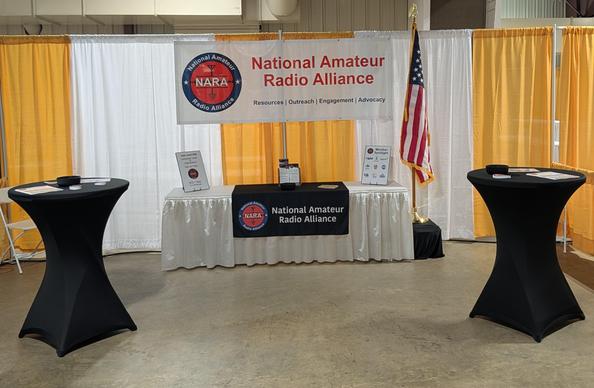
NARA is set up at Hamcation, and we'd love to meet you face-to-face. We're dedicated to promoting amateur radio while empowering ham radio operators and clubs across the country. Whether you're already a NARA member or just curious about our work, we want to connect with you.
Hamcation brings together thousands of hams from across the nation, and it's a opportunity to have real conversations about the future of ham radio.
#hamcation #amateurradio #hamradio #hamradiocommunity #hamfest
Ham Radio’s Biggest Problem: Why Clubs Can Be Hostile and What That Means for Newcomers
1,841 words, 10 minutes read time.
Amateur radio has long been celebrated as a cornerstone of technical curiosity, public service, and self-reliant communication. From helping communities during emergencies to connecting hams across continents, the hobby offers practical skills that extend far beyond mere novelty. Yet, despite these clear benefits, many newcomers in 2026 find themselves hitting an unexpected barrier: the social environment within clubs and online communities. This isn’t about licensing, equipment, or technical skill—it’s about the human side of ham radio.
As highlighted in a recent video by Ham Radio 2.0, titled “Ham Radio’s Biggest Problem | Here’s What’s Wrong,” many people attempting to enter the hobby encounter clubs and online groups that are, at best, indifferent and, at worst, openly hostile. According to the video, individuals often ask basic questions—where to get started, how to study, what equipment to buy—only to be met with dismissive or antagonistic responses. This raises a vital question: why does a hobby centered on connection, communication, and public service sometimes repel its newest members?
The issue, as the video points out, isn’t the challenge of learning or obtaining a license. It’s cultural: many existing ham operators, particularly in local clubs, have inadvertently created an environment that discourages newcomers. For aspiring hams, this can feel like a closed door rather than a community, slowing both individual progress and the growth of the hobby itself.
The Social Barrier: Clubs and Online Communities
The traditional route for learning ham radio has always been through local clubs. Clubs often provide mentorship, known as Elmering, which pairs experienced operators with newcomers to guide them through licensing, operating techniques, and equipment choices. Historically, this approach worked well: clubs were welcoming spaces, hands-on, and oriented toward building both skill and camaraderie.
However, Ham Radio 2.0 points out that today, the situation is uneven. Some clubs are vibrant, supportive communities; others are “clickish” and unwelcoming to outsiders. Reddit threads, forum discussions, and online comments echo this experience: many beginners report hostility, dismissiveness, or outright condescension when asking simple questions. One Reddit user recounted joining local clubs only to feel ignored, while another described the barriers he faced during pandemic-era licensing courses. Even online, certain platforms—especially Facebook groups—can amplify these challenges. Personal experience confirms this: hostile or combative responses on Facebook groups prompted leaving nearly all amateur radio groups, highlighting a larger pattern where online spaces sometimes exacerbate frustration rather than providing guidance.
It’s important to clarify that this isn’t universal. Many clubs, especially those that have embraced online engagement through platforms like Discord, YouTube, or Zoom, actively welcome newcomers. The contrast between hostile and supportive environments is stark, and it shapes whether a beginner persists or abandons the hobby.
Online Communities as Modern Elmers
Given the uneven club landscape, newcomers often turn to online resources. Ham Radio 2.0 emphasizes YouTube channels, Discord servers, and other virtual communities as modern Elmers—mentors who provide guidance, answer questions, and foster engagement. Unlike some traditional clubs, these spaces prioritize accessibility, inclusivity, and patience, making them ideal for learners without local support.
YouTube, for example, allows new hams to learn at their own pace, watch demonstrations, and ask questions in a moderated environment. Discord servers enable direct interaction with experienced operators, offering one-on-one mentorship that parallels the traditional Elmer model. Even beginners without local club access can build meaningful connections, ask questions without fear of ridicule, and gain confidence in operating equipment, building antennas, or participating in nets.
The lesson is clear: social barriers are not insurmountable. Where traditional clubs may falter, online mentorship can provide guidance and reassurance, helping beginners avoid the discouragement that often comes from unfriendly or hostile communities.
Licensing and Early Learning: The Technical Path
A recurring misconception is that getting licensed is the hardest part of amateur radio. In reality, licensing is structured and well-documented. In the United States, the FCC provides the regulatory framework, while ARRL, Gigaparts, and other educational organizations offer structured classes for Technician, General, and Extra licenses. These courses can be in-person or online, and they cover the required theory, regulations, and operational procedures.
The key insight from Ham Radio 2.0 is that learning is iterative. Many hams pass their license exams without deep understanding of equipment or operating practices, gaining hands-on expertise only after being on the air. Passing the exam is a milestone, but operating a transceiver, building an antenna, and participating in nets or contests provide the context and skill that make the hobby meaningful.
This approach aligns with the concept of “learning by doing.” Beginners shouldn’t feel pressured to master everything before acquiring a license. Instead, early exposure to on-air operation and guided practice—either through a welcoming club or online community—accelerates competence and enjoyment.
The Culture of Ham Radio: Why It Matters
Amateur radio isn’t just a hobby; it’s a cultural institution with a public service mission. Licensed operators play critical roles in emergency preparedness, disaster response, and local communications infrastructure. Spectrum stewardship and technical literacy are shared responsibilities that transcend personal interest.
When clubs and communities alienate newcomers, the hobby risks stagnation. As older generations of hams age, the pool of experienced operators shrinks. Protecting the spectrum, maintaining emergency capabilities, and preserving a culture of technical excellence requires a pipeline of engaged, competent newcomers. Making ham radio accessible isn’t simply an act of kindness; it’s vital to the longevity and public value of the hobby.
Hostility Online: Facebook Groups and the Modern Challenge
Social dynamics are particularly relevant online. Many beginners experience frustration when seeking help in Facebook groups. Discussions intended for support can devolve into hostility, criticism, or outright sarcasm. This behavior drives away potential hams, reinforcing a perception that the hobby is insular or elitist.
Your own experience, leaving nearly all amateur radio Facebook groups due to meanness, reflects this broader pattern. While Reddit, YouTube, and Discord offer alternatives, Facebook groups often magnify interpersonal friction, highlighting the need for moderated, inclusive spaces for mentorship and dialogue.
These experiences underscore a key point: the biggest obstacle isn’t technical skill—it’s the culture of engagement. Beginners are deterred not by theory or test questions, but by unwelcoming behavior that discourages participation and slows learning.
Practical Solutions: Finding Supportive Spaces
Fortunately, there are proven strategies for newcomers to overcome hostile environments:
By following these strategies, newcomers can bypass the unwelcoming environments and access the full benefits of amateur radio.
Stories from the Field
Ham Radio 2.0 shares numerous anecdotes that illustrate the impact of social barriers. One Reddit commenter described taking the Technician and General licenses online during the pandemic due to mobility challenges, only to find local clubs unsupportive. Another recounted attending annual ham events, only to feel ignored or dismissed.
Conversely, newcomers who engage with online communities often find mentorship, encouragement, and practical guidance. One user highlighted that YouTube channels, Discord servers, and even virtual hamfests can provide the same camaraderie and knowledge traditionally offered by local clubs. This demonstrates the evolving nature of amateur radio community culture and the opportunities for modern engagement.
The Future of Amateur Radio Communities
The social challenges in amateur radio highlight a broader opportunity: shaping communities that are inclusive, welcoming, and focused on skill development. Ham Radio 2.0 suggests cataloging welcoming clubs by state and region, promoting online mentorship, and leveraging social platforms for structured guidance.
As technology evolves, the hobby can adapt to ensure newcomers feel valued and supported. Online tools, streaming events, and moderated forums are increasingly effective in creating spaces where curiosity and skill development are encouraged rather than discouraged.
Encouragement for New Hams
If you’re a beginner feeling frustrated by unwelcoming clubs or hostile online spaces, take heart. Licensing, learning, and on-air operation are accessible, especially if you leverage supportive online communities. Discord servers, YouTube channels, and active forums provide mentorship that mirrors the traditional Elmer model, making the hobby approachable even in areas where local clubs are less welcoming.
Persistence pays off. Even if your first attempts to engage are met with indifference or hostility, finding the right community will accelerate your learning and connect you with others who share your interests. Amateur radio is fundamentally about communication, collaboration, and problem-solving. These values thrive when the environment is supportive, and modern online spaces increasingly provide that support.
Conclusion
Amateur radio’s greatest obstacle in 2026 isn’t technical. It’s cultural. Hostile or indifferent clubs and online spaces create barriers that frustrate newcomers, slow the pipeline of new operators, and threaten the continuity of a hobby that is valuable both culturally and practically.
Yet, solutions exist. Supportive online communities, mentorship channels, virtual clubs, and open-minded local groups demonstrate that ham radio can still be accessible, exciting, and socially rewarding. By recognizing the social dimension of the hobby, newcomers can navigate hostile environments, find guidance, and become active participants in a community that spans the globe.
Ham Radio 2.0’s insights remind us that inclusion and mentorship aren’t optional—they’re essential to preserving the hobby, protecting spectrum, and ensuring the next generation of hams has the skills, knowledge, and encouragement to thrive. For those starting today, the message is clear: don’t let social friction stop you. The airwaves await.
Call to Action
If this story caught your attention, don’t just scroll past. Join the community—men sharing skills, stories, and experiences. Subscribe for more posts like this, drop a comment about your projects or lessons learned, or reach out and tell me what you’re building or experimenting with. Let’s grow together.
D. Bryan King
Sources
Disclaimer:
The views and opinions expressed in this post are solely those of the author. The information provided is based on personal research, experience, and understanding of the subject matter at the time of writing. Readers should consult relevant experts or authorities for specific guidance related to their unique situations.
#AmateurRadio #amateurRadioBarriers #amateurRadioChallenges #amateurRadioClubsNearMe #amateurRadioConnectivity #amateurRadioCulture #amateurRadioExam #amateurRadioHostility #amateurRadioMentorship #amateurRadioOnline #amateurRadioOnlineLearning #amateurRadioOpportunities #amateurRadioSocial #amateurRadioSociety #amateurRadioSpectrum #amateurRadioStudy #ARRLResources #beginnerHamRadio #beginnerHamRadioSupport #discordHamRadio #ElmerMentor #Elmering #EmergencyCommunication #ExtraLicense #FacebookHamRadio #FCCAmateurRadio #GeneralLicense #gettingHamRadioLicense #GigapartsClasses #hamRadio #hamRadio20 #hamRadioAccessibility #hamRadioAdvice #hamRadioBeginners #hamRadioBeginnersGuide #hamRadioClasses #hamRadioClubs #hamRadioCollaboration #hamRadioCommunity #hamRadioContests #hamRadioConventions #hamRadioCulture #hamRadioCultureImprovement #hamRadioCultureProblem #hamRadioEducation #hamRadioEncouragement #hamRadioEngagement #hamRadioEngagementStrategy #hamRadioEquipment #hamRadioEvents #hamRadioExperience #hamRadioFrustration #hamRadioGuidance #hamRadioGuides #hamRadioHobby #hamRadioKnowledge #hamRadioLearning #hamRadioLearningPath #hamRadioLicensing #hamRadioLivestream #hamRadioMentorship #hamRadioMentorshipPrograms #hamRadioNets #hamRadioNetworking #hamRadioNetworkingTips #hamRadioNewOperators #hamRadioOnAir #hamRadioOnlineCommunities #hamRadioOnlineMentorship #hamRadioOnlineResources #hamRadioPersistence #hamRadioPositiveCommunity #hamRadioPractice #hamRadioPublicSafety #hamRadioPublicService #hamRadioResources #hamRadioSkillDevelopment #hamRadioTips #hamRadioTipsForBeginners #HamRadioTraining #hamRadioTroubleshooting #hamRadioTutorials #hamRadioVirtualClubs #onlineHamRadio #onlineHamRadioGroups #QRZForum #redditAmateurRadio #startingHamRadio #supportiveHamRadio #TechnicianLicense #welcomingHamRadioClubs #youtubeHamRadio
Ham radio’s biggest barrier isn’t the license—it’s hostile clubs and online communities. Learn how newcomers can find mentorship, supportive networks, and thrive on the air 🌐📻 #HamRadio #AmateurRadio #HamRadioCommunity
How Gatekeeping in Ham Radio Is Hurting the Hobby
8,734 words, 46 minutes read time.
A Pattern That Can No Longer Be Ignored
A little over a year ago, I published a blog post titled How Gatekeeping in Ham Radio Is Hurting Newcomers: Let’s Build a Supportive Community. That article was not an exception. It was simply one more example in a pattern that has followed nearly everything I have written about amateur radio. Regardless of the subject—operating practices, technology, culture, or the future of the hobby—the reaction from a segment of the amateur radio community has been consistently hostile. The criticism rarely engages with the substance of what is written. Instead, it arrives through social media messages, emails, and private DMs questioning credibility, motives, or whether I have any right to speak at all.
In recent months, the focus of that hostility has expanded. Alongside familiar accusations of not respecting tradition or not “doing things the right way,” criticism has increasingly targeted how the content itself is created. I have been transparent about using modern tools, including artificial intelligence, to assist with research, organization, drafting, and image creation. For some, the use of AI has become a disqualifier on its own, as though leveraging contemporary tools invalidates experience, technical knowledge, or good-faith participation. That reaction is revealing. Amateur radio was built on experimentation and adaptation, yet innovation is increasingly treated with suspicion in spaces that once celebrated it.
What makes this reaction harder to reconcile is the absence of any personal or financial incentive. All content on this site is published freely. There are no subscriptions, no paywalls, and no meaningful revenue. After more than two years of consistent writing, the blog generates nothing of consequence financially. There is no commercial angle, no monetization strategy, and no attempt to manufacture authority. The purpose has been straightforward: to document observations, share experience, and contribute to a conversation about the present and future of amateur radio.
That reality forces an uncomfortable question. If the work is free, transparent, and offered in good faith, why does it provoke such resistance? At some point, anyone who writes critically about an insular culture has to decide whether to step back or continue, knowing the reaction is unlikely to soften. The issue, then, is no longer about one article or one author. It is about a pattern of gatekeeping that increasingly defines how amateur radio presents itself to the outside world.
What Gatekeeping Looks Like in Amateur Radio
Gatekeeping in amateur radio rarely takes the form of explicit exclusion. It is not written into federal regulations, licensing requirements, or published band plans. No rulebook states that certain people do not belong or that certain questions are unwelcome. Instead, gatekeeping operates socially, enforced through tone, assumptions, and informal cultural signals that are widely understood by those already inside the hobby and immediately felt by those trying to enter it. This makes it difficult to confront directly because nothing overt has technically been violated—yet the message is unmistakable.
One of the most common examples appears when basic questions are asked. A newcomer may ask how to properly identify on a repeater, how to program a radio, or why a particular operating practice exists. Rather than receiving a clear explanation, the response is often layered with irritation, sarcasm, or condescension. Phrases like “you should already know that,” “read the manual,” or “that question gets asked all the time” communicate impatience rather than guidance. In some cases, the response is technically correct but delivered in a way that discourages further participation. The result is not education; it is embarrassment.
I have personally observed some of the meanest comments coming from gatekeepers directed at new hams on Facebook. Simple, genuine questions are sometimes met with ridicule rather than instruction. A query about basic repeater etiquette or antenna setup can spark a cascade of dismissive or insulting responses, leaving the person asking the question hesitant to engage further. This behavior sends an unmistakable message: asking questions publicly carries risk, and participation is conditional on tolerance for social friction rather than curiosity or effort.
Gatekeeping can also appear in day-to-day operational interactions, even when rules or listings suggest otherwise. For example, I was once asked not to use a repeater listed on Repeaterbook.com as publicly accessible. The operator insisted I should not transmit, despite the repeater not being marked private and being clearly intended for general use in the area, not only for visitors on vacation. While the principle of private repeaters is valid—owners may wish to restrict access to specific groups—this situation demonstrates how informal social enforcement can conflict with documented guidance. The expectation placed on me was not grounded in regulation or policy but in subjective judgment, effectively policing access through personal interpretation rather than technical or legal standards. Instances like this communicate a subtle but powerful message: access and participation are conditional on the approval of those asserting authority, even when formal rules are clear.
This phenomenon is also visible online in broader communities. I have seen amateur radio groups on Facebook or other forums grow rapidly when active and welcoming discussions attract new members—but then lose members over time as gatekeeping behavior takes hold. Experienced participants or self-appointed “experts” sometimes dominate conversations, criticize newcomers harshly, or insist that only certain practices or knowledge are valid. Over time, the community loses the very curiosity and energy that helped it grow in the first place. Those leaving are often skilled, motivated, and capable, but they are unwilling to endure persistent social friction.
Another common manifestation of gatekeeping is public arguments over trivial or technical details, which can occur in any forum imaginable—online, in-person, or even over the air. I have seen operators engage in prolonged disputes on Facebook groups, online forums, and club discussion boards over minor issues, such as exact phrasing in a net check-in, choice of equipment, or whether a specific repeater etiquette rule applies. These arguments often escalate, drawing in multiple participants and leaving newcomers observing a hostile environment. Even on the air, gatekeeping behavior can appear as sharp corrections or repeated commentary on trivial operating practices, turning routine communications into social policing.
It is important to clarify that while gatekeeping is socially discouraging, it is not the same as violating FCC rules. The FCC enforces regulations when an operator’s behavior interferes with others’ ability to use the airwaves, such as deliberately transmitting over other signals, playing prohibited audio content, or willfully blocking legitimate communications. For example, the FCC has fined operators for repeatedly transmitting music or animal noises that interrupted other communications, with penalties reaching tens of thousands of dollars. These cases are regulatory enforcement actions, distinct from the cultural gatekeeping described here, which primarily discourages participation rather than creating legal violations.
The dynamic is compounded when longevity is equated with authority. Experience matters in amateur radio; decades on the air bring insight and perspective. The problem arises when time served becomes a substitute for explanation. Statements such as “that’s how we’ve always done it,” “trust me, I’ve been licensed for decades,” or “you’ll understand once you’ve put in the time” shut down discussion rather than advance it. Knowledge becomes something to guard rather than something to share. In this environment, asking “why” is interpreted as a challenge rather than an opportunity to learn.
Gatekeeping is also evident in the treatment of operating modes and technology. Interest in newer digital modes, weak-signal experimentation, or software-defined radio is sometimes dismissed as a lack of seriousness. Operators may be told they are “letting the computer do all the work” or that they are avoiding the “real” skills of amateur radio. This framing ignores the reality that many modern modes require significant technical understanding of signal processing, propagation, timing, and software configuration. The objection is not technical but cultural: what is being defended is familiarity, not competence.
Similarly, familiarity with software, networking, automation, or data systems can be undervalued because these skills were not historically central to the hobby’s identity. Skills directly relevant to modern communications are sometimes minimized, while legacy knowledge is elevated regardless of current applicability. Even experienced operators who suggest procedural updates, question commonly repeated assumptions, or challenge norms can find themselves marginalized. In these cases, resistance is not about accuracy or safety but about violating unspoken rules: tradition should not be questioned publicly, and deviation from the familiar is interpreted as a threat rather than a legitimate perspective.
Club environments can amplify gatekeeping. Meetings may privilege inside jokes, historical hierarchies, or informal power structures that newcomers find difficult to navigate. Decisions might be made without explanation because “that’s how it’s always been done.” Those who ask for clarity risk being labeled disruptive. Over time, participation narrows to those willing to accept these dynamics without question.
Online forums intensify the effect. Threads intended for education often devolve into contests of status—who knows more history, who has the longest tenure, or who remembers obscure technical details. Correcting someone publicly, rather than privately, can be treated as a demonstration of authority. For newcomers or returning operators, these interactions create a daunting and unwelcoming first impression.
Gatekeeping is frequently defended as a way to protect standards, and it is important to acknowledge that standards genuinely matter in amateur radio. Shared spectrum requires discipline. Poor operating practices can interfere with others. Technical competence affects safety, legality, and public perception. The concern itself is valid. The problem lies in the method of enforcement. When standards are taught through patient explanation, demonstration, and guidance, they produce capable operators. When they are enforced through ridicule, public shaming, or dismissive language, they discourage participation without improving competence.
The practical cost of this behavior is significant. Gatekeeping filters out participants who are unwilling to tolerate unnecessary friction. It selects not for skill or commitment but for tolerance of hostility. Over time, this leads to a smaller, more insular community, which becomes increasingly defensive precisely because it has lost momentum. Standards are not strengthened by this process; they are maintained by fewer participants and defended more aggressively because the culture feels fragile.
Perhaps the most damaging aspect of gatekeeping is that it often goes unrecognized by those enforcing it. Because the exclusion is informal and socially normalized, it feels justified. The absence of explicit rules allows individuals to deny responsibility while the cumulative effect is clear: newcomers leave quietly, questions stop being asked, and participation declines. Gatekeeping becomes self-reinforcing. The community shrinks, dissenting voices disappear, and remaining members interpret the silence as confirmation that their approach is correct. Meanwhile, the hobby loses the curiosity, adaptability, and experimentation that once defined it.
Gatekeeping does not preserve amateur radio’s legacy. It erodes it slowly, politely, and often unintentionally. Recognizing that distinction is not an attack on experience or tradition. It is an acknowledgment that culture—not regulation—now poses one of the greatest risks to the hobby’s future.
How This Culture Took Hold
Amateur radio developed during a period when access to electronics and communication technology was extremely limited. In the early 20th century, radios were complicated, expensive, and largely inaccessible to the general public. Operators often had to build their own equipment from kits or even from raw components, carefully winding coils, assembling transmitters, and learning the intricacies of vacuum tubes. Every new skill—from soldering circuits to tuning antennas—required patience, ingenuity, and a willingness to experiment. Learning was hands-on and failure was common. Mentorship was essential: more experienced operators guided newcomers through the nuances of both the technical and social dimensions of the hobby, passing down not just knowledge, but also an understanding of the values and etiquette that governed the airwaves.
That environment fostered pride and identity. Completing a complex project or mastering a new operating technique was a visible achievement, and operators often took deep satisfaction in helping others learn. At the same time, the scarcity of knowledge and the difficulty of gaining it created a sense of ownership over the hobby’s identity. Those who had “been there” felt that the skills they had earned entitled them to define what it meant to be a legitimate amateur radio operator. This sense of ownership was not inherently malicious; it reflected a culture where expertise was rare, effort was costly, and mistakes could have real consequences for equipment, safety, or compliance with regulations.
As technology advanced, the context changed dramatically. The rise of personal computing, inexpensive digital electronics, and widely available communication tools expanded access to technical experimentation. Today, a beginner can purchase a ready-to-use digital transceiver, explore weak-signal or software-defined modes, and even experiment with satellite communications without ever having built a transmitter from scratch. Amateur radio no longer occupies a singular role as the primary gateway into electronics, networking, or wireless communication. Participation in the hobby began to decline in some areas, particularly in local clubs where membership aged without sufficient replacement. The visible result was fewer active operators and less generational turnover in knowledge.
In response, parts of the community became increasingly protective. Change, particularly when it involved digital modes, software-assisted operation, or other new approaches, was sometimes framed as a threat to identity rather than an opportunity for growth. Gatekeeping emerged in this context as a defensive response. By narrowing the definition of what constitutes “legitimate” operation—favoring traditional analog modes, hands-on equipment building, or adherence to historical etiquette—some operators attempted to preserve the cultural and technical identity that they felt was at risk.
The irony is stark: amateur radio’s early history was defined by rapid change, creative problem-solving, and experimentation that constantly pushed boundaries. Early pioneers were, in many ways, the ultimate disruptors. They tested the limits of what could be built, transmitted, and received. They challenged regulatory frameworks, adapted to evolving technology, and defined norms as they went. Resistance to new ideas, digital experimentation, or alternate learning pathways is a relatively recent development, emerging only after the hobby became more stable, less exclusive, and more accessible to the broader public.
This historical perspective helps explain why gatekeeping persists. It is not rooted in the hobby’s origins or in the practical requirements of operating legally and safely. Rather, it reflects a cultural anxiety: a desire to preserve identity in the face of generational change, technological evolution, and the democratization of knowledge. Understanding this context is essential. Gatekeeping is less about expertise and more about fear—fear that the hard-earned knowledge, skills, and traditions of one generation will be diluted or disregarded.
Yet the opportunity exists to realign culture with history. If the amateur radio community embraces curiosity, mentorship, and inclusive guidance—values that built the hobby in the first place—gatekeeping can be replaced with constructive participation. Early operators never intended their hard-won knowledge to become a barrier; it was meant to inspire, to educate, and to ensure that the airwaves were used responsibly. Reconnecting with that original spirit can help the hobby thrive in the modern era, where new tools and new perspectives are expanding what is possible.
The Effect on New and Returning Participants
People drawn to amateur radio today often arrive with practical motivations and diverse backgrounds. Some are interested in emergency communication, community resilience, or public service. Others are drawn by antennas, electronics, propagation, or the challenge of mastering digital modes. Many newcomers bring experience from adjacent technical fields—software, networking, robotics, or engineering—and see amateur radio as a hands-on, experimental extension of their skills. Returning operators, meanwhile, may be revisiting a hobby they explored decades ago, curious to see how technology and modes have evolved.
When these individuals encounter gatekeeping, the message they receive is not simply that the hobby is technically challenging, but that it is socially unwelcoming. Difficulty paired with support encourages persistence, growth, and deeper engagement. Difficulty paired with ridicule, sarcasm, or dismissive attitudes, however, drives disengagement. A newcomer may hesitate to ask questions, a returning operator may stop participating, and even capable individuals can quietly drift away from the hobby.
Real-world examples illustrate this clearly. On social media, I have witnessed new hams post simple questions about repeater etiquette, antenna placement, or basic operating procedures, only to be met with hostility or sarcastic responses from self-appointed “experts.” These interactions can escalate, drawing attention from others in the group, amplifying discomfort, and creating a climate where participation feels risky. Similarly, I have seen online amateur radio communities grow rapidly when curiosity and collaboration are encouraged, only to lose members over time as gatekeeping behaviors emerge—harsh corrections, trivial disputes, and repeated dismissals gradually push out those who are most eager to learn.
Even over the air, the effect is tangible. Minor violations of perceived etiquette, or the use of newer digital modes, can trigger repeated public corrections, unsolicited commentary, or criticism framed as instruction. I recall being scolded harshly for using a Roger beep early in my time as a ham. At the time, my intention was simply to signal the end of my transmission clearly and politely, yet my choice of practice provoked unexpected rebuke. Experiences like this communicate to newcomers that even small, well-meaning actions may be scrutinized, turning routine interactions into sources of anxiety rather than learning opportunities.
Another example involves impromptu nets, particularly with operators who key up rapidly and consistently. In these scenarios, anyone wishing to join the conversation may be physically unable to get their transmission through. In digital modes such as DRM, the effect can be even more restrictive: participants who want to disconnect or adjust settings are prevented from doing so because others dominate the channel. These behaviors are rarely intentional in the sense of personal malice, but the outcome is the same—new or returning participants are effectively blocked from active engagement, creating frustration and discouragement.
A core principle of amateur radio is that experience is gained through action. I am a full believer that you learn as you “do.” Reading manuals, watching videos, or observing others is valuable, but true understanding comes from operating your equipment, experimenting with setups, and engaging directly on the air. This principle is not academic—it has life-and-death implications in emergency situations. Operators drawn to amateur radio often join with the intent to serve their communities in times of crisis. They may want to assist in disaster communication, coordinate with emergency services, or provide backup communication when conventional networks fail. In these contexts, hesitation or inexperience can have serious consequences. If someone has only observed, studied, or theorized, they may struggle to set up antennas, program radios, or operate digital modes under pressure. Gatekeeping that discourages hands-on experimentation, delays participation, or makes newcomers afraid to transmit actively undermines this essential learning process. Emergencies are not the time to “learn.” Every operator must enter such situations with confidence and competence, which comes only from repeated, hands-on practice.
The discouragement is often subtle, yet persistent. New operators quickly learn which repeaters or nets feel welcoming and which are “policed” by gatekeepers. Some avoid certain bands or frequencies entirely, opting to participate only where they feel safe. This selective participation limits their exposure to different modes, technical challenges, and networking opportunities. Returning operators may experience similar limitations, discovering that questions they feel are essential for reintegration are met with judgment rather than assistance. The social cost becomes a barrier almost as real as technical or legal limitations.
The consequences ripple beyond individual participation. Clubs and nets lose momentum when active, curious members disengage quietly. Volunteer-led activities, mentorship programs, and community events suffer from reduced involvement. A net or forum that could serve as a hub for learning and experimentation instead becomes a gatekeeping showcase, deterring newcomers and silencing those who might otherwise contribute fresh ideas or technical innovations. Over time, the culture shifts subtly but decisively: enthusiasm is tolerated only if it conforms to established norms, and innovation is framed as unnecessary or threatening.
Modern technical hobbies abound, offering steep learning curves without social friction. Robotics, coding, maker communities, and digital communications platforms attract curious, capable individuals who are free to experiment and fail without fear of social ostracism. When amateur radio appears rigid, judgmental, or hostile, it quietly loses potential long-term participants who choose to invest their energy elsewhere. These are not people deterred by technical complexity—they are people deterred by culture. Gatekeeping, even when unintentional, functions as a silent attrition mechanism, limiting the hobby’s ability to attract and retain talent, curiosity, and innovation.
Licensing numbers alone do not reflect the true health of amateur radio. While thousands of new licenses are issued annually, many of these operators never become active participants. Obtaining a license is only the first step; remaining engaged, contributing to nets, clubs, and technical experimentation, and sharing knowledge with others is what sustains the hobby. Retention matters far more than initial recruitment. Cultural barriers—including gatekeeping, social friction, and dismissive attitudes—play a major role in determining who stays and who quietly disappears.
Early interactions are particularly influential. The first few experiences a newcomer has—whether on a repeater, in a local club meeting, or on an online forum—can determine whether they continue or disengage. When newcomers feel dismissed, ridiculed, or publicly corrected without explanation, motivation quickly erodes. In many cases, the potential for embarrassment outweighs curiosity or enthusiasm, and operators simply stop transmitting, attending meetings, or engaging online. Recruitment efforts alone fail when the culture discourages participation after entry. Gatekeeping accelerates decline by filtering out exactly the people needed to sustain the hobby.
The long-term effect on the hobby is cumulative. Declining participation among new and returning operators reduces diversity of thought and experience. Technical experimentation slows, and innovation is stifled. Mentorship networks shrink, leaving fewer experienced operators available to guide the next generation. In extreme cases, persistent gatekeeping can create generational gaps, where new hams never feel fully integrated and returning hams find the environment alien or intimidating. This dynamic threatens not only the vitality of local clubs and online communities but the broader sustainability of the hobby itself.
Ultimately, gatekeeping affects the hobby’s most valuable assets: people and culture. Every discouraged newcomer or disengaged returning operator represents potential talent, perspective, and enthusiasm lost. When the barriers are social rather than technical, the effect is insidious, invisible, and difficult to reverse. For amateur radio to remain relevant, inclusive, and vibrant, it must confront this culture, encourage welcoming participation, and restore mentorship as the standard for integrating new and returning participants.
Retention, Not Recruitment, Is the Real Problem
Licensing numbers alone do not reflect the true health of amateur radio. While thousands of new licenses are issued annually, many of these operators never become active participants. Obtaining a license is only the first step; remaining engaged—contributing to nets, clubs, technical experimentation, and mentoring—is what sustains the hobby. Retention matters far more than initial recruitment, and cultural factors play a major role in determining who stays and who quietly disappears.
Early interactions are particularly influential. The first few experiences a newcomer has—whether on a repeater, in a local club meeting, or on an online forum—can determine whether they continue or disengage. When newcomers feel dismissed, ridiculed, or publicly corrected without explanation, motivation quickly erodes. A sharp rebuke for asking a basic question, criticism for using a Roger beep, or frustration at being unable to join an impromptu net due to rapid keying can seem minor in isolation, but these experiences accumulate to create a pattern: participation is risky, and mistakes are punished rather than used as learning opportunities.
A core principle of amateur radio is that operators learn by doing. Reading manuals or watching videos is valuable, but true competence comes from hands-on practice: setting up antennas, programming radios, experimenting with modes, and making contacts on the air. This principle is not merely academic—it has practical consequences in emergencies. Operators who have not practiced in real-world conditions may struggle to set up communications under pressure or operate efficiently when networks fail. In emergencies, there is no time to “learn” on the job. Gatekeeping that discourages hands-on experimentation or instills fear of mistakes undermines this essential learning process, leaving the hobby’s operators less prepared and less confident.
Another barrier to retention is the perceived club-centric mentality in parts of the amateur radio community. Historically, clubs have provided access to repeaters, mentorship, licensing classes, and organized nets, making them central to the hobby’s social and technical infrastructure. For many veteran operators, club affiliation is equated with legitimacy or commitment, creating the impression that to be a “real” ham, one must participate in a club.
While club membership can be beneficial, this perception can discourage or alienate independent operators or newcomers who prefer to learn on their own or participate mostly online. Operators who choose to operate solo may feel excluded or judged, while others may be subtly pressured to join a club as a prerequisite for acceptance. In effect, the club-centric culture can function as an additional social filter, amplifying the impact of gatekeeping on retention.
The consequences of poor retention are visible across multiple dimensions. Clubs struggle to maintain membership and organize events when volunteers disengage after just a few months or years. Repeaters see declining use and reduced oversight as active operators dwindle. Mentorship programs falter, nets lose participants, and online communities shrink as enthusiasm is filtered out by gatekeeping behaviors. Recruitment efforts alone cannot compensate for these losses. Even when new licenses are issued in large numbers, culture—including expectations around clubs—determines whether those operators remain engaged, active, and confident.
Gatekeeping accelerates decline by filtering out the very people needed to sustain the hobby. Those most likely to ask questions, experiment, or innovate—traits essential for growth and modernization—are often the first to disengage when met with impatience, sarcasm, or social exclusion. Unlike regulatory violations, which are measurable and enforceable, cultural attrition is subtle and cumulative. By the time its effects are evident in membership rolls, net participation, or volunteer availability, significant damage has already occurred.
Retention also depends on mentorship and inclusive guidance. Communities that invest in onboarding, encourage questions, allow mistakes in low-stakes environments, and promote hands-on learning see significantly higher long-term participation. Conversely, communities that rely on rigid norms, public shaming, or social policing often lose highly capable operators. Over time, these losses reinforce the perception of the hobby as insular and defensive, further discouraging new and returning operators from investing their time and energy.
In short, amateur radio’s long-term health cannot be measured by license issuance alone. Recruitment without retention is meaningless. Every disengaged participant represents a loss of talent, enthusiasm, and capability. For the hobby to remain vibrant, relevant, and resilient, it must prioritize retention through a culture of mentorship, hands-on practice, and supportive learning—rather than allowing gatekeeping and club-centric attitudes to silently dictate who belongs.
Technology, AI, and Resistance to Change
The criticism surrounding artificial intelligence in amateur radio is part of a broader discomfort with modernization. For some, AI has become a symbol rather than a subject. It is often framed as a shortcut, a compromise of authenticity, or a threat to the “real” way of doing things. This resistance is not new. Similar debates arose with the adoption of digital modes, computer logging, software-defined radios, and even early satellite communications. In many cases, the pattern is the same: new technology is questioned not on the basis of its utility, but on its perceived departure from tradition.
Amateur radio has always relied on tools. From spark gaps to vacuum tubes, from transistorized transceivers to microprocessors, progress has come through adoption, experimentation, and integration—not avoidance. Using AI to assist with writing blog content, creating instructional images, or planning antennas does not replace human expertise any more than simulation software replaces the need to understand propagation or circuitry. Tools amplify human effort and creativity; they do not negate understanding. They allow operators to focus on learning, experimenting, and solving complex problems, rather than spending disproportionate time on repetitive or administrative tasks.
That said, the concerns about AI are not entirely unfounded. Relying too heavily on AI without cultivating underlying knowledge or hands-on experience can create dependency. In situations where AI is unavailable, produces errors, or misinterprets context, operators who have not developed fundamental skills may struggle. Just as in emergency communications, the operator’s own judgment, knowledge, and problem-solving ability are critical. AI should be treated as a tool, not a substitute for expertise—a way to augment learning and efficiency while preserving core competence.
Treating modern tools as illegitimate is another form of gatekeeping. It defines authenticity by nostalgia rather than capability, establishing arbitrary boundaries around what constitutes a “real” operator. This mentality can discourage participation from individuals who are already comfortable with contemporary technology, creating a subtle, yet pervasive, barrier to engagement.
The resistance is often selective. Many hams embrace new tools only when they align with long-standing practices or personal comfort zones. For example, digital modes such as FT8, D-STAR, and DRM are still criticized by some operators, while traditional CW (Morse code) is universally respected—even when, objectively, both require skill and technical understanding. One of the most amusing—and telling—arguments I’ve encountered is a ham complaining that someone using FT8 could contact all the countries in a region within a few hours and gain recognition for it, while it had taken them years to achieve similar recognition using DX FM phone. Whether or not this scenario is technically accurate, the perception alone reveals a key tension: modern digital modes, with their efficiency and automation, are sometimes seen as “shortcutting” the traditional path, even when the outcome—making successful contacts, learning propagation, or logging countries—is objectively the same.
This kind of criticism highlights a broader gatekeeping pattern: mastery is measured not only by achievement, but by how one achieves it. Digital modes, computer-assisted logging, or AI-assisted content creation can provoke suspicion because they do not follow historical methods, even though they are tools that expand participation and learning. Ironically, amateur radio has always evolved through the adoption of new technologies—from spark-gap transmitters to transistors, from analog repeaters to software-defined radios. Yet, when efficiency threatens tradition, some operators perceive it as a challenge to legitimacy rather than an opportunity to broaden engagement.
Ultimately, the pattern is clear: fear of change, suspicion of tools, and attachment to nostalgia create invisible barriers that prevent newcomers from fully engaging. AI, digital modes, computer logging, or other modern tools are not threats—they are extensions of the hobby’s original spirit: learning, experimenting, and communicating. Responsible adoption of AI and modern tools—combined with hands-on practice and fundamental knowledge—can strengthen the hobby, improve retention, and encourage innovation, rather than weaken it.
Emergency Communications and Cultural Risk
One of amateur radio’s strongest claims to relevance is its role in emergency communication. From natural disasters to local power outages, amateur radio operators have historically provided critical communication when conventional infrastructure fails. This capability depends on trained, confident, and motivated operators who are willing and able to serve under pressure. Gatekeeping undermines this mission by narrowing the pool of participants, discouraging newcomers, and creating an environment where potential operators hesitate to engage until it is too late.
The stakes are high. Emergencies do not allow for delayed learning, experimentation under observation, or “waiting your turn” in social hierarchies. Operators must know their equipment, modes, and procedures in advance. I have seen firsthand how cultural friction—whether harsh correction for small mistakes, exclusion from impromptu nets, or dismissive attitudes toward newer modes—can inhibit this hands-on experience. When operators fear public shaming or ridicule, they transmit less often, experiment less, and avoid situations where they might make errors, all of which diminishes practical readiness.
One of the simplest truths about emergency communication is that having enough people is often as critical as having skilled operators. During my years working with CERT (Community Emergency Response Teams), I saw firsthand how even well-trained volunteers struggled to meet operational needs simply because there were not enough participants. Tasks that seem straightforward—staffing check-in points, relaying messages, monitoring nets—require multiple people working together. Inadequate numbers mean overworked operators, delayed communications, and gaps in coverage that can compromise the effectiveness of the response. Amateur radio faces the same challenge. Even highly skilled operators cannot fill gaps if the overall number of participants is low. Gatekeeping compounds this problem by discouraging new or returning operators from engaging fully. Over time, this reduces the pool of available operators, creating a situation where emergencies may be staffed by too few people to operate safely or effectively.
Modern emergency communication increasingly intersects with digital systems, data transmission, and network integration. Effective coordination often relies on automated reporting, packet radio, mesh networks, and digital modes such as D-STAR, FT8, or DRM. Excluding operators who bring expertise in computers, networking, or digital communications—simply because they do not conform to traditional analog practices—weakens overall preparedness. Skills often derided by traditionalists can be exactly what enable rapid, reliable communication in a crisis. Cultural hostility toward these tools or the operators who use them does not improve readiness; it undermines it.
The implications extend beyond individual capability. Public agencies, emergency management organizations, and community preparedness planners evaluate amateur radio based on participation, professionalism, and adaptability. A shrinking, inward-facing community struggles to maintain credibility in these contexts. When clubs and nets are insular, or when digital expertise is discouraged, emergency managers may question whether amateur radio can reliably support critical communications during disasters. This perception affects funding, partnerships, and the broader role of the hobby in public service.
Ultimately, the link between culture and capability is direct. Gatekeeping and resistance to modernization do not simply hurt newcomers—they have real-world consequences for community resilience. Amateur radio’s claim to relevance depends on the ability to integrate all available skills, modes, and operators. A community that fosters inclusion, mentorship, and hands-on learning ensures a broader, more competent, and more adaptable operator base—exactly the qualities required when infrastructure fails, when every transmission counts, and when there simply aren’t enough people to do the job without everyone contributing.
Standards Are Preserved Through Education
Concerns about lowering standards often surface whenever gatekeeping is criticized. Critics argue that without strict social enforcement, operators will ignore procedures, misuse frequencies, or fail to uphold technical rigor. While the intention is understandable, these concerns frequently misunderstand the root of the problem. Clear standards—spectrum discipline, procedural knowledge, technical competence—are most effectively preserved through education and mentorship, not exclusion or intimidation. Standards enforced through gatekeeping, ridicule, or social pressure may appear to maintain authority in the short term, but in reality, they produce resentment, drive away capable participants, and weaken the community over time.
Respect for procedure and technical knowledge does not require hostility. Operators can be taught to follow rules, log contacts correctly, or handle nets efficiently through structured guidance, clear examples, and patient explanation. For instance, rather than scolding a newcomer for incorrectly joining a net, an experienced operator can demonstrate proper procedure, explain why it matters, and encourage repetition until the skill is mastered. A culture built on supportive instruction preserves the same standards that gatekeepers claim to defend—but it does so without alienating new or returning operators.
Authority earned through teaching is more durable than authority enforced through intimidation. A mentor who patiently guides a newcomer fosters trust and confidence. The operator internalizes knowledge and develops the competence to act independently, often exceeding the mentor’s expectations. By contrast, authority based on intimidation or sarcasm creates compliance only while observation is present, and it discourages initiative, experimentation, and critical thinking. In emergencies, when operators must act independently and adapt to unpredictable situations, the latter approach leaves them unprepared.
Gatekeeping also distorts perceptions of expertise. Longevity or technical skill may be conflated with moral or social authority, giving certain operators outsized influence over community norms. When standards are framed as tools for social control rather than shared knowledge, competence is overshadowed by conformity. In such environments, newcomers may hesitate to ask questions, veterans may avoid experimenting with new modes, and innovation slows—despite the ostensible goal of preserving quality.
Education-based standards also naturally accommodate modernization. Whether teaching digital modes, AI-assisted logging, or software-defined radio operation, clear instruction allows operators to master new tools without sacrificing technical rigor. Gatekeeping, in contrast, often resists change, equating unfamiliar technology with lowered standards rather than an opportunity to expand competence. This resistance can make communities insular and unwelcoming, undermining both retention and the long-term viability of the hobby.
In short, preserving standards is not about policing or shaming; it is about empowering operators with knowledge and confidence. A culture rooted in mentorship, explanation, and hands-on learning produces skilled, adaptable, and motivated participants. Those are the qualities that sustain amateur radio, maintain professionalism, and ensure readiness—whether in everyday operation, technical experimentation, or emergency communication.
Signs of Change Within the Community
Despite persistent challenges, there are encouraging signs that parts of the amateur radio community are evolving. Some clubs have recognized that onboarding and mentorship are critical for retention and long-term engagement. They invest in structured licensing classes, hands-on workshops, and open nets specifically designed to welcome newcomers. In these environments, questions are answered patiently, mistakes are treated as learning opportunities, and participation is valued over immediate technical perfection. This approach not only develops skills but fosters confidence, helping operators stay active and contribute meaningfully over the long term.
Online spaces are also showing positive examples. Moderated forums, social media groups, and digital communities increasingly enforce codes of conduct, curbing sarcasm, public shaming, and exclusionary behavior. Constructive discussion is encouraged, and members are rewarded for mentoring and sharing knowledge. In addition, some groups actively highlight beginner questions and create “starter guides” for new hams, showing that inclusion and technical rigor can coexist. These measures help prevent the attrition that often follows negative early experiences and encourage operators to participate in nets, contests, and emergency exercises without fear of ridicule.
Independent voices—bloggers, educators, and community advocates—have begun addressing gatekeeping explicitly, framing it as a cultural risk rather than a protective measure. They share personal experiences, provide resources, and demonstrate ways to balance tradition with modernization. For example, articles on integrating digital modes, AI-assisted tools, or software-defined radios show that embracing new technology does not compromise technical standards. Instead, it expands accessibility and engagement, allowing more operators to participate fully and safely.
Some operators are also experimenting with hybrid approaches that combine tradition and innovation. For instance, mentorship programs may include CW practice alongside FT8 digital modes, or club nets may pair older analog repeater use with digital voice and data exercises. These initiatives show that it is possible to respect history while preparing participants for modern communication challenges, including emergency scenarios where adaptability is critical.
These efforts demonstrate that change is possible without abandoning tradition. Respect for procedure, technical competence, and historical practices can coexist with mentorship, digital tools, and inclusive practices. Gatekeeping is not mandated by licensing rules or regulations; it is a cultural phenomenon. Rules did not create it, and rules alone will not solve it. Instead, the solution lies in shifting norms, fostering supportive communities, and recognizing that the hobby thrives when participation is encouraged rather than restricted.
In many ways, these changes signal hope for the future. Communities that embrace constructive mentoring, welcome digital modes, and integrate modern tools like AI for education or content creation are building a more resilient, adaptable, and engaged operator base. They demonstrate that amateur radio can evolve, attract new participants, and retain experienced operators while maintaining standards. The key lesson is that the hobby’s strength comes not from excluding participants but from empowering them, ensuring amateur radio continues to grow, innovate, and maintain its relevance in everyday operation, technical experimentation, and emergency communication alike.
Why This Conversation Matters
Amateur radio faces significant external pressures. Spectrum demands from commercial interests, regulatory constraints, and technological redundancy all place limits on what the hobby can do. Digital communication, cellular networks, and satellite systems increasingly handle tasks that amateur radio once fulfilled, from message relays to long-distance contacts. In this environment, adaptability, innovation, and broad participation are not optional—they are essential for the hobby’s survival and continued relevance.
Cultural self-sabotage compounds these external pressures. Gatekeeping reduces participation precisely when the community most needs new ideas, skills, and energy. Every discouraged newcomer is a potential operator, mentor, or advocate lost. Every veteran who withdraws due to a hostile culture diminishes institutional knowledge and operational capacity. The irony is stark: while amateur radio’s history was defined by experimentation and technological advancement, resistance to change today undermines both growth and preparedness.
It is important to note that people entering amateur radio are not asking for lowered expectations. They are not seeking shortcuts to competence; they want a fair opportunity to learn, practice, and contribute. When the community welcomes them, these individuals become productive operators, share knowledge with others, and strengthen clubs, repeaters, and emergency networks. When dismissed, ridiculed, or excluded, they quietly move on to other technical hobbies, leaving the hobby with fewer participants and less collective capability.
Ultimately, the combination of external pressures and internal gatekeeping represents a dual threat. Spectrum may be limited, technology may advance, and regulations may evolve—but the real danger comes from a culture that turns away potential participants. To thrive, amateur radio must embrace its own principles of learning, experimentation, and communication—not just in words, but in practice, mentorship, and inclusion.
Looking Forward: Culture Determines the Future
The future of amateur radio will not be determined by nostalgia alone. Its continued relevance, resilience, and vibrancy depend on how the community aligns behavior with its stated values. If amateur radio truly values experimentation, learning, technical mastery, and public service, it must confront the informal barriers that undermine those principles. Gatekeeping—whether through sarcasm, exclusion, rigid adherence to tradition, or subtle social enforcement—directly contradicts the spirit of the hobby and threatens its long-term health.
Gatekeepers thrive when people remain silent and when their actions go unexamined. By discouraging questions, ridiculing mistakes, or enforcing conformity quietly, gatekeepers exert influence without accountability. This makes cultural change slow and often invisible until participation dwindles, emergency preparedness suffers, or innovation stagnates. It is no exaggeration to say that the informal social rules of exclusion are as powerful as any regulatory requirement in shaping the behavior of operators. Speaking out, sharing experiences, and highlighting barriers is essential to breaking this cycle and creating a culture where learning and participation are prioritized over conformity and intimidation.
As we have seen throughout this discussion, gatekeeping affects retention more than recruitment. While new licenses may still be issued, the early social experience of a newcomer often determines whether they continue to operate, explore new modes, or contribute to the community. Newcomers and returning operators face social friction that discourages hands-on learning, limits skill development, and reduces participation in nets, clubs, and emergency exercises. Experienced operators may avoid mentoring or experimenting for fear of public criticism. Even modern tools—digital modes, AI-assisted resources, or software-defined radios—can be discouraged simply because they deviate from familiar practices. The result is a shrinking, less adaptable community, which compromises not only everyday operations but also the critical role amateur radio plays in emergency communication.
Emergency communication, perhaps more than any other aspect of amateur radio, demonstrates the stakes of this culture. Amateur radio operators have historically provided vital communications during natural disasters, power outages, and other emergencies when conventional infrastructure fails. This mission requires trained, confident, and motivated operators who can respond without hesitation. Emergencies do not allow for delayed learning, experimentation under observation, or waiting one’s turn. Operators must know their equipment, modes, and procedures in advance. When gatekeeping discourages participation or punishes mistakes publicly, it erodes confidence, reducing the number of active, capable operators available in a crisis.
One of the simplest truths about emergency communication is that having enough people is as critical as having skill. During my years with CERT (Community Emergency Response Teams), I saw how even well-trained volunteers struggled to meet operational needs simply because there were not enough participants. Staffing check-in points, relaying messages, monitoring nets—these tasks require coordination and manpower. Inadequate numbers lead to overworked operators, slower communications, and gaps in coverage. Amateur radio faces the same challenge. Gatekeeping compounds this problem by discouraging capable new operators, resulting in a smaller, less confident pool of volunteers. Even highly skilled veterans cannot fill the gaps alone, and the hobby’s capacity to serve the public is directly diminished.
Modern emergency communication increasingly intersects with digital systems, data transmission, and network integration. Automated reporting, packet radio, mesh networks, and digital modes like D-STAR, FT8, or DRM all enhance efficiency and reliability in crises. Operators with expertise in these areas are invaluable. Yet gatekeepers often dismiss such skills, equating familiarity with computers or digital technology with a lack of seriousness. This reduces overall preparedness and reinforces a false dichotomy between “traditional” and “modern” competence. Skills that can save lives or improve communications in high-stakes situations are marginalized, not nurtured.
Cultural barriers have consequences beyond immediate operations. Public agencies and emergency management organizations evaluate amateur radio based on participation, professionalism, and adaptability. A shrinking, inward-facing community struggles to maintain credibility in these contexts. Agencies may hesitate to include amateur radio in integrated emergency plans if they perceive the operator community as unwelcoming or resistant to modern tools. Gatekeeping is therefore not just a social issue—it is a strategic vulnerability, affecting the hobby’s ability to fulfill one of its most important public service missions.
Beyond emergencies, gatekeeping harms the day-to-day life of the hobby. Newcomers face ridicule for simple mistakes, for asking basic questions, or for experimenting with new modes or tools. I have personally witnessed harsh scolding over minor procedural issues, such as the use of a roger beep, or being discouraged from participating in a repeater clearly marked for public use. Impromptu nets can be intimidating when operators key up so quickly that anyone trying to join cannot participate—or, in the case of digital repeaters, cannot disconnect without disrupting others. Across social media and online forums, I have seen some of the meanest comments directed at newcomers for basic questions. Entire online communities have grown and then lost members because gatekeeping created an unwelcoming atmosphere.
Retention, not recruitment, is the real problem. While licensing numbers indicate initial interest, long-term participation depends on whether individuals feel welcomed, supported, and capable. Early interactions—on repeaters, in clubs, or online—shape attitudes that persist for years. When newcomers feel dismissed or publicly corrected without context, motivation erodes. Repeaters see declining use. Clubs struggle to maintain membership. Events rely on a shrinking pool of volunteers. Gatekeeping accelerates this decline by filtering out exactly the people needed to sustain the hobby.
A culture of mentorship, not intimidation, preserves standards more effectively than gatekeeping ever could. Technical competence, spectrum discipline, and procedural knowledge are best taught through guidance, explanation, and constructive feedback. Authority earned through teaching is far more durable than authority enforced through ridicule. In this model, standards are upheld naturally because operators internalize expectations, rather than performing only under the gaze of judgmental peers. This approach accommodates both tradition and modernization, allowing veterans to pass on knowledge while embracing new modes, digital tools, and even AI-assisted resources to support learning.
The resistance to modernization—digital modes, software-defined radios, AI-assisted tools—is a continuation of this gatekeeping mindset. Some operators view FT8, DRM, or AI-assisted writing and visual content as shortcuts or threats to authenticity. One amusing but telling example is the complaint that an FT8 operator could contact all countries in a region in hours, while others spent years achieving similar recognition using DX FM phone. Whether or not this scenario is technically accurate, it highlights a cultural tendency to measure mastery not by results or competence, but by adherence to traditional methods. Responsible adoption of tools, including AI, does not diminish skill—it enhances it. Those who leverage AI for writing, research, or visualization do so to amplify effort, not to replace knowledge or judgment.
A few people have criticized my blog—claiming the use of AI makes it “sloppy,” objecting to my writing style, or questioning the images I create. Those complaints will not deter me. I use AI as an assistive tool, helping with research, drafting, and creating visuals, but I do not blindly rely on it. Every piece reflects my perspective, judgment, and experience. AI amplifies effort; it does not replace expertise, context, or human oversight. This approach mirrors the broader lesson for amateur radio: modern tools—whether AI, digital modes, or software-defined radios—are valuable when used responsibly. They do not diminish skill; they enable it.
Despite these challenges, signs of progress exist. Some clubs now emphasize structured mentorship and onboarding, providing classes, hands-on workshops, and supportive nets. Online communities are increasingly moderated to prevent sarcasm, shaming, and exclusion, encouraging constructive discussion instead. Independent voices address gatekeeping as a cultural problem rather than a safeguard, highlighting ways to balance tradition with innovation. Hybrid approaches—pairing Morse code practice with FT8, or analog repeater nets with digital exercises—demonstrate that inclusion and modernization can coexist with technical rigor.
It is critical to recognize a broader truth: gatekeepers are the death of any hobby, organization, or company. Their influence, whether subtle or overt, stifles curiosity, discourages participation, and slows innovation. In amateur radio, gatekeepers reduce the number of active operators, erode morale, and limit the transfer of knowledge to new generations. The hobby thrives when people are empowered to explore, experiment, and contribute. It diminishes when rigid hierarchies, fear of judgment, and cultural exclusion dominate. Gatekeeping is not a safeguard; it is self-sabotage.
Those who enter amateur radio are not asking for lowered expectations. They are asking for a fair opportunity to learn, contribute, and grow. When welcomed, they become operators, mentors, and advocates. When dismissed, they quietly move on. The hobby loses twice: it loses participants, and it loses potential future leaders who could have sustained and strengthened the community. In this context, gatekeeping is not merely a nuisance—it is an existential threat to the hobby’s vitality and long-term survival.
Continuing to write about these issues invites criticism. Choosing silence would be easier—but silence allows cultural problems to persist unchallenged. Gatekeeping thrives precisely because it is rarely examined, and because people who could counter it remain silent. Speaking out, sharing experiences, and highlighting barriers breaks that cycle, making it possible to build a more welcoming, skilled, and resilient community.
The question is no longer whether amateur radio can afford to be more welcoming. The question is whether it can afford not to be. Its survival, relevance, and contribution to technical education and public service depend on retaining participants, integrating modern tools responsibly, and fostering a culture of mentorship and learning. Those who enter the hobby with curiosity, energy, and skill are not threats—they are the very lifeblood that ensures amateur radio continues to thrive for generations to come.
Ultimately, amateur radio’s future hinges on culture as much as technology. Technical competence, adherence to standards, and respect for procedure are essential—but they are insufficient without a community willing to teach, support, and encourage. Gatekeeping undermines all of these goals, while mentorship, inclusion, and thoughtful adoption of modern tools strengthen them. The choice is clear: the hobby must empower its participants, celebrate learning, and embrace modernization if it hopes to endure.
Call to Action
If this story caught your attention, don’t just scroll past. Join the community—men sharing skills, stories, and experiences. Subscribe for more posts like this, drop a comment about your projects or lessons learned, or reach out and tell me what you’re building or experimenting with. Let’s grow together.
D. Bryan King
Sources
Disclaimer:
The views and opinions expressed in this post are solely those of the author. The information provided is based on personal research, experience, and understanding of the subject matter at the time of writing. Readers should consult relevant experts or authorities for specific guidance related to their unique situations.
#AIInAmateurRadio #AmateurRadio #amateurRadioAITools #amateurRadioChallenges #amateurRadioChallengesAndSolutions #amateurRadioClubs #amateurRadioCollaboration #amateurRadioContentCreation #amateurRadioCriticism #amateurRadioCulturalIssues #amateurRadioCultureShift #amateurRadioEducation #amateurRadioEngagement #amateurRadioEquipment #amateurRadioExperimentation #amateurRadioHistory #amateurRadioHobbyDecline #amateurRadioHobbyFuture #amateurRadioHobbyPreservation #amateurRadioHobbyRelevance #amateurRadioHobbySustainability #amateurRadioInclusionStrategies #amateurRadioKnowledgeTransfer #amateurRadioMentorship #amateurRadioModernization #amateurRadioOnboarding #amateurRadioOnlineCommunities #amateurRadioOnlineForums #amateurRadioParticipation #amateurRadioRetention #amateurRadioSkills #amateurRadioSkillsDevelopment #amateurRadioSkillsRetention #amateurRadioStandards #amateurRadioVolunteerism #amateurRadioWriting #CW #digitalCommunicationHobby #digitalModesHamRadio #DRM #DXCommunications #EmergencyCommunication #EmergencyPreparedness #FT8 #gatekeepingInHamRadio #hamRadio #hamRadioAccessibility #hamRadioAdvocacy #hamRadioBeginners #hamRadioCommunity #hamRadioCommunityGrowth #hamRadioCommunityHealth #hamRadioCulture #hamRadioCultureEvolution #hamRadioDigitalModes #hamRadioDigitalTools #hamRadioEmergencyNetworks #hamRadioEngagementStrategies #hamRadioForums #hamRadioHobbyModernization #hamRadioInclusion #hamRadioInnovation #hamRadioInnovationAdoption #hamRadioInnovationCulture #hamRadioLeadership #hamRadioLearning #hamRadioLicensing #hamRadioMentorshipBenefits #hamRadioMentorshipPrograms #hamRadioModernizationResistance #hamRadioNets #hamRadioProblemSolving #hamRadioPublicService #hamRadioSocialDynamics #hamRadioTechnology #hamRadioTechnologyAdoption #hamRadioTraditions #HamRadioTraining #learningHamRadio #mentoringInHamRadio #MorseCode #newHamOperators #radioHobby #radioHobbyists #radioSpectrum #repeaterEtiquette #responsibleAI #SDR #softwareDefinedRadio
The Top Mistakes New Hams Make — And How to Dodge Them Before Your First Big QSO
1,333 words, 7 minutes read time.
Getting into amateur radio is an exciting move — but as someone who’s spent years building stations, chasing contacts, and mentoring newcomers, I can tell you: a lot of guys stumble early on. These aren’t just “rookie mistakes”; they’re common traps that can sap your enthusiasm or even make you think ham radio isn’t for you. If you’re a man serious about getting licensed someday — not just passing the test, but really operating — this article is for you.
Here’s the truth: mistakes happen, but the men who stick around long-term are those who navigate the beginner pitfalls with purpose. Let me walk you through three of the most frequent mistakes new hams make — then show you how to avoid them, so when you finally get your license, you’re not just ready, but ahead of the curve.
Mistake #1: Thinking More Power Solves Everything
One of the biggest false starts I see among new hams is the assumption that cranking up transmit power will magically fix every problem. You might think, “If I just run 50 or 100 W, I’ll blast through dead zones and reach distant repeaters or stations.” But that’s not how it often works — and misusing power can lead to more issues than it solves.
First, more power can mean more interference. Overdriving your transmitter or using power unnecessarily can overload other receivers, create splatter, or disturb nearby operators. It’s a blunt tool when finesse serves you better. Experienced sources caution that new operators “should practice using minimum required power for your transmission.” The idea is to learn to communicate efficiently, not overpower people.
Second, there are legal and practical constraints. Operating at higher power levels when not needed can draw unwanted attention, especially in dense or sensitive areas. In many license classes, you don’t need that much power for local contacts — and if you overshoot, you’re just wasting electricity and testing your gear unnecessarily.
The smarter move is to match your power to the situation. If you’re trying to reach a nearby repeater, start low. Use just enough to be heard reliably. Then, if you find you truly need more, you can scale up — but you’ll already understand how your station behaves. That builds skill and technical intuition. Learning to be effective with moderate power is one of the fastest ways to grow as a competent operator.
Mistake #2: Under‑Estimating the Antenna or Ignoring Setup
Here’s a hard truth: your antenna often matters more than your radio when it comes to performance. New hams commonly buy a rig, plug things in, and then wonder why they can’t reach the repeater down the road. The likely culprit? A poor antenna or a bad installation.
Antennas are not plug‑and‑play magic. You need to think about height, feedline, impedance, and matching. Some newcomers skip tuning altogether, which kills signal strength and can even damage equipment. Add in real‑world factors — trees, rooftops, nearby buildings — and suddenly your “powerful station” isn’t as powerful as you thought. On top of that, modern neighborhoods often pose their own challenges: homeowner association rules, zoning, or limited space can limit where you put an antenna.
It’s not just about putting up some wire. You need to test your antenna setup. Use an SWR meter or a suitable tuner, understand impedance mismatch, and ask: is your coax run too long or poorly routed? Is your ground system solid? These technical questions matter because a well‑matched antenna transmits and receives better, helping you make contacts with less effort.
Here’s another reality: many new operators rely on cheap or inefficient antennas (for example, the rubber-duck on a handheld), without realizing how much performance they sacrifice. Investing in a proper antenna — or at least learning how to optimize what you have — pays off far more than turning up the power dial.
Mistake #3: Waiting on the Sidelines — Not Getting On the Air
This is where passion meets procrastination, and it kills more potential than any technical mistake. I can’t tell you how many new hams say, “Once I get my license, I’ll figure it out — I’ll get on later.” Only “later” often means never. As one experienced voice put it, “Some new hams get their license … and then never get on the air. … The longer you delay the less likely you become engaged with the ham community.”
If you think ham radio is only useful for emergencies or someday-insanely-cool DX, you’re missing the real value: practice. Before anything serious happens, you need to know how to use your radio — where to transmit, how to ask for a signal report, how to navigate nets or simple CQ calls. That experience doesn’t come from manuals, it comes from doing.
Start simple. Turn your radio on, listen. Find a local net. Ask for a signal report: “This is [your callsign] checking in — anyone hear me?” That first “roger” is gold. It builds confidence. It helps you learn to speak clearly, to key up without fear, and to deal with the awkwardness of being small on the air.
One of the strongest pieces of advice I’ve seen: don’t wait for everything to be perfect. Your first few QSOs may be clumsy, your tone uneven, and you might feel out of place. That’s fine. It’s how you learn. If you delay, you might never cross that threshold — and the radio stays in the closet.
Putting It All Together: Why These Mistakes Matter
If you look at these three mistakes together, a theme emerges: most early failures aren’t because of a lack of technology, but because of mindset and preparation. New hams often think in terms of “gear first, get on later,” rather than “learn by doing.”
When you assume power solves range, you miss out on refining your actual operating skill. When you ignore antenna design, you undercut your rig’s capability. When you delay being on-air, you never get real-world practice — and the hobby stays theoretical.
Overcoming these pitfalls isn’t just about avoiding failure; it’s about building a foundation. By matching power appropriately, optimizing your antenna, and getting on the air early, you don’t just prepare to operate — you start operating. That’s where growth happens. That’s how you become an operator, not just a license-holder.
Final Thoughts
If you’re serious about becoming a ham, here’s what I want you to take away: get your mindset right from the start. View power as a tool, not a crutch. Respect your antenna system — it’s the strength of your station, not the radio itself. And don’t let fear or perfectionism keep you off the air — transmit early, listen often, learn fast.
Take action now: listen to your local repeaters, program your radio thoughtfully, and don’t be afraid to call for a signal report or check into a net. Those first awkward QSOs are more valuable than any shiny new rig.
Here’s to your first QSO, your first net check-in, and many more contacts ahead. 73.
Call to Action
If this story caught your attention, don’t just scroll past. Join the community—men sharing skills, stories, and experiences. Subscribe for more posts like this, drop a comment about your projects or lessons learned, or reach out and tell me what you’re building or experimenting with. Let’s grow together.
D. Bryan King
Sources
“Five Common Mistakes New Hams Make” – Ham Radio School
“New To Ham Radio? Here’s What NOT To Do.” – Off Grid Ham
“Common Amateur Radio Equipment Mistakes” – Tecomart
“Ham Radio Contesting 101: Top Ten ‘Rookie’ Mistakes, Plus Bonus” – OnAllBands
“Has Ham Radio become too easy?” – RadioReference Forum
“Things new hams should know” – MyGMRS Forum
“What’s the Best Advice to Give New Ham Radio Operators?” – OnAllBands
“Tips for New Hams” – UtahVHFS
“Choosing ham radio equipment as a newbie” – PA9X Amateur Radio Blog
“Mistakes you wish you hadn’t made starting out” – r/HamRadio Reddit thread
Disclaimer:
The views and opinions expressed in this post are solely those of the author. The information provided is based on personal research, experience, and understanding of the subject matter at the time of writing. Readers should consult relevant experts or authorities for specific guidance related to their unique situations.
#1 #2 #3 #amateurRadioAdviceMen #amateurRadioBeginnerMistakes #amateurRadioErrors #amateurRadioTips #amateurRadioTipsForBeginners #amateurRadioTipsForMen #beginnerHamRadioGuide #bestHamRadioPractices #commonHamRadioErrors #gettingLicensedHamRadio #hamRadioAdvice #hamRadioAmateurOperator #hamRadioAntennaMistakes #hamRadioAntennaSetup #hamRadioAntennaSetupGuide #hamRadioAntennaTips #hamRadioBeginnerAdvice #hamRadioBeginnerEtiquette #hamRadioBeginnerGuide2025 #hamRadioBeginnerGuideMen #hamRadioBeginnerOperation #hamRadioBeginnerPitfalls #hamRadioBeginnerPitfalls2025 #hamRadioBeginnerStrategy #hamRadioBeginnersGuide #hamRadioCheckIn #hamRadioChecklist #hamRadioCommunity #hamRadioEffectiveTransmission #hamRadioElmerGuidance #hamRadioEquipmentMistakes #hamRadioEssentialGuide #hamRadioEssentialTips #hamRadioEtiquette #hamRadioExpertAdvice #hamRadioFirstContact #hamRadioFirstQso #hamRadioFirstTimeOperationGuide #hamRadioFirstTimeOperators #hamRadioForBeginners #hamRadioFrequencyEtiquette #hamRadioFrequencyMistakes #hamRadioGearMistakes #hamRadioGettingStarted #hamRadioHobbyGuide #hamRadioJoiningNets #hamRadioLearning #hamRadioLearningCurve #hamRadioLearningCurveTips #hamRadioLearningFromMistakes #hamRadioLearningGuide #hamRadioLearningPath #hamRadioLearningResources #hamRadioLearningResourcesMen #hamRadioLearningResourcesMenhamRadioMistakes #hamRadioLicensingGuide #hamRadioListeningTips #hamRadioMentorAdvice #hamRadioMistakes #hamRadioMistakesForMen #hamRadioMistakesList #hamRadioMistakesToAvoid #hamRadioMistakesToAvoidGuide #hamRadioMistakesTutorial #hamRadioNetCheckIn #hamRadioNewbieErrors #hamRadioNoviceErrors #hamRadioNoviceTips #hamRadioOperatingGuide #hamRadioOperation #hamRadioOperationTips #hamRadioOperationalGuide #hamRadioOperatorMistakes #hamRadioOperatorTips #hamRadioPowerManagement #hamRadioPowerTips #hamRadioPowerTipsGuide #hamRadioPowerUseMistakes #hamRadioPracticalTips #hamRadioPractice #hamRadioQsoTips #hamRadioSetupTips #hamRadioSignalOptimization #hamRadioSignalReportTips #hamRadioStationMistakes #hamRadioStationSetup #hamRadioTechnicalTips #hamRadioTrainingTips #hamRadioTransmitMistakes #hamRadioTransmitTips #hamRadioTransmittingTips #hamRadioTroubleshooting #newHamRadioTips
The Gentleman’s Guide to Ham Radio: Unwritten Rules for Modern Operators
1,301 words, 7 minutes read time.
Amateur radio, or ham radio, is a unique hobby that combines technical skill, communication expertise, and community interaction. Success on the airwaves requires more than just a license—it demands understanding both regulations and the unwritten conventions that keep the hobby enjoyable and efficient for everyone. Operating responsibly ensures clear transmissions, prevents interference, and helps operators avoid being labeled a “lid,” a term for someone who makes avoidable mistakes on the air. This article explores the core practices that define effective ham radio operation.
Understanding Ham Radio Regulations
Every amateur radio operator is bound by regulations set forth by licensing authorities, and compliance is the first step in responsible operation. In the United States, for example, the Federal Communications Commission (FCC) enforces rules that prohibit broadcasting music, transmitting encrypted messages, or conducting commercial activities over amateur frequencies. Operators must also perform station identification at the start of a transmission, every ten minutes during prolonged contacts, and at the end of a conversation. These regulations are not merely formalities; they protect the integrity of the amateur radio spectrum and ensure that operators can communicate openly without interference from unauthorized sources.
Knowing the law is only the foundation. Equally important is understanding how to transmit responsibly. Operators must choose the correct calling frequency for their band, whether on VHF, UHF, or HF. For instance, in VHF operation, 146.52 MHz serves as the standard calling frequency in the Americas. HF operators must also be aware of band segments, using the upper portion for voice modes and the lower portion for data. Ignoring these guidelines and transmitting randomly can disrupt ongoing contacts and frustrate other operators. Listening before transmitting is critical; it prevents unintentional interference and helps operators gauge whether a frequency is active or clear.
Proper Repeater Etiquette and Communication Practices
Once you understand the rules, the next step is learning effective communication techniques, especially when using repeaters. Repeaters are shared resources, and using them incorrectly can annoy fellow operators or even create safety hazards during emergency communications. One of the most common mistakes for new operators is “chunking” the repeater—pressing the push-to-talk button without speaking. This generates unnecessary noise on the frequency and signals inexperience. If such an accident occurs, it should be acknowledged promptly to avoid being labeled a lid.
Operators should also avoid using the term “broadcast” to describe amateur transmissions. Amateur radio is inherently a two-way communication system. It is designed for interaction and connection, not one-way transmission of information. Similarly, operators should become familiar with repeater personalities. Some repeaters are formal and structured, with strict conversation protocols, while others are informal or casual. Observing the repeater’s tone and conventions before transmitting allows new operators to integrate seamlessly, reducing the risk of conflicts or misunderstandings. Listening, patience, and proper identification are key components of this stage of operation.
Calling Frequencies, Codes, and Phonetics
Another critical aspect of ham radio best practices is understanding how to make effective contact on a frequency. Calling frequencies are designated portions of a band where operators can announce their presence, such as calling “CQ” to signal availability for a conversation. On VHF repeaters, it is unnecessary to use traditional CQ calls. Instead, a simple identification or request for contact is sufficient. On HF, the situation is different. Operators may use CQ calls to reach others across longer distances, but even then, care must be taken to ensure the frequency is clear. Listening for a few moments, announcing presence, and waiting for responses prevents interference and shows respect for fellow operators.
Operators should also understand the proper use of codes. Common codes, such as QSL for confirmation of receipt or QTH for location, are derived from Morse code practices and are widely accepted. Other codes like QRZ (who is calling) and QSY (change frequency) serve specific functions. In addition, the phonetic alphabet is essential for clear identification, particularly on HF or during contests, where signal clarity is critical. On VHF repeaters, however, phonetics may be unnecessary unless the call sign is difficult to discern. Using codes and phonetics appropriately ensures that communications are efficient and understandable, maintaining professionalism on the air.
Advanced Best Practices for HF and Data Modes
HF operations introduce additional technical considerations, such as antenna tuning and signal management. Operators should never tune an antenna over an active conversation, as the tuning noise can disrupt ongoing contacts. Instead, move a few kilohertz away from an active frequency before initiating tuning procedures. Similarly, when engaging in data modes using software like FL Digi, operators should be aware of RSID tones and mode identification to prevent confusion for others receiving the signal.
Calling CQ on HF requires attentiveness and timing. Operators should first confirm that a frequency is free, announce their presence, and then issue a CQ call in a measured manner. Ragchewing, or extended conversational contact, requires awareness of the other operator’s signal strength and readability. Signal reports, often expressed using the RST system—Readability, Signal Strength, and Tone—allow operators to determine whether a conversation is feasible. Providing or interpreting an accurate RST ensures that communication remains clear and efficient, and prevents frustration caused by attempting contacts under suboptimal conditions.
Effective Interaction During Nets and Group Communications
Net operations, where one operator serves as a controller for a structured group conversation, demand disciplined communication. Operators should not transmit until called upon and must follow the net control protocol. Interrupting ongoing conversations is acceptable only under certain circumstances, such as emergencies or brief interjections. Understanding how to enter and participate in group discussions without dominating the channel is an advanced skill that reinforces professionalism.
Equally important is leaving adequate pauses between transmissions. Allowing time for other operators to respond or interject ensures that conversations remain orderly and inclusive. Misusing the seven-three shorthand, or incorrectly referencing handheld transceivers, may mark an operator as inexperienced. Observing these subtle conventions distinguishes proficient operators from novices and reinforces the culture of respect that underpins amateur radio.
Conclusion: Mastering Ham Radio Conduct
Operating a ham radio effectively requires a balance of technical knowledge, regulatory compliance, and interpersonal skill. By understanding regulations, respecting calling frequencies and repeaters, and mastering proper communication techniques, operators can avoid common mistakes and participate fully in the amateur radio community. Listening attentively, using codes and phonetics appropriately, and maintaining awareness of other operators on the frequency ensures clarity, efficiency, and respect.
Ham radio is as much about community and shared experience as it is about technology. Following best practices allows operators to make meaningful contacts, expand their skills, and enjoy the hobby without causing interference or frustration. Mastery of these principles ensures that every transmission contributes positively to the amateur radio environment, fostering both technical competence and professional conduct.
Call to Action
If this story caught your attention, don’t just scroll past. Join the community—men sharing skills, stories, and experiences. Subscribe for more posts like this, drop a comment about your projects or lessons learned, or reach out and tell me what you’re building or experimenting with. Let’s grow together.
D. Bryan King
Sources
Disclaimer:
The views and opinions expressed in this post are solely those of the author. The information provided is based on personal research, experience, and understanding of the subject matter at the time of writing. Readers should consult relevant experts or authorities for specific guidance related to their unique situations.
#amateurOperator #amateurRadio #amateurRadioAdvice #amateurRadioCommunity #amateurRadioEquipment #amateurRadioHobby #amateurRadioInstruction #amateurRadioKnowledge #amateurRadioNetwork #amateurRadioRules #amateurRadioSafety #amateurRadioSignals #amateurRadioStation #amateurRadioTraining #antennaTuning #callingFrequencies #communicationProtocol #contestOperation #cqCalls #cw #dataModes #digitalModes #effectiveRadioCommunication #emergencyCommunication #fccRegulations #flDigi #hamRadio #hamRadioBeginner #hamRadioBestPractices #hamRadioCommunity #hamRadioEtiquette #hamRadioGuide #hamRadioLicense #hamRadioOperations #hamRadioTips #handheldTransceiver #hfContacts #hfRadio #ht #morseCode #netControl #phoneticAlphabet #properCommunication #psk31 #pushToTalk #qCodes #qrz #qsl #qsy #qth #radioBestPractices #radioCallSigns #radioCheck #radioClarity #radioCodes #radioCommunicationSkills #radioContact #radioConversation #radioConversationEtiquette #radioEngagement #radioEtiquette #radioFrequency #radioGuidelines #radioHobbyist #radioInterference #radioLearning #radioLicense #radioListener #radioListening #radioMonitoring #radioOperation #radioOperationGuide #radioOperationTips #radioOperatorGuide #radioOperatorTips #radioSetup #radioSignal #radioTerminology #radioTransmission #ragchew #readability #repeaterCommunication #repeaterEtiquette #repeaters #rsidTone #rstReport #rtty #sevenThree #signalReport #signalStrength #toneReport #uhfCommunication #uhfContacts #vhfCommunication #vhfContacts
Understanding Antennas: A Beginner’s Guide
1,790 words, 9 minutes read time.
If you’ve ever tuned a receiver or held a handheld transceiver, you know the thrill of connecting with someone miles away over invisible waves. Yet, no matter how impressive your radio or its features, the antenna remains the real workhorse of your station. Think of it as the engine of a sports car: you can have the finest chassis and interior, but without a capable engine, performance suffers. The same principle applies to ham radio. A well-designed antenna can make even modest equipment sing, while a high-powered rig can struggle when paired with a poorly chosen or installed antenna.
This guide isn’t about licensing or exam questions. Instead, it’s about helping you master the science and art of antennas so that when the time comes to pursue your license, you already understand what makes an antenna work—and why it matters more than most novices realize. By the end, you’ll have the insight to make informed decisions about design, installation, tuning, and optimization, and you’ll understand why the antenna is the heart of every station.
The Big Picture: What an Antenna Really Does
An antenna is, at its simplest, a bridge between your radio and the world. It converts electrical energy from your transmitter into electromagnetic waves that propagate through the air. On receive, it captures those waves and converts them back into electrical signals for your radio to decode. While radios can be complex, antennas are governed by elegant, consistent physical principles.
Key characteristics define performance: frequency, wavelength, radiation pattern, feed-point location, and impedance. Frequency determines physical size; lower frequencies need longer elements, while higher frequencies allow smaller antennas. Wavelength defines the resonant length of the antenna, determining how efficiently it radiates or receives energy. Impedance is crucial for matching the antenna to your radio and minimizing power loss. A mismatch can result in reflected energy, poor performance, or even equipment stress.
The antenna’s shape, orientation, and height relative to the ground all shape its radiation pattern—the “footprint” over which your signal travels. A simple horizontal dipole a few feet off the ground will behave very differently from the same dipole mounted 30 feet high. Understanding these nuances early will save frustration later, especially when space, trees, and rooftops impose real-world constraints.
Antenna Theory for Beginners
When learning about antennas, it helps to think in terms of waves. Radio waves have both a wavelength and frequency. A quarter-wave or half-wave element resonates when its physical length is proportional to the wavelength of your frequency of interest. This resonance ensures maximum energy transfer and minimal loss.
Impedance is another cornerstone concept. Most amateur radios expect a 50-ohm load. An antenna presenting a significantly different impedance causes reflections back to the transmitter, measurable as Standing Wave Ratio (SWR). Understanding SWR is crucial: a high SWR indicates energy is bouncing back toward your radio, while a low SWR shows efficient transfer. Modern antenna analyzers make this process easier, but grasping the principle early ensures you interpret readings correctly.
Height, feedline quality, and nearby obstacles all interact with theory. A well-placed antenna can outperform a technically superior antenna that’s poorly installed. Even the choice of coax or ladder line matters; losses in feedlines reduce overall effectiveness. Understanding these elements before you even cut your first wire sets a foundation that will carry you through your first contacts and beyond.
Exploring Common Antenna Types
Choosing the right antenna often comes down to balancing your goals, available space, and budget. The horizontal dipole is a classic starting point: easy to construct, effective, and versatile. Variations like the inverted-V conserve space while maintaining reasonable efficiency. The G5RV multiband wire is another beginner favorite, providing access to multiple bands with a single installation.
Vertical antennas, including ground-plane designs, offer a smaller footprint and omnidirectional coverage, making them suitable for limited space. However, verticals often require a decent ground system for efficiency. Portable hams often start with rubber-duck handheld antennas or lightweight whips. While these are limited in range and performance, they provide essential practice in tuning, orientation, and handling.
Directional antennas, such as beams or Yagis, allow you to focus power in a particular direction, improving signal strength and reception. While these require more planning, supports, and often rotators, they demonstrate the profound impact antenna geometry has on performance. Even simple directional configurations like a corner reflector or quad can dramatically improve reception without increasing transmitter power.
Installation Considerations
An antenna’s effectiveness hinges on proper installation. Begin with a site survey. Note available supports, nearby obstacles, and ground conditions. Trees, metal structures, and other antennas can influence radiation patterns and SWR. Height is your ally: higher antennas generally produce lower take-off angles, enhancing long-distance performance.
Feedline choice is critical. Coaxial cable is convenient, widely available, and easy to handle, but every foot adds loss, especially at higher frequencies. Ladder line or open-wire feedlines minimize loss but require careful routing and insulation. Matching devices like baluns and tuners correct impedance mismatches and maximize power transfer, but they cannot compensate for poor placement or inadequate height.
Grounding isn’t just about lightning protection—it also improves safety and can reduce RF interference in your station. A properly grounded antenna system protects both your equipment and your home while ensuring more consistent performance.
Tuning and Optimizing
Once your antenna is up, tuning is the next step. Measure SWR across your desired frequency range. Small adjustments—trimming or lengthening elements, adjusting angle or height—can significantly improve resonance. Even a minor shift in a tree branch or support can alter SWR readings.
Baluns and matching networks help achieve impedance compatibility, but efficiency always begins with the antenna itself. Understand feedline losses versus antenna gain. In many cases, a slightly less “ideal” antenna installed correctly outperforms a theoretically perfect antenna with installation issues.
Routine monitoring ensures sustained performance. Seasonal changes, weather, or vegetation growth can subtly affect your antenna. Keeping a notebook with element lengths, feedline types, and SWR readings creates a reference that saves countless hours troubleshooting later.
Understanding the Math Behind Antennas
Even if licensing isn’t your immediate goal, some math from the Technician and General exams is invaluable for designing and tuning antennas. Let’s break it down.
Wavelength and Antenna Lengths
Radio waves travel at the speed of light, roughly 300,000,000 meters per second. The wavelength (λ\lambdaλ) is calculated as:
Where ccc is the speed of light in meters per second and fff is frequency in hertz. For example, a 14 MHz signal:
Using wavelength, antenna lengths are derived. A half-wave dipole, the most common, is approximately:
A quarter-wave vertical would be:
These formulas allow you to calculate almost any basic wire antenna length accurately.
Impedance and SWR
Understanding SWR requires a bit of algebra, but the principle is simple. SWR is the ratio of the maximum to minimum voltage on the line:
An SWR of 1:1 indicates perfect impedance matching. If your antenna presents 75 ohms to a 50-ohm transmitter, SWR rises to 1.5:1. Knowing this math helps interpret readings and adjust antenna lengths to minimize reflected power.
Power Loss in Feedlines
Feedline loss depends on frequency, cable type, and length. The basic relationship is:
Where III is current and RRR is the resistance of the line. While hams rarely calculate exact wattage losses, understanding that longer coax and higher frequency result in more loss helps you make smart installation choices. For example, 50 feet of RG-58 at 14 MHz may lose several tenths of a dB, while the same length at 144 MHz loses significantly more.
Resonance Adjustment
Small adjustments in element length directly influence resonance. For a half-wave dipole, a change of 1% in length shifts resonance by roughly 1% of the operating frequency. Understanding the proportionate effect of element trimming helps you fine-tune SWR without guesswork.
Growth Path: Beyond the Beginner Antenna
Your first antenna is not the end of your journey—it’s the foundation. Once you understand resonance, SWR, feedlines, and radiation patterns, upgrading to more complex systems becomes far less intimidating. Transitioning from a simple dipole to a directional beam, or from a single-band wire to a multiband installation, is much smoother when grounded in fundamental knowledge.
Experimentation is encouraged. Try different heights, orientations, or portable setups. Document every change. Over time, this builds not just skill but confidence. A well-documented antenna journey also creates a valuable reference for troubleshooting or mentoring newcomers in your local club.
Practical Tips and Takeaways
Start simple and test early. A straightforward dipole or vertical, installed thoughtfully, offers a playground for learning without the frustration of complex setups. Prioritize site and installation over chasing high-gain claims; a well-placed, modest antenna frequently outperforms flashy designs.
Keep detailed records. Note heights, element lengths, SWR readings, and observations. Engage with local clubs or online communities to exchange insights. Remember, there’s no “perfect” antenna; each design involves trade-offs. Your goal is functional, efficient, and maintainable—something that gets you on the air while teaching you valuable lessons along the way.
Conclusion
Understanding antennas is the cornerstone of being a competent ham operator. By mastering fundamental theory, experimenting with design and installation, learning to optimize performance, and applying some of the math behind resonant lengths and SWR, you lay a solid foundation for the future. The knowledge you gain now makes licensing less about memorization and more about applying what you already know.
The antenna is more than a piece of hardware; it’s a bridge between your curiosity and the world. Build it thoughtfully, learn from each adjustment, and your first transmissions will carry far further than just radio waves—they’ll carry experience, understanding, and confidence.
Your journey is just beginning, and the airwaves are waiting.
Call to Action
If this blog caught your attention, don’t just scroll past. Join the community—men sharing skills, stories, and experiences. Subscribe for more posts like this, drop a comment about your projects or lessons learned, or reach out and tell me what you’re building or experimenting with. Let’s grow together.
D. Bryan King
Sources
Disclaimer:
The views and opinions expressed in this post are solely those of the author. The information provided is based on personal research, experience, and understanding of the subject matter at the time of writing. Readers should consult relevant experts or authorities for specific guidance related to their unique situations.
Related Posts
Rate this:
#advancedAntennas #amateurRadioLearning #amateurRadioTips #antennaAnalyzer #antennaBlog #antennaCalculators #antennaConstruction #antennaCoverage #antennaDesign #antennaEfficiency #antennaEfficiencyTips #antennaExperiments #antennaFeedline #antennaForBeginners #antennaFormulas #antennaGain #antennaGrounding #antennaGuide #antennaHeight #antennaImpedance #antennaInstallation #antennaMatching #antennaMaterials #antennaMath #antennaModeling #antennaOrientation #antennaPerformance #antennaPolarization #antennaReferenceGuide #antennaSoftware #antennaTesting #antennaTheory #antennaTipsAndTricks #antennaTroubleshooting #antennaTuning #baseStationAntennas #beamAntenna #coaxialCable #dipoleAntenna #directionalAntennas #diyAntennas #fccExam #generalLicense #groundPlaneAntenna #hamRadioAntennas #hamRadioClubs #hamRadioCommunity #hamRadioMath #hamRadioProjects #hamRadioResources #hamRadioSetup #hamRadioSignals #hfAntennas #hfBandAntennas #hfPropagation #ionosphereEffects #mobileAntennas #omnidirectionalAntennas #portableAntennas #practicalAntennaGuide #propagationTips #radiationPattern #radioCommunication #radioEquipment #radioFrequency #radioHobby #radioLicensing #radioPerformance #radioPropagation #radioScience #radioSignalStrength #radioWavePropagation #resonantFrequency #rfDesign #solarActivity #swrCalculation #technicianLicense #uhfAntennas #uhfBandAntennas #uhfPropagation #verticalAntenna #vhfAntennas #vhfBandAntennas #vhfPropagation #yagiAntenna
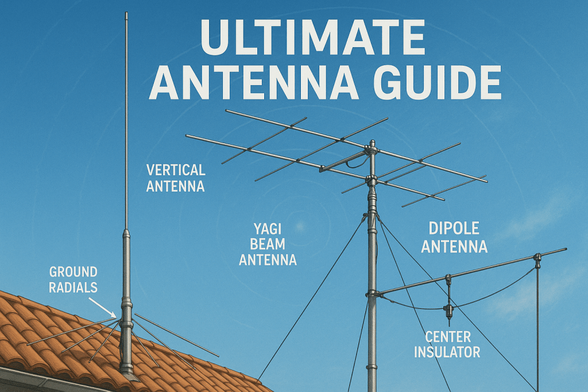



 Bryan King
 NARA
NARA Bryan King (W8DBK)