 ☑️ Cath
Discussion with my husband:
Do we have free will?
I say yes; he says no.
What's your opinion?
Boost please.
| Yes, we have free will | |
| There is no such thing as free will | |
| Other, please explain |
Poll ends at .
Discussion with my husband:
Do we have free will?
I say yes; he says no.
What's your opinion?
Boost please.
| Yes, we have free will | |
| There is no such thing as free will | |
| Other, please explain |
Apologetics: The Christian Dilemma (That Isn’t a Dilemma at All.)
As I’ve been trying to branch out more into other topics on my YouTube channel, one of the videos I looked at to respond to was some dude laying out what he believes is a dilemma that disproves the existence of God. In the 54 second video, he says that God can’t exist because the Bible claims that God is All-Loving and All-Powerful. But if God allows people to go to Hell and won’t stop them, then He can’t be All-Loving; and if He can’t stop people from going to Hell, then He can’t be All-Powerful. This person also brought up the argument that this can’t be solved via free will since the choice between Heaven and Hell isn’t a fair choice, and that God still can’t be All-Loving because he doesn’t give a second chance to get out of Hell.
However, this isn’t a dilemma that disproves God’s existence, and here’s why.
To start, we need to clear up what Hell is and how free will ties into the equation. Hell is a place of eternal torment and separation from God. Going there is the punishment for a lifetime of breaking God’s rules and continuously rejecting Him. Whenever we sin or willfully reject God, we’re basically saying, “I don’t need you. I can do my own thing.” Thus, going to Hell is the logical end point of that. It’s God giving you what you want after you spent a lifetime ignoring the evidence for Him, wishing He’d go away, and running off to do your own thing.
Because of this, free will is not negated. Had God created us to serve Him always and given us no choice in the matter, that would have been coercion. Instead, because He loves us, He gave us the choice: follow Him and stick with Him or run away from Him and be separated from Him in the end. Thus, using the analogy of an abusive boyfriend saying, “Love me or get beat up,” doesn’t work, since God allows you to get what you want in the end.
With that out of the way, we can address the dilemma. This entire argument is based on the idea that we don’t have free will with God. However, if there is free will, then both parts of the argument fall flat. The claim that God can’t be All-Loving if He won’t stop people from going to Hell collapses since if He were to forcibly stop someone from going to Hell, then He would be infringing on their freedom to choose, making Him unloving and evil. Sure, they would be saved from Hell, but it would be under means of coercion.
Additionally, this argument collapses even further since God gives us a myriad of reasons to believe in Him. Often, He puts people and events in our lives to call us back to Him. It’s our choice if we’ll acknowledge those wake-up calls and escape Hell by doing what the Bible says and putting our faith in Christ, or if we’ll continue to ignore them. We have plenty of chances to make that decision, but our chances end when we die.
On the other half of the dilemma, we have the idea that if God can’t stop us from going to Hell, then He isn’t All-Powerful. This half banks on a misunderstanding of God’s character, namely the idea that because He’s All-Powerful, then He can do literally anything. What it fails to understand is that God, though All-Powerful, only does things according to His character, which is just and good. And since He’s All-Loving, while it would be easy for Him to force us into Heaven, He doesn’t because that would be evil since that’s – once again – coercion. If He did that, then He would be removing all free will from that person and would be going against His own character.
Moreover, forcing a person into salvation is unjust either way you look at it. If God never punished us in Hell for our sins, then He couldn’t be loving or just because the evil of the world would go unpunished. Likewise, if God forced people to repent (since repentance from your sins is necessary to go to Heaven), then He would be unjust because not only is it forced, but because it’s a forced repentance, it’s not real. Can a person truly repent if they don’t have a choice not to? In either case, sin would go unpunished.
This also rolls into the reason why we don’t get a second chance to repent after we die. If we died and found out that we were going to Hell, but God gave us a second chance to repent, then it would be a form of coercion as well. You would be repenting solely out of fear, not out of a recognition that you had done wrong and need forgiveness.
On these grounds, this is a false dilemma built on a misunderstanding of God’s character and the nature of free will.
Until next time,
M.J.
#Apologetics #Atheism #Atheist #Bible #Blog #Christian #ChristianApologetics #Christianity #faith #FreeWill #god #Hell #jesus #love #OpinionPeice #philosophy #Religion #Writing
✨#Consciousness doesn’t just arise in one specific spot🗺️ in the #brain.🧠
This #Zoomposium with renowned #brainresearcher Prof. Dr. #WolfSinger explores one of the biggest #unansweredquestions in #science:
📺 https://youtu.be/C2FVIbAyaH4
📎 https://philosophies.de/index.php/2022/03/22/kann-das-gehirn-das-gehirn-verstehen/
#Neuroscience #PhilosophyOfMind #CognitiveNeuroscience #HardProblem #Neurophilosophy #AI #NeuralCorrelates #Qualia #FreeWill #BrainResearch #ComplexSystems #Philosophy #Science #ConsciousnessResearch
I wonder if this will annoy me. I do think we have free will.
Listening to Sean Carroll’s Mindscape (Episode 354 | Christian List on Free Will and Levels of Reality): https://www.preposterousuniverse.com/podcast/2026/05/18/354-christian-list-on-free-will-and-levels-of-reality/
If you don't believe in free will, it's never appropriate to criticize people for the choices they make. You don't think I'm going to give up on that pleasure so easily.
HOW ASTROLOGERS VIEW FREE WILL VS. CHALLENGING ASTROLOGICAL INFLUENCES
#freewill #astrology #horoscope #vedicastrology #indianastrology #vedicastrologer #astrologer #predictions #destiny #psychic #kundli #jyotish #remedy
CLICK TO READ . . . .
https://medium.com/@astrologywithsubir/how-astrologers-view-free-will-vs-challenging-astrological-influences-64c12b316fe1
Persuasion is not a side effect of technology; it’s often the point. Every interface, every notification, every design decision carries with it an intent to influence behaviour.
Sometimes persuasion serves someone else’s agenda, nudging us to buy, scroll, work harder or give up privacy.
The same persuasive techniques can empower or exploit, depending on who controls the system, what goals they pursue and whether they have meaningful consent.
"In this paper, we defend libertarian free will against this challenge from luck. We argue that most formulations of the Luck Objection presuppose a conceptual model of indeterministic decision-making that is not well aligned with recent advances in the natural sciences"
https://link.springer.com/article/10.1007/s11229-026-05570-5
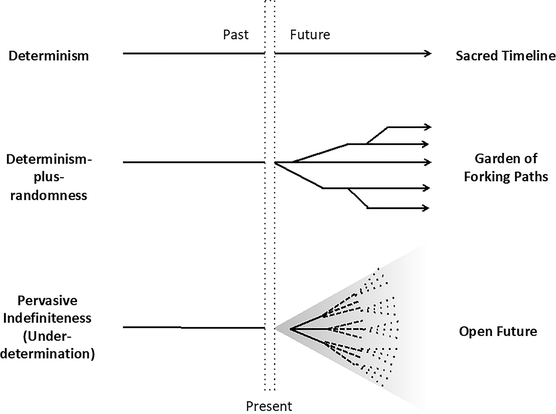
While the free will debate tends to focus primarily on the implications of determinism for freedom, a long line of philosophers have also argued that free will would not be compatible with indeterminism either. These arguments typically take the form of a so-called Luck Objection: a family of related arguments which all seek to show, roughly, that if an action is not causally pre-determined then it must be a sort of random happening, over which the agent lacks the control required for free will. If successful, these arguments are fatal for libertarian accounts of free will, which are committed to the view that free actions must be both undetermined and under the agent’s control. In this paper, we defend libertarian free will against this challenge from luck. We argue that most formulations of the Luck Objection presuppose a conceptual model of indeterministic decision-making that is not well aligned with recent advances in the natural sciences; specifically, we argue that they make assumptions about the nature of indeterminacy and about the causal structure of decision-making, which libertarians have good empirical reason (from both physics and neuroscience) to reject. We develop a more empirically plausible model of agential decision-making and apply this to the problem of luck. We argue that, under such a model, it is entirely natural to think of an agent’s actions as both ‘undetermined’ (in the sense of being under-determined) and under their own control. We conclude that indeterminism poses no threat to a more naturalistic version of libertarian free will.
A quotation from Bertrand Russell
In our own day […] there has been too much of a tendency towards authority, and too little care for the preservation of initiative. Men in control of vast organisations have tended to be too abstract in their outlook, to forget what actual human beings are like, and to try to fit men to systems rather than systems to men.Bertrand Russell (1872-1970) English mathematician and philosopher
Lecture (1949-01-30), “Individual and Social Ethics,” Reith Lecture, “Authority and the Individual” No. 6, BBC Radio
More about this quote: wist.info/russell-bertrand/838…
#quote #quotes #quotation #qotd #bertrandrussell #authority #control #freewill #humanity #individual #individuality #initiative #management #organizations #power #systems

In our own day [...] there has been too much of a tendency towards authority, and too little care for the preservation of initiative. Men in control of vast organisations have tended to be too abstract in their outlook, to forget what actual human beings are like, and to try…
You Can't Choose Your Beliefs
 The Tanuki Corner
 Philo Sophies
 Ian Robinson
 Subir Pal vedic astrologer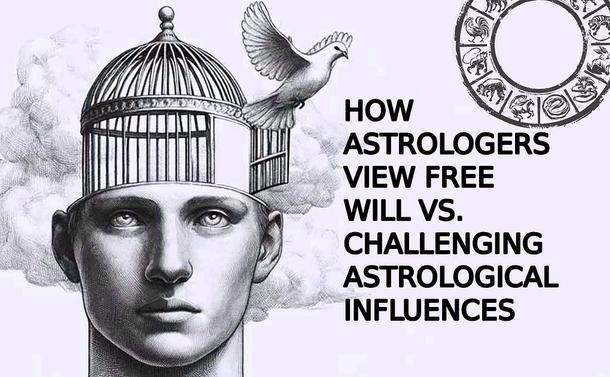
 Jefe
Jefe
 Björn Brembs
 WIST Quotations
 MokhtarStork
 The Pleasure Principle