 David Boles
The God in the Wire: The Book That Began with an Empty Shelf
I did not set out to write a book about technology. I set out to understand an empty shelf. The shelf is at LaGuardia Community College in Long Island City, Queens, mounted on a corridor wall beneath a sign bearing the universal symbol for Deaf access. The shelf once held a TTY, one of those text telephones that gave Deaf people their first access to instantaneous distance communication. The TTY is gone. The smartphone replaced it. The sign is still there, pointing to something that no longer exists. I saw it during a workshop break, in a hallway I had no reason to be in, and for the next several years I could not stop thinking about it.
The God in the Wire: Technology, Meaning, and the Empty Shrine is now available from David Boles Books as a Kindle ebook, a trade paperback, and a free PDF download. It is a work of cultural criticism, twelve chapters, an introduction, a coda, and a full scholarly apparatus including endnotes, a glossary of analytical terms, and a reader’s guide to the Eugene O’Neill plays that give the book its governing argument. It is the book I have been circling for a decade without knowing it, and it is the book I am proudest to have written.
The Question O’Neill Could Not Close
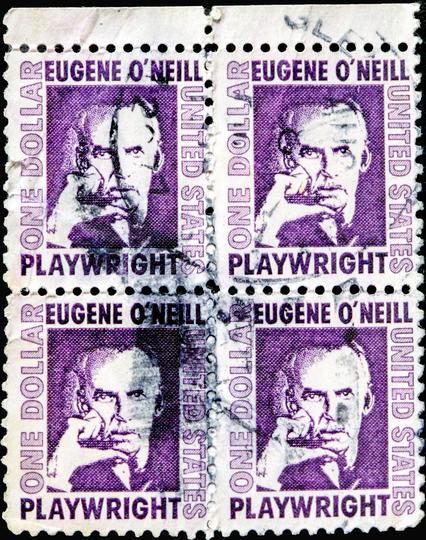
The book’s thesis comes from a playwright, not a technologist. In 1929, Eugene O’Neill described a trilogy of plays he intended to write about “the death of the old God and the failure of Science and Materialism to give any satisfying new one.” He wrote one of those plays, Dynamo, about a young man who loses his religious faith and transfers his worship to a hydroelectric generator. The play failed. The trilogy was never completed. But the question O’Neill was asking turned out to be the defining question of the century that followed: what happens when a civilization replaces its gods with its machines, and the machines turn out to be structurally incapable of doing what the gods once did?
That question drove Dynamo in 1929. It drives every chapter of The God in the Wire in 2026. The difference is that we now have a century of evidence to examine. O’Neill was diagnosing a crisis in its earliest stages. We are living inside the crisis at full maturity, surrounded by machines of extraordinary power that deliver everything except the one thing we keep asking them to provide: meaning.
The Five Threads
The book weaves five threads through its twelve chapters.
The first is the Deaf experience of communication technology. My wife is Deaf. Her fifty-year relationship with the tools of distance communication, from the TTY through the pager, the video phone, the smartphone, and the video relay service, runs through the book as testimony. Her words appear as direct quotation. Her perspective is not a case study or a sidebar. It is the book’s emotional center, because when you examine the history of communication technology through the experience of someone who was excluded from its founding medium, the telephone, you see things that hearing people cannot see. You see what the technology actually did, stripped of the mythology that the hearing world built around it.
The second thread is my own fifty-year relationship with the tools of composition: the manual typewriter, the electric Selectric, the Kaypro word processor, the networked computer, and the large language model. Every writer who has lived through this transition has a version of this story, but I wanted to tell it with the specificity it deserves, because the details matter. The resistance of the manual typewriter key is not the same as the frictionless completion of the language model, and the difference is not nostalgia. It is a structural change in the relationship between the writer’s body and the act of thinking on the page.
The third thread traces the transformation of American teaching from chalkboard to cloud. The fourth follows the democratization and fragmentation of public expression from the mimeograph to social media. The fifth examines medicine and environmental crisis, the domains where technology most directly confronts death and the limits of the material world. The cardiac catheter. The mRNA vaccine. The ozone layer. The climate. The places where the machine genuinely saves and the places where saving the body does not answer the question of what the body is for.
The Analytical Machinery
Every chapter applies what the book calls the Substitution Test. Three questions. What human good was this technology supposed to serve? What did it actually deliver instead? Who profited from the substitution? Those questions are not rhetorical. They have specific, documented answers in every case, and the answers follow a pattern that is the book’s central argument.
A technology arrives with a promise. It achieves dominance. During that dominance, it substitutes a lesser good for a greater one: efficiency for understanding, connectivity for communion, information for wisdom, engagement metrics for attention, fluency for thought. The substitution is profitable for someone, usually the platform or the manufacturer, and the profit motive ensures that the substitution is never publicly identified as a substitution. It is marketed as progress.
This is what I call the Arrival-Dominance-Disappearance triad, and it governs the structure of every chapter. The technology arrives. The technology dominates. The technology disappears or transforms, and the meaning it was supposedly carrying disappears with it, because the meaning was never in the machine. It was in us.
What This Book Is Not
The God in the Wire is not a Luddite tract. I use technology constantly. I am typing these words on a computer. The book was typeset in LaTeX, built as an ePub, and formatted for print-on-demand. I am not arguing against technology. I am arguing against the worship of technology, and there is a difference so fundamental that collapsing it is itself a species of the category error the book diagnoses.
There is a chapter called “Moments of Grace” that identifies the times technology got it right. The TTY is one. The early internet, before the advertising model consumed it, is another. The mRNA vaccine, developed in under a year against a novel pathogen, is a third. In each case, the technology remained instrumental, it preserved the human grammar of the act it mediated, and it did not demand worship. The moments of grace are real. The problem is that they are moments, not the default condition, and the structural incentives of the technology industry push relentlessly against their repetition.
The Company It Keeps
This book enters a conversation with predecessors I admire and from whom I have learned enormously. Neil Postman’s Amusing Ourselves to Death. Nicholas Carr’s The Shallows. Sven Birkerts’s The Gutenberg Elegies. Jenny Odell’s How to Do Nothing. These are important books about technology and human meaning. What none of them does, and what The God in the Wire does, is place Deaf experience at the center of the argument. That is not a criticism of their work. It is a description of a gap this book attempts to fill, because the gap matters, and the perspective it opens changes the argument in ways I did not anticipate when I began writing.
The book also draws heavily on Henry Adams’s The Education of Henry Adams, particularly the “Dynamo and the Virgin” chapter that recounts Adams’s confrontation with the dynamo at the 1900 Paris Exposition. Adams felt a moral force radiating from the machine, the modern equivalent of the force that had built Chartres. He was right about the power. He was wrong about the meaning. That gap, between power and meaning, is the empty shrine.
The Scholarly Apparatus
I built the back matter to be genuinely useful, not decorative. The endnotes provide full citations to the clinical, historical, and sociological literature: the Surgeon General’s advisory on loneliness, the Case and Deaton research on deaths of despair, the Twenge data on adolescent mental health, the Molina and Rowland ozone research, the IPCC assessments, the Gruentzig cardiac catheterization, the Palella antiretroviral data. Every empirical claim in the book is sourced. Every statistic is documented.
The glossary defines the analytical terms the book develops: the Arrival-Dominance-Disappearance Triad, the Category Error, the Substitution Test, the Moments of Grace. These are the book’s constructions, and I wanted readers to have a reference that collects them in one place.
The reader’s guide to the O’Neill plays walks through every work referenced in the text, from Beyond the Horizon through Long Day’s Journey into Night, because I am asking readers to engage with a playwright many of them may not have read since college, and I owe them the context to make that engagement meaningful.
The Sign Above the Shelf
I went back to LaGuardia. The sign was still there. The shelf was still empty. And standing in that corridor for the second time, I understood something I had not understood the first time: the sign was never pointing to the machine. The sign was pointing to the need. The need that existed before the TTY arrived and that persisted after the TTY was gone. The need to reach another human being across distance. The need that no technology has ever created and no technology has ever satisfied and no technology ever will, because the need is not technological. It is the most human thing about us, and the machines, for all their power, can only carry it. They cannot create it. They cannot sustain it. They cannot replace it.
That is the argument. That is the book.
#amazon #bolesBooks #book #davidBoles #drama #eugeneOneill #god #paperback #publishing #sociology #technology #wire
 SameGirlie
 LoC Appreciation Society
 Serendipity
 Of Bookish Things
 Variety
 ValTagliaferri
 PatriciaPhotos

 JBRoss