The Book Lives Three Times: How Seneca Got Reading Wrong by Getting It Right

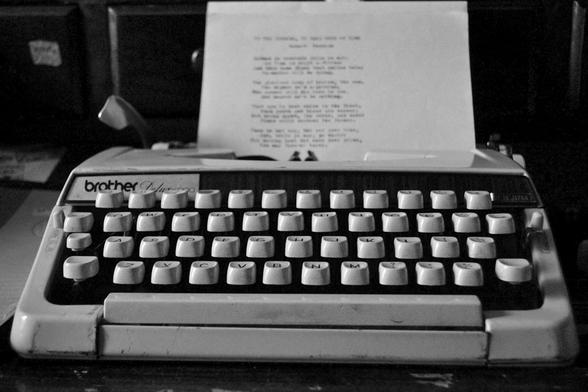
You finish writing a book and the manuscript sits there, cooling on the screen like bread pulled from an oven. It is done. It is no longer yours. This is the part no one tells you about authorship: the moment the final sentence locks into place, the book begins its first death, because it has stopped being a living negotiation between you and the language and has become, instead, a fixed object. A thing. The writer’s relationship to the finished text is not unlike the relationship a parent has to an adult child who has just walked out the front door with a suitcase. You made this. You cannot unmake it. You are, from this point forward, irrelevant to its survival.

Something strange surfaces in that departure. While you were writing, the book had a voice, and the voice was yours. I mean the silent one, the one that has nothing to do with ordering coffee or arguing with the insurance company, the interior narrator that reads your own thoughts back to you and lives in the cavity between your ears. It has no sound but is louder than anything in the room. Every sentence you wrote was tested against that voice. You heard the book before you read it. The prose rhythm, the paragraph pacing, the places where a sentence needed to land hard or dissolve into the next thought, all of it was conducted by a voice that has no waveform and no frequency but is, for the writer, the most real sound in the world. When the book is finished, that voice goes quiet. The conductor steps off the podium. What remains on the page is the score, but the performance that produced it is already gone.

Then someone picks up the book and reads it in silence, and a different voice appears.

This is the life of the book that is easiest to overlook, because it happens inside the reader’s skull and leaves no evidence. A person sits with your text and their inner voice takes possession of it, and that voice cannot be yours. The reader’s internal narrator carries its own cadence and speed, colored by decades of that person’s accumulated experience with language. Where you heard a sentence as clipped and staccato, the reader may hear it as languid. Where you intended a pause, the reader may barrel through. The reader is performing the text in the only theater that matters, and the performance is entirely their own. Two people can read the same novel in the same afternoon in the same room and hear completely different books, because the voice in one head is never the voice in another. Silent reading is a private staging of the text, unrehearsed, undirected, and unrepeatable.

This is the second life of the book: the one where it exists as pure text and the reader becomes, without knowing it, both audience and performer. The writer is absent. The writer’s voice is gone. What replaces it is whatever voice the reader has cultivated across a lifetime of reading, one that speeds up when the prose is familiar and slows when it is strange, that whispers through some passages and declaims through others, and that the reader has never once thought to question because it has been there since they first learned to decode symbols on a page. This is a genuine performance, as real as any staged production, and it happens billions of times a day in absolute silence.

Then something else happens. Someone else reads the book aloud.

I have listened to narrators perform my work, and the experience is dislocating in ways I did not anticipate. A narrator translates and performs simultaneously, but what a narrator actually does runs deeper than either word suggests. A narrator re-authors the text in real time, filtering every sentence through a different nervous system and a whole separate body of accumulated memory, lungs that breathe in places where you, the writer, never paused. The commas you placed with surgical precision become suggestions. The rhythms you hammered into the prose get bent, sometimes broken, sometimes improved, by a voice that carries its own gravitational field. What emerges from the narrator’s mouth is a separate book that happens to share your words.

The part that haunts you comes afterward: the narrator’s voice replaces yours. Once you have heard your book performed by another person, you cannot unhear it. You go back to the text and try to read it in your own inner voice, the one that built the thing sentence by sentence, and the narrator is already there, squatting in your skull, delivering lines with inflections you never intended. Your book has been colonized. The voice you lived with for months or years of drafting has been overwritten by a voice that arrived after the work was done and claimed it with the confidence of someone who has always lived there. I say this without resentment, only as a witness to the irreversibility of certain experiences. You cannot un-know a melody once it has been attached to lyrics you wrote in silence.

For the listener, the colonization is even more complete, because the listener never had the writer’s voice to begin with. The listener’s first encounter with the text arrives through the narrator’s body and breath, through decisions about emphasis and tempo and the thousand micro-choices that constitute a spoken performance. The narrator’s voice becomes the voice of the book, permanently, the way a film score becomes inseparable from the images it accompanies. Ask anyone who has listened to a well-narrated audiobook to then read the same text in print, and they will tell you: the narrator is still there, still speaking inside their head, overlaying the reader’s own internal voice with a ghost performance that refuses to vacate.

This is the third life of the book: the one where it enters the listener through a voice the writer did not choose and could not have predicted, and becomes something neither the writer nor the narrator intended.

People ask me why I do not narrate my own books. I narrate the Human Meme podcast, so the question is reasonable: if you already sit in front of a microphone and talk for a living, why hand the book to a stranger? I did narrate one, The Wound Remains Faithful, and the experience taught me something about the economics of creative time that I have not forgotten. A book that took months to write takes roughly six hours of studio time to perform as audio. Six hours of recording, plus editing, plus the physical recovery that sustained vocal performance demands. When I look at a free day and ask myself whether I want to spend it re-performing a book I have already written or writing an entirely new one, the new book wins every time. The podcast is different. The podcast is composed in the speaking. The voice and the writing happen simultaneously, and the performance is the first draft. A book has already been performed once, silently, in the writing, and asking me to perform it again aloud is asking me to walk a trail I have already walked when there is an uncut forest next to it.

But the deeper reason is theatrical, and it connects to everything I have been arguing in this essay. If I narrate my own book, the three lives collapse into two. My voice in the writing and my voice in the narration are too close to each other. The gap between them, the productive gap where the book gets re-authored by a second intelligence, closes. The book becomes a one-man show, and much of my life has already been a one-man show: writing, editing, publishing, designing, promoting, all of it carried by one pair of hands. The audiobook is the place where I can finally open the door and let someone else onto the stage. There is a generosity in that, and a relief, and also a creative dividend, because what comes back from the narrator is always more interesting than what I would have produced alone. A second mind in the room changes the room. I know this from decades of directing actors. The playwright who insists on playing every part has misunderstood the purpose of theater.

Seneca understood something about this multiplication, though he never had to endure the experience of hearing a Roman actor perform his prose in a recording studio. In De Brevitate Vitae, he argues that the philosopher lives longest among all people, because through reading, one annexes every preceding age to one’s own. We can, he writes, dispute with Socrates, doubt with Carneades, find peace with Epicurus, and overcome human nature with the Stoics. The years that came before us are not lost. They are available, and through concentrated study, they become ours. A single life becomes many lives. The calendar is a liar.

But Seneca was also suspicious of exactly the kind of expansive reading his own argument seems to invite. In his second letter to Lucilius, he reverses field with the confidence of a man who has caught himself in a contradiction and decided to own it. Do not read everything, he warns. Do not flit from book to book the way a restless traveler moves from city to city, arriving everywhere and settling nowhere. Linger with a few great thinkers. Digest them. Let their ideas become part of your tissue. The person who reads everything absorbs nothing. The person who reads deeply absorbs the author whole.

Seneca’s two positions only appear to contradict each other. Together they form a single, stranger argument: the multiplication of lives he describes in De Brevitate Vitae depends on depth, never on volume. You do not live Socrates’ life by skimming the dialogues. You live it by sitting inside a single passage until Socrates’ way of thinking becomes indistinguishable from your own. The annexation of another life requires the same commitment you would bring to an actual relationship. You have to show up. You have to stay.

Now extend this to the listener, and extend it further to the writer who came up through the theater.

I am a playwright. I have spent decades thinking about what happens when language leaves the page and enters a body that is not the author’s body. In the theater, this transaction is visible. You sit in a darkened house and watch actors inhabit your words in real time, and the text becomes dimensional in a way that no private reading can replicate, because the actor’s physical presence adds information that the page cannot carry: gesture, stance, the way a pause lands differently when an actual human being is standing in an actual room holding the silence. Live theater is synchronous. The audience and the performer share the same moment. The electricity of that shared present tense is what makes theater irreplaceable, and it is also what limits it. A room, bodies, everyone in the same place at the same time.

An audiobook is the redacted version of that staged play.

“Redacted” in the sense of concentrated, the way a reduction in cooking intensifies a flavor by removing the water. An audiobook strips away the visual dimension of performance, the set, the lights, the blocking, the costumes, and leaves only the voice. And the voice, it turns out, is where most of the meaning lived all along. This is something the old radio dramatists understood instinctively: when you remove the visual, the listener’s imagination does not shut down. It accelerates. The listener becomes scenic designer, casting director, and lighting technician in a single act of involuntary creation, building a visual world around the voice that is more personal, more fitted to the listener’s own psyche, than anything a stage crew could construct.

When I write a book now, I hear it as a playwright hears a script. The prose is dialogue spoken by a narrator who does not yet have a name or a face, and the stage is the inside of a stranger’s head. The performance will not happen in a theater on West 44th Street in front of four hundred people at 8:00 on a Thursday evening. It will happen in a car on Interstate 80, or in a kitchen at 6:00 in the morning, or in a hospital waiting room at a time the listener would rather not remember. The audience has been scattered across time zones and years, each person encountering the performance alone, at a moment determined by the private circumstances of their own life rather than by a curtain time. This is asynchronous theater. The playwright writes for a stage that exists everywhere and nowhere, and the result is a more intimate form of drama, because the performance happens inside the listener rather than in front of them.

The old radio plays understood this intimacy. When Orson Welles broadcast The War of the Worlds in 1938, the panic it caused demonstrated something important about the isolated voice. A voice entering the ear without visual accompaniment occupies a different neurological category than a voice attached to a body on a stage. The brain processes an isolated voice as closer and more authoritative, for the simple reason that there is nothing else competing for attention. The listener cannot glance at the set and remember that this is fiction. The listener has only the voice, and the voice is inside them, and the distance between “hearing a performance” and “experiencing an event” collapses to nothing.

This is what thrills me about the audiobook as a form. It is theater without walls. It is a play that runs continuously, starting and stopping at the listener’s discretion, performed for an audience of one in a venue that exists nowhere and everywhere. The book I wrote in silence, hearing it in the voice that lives between my ears, has traveled through the narrator’s larynx and into the listener’s private theater, and at each stage it has been remade by a different human intelligence. The text is the constant. The voice, the pacing, the meaning, all change with each body the book passes through.

Seneca would have approved of this, I think, with one caveat. He would have insisted that the listener not move on too quickly. Stay with this book. Let it work on you. Do not queue up the next title the moment the final chapter ends. The modern compulsion to consume, to track reading goals and annual book counts and to-be-read piles measured in linear feet, is the restless tourism Seneca warned Lucilius against. You do not multiply your life by multiplying your inputs. You multiply your life by refusing to leave a text until it has become part of you, until you can think in its rhythms without trying, until the author’s concerns have become your concerns and you can no longer remember a time when they were not.

The book lives three times. Once in the writing, where the author’s silent voice conducts every sentence. Once in the reading, where a stranger’s inner voice performs the text in a private theater no one else will ever enter. And once in the listening, where a narrator’s physical voice colonizes both the author’s memory and the listener’s imagination, creating something none of them intended and none of them can fully control.

Three lives. Three genuine performances. And the price of admission to any of them is the willingness to stay.

#audiobook #book #listener #narrator #performance #playwright #Podcast #producer #publishing #reader #seneca #tech #watcher #write #writing

Playwrightで「手動テスト地獄」を卒業する——E2Eテスト自動化とCI組み込みのハンズオン入門
https://qiita.com/76Hata/items/2ab2584041c5f487206d?utm_campaign=popular_items&utm_medium=feed&utm_source=popular_items

#qiita #TypeScript #テスト自動化 #E2Eテスト #CICD #Playwright

Playwrightで「手動テスト地獄」を卒業する——E2Eテスト自動化とCI組み込みのハンズオン入門 - Qiita

この記事で分かること E2Eテストとは何か、なぜ自動化すべきなのか Playwrightのセットアップから最初のテスト実行まで Page Object Modelパターンで保守しやすいテストを書く方法 GitHub ActionsにPlaywrightテストを組み込む具...

Qiita
Deadline Today: HISTORICAL STAGE PLAY Writing Contest wildsoundwritingfestival.submittable.com/submit/33139... Get a best scene of your stage play performed at the writing festival and made into a video. #stageplay #play #historicalstory #writing #playwright

WILDsound Writing Festival - H...
WILDsound Writing Festival - HISTORICAL STAGE PLAY Writing Contest (get play performed by professional actors)

Festival contest brough to you by the  Documentary Festival: www.documentaryshortfilmfestival.com   I have to really thank the actors for my reading, nothing short of terrific as they were, nothing short of incredibly smart, attractive, and perceptive as they were. They brought the script to life.  – F. Maffai   FULL FEEDBACK on your stage play from our committee of Professional Playwriters, Production Heads and Story Consultants. Get a best scene of your stage play performed at the writing festival and made into a video for the winner.   Submit your 10 Page Play, 1 Act Play, or Full Stage Play to the Festival.   SUBMIT your STAGE PLAY Today  You will receive feedback on your play in 3-5 weeks   Email the festival at [email protected] Or text the festival at 416-568-9046 If you have any questions.  Watch Story Performance Readings:        More Recent Testimonials: WILDsound is a screenwriter’s treasure! They take enormous time to provide the most expert, detailed feedback, even allowing my choice to incorporate all the committee’s ideas or stay with my draft. With caring support, they’ve honored each deadline and every award they promised, and I’m forever grateful for their right-on insightful niggles to enhance my story. WILDsound provides everything a screenwriter needs to find the way to a story’s successful completion. I’m forever grateful!  – E. Carlton I have taken the time to review your feedback and have found your comments and suggested invaluable. As an amateur writer, with this being my first attempt at a screenplay, it’s feedback like this that will help mold me into a stronger writer. I am taking your suggestions and comments into consideration and heading back to the drawing board. My time is limited and I do not want to rush myself.  – S. Kochan Thank you for your incisive feedback on my submission. I especially appreciate the specificity with which you address areas that need improvement, and I can see how revising them will make my resubmission better.  – E. Wise Thank you for your excellent feedback! This is my first ever script / writing attempt, so I really did need the valued advice you so clearly pointed out.  – B. Browne Thank you very much for your email and taking the time to write such a good feedback. I really appreciate all your comments and I will definitely take them on board. No worries about being harsh – the harder the better as it helps me to improve my writing.  – A. Chaos

Critically acclaimed play, The Neighbours, coming to Kitchener
How well do you really know your neighbours? That is the question Waterloo playwright Nicolas Billon asks the audience to contend with in his highly acclaimed play The Neighbours. After a successful run in Toronto, the production is coming home for a limited run in Kitchener. Matt White is the artistic director at Green Light Arts and Nicolas Billon is a Governor General award-win...
https://www.cbc.ca/player/play/9.7133067?cmp=rss

Ivan Fioravanti ᯅ (@ivanfioravanti)

MiniMax 2.7로 만든 현대식 Space Invaders 클론 데모 소개. 디자인·사운드가 좋으며, Claude Code를 하네스로 사용하고 Playwright로 대화형 검토를 진행해 MiniMax를 페어 프로그래머처럼 활용한 개발 사례를 설명합니다.

https://x.com/ivanfioravanti/status/2033936213510377733

#minimax #gamedev #claudecode #playwright

Ivan Fioravanti ᯅ (@ivanfioravanti) on X

MiniMax 2.7 in action! Here a Space Invaders modern clone! Great design and great sound! Created using Claude Code as harness and it has been a conversation and constant review through playwright. It's a great pair programmer!

X (formerly Twitter)

Ivan Fioravanti ᯅ (@ivanfioravanti)

MiniMax 2.7 데모 소개: Space Invaders 스타일의 현대적 클론을 공개하며, Claude Code를 해니스(harness)로 사용하고 Playwright로 대화형 리뷰·테스트를 진행했다고 설명합니다. 개발 보조(페어 프로그래머)로 Claude Code와의 조합이 유용하다는 사례 공유입니다.

https://x.com/ivanfioravanti/status/2033936213510377733

#minimax #claude #playwright #gameai

Ivan Fioravanti ᯅ (@ivanfioravanti) on X

MiniMax 2.7 in action! Here a Space Invaders modern clone! Great design and great sound! Created using Claude Code as harness and it has been a conversation and constant review through playwright. It's a great pair programmer!

X (formerly Twitter)

“Currently playing at #BelvoirStTheatre, A Mirror is set in an imaginary #authoritarian regime where the #MinistryOfCulture closely presides over the arts.

Written by British #playwright #SamHolcroft, the play seemingly begins with a wedding; however, it soon becomes clear the ceremony is a cover for an illicit performance of an unsanctioned play.

In a clever meta-fictional flex, the banned play in A Mirror is about a banned #play. The result, says Thanos, is an exploration of "#censorship, art and #whistleblowing".

#Arts / #Australia / #MargaretThanos / #STC <https://abc.net.au/news/2026-03-15/margaret-thanos-director-a-mirror-belvoir-the-river-stc/106431664>

Meet the 25yo director at the helm of Miranda Otto's return to the stage

With two main-stage productions already under her belt in 2026, Margaret Thanos has cemented her place as a rising star of Australian theatre.

#Development #Approaches
My favorite way to write code in 2026 · Test-driven development using Playwright https://ilo.im/16b947

_____
#Programming #Testing #Coding #WebComponents #Playwright #WebDev #Frontend #JavaScript #HTML #JavaScript

My favorite way to write code in 2026 (on becoming a TDD addict)

I’ve hated writing JavaScript tests for pretty my whole career. That thing where you plan a component, write some code, iterate it a whole bunch until it works the way you want… and then write tests that validate that the thing you’ve already validated does in fact do the thing you already know it does? Yea, that sucks. It’s also not what good testing looks like. Today, I write my tests first, and then write my code.

https://vitest.dev/guide/browser/#configuration - #vitest browser mode uses #Playwright and others to run #tests in a real browser.
Vitest

Next generation testing framework powered by Vite

Barrierefreiheit ist mehr als DOM-Analyse. ♿️

Ich habe SpecA11y veröffentlicht – ein Open-Source-Tool, das via Playwright echte Browser-Interaktionen testet:

• Simuliert Tab-Keys (Keyboard Traps)
• Prüft Fokus-Indikatoren per Screenshot
• Validiert Reflow & Text-Spacing
• SARIF-Export & n8n-Integration

MIT-lizenziert & fertig für die CI-Pipeline.

🔗 https://github.com/OKlueck/SpecA11y

#SpecA11y #barrierefreiheit #A11y #WebDev #OpenSource #Playwright #WCAG

GitHub - OKlueck/SpecA11y: Automated WCAG accessibility checker powered by Playwright — interactive testing with keyboard trap detection, focus indicator verification, reflow testing, and 106 built-in rules including WCAG 3.0 draft support.

Automated WCAG accessibility checker powered by Playwright — interactive testing with keyboard trap detection, focus indicator verification, reflow testing, and 106 built-in rules including WCAG 3....

GitHub