RIP: the paperback

"‘We’re losing #accessibility’: America says goodbye to the mass-market #paperback

The so-called ‘pocket #book’ sold in supermarkets is being phased out across the US

They had that democratic aspect to them where you can just find them anywhere and it always felt like... there is something here for everyone, whether it’s the Harlequin romance novel or something very pulpy like a sci-fi or horror novel that you could quickly get”

https://www.theguardian.com/books/2026/feb/24/america-says-goodbye-paperback

#books #bookstodon

‘We’re losing accessibility’: America says goodbye to the mass-market paperback

The so-called ‘pocket book’ sold in supermarkets is being phased out across the US, the latest sign of an ongoing shift in how people are choosing to read

The Guardian

The God in the Wire: The Book That Began with an Empty Shelf

I did not set out to write a book about technology. I set out to understand an empty shelf. The shelf is at LaGuardia Community College in Long Island City, Queens, mounted on a corridor wall beneath a sign bearing the universal symbol for Deaf access. The shelf once held a TTY, one of those text telephones that gave Deaf people their first access to instantaneous distance communication. The TTY is gone. The smartphone replaced it. The sign is still there, pointing to something that no longer exists. I saw it during a workshop break, in a hallway I had no reason to be in, and for the next several years I could not stop thinking about it.

The God in the Wire: Technology, Meaning, and the Empty Shrine is now available from David Boles Books as a Kindle ebook, a trade paperback, and a free PDF download. It is a work of cultural criticism, twelve chapters, an introduction, a coda, and a full scholarly apparatus including endnotes, a glossary of analytical terms, and a reader’s guide to the Eugene O’Neill plays that give the book its governing argument. It is the book I have been circling for a decade without knowing it, and it is the book I am proudest to have written.

The Question O’Neill Could Not Close

The book’s thesis comes from a playwright, not a technologist. In 1929, Eugene O’Neill described a trilogy of plays he intended to write about “the death of the old God and the failure of Science and Materialism to give any satisfying new one.” He wrote one of those plays, Dynamo, about a young man who loses his religious faith and transfers his worship to a hydroelectric generator. The play failed. The trilogy was never completed. But the question O’Neill was asking turned out to be the defining question of the century that followed: what happens when a civilization replaces its gods with its machines, and the machines turn out to be structurally incapable of doing what the gods once did?

That question drove Dynamo in 1929. It drives every chapter of The God in the Wire in 2026. The difference is that we now have a century of evidence to examine. O’Neill was diagnosing a crisis in its earliest stages. We are living inside the crisis at full maturity, surrounded by machines of extraordinary power that deliver everything except the one thing we keep asking them to provide: meaning.

The Five Threads

The book weaves five threads through its twelve chapters.

The first is the Deaf experience of communication technology. My wife is Deaf. Her fifty-year relationship with the tools of distance communication, from the TTY through the pager, the video phone, the smartphone, and the video relay service, runs through the book as testimony. Her words appear as direct quotation. Her perspective is not a case study or a sidebar. It is the book’s emotional center, because when you examine the history of communication technology through the experience of someone who was excluded from its founding medium, the telephone, you see things that hearing people cannot see. You see what the technology actually did, stripped of the mythology that the hearing world built around it.

The second thread is my own fifty-year relationship with the tools of composition: the manual typewriter, the electric Selectric, the Kaypro word processor, the networked computer, and the large language model. Every writer who has lived through this transition has a version of this story, but I wanted to tell it with the specificity it deserves, because the details matter. The resistance of the manual typewriter key is not the same as the frictionless completion of the language model, and the difference is not nostalgia. It is a structural change in the relationship between the writer’s body and the act of thinking on the page.

The third thread traces the transformation of American teaching from chalkboard to cloud. The fourth follows the democratization and fragmentation of public expression from the mimeograph to social media. The fifth examines medicine and environmental crisis, the domains where technology most directly confronts death and the limits of the material world. The cardiac catheter. The mRNA vaccine. The ozone layer. The climate. The places where the machine genuinely saves and the places where saving the body does not answer the question of what the body is for.

The Analytical Machinery

Every chapter applies what the book calls the Substitution Test. Three questions. What human good was this technology supposed to serve? What did it actually deliver instead? Who profited from the substitution? Those questions are not rhetorical. They have specific, documented answers in every case, and the answers follow a pattern that is the book’s central argument.

A technology arrives with a promise. It achieves dominance. During that dominance, it substitutes a lesser good for a greater one: efficiency for understanding, connectivity for communion, information for wisdom, engagement metrics for attention, fluency for thought. The substitution is profitable for someone, usually the platform or the manufacturer, and the profit motive ensures that the substitution is never publicly identified as a substitution. It is marketed as progress.

This is what I call the Arrival-Dominance-Disappearance triad, and it governs the structure of every chapter. The technology arrives. The technology dominates. The technology disappears or transforms, and the meaning it was supposedly carrying disappears with it, because the meaning was never in the machine. It was in us.

What This Book Is Not

The God in the Wire is not a Luddite tract. I use technology constantly. I am typing these words on a computer. The book was typeset in LaTeX, built as an ePub, and formatted for print-on-demand. I am not arguing against technology. I am arguing against the worship of technology, and there is a difference so fundamental that collapsing it is itself a species of the category error the book diagnoses.

There is a chapter called “Moments of Grace” that identifies the times technology got it right. The TTY is one. The early internet, before the advertising model consumed it, is another. The mRNA vaccine, developed in under a year against a novel pathogen, is a third. In each case, the technology remained instrumental, it preserved the human grammar of the act it mediated, and it did not demand worship. The moments of grace are real. The problem is that they are moments, not the default condition, and the structural incentives of the technology industry push relentlessly against their repetition.

The Company It Keeps

This book enters a conversation with predecessors I admire and from whom I have learned enormously. Neil Postman’s Amusing Ourselves to Death. Nicholas Carr’s The Shallows. Sven Birkerts’s The Gutenberg Elegies. Jenny Odell’s How to Do Nothing. These are important books about technology and human meaning. What none of them does, and what The God in the Wire does, is place Deaf experience at the center of the argument. That is not a criticism of their work. It is a description of a gap this book attempts to fill, because the gap matters, and the perspective it opens changes the argument in ways I did not anticipate when I began writing.

The book also draws heavily on Henry Adams’s The Education of Henry Adams, particularly the “Dynamo and the Virgin” chapter that recounts Adams’s confrontation with the dynamo at the 1900 Paris Exposition. Adams felt a moral force radiating from the machine, the modern equivalent of the force that had built Chartres. He was right about the power. He was wrong about the meaning. That gap, between power and meaning, is the empty shrine.

The Scholarly Apparatus

I built the back matter to be genuinely useful, not decorative. The endnotes provide full citations to the clinical, historical, and sociological literature: the Surgeon General’s advisory on loneliness, the Case and Deaton research on deaths of despair, the Twenge data on adolescent mental health, the Molina and Rowland ozone research, the IPCC assessments, the Gruentzig cardiac catheterization, the Palella antiretroviral data. Every empirical claim in the book is sourced. Every statistic is documented.

The glossary defines the analytical terms the book develops: the Arrival-Dominance-Disappearance Triad, the Category Error, the Substitution Test, the Moments of Grace. These are the book’s constructions, and I wanted readers to have a reference that collects them in one place.

The reader’s guide to the O’Neill plays walks through every work referenced in the text, from Beyond the Horizon through Long Day’s Journey into Night, because I am asking readers to engage with a playwright many of them may not have read since college, and I owe them the context to make that engagement meaningful.

The Sign Above the Shelf

I went back to LaGuardia. The sign was still there. The shelf was still empty. And standing in that corridor for the second time, I understood something I had not understood the first time: the sign was never pointing to the machine. The sign was pointing to the need. The need that existed before the TTY arrived and that persisted after the TTY was gone. The need to reach another human being across distance. The need that no technology has ever created and no technology has ever satisfied and no technology ever will, because the need is not technological. It is the most human thing about us, and the machines, for all their power, can only carry it. They cannot create it. They cannot sustain it. They cannot replace it.

That is the argument. That is the book.

#amazon #bolesBooks #book #davidBoles #drama #eugeneOneill #god #paperback #publishing #sociology #technology #wire

Cat Heads in Space: The Novel That Grew a Body

Some books begin as sentences. Others begin as outlines or fragments scrawled on napkins at two in the morning. This one began as a sound. Specifically, it began as the sound of my own voice reading a line about a cat head floating through space in a Life Helmet, arguing with another cat head about whether their ship had a name, and realizing that the argument was funnier and sadder and more philosophically loaded than anything I had planned for it to be. That was twenty-eight episodes ago. The episodes lived on the Human Meme podcast as a serialized audio drama called Cat Heads in Space, and for years, that was where the story existed: in the air, in the performance, in the space between my microphone and the listener’s ear. Today, the story has a body. Cat Heads in Space: The Body Problem is now available from David Boles Books as a novel.

I need to explain how and why this happened, because the how and the why are part of the argument the book is making, and because the decision to write a novel rather than adapt existing scripts is the kind of creative choice that carries consequences for every page that follows it.

Twenty-Eight Episodes and a Series Bible

The Cat Heads in Space episodes ran on Human Meme beginning in 2024, occupying the same podcast feed that has carried philosophical explorations of consciousness, language, memory, and embodiment since 2016. The premise is disarmingly simple: four cat heads, separated from their bodies by a procedure they cannot remember, float through the universe in Life Helmets that provide oxygen and treats while they search for the bodies they have lost. Captain Whiskerfluff is gray-furred and philosophically overwound. Lieutenant Mittens is ginger and tells jokes the way other creatures metabolize oxygen. Cookie Kitty is calico and has opinions about soup that she expresses at volumes capable of restructuring molecular bonds. And Skeedootle is not a cat at all but a puppy, floppy-eared and enormous-eyed, adopted into the crew because no one could justify leaving a creature alone in the dark.

Over twenty-eight episodes, I built a world. I built it the way a dramatist builds a world, which is to say I built a series bible: the rules of the Life Helmets, the mechanics of the treat dispensers, the morale algorithm that reads emotional states and adjusts flavor accordingly, the Treat Ration Protocol that eventually replaces the algorithm with total neutrality. I built the ship, which has no name because the crew argued about it so long that the argument became the identity. I built the quest, which is for bodies, and which carries a philosophical weight that I did not initially intend and could not subsequently avoid, because a story about creatures searching for the physical means of contact with the world is inevitably a story about what it means to be alive in a body, and what it costs to lose one, and whether the losing can ever be undone.

The episodes were performed. They were voiced. They were sound, and sound has qualities that text does not: timing, inflection, volume, the pause before a punchline that makes the punchline land. Sound also has limitations that text does not. You cannot get inside a character’s head in an audio drama the way you can on the page. You cannot describe the specific quality of silence aboard a ship drifting between stars. You cannot build a narrator who watches these creatures with equal measures of tenderness and precision, who loves them enough to tell the truth about them, which is that they are broken, and brave, and exactly as confused as the rest of us.

The Decision to Start From Cat Scratch

When I decided to write the novel, the first question was obvious: do I adapt the existing twenty-eight episodes, or do I start fresh?

I have spent decades at Columbia and NYU and Rutgers teaching dramatic literature and the mechanics of adaptation. I have watched what happens when a script becomes a film, when a novel becomes a play, when a stage production becomes a screenplay. The ones that work are the ones that recognize the new medium as a new instrument and play it accordingly. The ones that fail are the ones that try to reproduce the experience of the original in a format that was not designed to deliver it. Audio drama is not prose fiction wearing a microphone. They are different technologies for different purposes, and the honest thing to do was to respect both by letting each exist on its own terms.

So I started from scratch. I kept the characters, the world, the tone, the fundamental question, and the series bible. I discarded every episode script. The novel was written for the page, sentence by sentence, with the full knowledge that the people who had listened to all twenty-eight episodes would arrive at this book expecting something they recognized but had not heard before. The podcast listeners earned new material. New readers earned a complete, self-contained experience. Nobody earned a transcription.

What the Page Could Do

Prose gave me interiority. It gave me the ability to describe what it feels like, from the inside, to remember warmth when you have no skin to feel it. It gave me Merleau-Ponty as an epigraph: “The body is our general medium for having a world.” It gave me the Narrator, a presence who does not exist in the podcast episodes, who watches these creatures with the specific attention of someone who understands that comedy and tragedy are the same story told at different speeds.

Prose gave me three Movements. The Drift, in which the crew loses everything except each other. The Signal, in which the universe offers substitutes for what they have lost, and every substitute is a different kind of trap. The Threshold, in which the bodies arrive from the other direction, having crossed the dark independently, having refused to wait.

Prose gave me eighteen chapters. A Warmth Fog that nearly stops the quest. A sentient moon made of compacted cat hair that collects stories and rejects the hollow ones. A bureaucratic asteroid that requires forms requiring bodies to complete. An alien who considers doors philosophically restrictive. A colony of disembodied ears that takes Skeedootle’s bark and keeps it, leaving the puppy to cross most of the novel in silence, so that the first bark from a whole body in the final chapter arrives with a weight the reader has been carrying for three hundred pages.

And prose gave me Chapter 16: “The Separation Record.” I will not reveal what happens in this chapter. I will tell you that the word “quest” means something different after you read it, and that the word “voluntary” becomes the heaviest word in the book, and that the implications restructure every chapter that preceded it. I wrote this chapter knowing it would change the entire novel retroactively. It did. It was supposed to.

A Comedy About the Hardest Question

The Body Problem is a comedy. I want that stated plainly because the novel’s philosophical architecture might suggest otherwise, and because the comedy is not incidental decoration applied to a serious inquiry. The comedy is the inquiry. Cookie Kitty’s volume is how she survives. Mittens’ jokes are how he breathes. Whiskerfluff’s monologues are how he processes the unbearable. Skeedootle’s earnestness is how she holds the crew together when the holding together seems impossible. These are not characters who happen to be funny. These are characters whose humor is a survival mechanism so deeply integrated into their identities that removing it would kill them faster than removing their bodies did.

The question the book asks is whether having a body is worth the cost of having a body. The cost is vulnerability. The cost is sensation, which means pleasure and pain simultaneously, which means the sunbeam on the floor and the sharp thing you step on, which means the warm hold and the cold absence of the warm hold. The Cat Heads say yes. They say yes loudly, with a great deal of soup involved, and with the understanding that what they are becoming when they find their bodies is not what they were before they lost them. The novel calls this the Doctrine of Irrevocable Change: no action can be undone, no loss restored, and the creatures who emerge from reunion are not the creatures who entered separation but something new, something none of them have met yet.

That felt true to me. It felt true in the way that the Fractional Fiction series feels true when a public domain text collides with contemporary research and produces a story that belongs to neither tradition but could not exist without both. Cat Heads in Space is not Fractional Fiction. It is not an adaptation of a classic text. It is an original novel that grew from an original podcast that grew from a question I could not stop asking: what remains of you when the thing you thought defined you is removed?

The question applies to more than cat heads in helmets. It applies to anyone who has lost a capability, a role, an identity, a physical function they had taken for granted. It applies to communities that retain their names and their memories but have lost the economic and institutional body that once allowed them to act in the world. It applies, and I say this with the full absurdity of saying it about a book involving cat heads and soup, to the human condition, which is the condition of being located in a body you did not choose, in a world that can reach you because you have skin, and which you would not trade for anything because the alternative is a helmet and a treat and the sound of your own thinking and nothing else.

The Catalog Grows

Cat Heads in Space: The Body Problem joins a David Boles Books catalog that now includes the Fractional Fiction series (The Dying Grove, The Inheritance, The Kinship of Strangers, The Wound Remains Faithful, The Corollary, Civility Certified), the EleMenTs series (Tin, Aluminium), the ASL education library with Janna Sweenie, and recent novels including The Last Living American White Male and Beautiful Numbness. Each book asks a different question. This one asks whether wholeness is worth the cost of being whole.

The twenty-eight original podcast episodes remain archived at HumanMeme.com for anyone who wants to hear the voices before reading the prose. I recommend both, in either order. They are two doors into the same universe, not two versions of the same hallway.

Percy and Lotty, who are British Shorthairs and who are whole, watched me write this book from the other side of my desk with the expression they reserve for activities they find mildly interesting and fundamentally unnecessary. They have never been separated from their bodies. They have never searched for anything except the treat bag, which they find every time, because their noses work, because their noses are attached to their faces, because their faces are attached to their bodies, because they are whole and have always been whole and have no idea how lucky that makes them.

The soup, as of the final chapter, goes clockwise.

Available Now

Cat Heads in Space: The Body Problem by David Boles. Published by David Boles Books Writing & Publishing, New York City. 2026.

Kindle ebook: Amazon Paperback: Amazon Book Page: BolesBooks.com Original Podcast Episodes: HumanMeme.com Prairie Voice Article: The Disembodied Town

#28Episodes #amazon #bodyProblem #bolesBooks #catHeads #catHeadsInSpace #cats #davidBoles #fantasy #humanMeme #kittens #novel #paperback #Podcast #scienceFiction
Hawkwind: Days of the Undeground, Joe Banks. A very detailed #Hawkwind history, for the fans or the curious

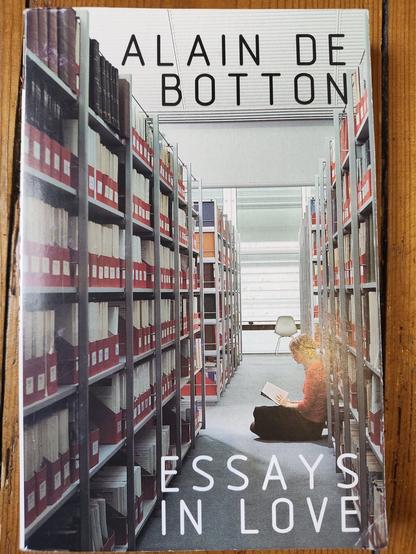
A #Book cover on random days. No 71 - #books #fedibooks #paperback
Okay, fixed up #paperback on Linux and stuff, had to work around widgit issues on Linux but like it works. Been working on that all day, stuff like F7 not opening the elements list, elements list widgits, hopefully isolated changes to Linux only. But you know what, it's one step closer to being ready for general use. Yes yes, that's right, BT Speak will do that now lol, cause I know that's what they'll do. I don't care at this point. Eventually I'll get BRLTTY working with grade 2 input and they'll use that too I'm sure. Meh.
Ugh, trying to get #paperback on Linux fully functional equivalent to Windows, and widget issues are biting me right in the butt! Ugh.