🔗 https://www.thenewatlantis.com/publications/how-bill-mckibben-lost-the-plot?utm_source=mastodon&utm_medium=social&utm_campaign=fedica-Autoposting
#ClimateDebate #Activism #EnvironmentalEthics
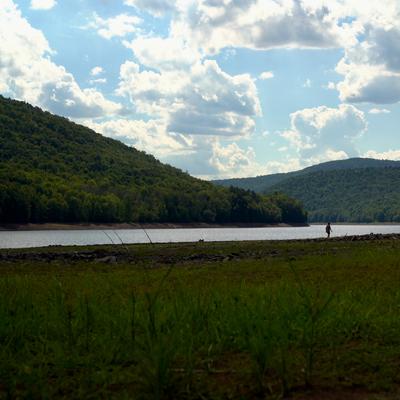
Public responsibility shouldn’t end at our gates — it must extend into the wild we still have.
Let's not wait until beauty fades beneath plastic. Let nature be a reminder, not a regret.
#Nanmangalam #UrbanWildlife #CivicResponsibility #TamilNadu #EnvironmentalEthics
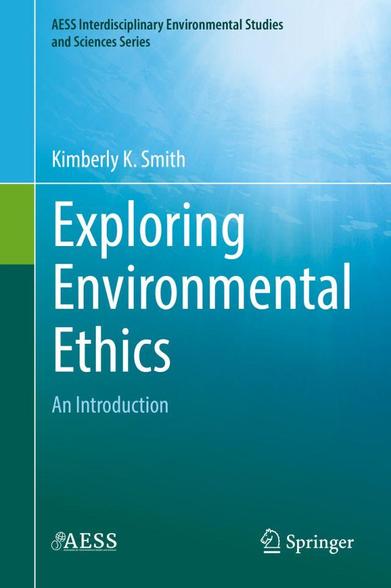
Exploring Environmental Ethics by Kimberly K. Smith, 2018
This book is designed as a basic text for courses that are part of an interdisciplinary program in environmental studies. The intended reader is anyone who expects environmental stewardship to be an important part of his or her life, as a citizen, a policy maker, or an environmental management professional.
I'm studying environmental ethics atm so please excuse my somewhat spammy musings and sharing of interesting things I find. I think it is valuable and genuinely interesting and stimulating. I hope it helps someone to explore new ideas, learn words/ways to communicate existing ideas, and get new insights into history, philosophy, and the environment.
Just like with #PFAS-laden #FirefightingFoam, less #Toxic alternatives are out there, but expense is often cited as a roadblock. TBH, things that benefit the environment and society shouldn't cost more than the toxic originals -- and toxic chemicals should be replaced! Period! Make #BigChemical pay! (Since they probably knew about the hazards but hid them from the public. As usual with Big anything these days...!)
A #PinkPowder is being used to fight #CaliforniaFires. It's getting everywhere
by Nadine Yousif, January 13, 2025
"Its use has been controversial in the past over its potential effects on the #environment.
"A lawsuit filed in 2022 by the #ForestServiceEmployees for #EnvironmentalEthics, an organisation made up of current and former employees of the #USForestService, accused the federal agency of violating the country's clean water laws by dumping #chemical #FireRetardant from planes onto forests.
"It argued that the chemical kills fish and is not effective.
"The following year, a US District judge agreed with the employees, but in her ruling allowed the Forest Service to continue using the retardant as it seeks a permit to do so from the US Environmental Protection Agency (EPA).
"The case drew the attention of communities devastated by #wildfires in the past, including the town of #ParadiseCalifornia, which was destroyed by fire in 2018.
"Its then-mayor, Greg Bolin, hailed the judge's ruling, saying it ensures communities 'have a fighting chance' in the face of fires.
"The Forest Service told NPR that this year, it phased out the use of one type of #PhosChek formula - #PhosChekLC95 - in favour of another - #MVPFx - saying that the latter is less toxic to #wildlife.
"The Forest Service also has a mandatory ban in place on dropping fire retardant in sensitive environmental areas, like waterways and habitats of endangered species. There are exceptions to the ban, however, in cases 'when human life or public safety are threatened.'"
Read more:
https://www.bbc.com/news/articles/c93lqng957jo?utm_source=firefox-newtab-en-us
#FireRetardant #FishKills #Wildfires #Firefighting

For my followers in the Davis, California area, mark your calendars for one month from today for a free author event for my book, _The Land Is Our Community: Aldo Leopold’s Environmental Ethic for the New Millennium_ at our local bookstore, the Avid Reader!
#EnvironmentalEthics
#EnvironmentalHistory
#PhilBio
#HPB
#ConservationBiology
#Ecology
New Correspondence Entered into the Twin Metals v. US Docket, Reiterating the Risk of Serious and Irreparable Harm to the Boundary Waters
The attorney for the Environmental and Natural Resources Division of the DOJ just entered this correspondence into the Twin Metals v. US docket.
It attempts to clarify a point on which the federal government has insisted: since the Forest Service moved to withdraw more than 225,000 acres Superior National Forest lands from mineral exploration and development in September of 2021, the Bureau of Land Management acted lawfully — or with authority — when it denied Twin Metals’ Preference Rights Lease Applications, or PRLAs. Therefore, the government contends, Twin Metals has no claim, so Judge Cooper was right to dismiss Twin Metals’ complaint. (For a little more context, see this post.)
In response to the Bureau of Land Management’s request for clarification, the Forest Service reiterates its position:
The record for the 2016 lease consent determination and 2023 withdrawal application demonstrate that development of these mineral resources presented an unacceptable, inherent risk of serious and irreparable harm to the BWCAW natural resources. It has been thoroughly documented that the proposed mineral leasing is not a compatible use within the watershed in such proximity to the wilderness and that the Forest Service’s withholding of consent to the issuance of leases for MNES-057965 and MNES- 050264 would be consistent with the record. This is entirely consistent with previous consent decisions on mineral lease renewals in the same area of the Rainy River Watershed, as well as last year’s decision to withdraw approximately 225,378 acres of land within the watershed from mineral leasing. Extensive analysis and public input associated with prior consent decisions and the mineral withdrawal process informs and supports this response. [emphasis mine]
There is a to to unpack here, and can’t help but wonder why this correspondence comes at such a late hour. Is the federal government is just making sure to cover all bases, or are there alarm bells ringing? Be that as it may, here are the letters in question.
BLM Letter to US ForestService re Twin Metals PRLAs 241219Download#ANTO #administrativeState #corruption #environmentalEthics #ethics #lawfulAuthority #pollution #Water
I have a new paper out in 𝘛𝘩𝘦 𝘑𝘰𝘶𝘳𝘯𝘢𝘭 𝘰𝘧 𝘈𝘨 𝘢𝘯𝘥 𝘌𝘯𝘷𝘪𝘳𝘰𝘯𝘮𝘦𝘯𝘵𝘢𝘭 𝘌𝘵𝘩𝘪𝘤𝘴 called "Nativeness as gradient: Towards a more complete value assessment of species in a rapidly changing world"
(1/3)
https://doi.org/10.1007/s10806-024-09942-0
#ecology #ethics #environmentalethics #biogeography #conservation #anthropocene #climatechange
Conservation biologists recognize a duty to maintain as much value as possible in ecosystems that are threatened by recent anthropogenic impacts. Until recently the paradigm of contemporary conservation seemed relatively straightforward: the best way to maintain the value of species and ecosystems at a given location was to maintain—or shepherd the system back towards—historical conditions. Among the most difficult theoretical tasks was the determination of “baseline” historical conditions (or trajectories) to return to, recognizing the dynamism of ecosystems over time. However, the rate, scale, and magnitude of contemporary climate change, species introductions, and land-use change make it increasingly impractical to return locations to any kind of historical state. This forces a paradigm shift which is both ongoing and difficult, and necessitates a rigorous evaluation of the scientific and ethical foundations of modern conservation along with a careful reexamination of terminology. Here, I discuss the moral relevance and waning utility of the geographically-based and dichotomous understanding of “native” (or “in situ”) which is an important component of conservation ethics and practice. I then propose a new understanding of nativeness in which a species is native—not to a geographic location—but to a quantifiable set of biotic, climatic, geologic, and topographic conditions (i.e. its niche) that can then map to geographic space. Following this, I demonstrate the unique utility of this concept, which I will refer to as “econativeness,” in thinking through conservation problems—range expansions, range contractions, species introductions, and assisted migration—where the classical understanding of nativeness has become increasingly inadequate for assessing the moral value of species.