Ampere Analysis makes speculation on female gamers, not hard data
Ampere Analysis presented a study earlier this year where they concluded that women make up 48% of the gaming community. We can say that’s effectively half. That’s approximately 922 million people across 21 countries. Big numbers for sure. Supposedly, the gaming industry is largely ignoring this major possible market segment, as there is a serious lack of games for women who would like to play story-driven single-player games with a social aspect and romance. They came to this conclusion by looking at what kind of media outside games these women consume and made a beeline assumption that women want the same thing from their games. What their data seems to indicate is that there is a large section of women who are interested in playing games but don’t. Either they don’t know how to play games or don’t know what kind of game content exists.
Let’s pause here and point out that Ampere showcases data in a biased manner. That 48% includes any woman who has played a game, be it Candy Crush or FarmVille. If you’re a woman who has played a game of any kind, you’re counted in this number. The quality of these stats is messy, as that equates players who spend about ten minutes with games per week with people who spend most of their waking hours gaming. This is an important point, as any person wanting to sell something realizes that these two kinds of customers are completely different and need to be valued in a different manner.
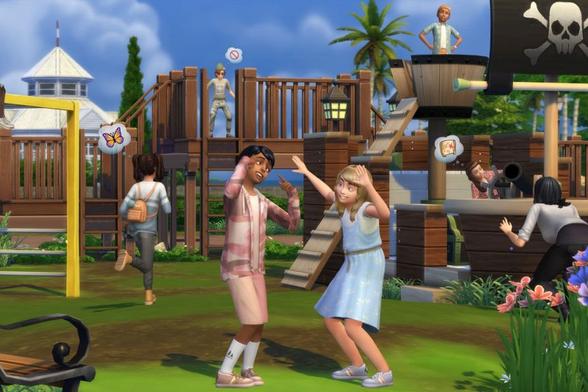
The inquiry had 52 video and computer games listed. Only three titles had more women playing than men: Animal Crossing: New Horizons, The Sims 4, and Roblox. From a list of 50 mobile games, some 13 titles had more women players. This would indicate, then, that the higher concentration of women in gaming can be found outside the usual big sellers, and on mobile devices rather than consoles and computers.
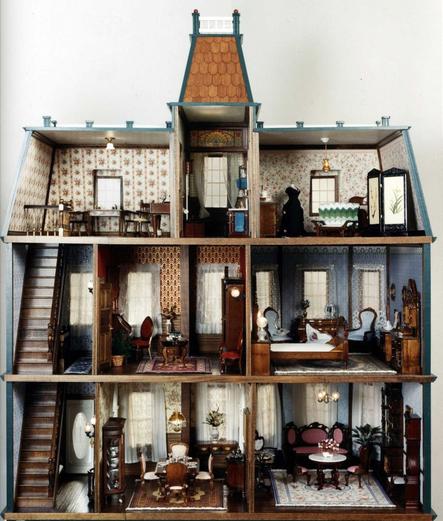
The market is functioning as you’d expect; nothing has really changed in behavioural differences between the two sexes. Early on in this blog’s life, I wrote about girl games as part of a series where I illustrated how video and computer games aren’t a special phenomenon in and of themselves, but a continuation of a long play culture. Gaming in general mostly adheres to boys’ play culture, as it builds on competition and readily set rules. It’s much easier to make a soccer or a tennis video game because these rules exist and are set in stone. Playing house is something classically part of girls’ play culture, as playing with dolls and other miniature house equipment readies them for motherhood. It’s much harder to make a simulacrum of playing house because it has no readily set rules. Here’s mother, dad, kid, and maybe a dog. Here’s the house. Now play house. I’ve used The Sims as an example of this being successfully adapted, and I’m not surprised The Sims 4 is on the above list.
The Sims, analogue edition
Making girl games is hard because historically they’ve been misunderstood and misapplied by powers that be in the gaming industry. You might have a good memory of some Barbie game out there, but none of them would win any prizes. What most of these girl games lacked in the 1980s and 1990s was holding power, or the way a game keeps attracting the player back to itself to maintain their attention span and immerse them in its world. Because gaming is largely based on boys’ play culture, its holding power over girls is less due to the different schema the two have classically worked under. In a manner, girls and women as gamers were treated like some sort of invalids because of this. Girl games were colourful, with horses and puppies galore, with about as much gameplay as a wet towel on a wall.
However, as demand grew for games specifically catering to girls and women, a few began to understand that the differences in play cultures were a possibility rather than a ball and chain. Brenda Laurel founded Purple Moon in 1999 to make, as she called it in 2009, a cultural intervention. Purple Moon’s games targeted girls between 8 and 14, and rather than making games about competition and confrontation, their games were more like interactive story worlds the players could explore. However, as we can see from Ampere’s data, games-for-all are more popular among modern women and girls than games directly aimed at girls.
[youtube https://www.youtube.com/watch?v=zu2kZwk1Ym4?version=3&rel=1&showsearch=0&showinfo=1&iv_load_policy=1&fs=1&hl=en&autohide=2&wmode=transparent&w=863&h=486] Purple Moon games were criticized for doing the same gender stereotyping they wanted to intervene
In a way, girl games dried out early in the millennium because games in general had already begun to emphasize story framing and expanded world-building in mainstream titles. I would hazard a guess that World of Warcraft offered much of the very same story-driven exploration and interactivity, not just with the game but with other players as well.
Barbie Fashion Designer may have sold well and left an unwanted mark, but a game like New Style Boutique 3 found itself with a cult following from the opposite sex. The game didn’t just require players to design new clothing combinations, but had a framing narrative of the player needing to run a clothes boutique, making the game deep enough to have holding power over both boys and men as well as girls and women. Unlike the Barbie game, this 3DS game had some depth to it. The lack of a license probably hurt the game’s sales, but its cult status shows that games stemming from girl play culture can have universal acceptance, even if it’s marginal. Of course, The Sims is the titan in this.
A game that had surprising hold on its male audience
Girl game as a term has become rare, as it became associated with terrible shovelware. They were represented as the opposite of boys’ games, which frankly is just the de facto standard for the game industry. That’s not to say girls and women were ignored, as Super Mario and The Legend of Zelda games still make big sales and are more or less equally popular between the sexes. As gaming has moved away from public places and now solely resides at home, there is no longer any pressure for girls and women to give whatever games they might fancy a go. Why did more females play Tetris than Pac-Man? Because the physical placement of the game had moved away from arcades to home computers and consoles.
This study seems to ignore a few genres that have an overwhelming female audience, and they even make the whole girl game concept sound good: otome games and romance video games. Otome games have been specifically designed to cater to the sensibilities girls and women have, so it’s not surprising that over 90% of otome game players are women. We can argue whether or not visual novels count, but some fantasy otome games also have elements like running a kingdom, meaning they’re not just text but have meaningful gameplay elements that impact the social aspect.
As games have gotten heavier on delivering framing and allowing players to wander the world, we’ve seen a sort of coming together between the two play cultures. Especially with RPGs like Dragon Age series or The Witcher 3, we see that social aspect becoming a major component, with the ability to romance characters and that being an essential part of the story. However, the bulk of the play is still dictated by rules and regulations that largely stem from boys’ play culture. Acknowledging this, we can see how the two complement each other in a manner where they couldn’t exist separately. You get action gameplay with whatever character you choose to make, and then engage in extensive dialogue options between NPCs that might affect anything from what coloured shoes they wear to who stabs you in the back.
I see that if gaming would take its interactivity into account more, allowing players to dynamically change framing directions as much as systems could, and not stick to linear storytelling as seen in films and literature, we could find ourselves in places where games combine the two play cultures in a more holistic manner and embrace the medium’s inherent properties rather than stick with ready-made stories.
However, that wouldn’t automatically mean more women would want to play such a game. The number of hardcore male gamers who put more money into gaming is larger than females, and that is a lifestyle choice. The linkage between visual novels and women reading books is easy to understand; they’re almost the same thing in different packaging. However, there is no hard proof or individual linkage showcasing cross-media consumption. Anecdotes and niche demographics do suggest an overlap, but a large number of romance book readers don’t play games, even when there are already options that cater to them.
Mass Effect is another game series that bucks the trends with a loyal female fanbase
Even when we ignore romance as a genre, there are no studies that link cross-media consumption. Ampere is making the argument that because women consume X kind of content in media Y, then they should also be interested in X content in media Z. While this seems like a no-brainer at surface value, it’s a pretty big leap from opening a book and reading what’s on the page to installing a 50GB game on your computer and learning system mechanics that enable a similar story to that of a Harlequin book. That’s why girl games had that bad reputation; they tried to meet a supposedly invalid audience by cutting away gameplay to match a level where other media offered a more enjoyable pastime. The claims Ampere makes are circumstantial at best. We would first need studies showcasing that people, especially women, actually consume the same kinds of genres and styles across all media. Ampere’s conclusion about what women would look for in a game based on what they watch and read is no less than harmful stereotyping.
The argument of women needing an easier entry point for gaming is petty at best and sexist at worst. It’s the whole notion of girl games and females being seen as gaming invalids raising its head again. There has never been a better time in history to get into gaming than now. Endless amounts of YouTube tutorials and guides exist, games quite literally hold the player’s hand to pass even the slightest obstacle, no-failure states exist across the board, and even gameplay can be skipped in some cases. Saying that there’s a subset of female non-gamers who are interested in gaming but lack the knowledge of how to play these games and what content is out there, and then demanding entry-level content, is misguided. If women are interested in something and want to give it a shot, they are just as capable of finding things out themselves. They need the same thing as men: motivation and reason.
We have more games than ever before, from small indie developers to large AAA studios, and they’re all easy to find as long as your search skills are decent. However, if there is no reason to take up gaming as a hobby or lifestyle, then that person is not as valuable a customer as someone who already is. You can’t force people to become something, just like you can’t force men and women to choose a certain kind of career path simply because statistics look off. The same applies to hobbies. It might be cultural or biological; it doesn’t matter.
Koei’s
Angelique Trois is an example of a successful otome game IP from over twenty years ago
When you have people who are not interested in your product and are aware it exists, they’re not even untapped customers. You would have to fundamentally change their perceptions to turn them into customers. Ampere disregards its own results: 47% of female non-gamers say they would never consider playing. That’s 10% less than non-gaming males. If there are more boys and men willing to give gaming a shot than girls and women, then wouldn’t that be the more viable market segment to pursue?
We should, of course, question Ampere’s data, as it’s all done via surveys. Ampere gave out a generalised survey that doesn’t really go into detail, nor did they conduct any behavioural study over time. 46,000 respondents self-reported their preferences and habits. This is probably one of the worst ways to gather consumer information, as customers don’t always know what they want. I often use the example of why there are so many different kinds of tomato pasta on store shelves. Consumers think they know what they want, but often don’t. It’s not because they’re unintelligent, but because we are creatures of habit and environment.
Everything in this study is just speculation. There are no strong scientific grounds presented.
No industry would take a study like this and its recommendations seriously. You can’t turn someone who doesn’t want mustard into a mustard customer. It simply won’t happen.
The approach is also flawed. Rather than directly asking what games women play or what media they consume elsewhere, a study examining what kinds of games and play current girls engage in would yield more valid data. Similarly, researching past play habits of adult women and their current non-digital hobbies could provide valuable insights. This would be difficult, time-consuming, and expensive. It would also require researchers who understand differences in play cultures across various societies if conducted globally.
To understand women, Arino played
Angelique Trois on air
However, there’s still one thorn in my side I need to pick: games for general audiences. I mentioned Mario and Zelda earlier, and the reason they attract both sexes is because they are well-designed, high-quality games. Data over decades suggests that boys and girls, men and women, gravitate toward games that are enjoyable and have strong holding power. The more explicitly gendered a game is, the worse its design tends to be, and the less successful it becomes.
#computerGames #culture #customerAndService #customerService #customers #electronicGames #entertainment #games #gaming #videoGames #videogames #visualNovels .:\dGh/:.
 Jen Gentleman
 magical_cat
 ThinkingSapien
 Neural


 IBBoard
 For Pete's Sake 🏴 🏳️🌈


 Bjørnar (he/him)
 Aaltomies