 agile
agile Planio
While it can take time to set up a proper capacity planning program, that initial investment can pay you multiples back.
Learn how 👉 https://lttr.ai/AoFOc
While it can take time to set up a proper capacity planning program, that initial investment can pay you multiples back.
Learn how 👉 https://lttr.ai/AoFOc
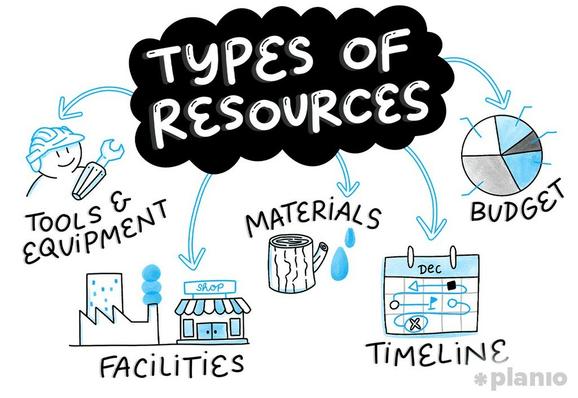
Capacity planning ensures you have the RIGHT resources, of the RIGHT quantity, at the RIGHT time.
Let’s dig into that 👉 https://lttr.ai/AoFOW
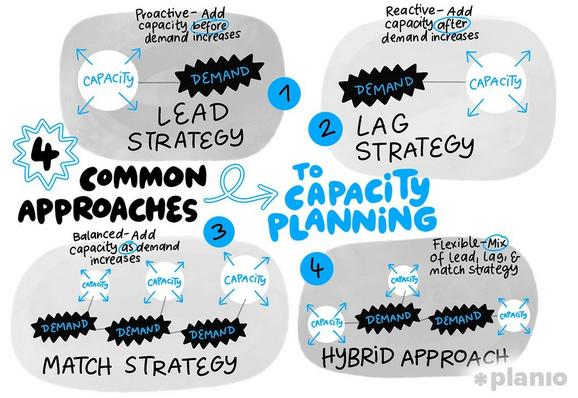
There are typically four common ways you can approach resourcing to meet capacity requirements.
Learn more 👉 https://lttr.ai/Aqq4o
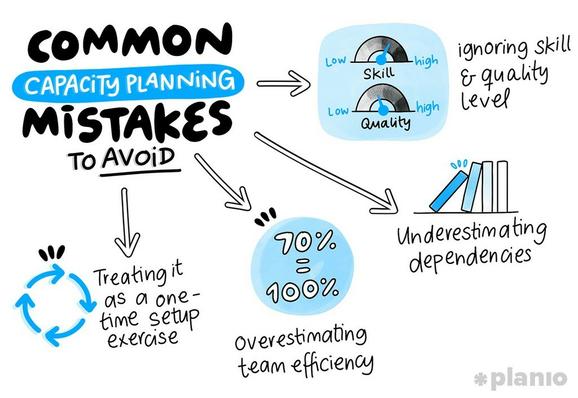
With the right tools, it’s much easier to avoid common mistakes and level-up your capacity planning.
Be prepared 👉 https://lttr.ai/Aqh4e
Grow or Die
For its whole life, Amazon faced a classic capacity planning problem that everyone has. You need to have many machines at the busy time of the year, but they will lie idle the rest of the year.
While growing rapidly, your answer is easy: arrange to buy the needed machines as late as possible, so they came on-line just before Black Friday. The rest of the year they don’t exist, so they don’t cost you anything.
Something changed
But what if you’re not growing at 30% a year? Now you do have idle machines, for 11 out of 12 months a year.
You could arrange to start growing again. Amazon did just that, when they went from running a few data centres just for themselves and started AWS, Amazon web services. Now they were getting business from tons of new customers, and jumped back to their previous solution.
In it, you add as many machines as you can afford, until you are up to the predicted number you needed for the next “Black Friday”. You’re growing like crazy again. You can buy machines and entire data centres again … until business starts to flatten out.
What now?
You’re back to not having to buy extra every year, but you still have to pay for running everything you bought. And your profits have to keep paying back the capital investment you made when you bought those machines.
For a little while you can just coast, profit-taking on your investments.
But that won’t last. Your smaller competitors are still growing as fast as they can get customers., including by taking them from you. When that stops, you’re all in the same boat. Microsoft, Google, Alibaba and all the little guys.
Choose any Two
There are three classic approaches to staying alive in business: maximize growth, maximize revenue, or minimize cost. You did the first, now you need to do the others.
While you’re doing that, let’s pretend you’re Dr. Evil so your solutions don’t have to be ethical (:-))
Start with cost minimization: extend the effective life of your servers. That works because Moore’s Law is coming to an end, and clock speeds have stagnated. That in turn means a three-year-old machine is no longer hugely slower that a new machine. You can keep using your old machines without a cost-benefit crash. Amazon did just that, extending the life of its servers to six years. They claimed a $900m benefit in the first 90 days [Cantrill, 2024].
Then take advantage of some of the smaller advantages:
Finally, keep creeping the price upwards. Your cost may be slowly decreasing, but you should always be increasing your prices, now you’ve locked in your customers.
Does this Sound Familiar?
Yup!
Cory Doctorow defines enshittification as
That’s a good tactic for Dr. Evil. But maybe not for everyone.
What does this do to me?
If you’re in the same pickle as Amazon, leave the Dr. Evil solutions out, and see how many you can apply to your version of the problem.
If your year-end business isn’t hugely greater that your regular business, the capacity planning problem is easier. A customer I know was once was in just that situation. They were able to use the longer life of recent servers and the price advantage of large purchases to solve their problem.
–dave
[Cantrill 2024] Bryan Cantrill, Moore’s Scofflaws, Oxide blog, https://oxide.computer/blog/moores-scofflaws
[Wright 2025] Wikipedia, Experience curve effects, https://en.wikipedia.org/wiki/Experience_curve_effects
 Mass Axis
 Sanjay Mohindroo
 This Blog has No Leaves
 zartom