 Spirituality & Religious Studies
Kabbalah, Part 1
Also spelled Qabalah or Qabbala. It literally means the act of receiving, acceptance.
This is an esoteric method, discipline, & school of thought in Jewish mysticism. It forms the foundation of mystical religious interpretations within Judaism. A traditional Kabbalist is called a Mekubbal (“receiver”).
Jewish Kabbalists originally developed transmissions of the primary texts of Kabbalah within the realm of Jewish tradition. Often using classical Jewish scriptures to explain & demonstrate their mystical teachings.
Kabbalah came out of earlier forms of Jewish mysticism in 12th-13th century Occitania, specifically in Languedoc, among Hakhmei Provence.
Following the movement of Jews from Southern France & Spain, it was found in the Rhineland school of Judah the Pious, al-Andalus, L& was reinterpreted during the Jewish mystical Renaissance in the 16th-century Ottoman Palestine.
The Zohar was authored in the late 13th century, likely by Moses de Leon. Isaac Luria (16th century) is considered the father of contemporary Kabbalah. Lurianic Kabbalah was popularized in the form of Hasidic Judaism from the 18th century onwards.
The primary texts of the major lineage in medieval Jewish tradition are the Bahir, Zohar, Pardes Rimonim, & Et Chayim (‘Ein Sof’). The early Hekhalot literature is recognized as ancestral to the sensibilities of this later flowering of the Kabbalah, & more especially, the Sefer Yetzirah is acknowledged as the forerunner from which many of these books draw their formal inspiration.
The Sefer Yetzirah is a brief document of only a few pages, written many centuries before the high & late medieval works (sometime between 200-600 CE), detailing an alphanumeric vision of cosmology & may be understood as a kind of prelude to the major phase of Kabbalah.
The history of Jewish mysticism encompasses various forms of esoteric & spiritual practices aimed at understanding the divine & the hidden aspects of existence. This mystical tradition has evolved greatly over millennia, influencing & being influenced by different historical, cultural, & religious contexts.
Among the most prominent forms of Jewish mysticism is Kabbalah, which developed in the 12th century & has since become a central component of Jewish mystical thought. Other notable early forms include prophetic & apocalyptic mysticism, which are evident in biblical & post-biblical texts.
The roots of Jewish mysticism can be traced back to the biblical era, with prophetic figures such as Elijah & Ezekiel experiencing divine visions & encounters. This tradition continued into the apocalyptic period, where texts like 1 Enoch & the Book of Daniel introduced complex angelology & eschatological themes.
The Hekhalot & Merkabah literature, dating from the 2nd century to the early medieval period, further developed these mystical themes. This focuses on visionary ascents to the heavenly palaces & the divine chariot. Hekhalot literature (from the Hebrew word for “Palaces”) relates to visions of entering Heaven alive.
Merkabah (or Merkavah) mysticism is a school of Jewish mysticism, centered on visions such as those found in Ezekiel 1, or in the hekhalot literature, concerning stories of ascents to the heavenly palaces & the Throne of God.
According to the Zohar, Torah study can proceed along 4 levels of interpretation (exegesis). These 4 levels are called pardes from their initial letters (PRDs, “orchard”):
- Peshat (“simple”): The direct interpretations of meaning.
- Remez (“hints”): The allegoric meanings (through allusion).
- Derash (from the Hebrew darash, “inquire” or “seek): Midrashic (rabbinic) meanings, often with imaginative comparisons with similar words or verses.
- Sod (“secret” or “mystery”): The inner, esoteric (metaphysical) meanings, expressed in kabbalah.
Kabbalah is considered by its followers as a necessary part of the study of the Torah. The study of the Torah (the Tanakh & rabbinic literature) is an inherent duty of observant Jews.
There are 3 different types of Kabbalah: Lurianic Kabbalah, Meditative-Ecstatic Kabbalah, & Practical Kabbalah. These 3 types can be distinguished by their basic intent with respect to God:
- The Theosohical/Theosophical-Theurgic tradition of Theoretical Kabbalah (the main focus of the Zohar & Luria) seeks to understand & describe the divine realm using the imaginative & mythic symbols of human psychological experience. Its theosophy also implies the innate, centrally important theurgic influence of human conduct on redeeming or damaging the spiritual realms, as man is a divine microcosm. The purpose of traditional theosophical kabbalah was to give the whole of normative Jewish religious practices this mystical metaphysical meaning.
- The Meditative tradition of Ecstatic Kabbalah strives to achieve a mystical union with God, or nullification of the meditator in God’s Active intellect. Abraham Abulafia’s “Prophetic Kabbalah” was the supreme example of this. Though marginal in Kabbalistic development. His alternative to the program of theosophical Kabbalah. Abulafian meditation built upon the philosophy of Maimonides, whose followers remained a rationalist threat to theosophical Kabbalists.
- The Magico-Talismanic tradition of Practical Kabbalah endeavours to alter both the Divine realms & the World using practical methods. While theosophical interpretations of worship see its redemptive role as harmonizing heavenly forces, Practical Kabbalah properly involved Practial Kabbalah properly involved white-magical acts, & was censored by Kabbalists for only those completely pure of intent, as it relates to lower realms where purity & impurity are mixed. Consequently, it formed a separate minor tradition shunned from Kabbalah. Practical Kabbalah was prohibited by the Arizal until the Temple is rebuilt & the required state of ritual purity is attainable.
According to Kabbalistic belief, early kabbalistic knowledge was imparted orally by the Patriarchs, prophets, & sages. Eventually, to be “interwoven” into Jewish religious writings & culture. According to this view, early kabbalah was, around the 10th century BCE, an open knowledge practiced by over a million people in ancient Israel.
Foreign conquests drove the Jewish spiritual leadership of the time (the Sanhedrin) to hide the knowledge & make it secret, fearing that it might be misused if it fell into the wrong hands.
From the Renaissance onward, Jewish Kabbalah texts entered non-Jewish (Gentile) spaces. Where they studied & translated by Christian Hebraists & Hermetic occultists. Christian Hebraists are scholars of Hebrew texts who approach the works from a Christian perspective.
The syncretic traditions of Christian & Hermetic Kabbalah developed independently of Jewish Kabbalah. They read Jewish texts as universalist ancient wisdom preserved from Gnostic traditions of “the olden days.” Both adapted the Jewish concepts freely from their Jewish understanding. This made it possible to merge with multiple other theologies, religious traditions, & magical associations. In the time of the Age of Reason, Christian Kabbalah declined. Hermetic Kabbalah took a much different route, a route that some secretive “societies” went: they went underground.
The technical definition of Kabbalah varies according to sect & the aims of those following it. In its earliest & original usage in ancient Hebrew, it means “reception” or “tradition.” In this context, it tends to refer to any sacred writing written after (or otherwise outside of) the 5 books of the Torah. (This is the 1st 5 books of the Old Testament.)
After the Talmud was written, it refers to the Oral Law. In the much later writings of Eleazar of Worms (circa 1350), it refers to theurgy or the conjuring of demons & angels by the invocation of their secret names.
The nature of the divine prompted kabbalists to envision 2 aspects to God: 1.) God is essence, absolutely transcendent, unknowable, limitless divine simplicity beyond revelation, & 2.) God in manifestation, the revealed persona of God through which He creates, sustains, & relates to humankind.
Kabbalists speak of the 1st as the Ein Sof (“the infinite/endless,” literally “there is no end”). Of the impersonal Ein Sof, nothing can be grasped.
However, the 2nd aspect of divine emanations, accessible to human perception, dynamically interacting throughout spiritual & physical existence, reveals the divine immanently, & is bound up in the life of man. Kabbalists believe that these 2 aspects aren’t contradictory but complement 1 another, emanations mystically revealing the concealed mystery from within the Godhead.
As a term describing the Infinite Godhead beyond Creation, Kabbalists viewed the Ein Sof itself as too sublime to be referred to directly in the Torah. It’s not a Holy Name in Judaism. No name could contain a revelation of the Ein Sof.
The structure of emanations has been described in various ways: Sephirot (divine attributes) & Partzufim (divine “faces”), Ohr (spiritual light & flow), Names of God & supernal Torah, Olamot (spiritual worlds), a Divine Tree & Archetypal Man, Angelic Chariot & Palaces, male & female, enclothed layers of reality, inwardly channels (“limbs” of the King) & the divine Souls of Man.
These symbols are used to describe various levels & aspects of Divine manifestation, from the Pnimi (inner) dimensions to the Hitzoni (outer). It’s solely in relation to the emanations, certainly not the Ein Sof Ground of all Being, that Kabbalah uses anthropomorphic symbolism to relate psychologically to divinity.
The Sephirot/Sefirot/Sefirah are the 10 emanations & attributes of God with which He continually sustains the existence of the universe. These emanations are viewed as parts of God’s divine nature, which reveal themselves in different ways.
The Zohar & other Kabbalistic texts elaborate on the emergence of the sephirot from a state of concealed potential in the Ein Sof until their manifestation in the mundane world. In particular, Moses ben Jacob Cordovero (known as “the Ramak”) describes how God emanated the myriad details of finite reality out of the absolute unity of Divine Light via the 10 sephirot, or vessels.
According to Lurianic cosmology, the sephirot correspond to various levels of creation. 10 sephirot are in each of the 4 Worlds. 4 Worlds within each of the larger 4 Worlds, each containing 10 sephirot, which themselves contain 10 sephirot, which themselves contain 10 sephirot, to an infinite number of possibilities.
They emanated from the Creator for the purpose of creating the universe. The sephirot are considered revelations of the Creator’s will (ratzon), & they shouldn’t be understood as 10 different “gods” but through the Emanations. It’s not God who changes but the ability to perceive God that changes.
Divine creation through the 10 Sephirot is an ethical process. They represent the different aspects of Morality. Loving-Kindness is a possible moral justification found in Chessed, & Gevurah is the Moral Justification of justice, & both are mediated by Mercy, which is Rachamim.
However, these pillars of morality become immoral when taken to extremes. When Loving-Kindness becomes extreme, it can lead to sexual depravity & a lack of Justice to the wicked. When Justice becomes extreme, it can lead to torture & the Cain-ing of innocents & unfair punishment.
The tzadikim or “righteous” ascend these ethical qualities of the 10 sephirot through righteous action. If there were no tzadikim, the blessings of God would become completely hidden, & Creation would cease to exist.
While real human actions are the “Foundation” (Yesod) of this universe (Malkuth), they must be accompanied by the conscious intention of compassion. Compassionate actions are often impossible without faith (Emunah), meaning trusting that God seems hidden.
Make a one-time donation
Your contribution is appreciated.
DonateMake a monthly donation
Your contribution is appreciated.
Donate monthlyMake a yearly donation
Your contribution is appreciated.
Donate yearly #10Sephirot #10thCenturyBC #12thCentury #12thCenturyAD #13thCentury #16thCentury #16thCenturyAD #18thCentury #200CE #2ndCentury #600CE #AbrahamAbulafia #AbulafianMeditation #AgeOfReason #alAndalus #AncientHebrew #AncientIsrael #Arizal #Bahir #BookOfDaniel #BookOfEnoch #Chessed #ChristianHebraists #Circa1350 #Creation #Darash #Derash #DivineMacrocosm #DivineMicrocosm #DivineTree #EinSof #EinSofGroundOfAllBeing #EleazarOfWorms #Elijah #EtzChayim #Exegesis #Ezekiel #Gentile #Gevurah #Gnosticism #Godhead #Hakhme #HasidicJudaism #Hebraists #Hebrew #Hekhalot #HermeticKabbalah #HermeticOccultists #Hitzoni #InfiniteGodhead #IsaacLuria #JewishKabbalah #JewishKabbalists #JewishMysticism #Jews #JudahThePious #Judaism #Kabbalah #Kabbalist #KalipotShells #Languedoc #LovingKindness #Luria #LurianicKabbalah #Macrocosm #MagicoTalismanicTraditiion #Maimonides #Malkuth #MedievalJudaism #MeditativeEcstaticKabbalah #Mekubbal #Mercy #Merkabah #MerkabahMysticism #Merkavah #Midrashic #MosesBenJacobCordovero #MosesDeLeon #Occitania #Ohr #Olamot #OralLaw #Ottoman #OttomanPalestine #Palestine #PardesRimonim #Partzufim #Patriarchs #Peshat #Pnimi #PracticalKabbalah #Prophet #PropheticKabbalah #Prophets #Provence #RabbinicLiterature #Rachamim #Ratzon #Remez #Renaissance #Rhineland #RitualPurity #Sages #Sanhedrin #SeferYetzirah #Sefirah #Sefirot #Sephirot #Sod #SouthernFrance #Spain #Syncretism #Talmud #Temple #TheRamak #TheoreticalKabbalah #TheosophicalKabbalist #TheosophicalTheurgicTradition #Theurgy #ThroneOfGod #Torah #TraditionalTheosophicalKabbalah #Tzadikim #Yesod #Zohar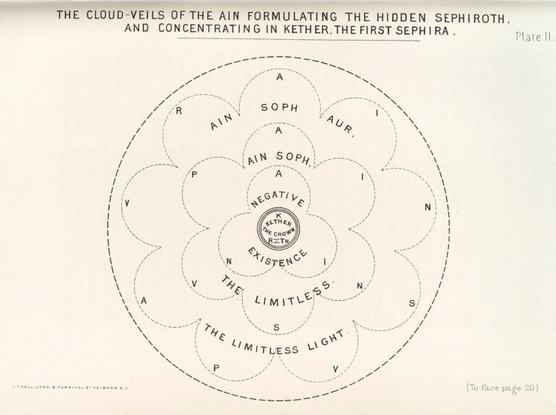
 Fauve
Fauve A∂α Lσνєℓαcє
 𝑬𝒍 𝒄𝒂𝒔𝒕𝒊𝒍𝒍𝒐 𝒎𝒂́𝒔 𝒂𝒏𝒕𝒊𝒈𝒖𝒐 𝒅𝒆 𝑬𝒔𝒑𝒂𝒏̃𝒂
  Actualidad Almanzora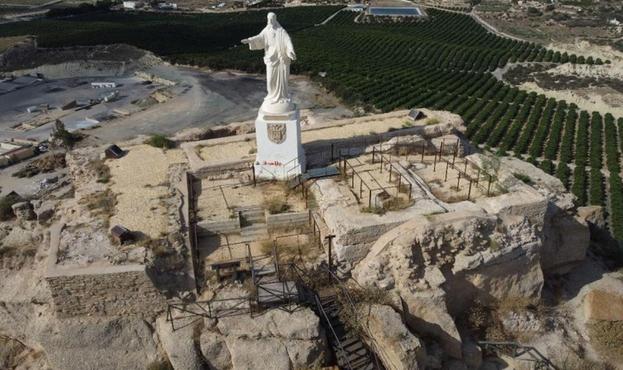
 PugJesus
 Folke Bernadotte