 Kirjavinkit
Kunnes minua ei jää
Raisa Jäntti ilahduttaa lukijoita vuonna 2025 jo toisella runokirjalla. Keväällä ilmestynyttä lepatus pilke -kokoelmaa seuraa Kunnes minua ei jää, joka on takakansitekstinsä mukaan kirja ”kamppailulajin harjoittamisesta, toistosta ja mielestä”. Kamppailulaji on tässä yiquan; juoksemisestakin on puhe. Jäntti ei ole ensimmäistä kertaa kehollisuuden, urheilun ja liikkeen äärellä: aikaisemmin hän on kirjoittanut baletista, snookerista ja vuorikiipeilystä. Jäntti on ollut […] Chloe G artist
Trained this evening too. For me that’s twice in one day.
I often pull out a piece of one of the Chen style forms and practice it over and over for example in the kitchen whilst cooking. That’s not unusual.
But this was a full on warmup and standing and form followed by more standing. Then a loosen up. Unheard of.
Ache now but in a good way?
When I say studying, I mean training.
 The Long Tail
I'm convinced the founders of the internal marital arts - #neijia - were #neurodivergent / non-neurotypical.
It's just too much of a coincidence that the practices all help managing various ND traits, and are so much 'not normal' with respect to the vast majority of martial arts.
#taijiquan #aikido #baguazhang #xingyiquan #yiquan
It's just too much of a coincidence that the practices all help managing various ND traits, and are so much 'not normal' with respect to the vast majority of martial arts.
#taijiquan #aikido #baguazhang #xingyiquan #yiquan
 relaxnsmile
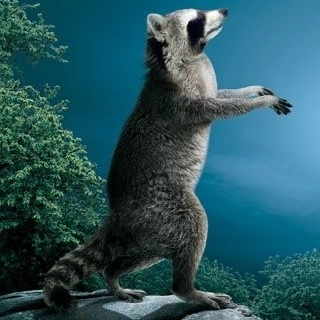
In 1939, Wang Xiangzhai issued a public challenge through a Beijing newspaper. His objective: to test and prove the new martial arts training system of Yiquan, a system that placed standing meditation (zhan zhuang) at its core.
Expert fighters from across China, Japan and even Europe traveled to answer Wang’s challenge. None could beat him or his senior students. His standing meditation training produced superior results in a shorter time period, when compared to methods used in boxing, Judo, and other styles of Kung Fu.
Considering the proven value of standing meditation, surprisingly few people undertake the practice today. Why is this? As Wang himself noted, the exercise is plagued by logical contradictions. Understandably, but unfortunately, martial artists reject the exercise because it cannot possibly work.
Sincere students, who are willing to suspend their disbelief for a few hours of introductory practice, will encounter and resolve these four paradoxes.
Standing still is good exercise. Wang Xiangzhai explained the unique health benefits of standing meditation in his essay, The Gain From Practicing Martial Art:
Appropriate exercises can positively affect every cell and every organ in the human body, improve the functioning of respiratory and vascular systems, and also improve metabolism. In other words, they activate the whole human organism.
In typical forms of exercise, before the body is tired, there are already problems with breathing and the heart is overburdened. So the exercise must be halted prematurely in order to let one’s heart rest, to catch one’s breath and return to a normal state.
Chinese combat science uses the opposite method. This is exercise of the muscular and vascular systems, exercise for all cells of the body. The principle is to stimulate every organ at the same time. Even if during exercise your muscles become tired, your pulse stays in the normal range, and breathing is natural. After the exercise, you feel that your breath is freer and more comfortable than before.
Because there are no complex sets of movements, the nervous system is not greatly stressed; you eliminate internal tension, achieving mental calm. This is one of the elements that make combat science different from typical forms of exercise.
Holding your arms up is relaxing. Many variations of standing meditation require that the arms be held up, as if holding a ball, for fifteen minutes or more. At first, such postures are unpleasant, and cause tension and soreness in the shoulders. However, the posture itself is not the problem, it only exposes the problem: an unhealthy lifestyle, so deficient in exercise that even your own arms seem oppressively heavy.
After a few weeks of regular practice, the soreness will give way to more pleasant sensations. You will be able to raise your arms up with no discernable effort, and your entire body will become warm. Your joints will feel well-lubricated; stiffness or arthritic conditions will be relieved.
Time flies when you’re doing nothing. A lack of upper-body strength is not the only obstacle to successful practice. After the soreness disappears, a succession of images will parade through your mind. Endlessly replaying the events of the past, and predicting those of the future, you should begin to recognize that you are addicted to distraction.
Starving the beast will weaken it. If you can disregard these distractions from within, do so; otherwise, remove them from your practice environment. Shut the windows and the doors. When your mind finally stops, your perception of time will change; instead of watching the clock, you’ll wish you had more time to spend in this calm and quiet state.
Static posture training promotes fluid and coordinated movement. The prevalence of these mental and physical discomforts illustrates that, although everyone can stand still, few people do it well.
Only after resolving these issues within yourself, will you discover how deeply they affect your performance. As you would expect, your balance will improve; you may be surprised to find that standing meditation also increases your sensitivity, explosive speed and power.
In his later years, Wang Xiangzhai nicknamed himself “Old Man of Contradictions”. Martial artists today cannot hope to match his great accomplishment, unless they are willing to stand first, and ask questions later.
#meditation #healthbenefits #healing
#WangXianZhai #StandingMeditation
#Yiquan #kungfu #WarriorsOfStillness
http://www.martialdevelopment.com/blog/four-paradoxes-of-standing-meditation/
Expert fighters from across China, Japan and even Europe traveled to answer Wang’s challenge. None could beat him or his senior students. His standing meditation training produced superior results in a shorter time period, when compared to methods used in boxing, Judo, and other styles of Kung Fu.
Considering the proven value of standing meditation, surprisingly few people undertake the practice today. Why is this? As Wang himself noted, the exercise is plagued by logical contradictions. Understandably, but unfortunately, martial artists reject the exercise because it cannot possibly work.
Sincere students, who are willing to suspend their disbelief for a few hours of introductory practice, will encounter and resolve these four paradoxes.
Standing still is good exercise. Wang Xiangzhai explained the unique health benefits of standing meditation in his essay, The Gain From Practicing Martial Art:
Appropriate exercises can positively affect every cell and every organ in the human body, improve the functioning of respiratory and vascular systems, and also improve metabolism. In other words, they activate the whole human organism.
In typical forms of exercise, before the body is tired, there are already problems with breathing and the heart is overburdened. So the exercise must be halted prematurely in order to let one’s heart rest, to catch one’s breath and return to a normal state.
Chinese combat science uses the opposite method. This is exercise of the muscular and vascular systems, exercise for all cells of the body. The principle is to stimulate every organ at the same time. Even if during exercise your muscles become tired, your pulse stays in the normal range, and breathing is natural. After the exercise, you feel that your breath is freer and more comfortable than before.
Because there are no complex sets of movements, the nervous system is not greatly stressed; you eliminate internal tension, achieving mental calm. This is one of the elements that make combat science different from typical forms of exercise.
Holding your arms up is relaxing. Many variations of standing meditation require that the arms be held up, as if holding a ball, for fifteen minutes or more. At first, such postures are unpleasant, and cause tension and soreness in the shoulders. However, the posture itself is not the problem, it only exposes the problem: an unhealthy lifestyle, so deficient in exercise that even your own arms seem oppressively heavy.
After a few weeks of regular practice, the soreness will give way to more pleasant sensations. You will be able to raise your arms up with no discernable effort, and your entire body will become warm. Your joints will feel well-lubricated; stiffness or arthritic conditions will be relieved.
Time flies when you’re doing nothing. A lack of upper-body strength is not the only obstacle to successful practice. After the soreness disappears, a succession of images will parade through your mind. Endlessly replaying the events of the past, and predicting those of the future, you should begin to recognize that you are addicted to distraction.
Starving the beast will weaken it. If you can disregard these distractions from within, do so; otherwise, remove them from your practice environment. Shut the windows and the doors. When your mind finally stops, your perception of time will change; instead of watching the clock, you’ll wish you had more time to spend in this calm and quiet state.
Static posture training promotes fluid and coordinated movement. The prevalence of these mental and physical discomforts illustrates that, although everyone can stand still, few people do it well.
Only after resolving these issues within yourself, will you discover how deeply they affect your performance. As you would expect, your balance will improve; you may be surprised to find that standing meditation also increases your sensitivity, explosive speed and power.
In his later years, Wang Xiangzhai nicknamed himself “Old Man of Contradictions”. Martial artists today cannot hope to match his great accomplishment, unless they are willing to stand first, and ask questions later.
#meditation #healthbenefits #healing
#WangXianZhai #StandingMeditation
#Yiquan #kungfu #WarriorsOfStillness
http://www.martialdevelopment.com/blog/four-paradoxes-of-standing-meditation/

 Alessandro
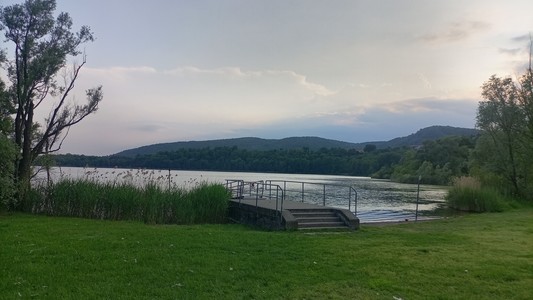
Ready for #neijia training!!!
Photo: (Comabbio lake, Varese, Italy)
#lake #training #italy #neigong #taijiquan #xingyiquan #yiquan #baguazhag #gongfu