#PenobscotNation #Elder ‘Butch’ Phillips dies at 85

A celebrated #CultureBearer and artist, Reuben Elliot 'Butch' Phillips also was part of the team that negotiated the #Maine Indian Claims Settlement Act of 1980.

Reuben M. Schafir, July 29, 2025

"Reuben Elliot “Butch” Phillips, a Penobscot elder, artist, culture-bearer and the former lieutenant governor of the tribe, died Sunday at the age of 85.
Phillips was a leader within his tribe, an accomplished birch bark artist known for crafting moose calls adorned with intricate etchings, an athlete and a masterful hunter.

Scott Phillips, one of the elder Phillips’ three sons, said his father was a “very patient, very soulful” hunter who successfully hunted moose until just two years ago.

Phillips was often called upon to perform ceremonies and lead prayers at events. He cherished his role as a tribal elder, family members said, and was a living advocate for Penobscot traditions.

“He was a proponent of the Penobscot Nation,” Scott Phillips said. “All the traditions and customs, he wanted to keep that going for future generations, and he tried to pass a lot of that knowledge on to me and my brothers, his grandchildren and the people of the nation.”

“He never opened a ceremony without recalling the ancestors and ensuring that we honored them in our daily lives,” said #BarryDana, Phillips’ nephew and former two-term chief of the Penobscot Nation. “When you’re an elder and you preserve a value, you repeat it as early and as often as needed, and he didn’t hesitate to repeat it all the time. And now he’s an ancestor.”

#MaulianBryant, Dana’s daughter, recalled her great-uncle as well-spoken, diplomatic and warm, yet stalwart in his convictions. Known for his impeccable presentation, Bryant said he sported a neatly combed coif of dark hair well into old age and was often present at tribal ceremonies in full regalia.

Phillips was born May 7, 1940, and grew up on Indian Island, the seat of the Penobscot Nation’s government. He served in the U.S. Army and had a lengthy career in telecommunications, in addition to the various positions he held within the Penobscot Nation and associated causes, according to an obituary written by his family. He served as lieutenant governor, a position now known as vice chief, of the Penobscot Nation from 1992 to 1994. He lived in his later years on Penobscot ancestral homelands known today as Milford, across the river from the tribe’s headquarters.

In the 1970s, Philips was one of the Penobscot representatives on the team that negotiated the Maine Indian Land Claims Settlement of 1980. The legislation was viewed by many at the time as the only way for tribes to secure limited compensation for stolen land. It also subjected tribal nations to state government control and excepted them from the sovereignty all other federally recognized tribes have.

The law was a divisive topic internally among tribal members during negotiations. Its impacts have shaped the work of Dana and Bryant, who served as Penobscot tribal ambassador before she became executive director of the Wabanaki Alliance in January 2025. Bryant’s work today is largely dedicated to unraveling many of the restrictions imposed by the settlement act. Conversations with her great-uncle caused her to shift her thinking of the law and of the negotiators who partook in its crafting.

“I never wanted those tribal leaders to feel ashamed or that they did a bad thing, because it was a historic thing and there were good things for the tribe and they were between a rock and a hard place,” she said. “I really credit him with me shifting my approach to the whole thing and seeing it in a wholesale way and just remembering the humanity of everyone involved.”

Dana and Phillips never spoke of the negotiations outside of a single town-hall meeting — but Dana said he knew his uncle was fully behind him when he went head-to-head with the state on several occasions.

By working on the negotiating team, Phillips was fulfilling a duty asked of him by his government, said John Dieffenbacher-Krall, the former executive director of the Wabanki Alliance.

“There can be no greater example of citizenship,” he said.

Phillips was also an outspoken advocate of the #PenobscotRiver restoration.
“My generation, we saw the Penobscot River at its worst. It was like an open sewer,” he told #WERU Community Radio and #SunlightMediaCollective in 2018. “And as children, it really didn’t mean too much to us. We still swam in it, we still ate the fish, we still canoed in it and so forth. But I also witnessed the cleansing of the river.”

He was part of a group in 2002 that built the first birch bark canoe on Indian Island in 60 years and helped paddle the boat up the Penobscot River to Katahdin.
Butch Phillips at his Milford home in 1997. (John Ewing/Staff Photographer)
“It was a really strong moment in the revitalization of our culture,” Dana said.
Phillips was married for 40 years to Linda Ann Stewart, who died in 2001. He is survived by his three sons, four siblings and numerous grandchildren, great-grandchildren and friends.

In his final days, family members say Phillips asked those around him to show love.

“He hoped people would put their differences aside and just love each other,” Scott Phillips said."

Source:
https://www.pressherald.com/2025/07/29/penobscot-elder-butch-phillips-dies-at-85/

Archived version:
https://archive.md/Dmby4

#Penobscot #PenobscotElder #MaineSettlementAct #WaterIsLife #PenobscotRiver #WaterKeeper #NativeAmericanArtist #CultureKeeper

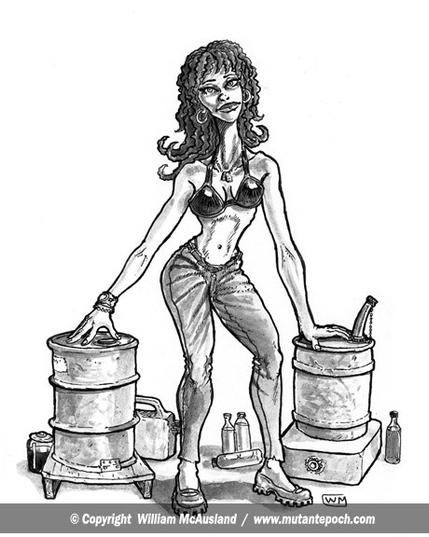
Water Keeper: This character was formerly an expert in securing, testing, filtering, storing and creating transport containers for precious water. He or she was accomplished at the digging of wells, understanding the patterns in trees, ravines, hills, and vegetation in arid regions in order to better guess where a source of water might be rooted out. There is a 3 in 10 chance this valuable individual also knew the art of water dowsing with a forked stick, and has an 89% chance of finding water in an area with just a witching stick.

Art from page 20 of The Mutant Epoch RPG Expansion Rules book.

https://www.drivethrurpg.com/en/product/499645/the-mutant-epoch-rpg-expansion-rules

#water #waterbarrel #waterjug #jugs #barrels #caste #tme #rpg #ttrpg #mutantepoch #postapocalyptic #apocalypse #roleplaying #woman #mutant #outlandsystem #outlandarts #inkdrawing #waterkeeper

DriveThruRPG

The #Tonawanda #Seneca Nation’s Fight to Protect the #BigWoods and stop STAMP

By Margaret Wooster (WNY Environmental Alliance) with Sarah Howard (Neighbors of the Onondaga Nation + Allies of the Tonawanda Seneca Nation) June 16, 2023

"One of Western #NewYork’s greatest treasures is a 20,000-acre #wetland-#grassland complex located mainly in the Town of Alabama, and locally known as 'Alabama Swamp.' It is also known as the Sixth Great Lake, a glacial lake now largely underground but surfacing in the plentiful streams and pools that make this watery landscape essential to the many reptiles, amphibians, mammals and birds who live or pass through, especially during spring migration.

"This area is also home to the Tonawanda Seneca Nation, a federally recognized Nation and part of the #HaudenosauneeConfederacy. The extraordinary #biodiversity of this area is in large part a testament to their ongoing #stewardship and reciprocal relationship with the more-than-human beings who also call this place home.

"But now, this place, and the Tonawanda Seneca Nation itself, faces an existential threat to their well-being. The #GeneseeCounty Economic Development Center (#GCEDC) has purchased 1,260 acres of habitat and farmland to build a Science and Technology Advanced Manufacturing Park (#STAMP) adjacent to the Nation’s territory. The site is also located within a few miles of multiple state and federally protected areas, including the #Iroquois National #Wildlife Refuge and the John White Wildlife Management Area.

"The STAMP plan capitalizes on federal and state subsidies for #microchip fabrication. To date, however, its only tenant is Plug Power, a #HydrogenFuelCell manufacturer whose product will have to be trucked many miles to market, undermining its justification as 'green power.'

"Two other possible developers – semiconductor producer #EdwardsVacuum and the warehouse developer #ScannellProject – would pave or build over the site’s northern 600-plus acres and bring an extra 140 #cars and #diesel trucks per hour up the narrow country road that leads to the refuge and through the Nation.

"However, the Tonawanda Seneca Nation and their allies, including other local residents and numerous environmental organizations, are fighting back against this industrial development. In February [2023], the GCEDC applied for a 'Full Campus Incidental Take Permit' that would allow them to remove habitat for #endangered and threatened #wildlife species known to occupy the site, including the #ShortEaredOwl and the #NorthernHarrierHawk. In response to the hundreds of letters it received from the public about this permit, the Department of Environmental Conservation (DEC) required the GCEDC to hold a public hearing, which took place on May 11 in the town of Basom.

"More than 185 people attended the hearing. All 49 who spoke were opposed to the permit and the majority expressed opposition to the entire STAMP project. Speaking in opposition were numerous members of the Tonawanda Seneca Nation, including titleholders, as well as allies from groups including the Buffalo Niagara #Waterkeeper, #SierraClub, #SaveOntarioShores, SUNY ESF, University of Rochester, Western New York Environmental Alliance and the #CleanAirCoalition of Western New York. In the words of Tonawanda Seneca Nation Sub-Chief Scott Logan (Bear Clan), 'If this permit were to be granted, it would be an immense injustice to #MotherEarth. And as a #Haudenosaunee person, and all the Haudenosaunee People in here, that is our birthright. It is our, what we are here for, is to protect the earth. And the STAMP Project goes a hundred percent against what we are — what we’re all about.'

"The STAMP site is located immediately adjacent to the Nation’s present-day reservation boundaries. Indeed, the most intensive manufacturing will be located along the project’s border with the Nation. However, as their Council of Chiefs has repeatedly stated in public comment letters and letters to agencies responsible for granting permits sought by the developers, the project’s approval process has continuously and egregiously undermined the Nation’s #sovereignty. In violation of their status as a federally recognized #TribalNation, the Tonawanda Band of Seneca’s Council of Chiefs – their traditional governance structure – has not been afforded a robust consultation process in decision-making about the project. Instead, opportunities for consultation have been perfunctory at best, and have focused almost exclusively on mitigation.

"In their official letter to the NYDEC regarding the proposed Part 182 Take Permit (mentioned above), the Nation’s Council of Chiefs wrote that, 'The Tonawanda Seneca Nation opposes this habitat destruction and would directly be impacted by it. The permit would allow for unmitigated incidental take on Nation lands when, inevitably, increased human presence, noise, excavation, light and traffic would disturb these species and turn them away… We do not want our Territory, people or future generations to be burdened by the negative impacts of these projects. This is a human rights issue for the Tonawanda Seneca Nation and the Haudenosaunee, who would bear a disproportionate burden from the industrialization of the land at STAMP.'

"The Council of Chiefs has demanded that a supplemental Environmental Impact Statement (EIS) be carried out to assess the possible impacts on the Nation, its culture and its environment; to date there has been no such study and the 2012 STAMP EIS (which did not analyze impacts on the nation) is badly outdated."

https://globaljusticeecology.org/tonawanda-seneca-nation/

#ForestDefenders #SenecaNation #FirstNations #NativeAmericanRights #CulturalGenocide #EnvironmentalRacism #Greenwashing #HydrogenPower

The Tonawanda Seneca Nation's Fight to Protect the Big Woods and stop STAMP - Global Justice Ecology Project

The Tonawanda Seneca Nation’s Fight to Protect the Big Woods and stop STAMP By Margaret Wooster (WNY Environmental Alliance) with Sarah Howard (Neighbors of the Onondaga Nation + Allies of the Tonawanda Seneca Nation) June 16, 2023     Note: To stay informed and to take action in support, fill out this form or email […]

Global Justice Ecology Project
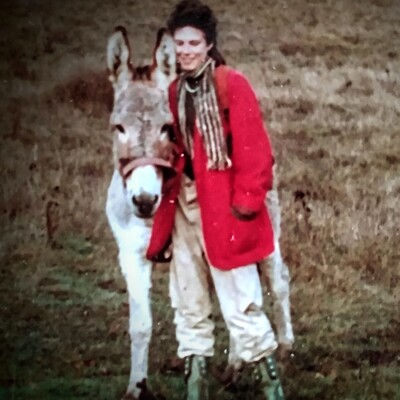
54 yr old Water Keeper faces a possible 5 year jail sentence for peacefully protesting line 3 pipeline crossing indigenous territory in northern Minnesota
#TarSandProtest #WaterKeeper
https://www.theguardian.com/environment/2023/aug/27/climate-activist-mylene-vialard-line-3-pipeline-protest-climate-activism-crackdown
‘I’m not the guilty one’: the water protector facing jail time for trying to stop a pipeline

Mylene Vialard goes on trial this week for opposing a pipeline on Indigenous land amid warnings peaceful protest is under threat

The Guardian