Again, don't do this with bare skin (use safety equipment and appropriate precautions)

#WoodAshCement

July 17, 2018, PrimitiveTechnology

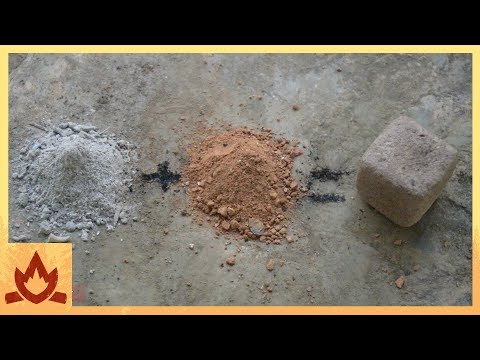
"I developed an experimental cement from made only from re-fired #WoodAsh as its #cementitious material. It was mixed with crushed #terracotta as an aggregate and formed into a cube. The cement set hard after 3 days and did not dissolve in water after this period.

"Process: First I burnt bark and leaves in a kiln at high temperatures to produce well burnt, mostly white wood ash. The ash was then mixed into water and stirred well. The excess water was poured off and the resulting paste was made into pellets and allowed to dry. A pellet was then re-heated in the #forge until it glowed about orange hot. This was then taken out, cooled and dropped in a pot of water. The pellet dissolved and boiled due to a chemical reaction with the water. The paste was stirred and crushed terracotta (old tiles from previous projects) was added and mixed to form a mouldable #mortar. This was formed into a cube and allowed to set for three days (in the video, a cube made exactly the same way 3 days previously was used due to time constraints). The resultant cube was strong and made a slight ringing sound when tapped with a finger nail. It was placed in water for 24 hours to simulate a very heavy rain event and did not dissolve or release residues into the water.

"My current theory: The main component of wood ash consists of #calcium in some form (e.g. #CalciumCarbonate, #CalciumOxide). This can be up to 45% from my research. Calcium is in higher concentration in the #bark and #leaves of a tree. When the ash is mixed with water, the soluble component of wood ash (10% pot ash) dissolves into the water. But seeing that it does nothing for the cementing process, it is drained off leaving the insoluble calcium (and other components) in the paste. Doing this probably raises the relative percentage of calcium in the paste to about 50% or more. Most of the other 50 % consists of silica and alumina which are #pozzolans, materials that chemically react with calcium hydroxide to increase the durability of the cement product. The paste was then made into a pellet and fired again to high temperature to convert all the calcium compounds to calcium oxide. It also reduces any charcoal in the pellet to ash if it hadn’t already been burnt the first time. This step seemed important as un-fired ash pellets only partially hardened and would fall apart in water, though retaining a weak undissolved 5mm thick crust. I can only surmise that re-firing the ash just gave a greater conversion of the calcium components to calcium oxide. The pellet is slaked in water converting the calcium oxide to calcium hydroxide. This cement was mixed with crushed terracotta which may also help in some way that I’m not aware of as I only did this one experiment and did not test other aggregates yet (e.g. sand, gravel etc.). Terracotta is porous and might hold together better than other materials. The mixture is allowed to set in air where carbon dioxide reacts with calcium hydroxide to form calcium carbonate cementing the aggregate together. After this, the cement will not dissolve in water.

"Use: I think this material might have a potential use as a mortar holding rocks or bricks together in wet environments where #limestone or #SnailShells are unavailable for making cement. Wood ash is a pretty ubiquitous material to most natural environments inhabited by people using biomass fuels. Wood ash cement turns a waste product into a valuable building material. From my research, wood ash is already being used as a partial replacement for cement in the building industry without decreases in strength of the final product. But I’ve only just started experimenting with it and don’t know its full capabilities and limitations. Calcium content of wood ash differs depending on the species of tree, the part of the tree burnt and the soil it’s grown on. Cautious experimentation is still required before committing to a hut built from this material."

Learn more:
https://primitivetechnology.wordpress.com/2018/07/17/wood-ash-cement/
#SolarPunkSunday #DIY #Cement #Woodashes #BuildingMaterials

Wood ash cement

I developed an experimental cement from made only from re-fired wood ash as its cementitious material. It was mixed with crushed terracotta as an aggregate and formed into a cube. The cement set ha…

Ahhhh... Using a hand-drill to start a fire. Now that takes me back to my days at the Wilderness School! I'd love to try and make a pottery-kiln (I'll be researching that soon...)

#Australia - Making #lime with Primitive Technology

"When heated above 840 degrees Celsius, the lime decomposes into calcium oxide (CaO) or #Quicklime and releases carbon dioxide (CO2). When water is added to the quicklime it becomes calcium hydroxide Ca (OH)2 or #LimePutty. From here the calcium hydroxide can then be shaped into a form and allowed to set.

Carbon dioxide enters the lime putty as it dries causing it to turn back into calcium carbonate. The new calcium carbonate has then set, remaining solid and water resistant.

In my local geography, calcareous rocks such as limestone are absent leading to a difficulty in acquiring the feed stock for lime making. However, I was still able to make lime by collecting the shells of large terrestrial snails that are native to the rainforest here. The unoccupied shells of these snails were gathered up and stored at the hut. Fire wood was gathered and packed neatly into the kiln.

Importantly, the firewood was stacked on top of the grate rather than underneath it in the firebox as is the normal procedure for firing pottery. Using an ordinary updraft pottery kiln in this configuration allows it to reach much higher temperatures than would be possible during normal use. The wood was lit from above and the fire burned down towards the grate. Alternate layers of shells and wood were added on to this burning fuel bed. After adding the last layer of wood to act as a 'lid' to prevent heat loss from above I left the kiln to finish on its own, unsupervised. The whole process took about an hour and a half.

When the kiln had cooled down a few hours later, I took out the calcined shells. Not shown in the video was the fact that some shells got so hot, the dirt stuck to them turned into slag and fused to them, possibly with the lime acting a flux lowering its melting point. This extreme heat (+1200 c) should be avoided as the over burnt lime becomes 'dead lime', unable to slake in water. Most shells were still useable though. They were taken out of the kiln and had water added to them.

An exothermic reaction then ensued. Heat was produced as the lime quicklime turned into slaked lime. The water heated up creating steam and the shells decomposed into a white paste. The paste was stirred and crushed pottery was added to it as an aggregate (sand is normally used for this, I just had a lot of old pot sherds lying about to dispose of).

This lime mortar mixture was then formed into a block shape and left to dry. It took about a week and a half to set as we have had extremely humid, wet weather. The block was observed to have set demonstrating its properties.

What I created is actually lime mortar, typically used for mortaring bricks and tiles together. It’s basically the ‘Glue’ that holds together the building blocks of masonry structures. From my research 20 kg of lime mortar is used on a 1 m square section of brick wall. 5 kg of lime to 15 kg of aggregate (sand, grog etc.) per a 1 m square section of bricks. The shells, though large, are not terribly abundant. A method for finding shells efficiently needs to be made before considering making lime mortar in this fashion. From my experience sand bars in a creek sometimes accumulate snail shells from higher up in the mountains. In these spots, water velocity decreases and shells in the water tend to drop out of the water column. Additionally lime may be partially replaced with ordinary wood ash in mortar without a corresponding decrease in strength. To conclude, making lime in a land without limestone is possible but can be problematic when trying to do so on a large scale."

Watch:
https://thekidshouldseethis.com/post/making-lime-with-primitive-technology

YT:
https://www.youtube.com/watch?v=Ek3aeUhHaFY&t=46s

Wordpress:https://primitivetechnology.wordpress.com/

Patreon page: https://www.patreon.com/user?u=2945881

#SolarPunkSunday #SustainableMaterials #TraditionalTechnology #ZeroWaste #Mortar #LimeMortar #Snailshells #Adaptation #AncientTechnologies #Science #AnimalProducts #LocalMaterials

Making lime with Primitive Technology

Making use of the unoccupied shells of native rainforest snails around his original land, Primitive Technology makes lime mortar by firing them in his

The Kid Should See This
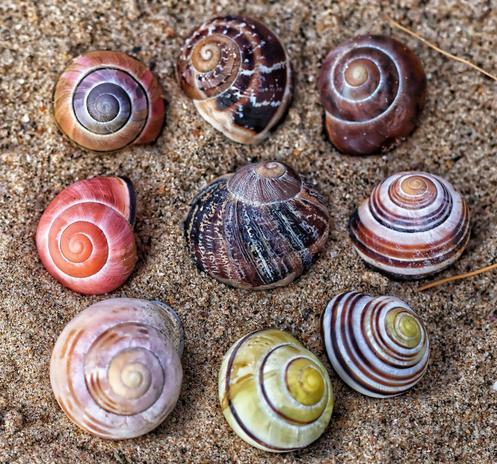
A little offering of gratitude using old snail shells I found on my morning walk.

#TripleSpiral #SnailShells #Gratitude

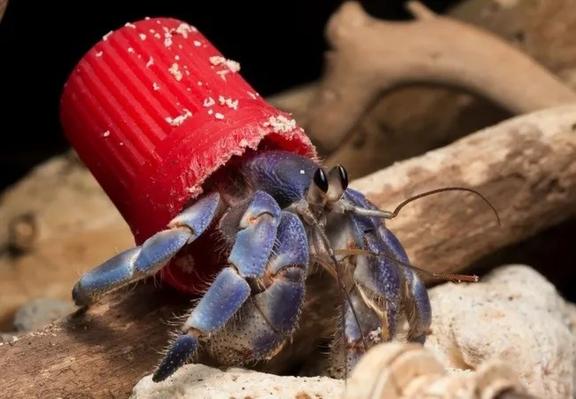
This whole group of #crabs have adapted to scavenge and use discarded #SnailShells to protect their fragile bodies. And when those shells are in short supply, the crabs will fight over them.

The researcher said that the natural snail shells were in decline, so she suspected it might be becoming easier for the animals to find an artificial alternative. #Oceans #Plastics #pollution

#HermitCrabs are 'wearing' our #plastic rubbish - BBC News
https://www.bbc.com/news/science-environment-68071695

Hermit crabs are 'wearing' our plastic rubbish - BBC News

Hermit crabs all over the world are using our discarded plastic and other waste in place of their natural shells.

BBC News