#SodiumIonBatteries offer an alternative to tricky #lithium

Oct 26th 2023

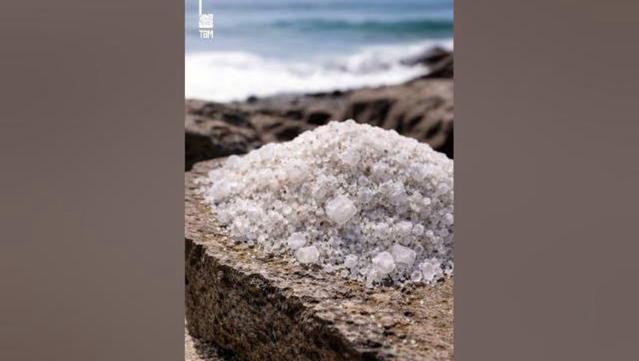
Excerpt: "Fortunately, lithium is not the only game in town. As we report this week, a clutch of firms are making batteries based on sodium, lithium’s elemental cousin. Since sodium’s chemical properties are very similar to those of lithium, it too makes for good batteries. And sodium, which is found in the salt in #seawater, is thousands of times more abundant on Earth than lithium and cheaper to get at. Most of the companies using sodium to make batteries today are also Chinese. But pursuing the technology in the West might be a surer route to energy security than relying heavily on lithium.

"Besides its abundance, sodium has other advantages. The best lithium batteries use #cobalt and #nickel in their electrodes. Nickel, like lithium, is in short supply. #Mining it on land is #EnvironmentallyDestructive. Proposals to grab it from the #seabed instead have caused rows. A good deal of the world’s cobalt, meanwhile, is extracted from small mines in the #DemocraticRepublicOfCongo, where #ChildLabour is common and working conditions are dire. Sodium batteries, by contrast, can use #electrodes built from #iron and #manganese [and wood #lignin], which are plentiful and uncontroversial. Since the chemical components are cheap, a scaled-up industry should be able to produce batteries that cost less than their lithium counterparts.

"Sodium is not a perfect replacement for lithium. It is heavier, meaning sodium batteries will weigh more than lithium ones of an equivalent capacity. That is likely to rule them out in some cases where lightness is paramount. But for other applications, such as #GridStorage or #HomeBatteries, weight is irrelevant. Several Chinese carmakers are even beginning to put sodium batteries in #ElectricVehicles."

Read more:
https://www.economist.com/leaders/2023/10/26/sodium-batteries-offer-an-alternative-to-tricky-lithium

Archived version:
https://archive.ph/7x6JX

#SolarPunkSunday #EnergyStorage #SodiumIon #NewTechnology #GiantLeap #Reuse #WasteReuse #NoLithiumMining #NoMining

Sodium batteries offer an alternative to tricky lithium

Lithium is relatively scarce and mostly refined in China. Sodium is neither

The Economist
Photographer Explores New York's Vast, Complex, and Invisible Water System

It's a project that spans 30 years.

PetaPixel

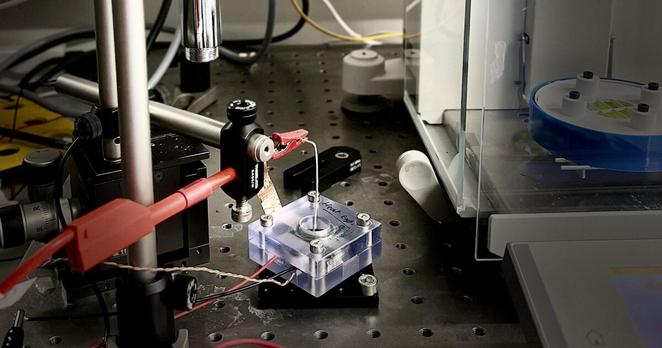
New #SodiumIon battery stores twice the energy and #desalinates #seawater

Date: February 19, 2026
Source: University of Surrey

Summary: A surprising breakthrough could help sodium-ion batteries rival lithium—and even turn seawater into drinking water. Scientists discovered that keeping water inside a key battery material, instead of removing it as traditionally done, dramatically boosts performance. The “wet” version stores nearly twice as much charge, charges faster, and remains stable for hundreds of cycles, placing it among the top-performing sodium battery materials ever reported.

"In research published in the Journal of Materials Chemistry A, scientists examined sodium vanadium oxide, a well-known sodium-based compound. They discovered that allowing the material to retain its natural water content significantly enhances how it functions inside a battery.

"The compound, called nanostructured sodium vanadate hydrate (#NVOH), delivered far stronger results when used in its hydrated form. It stored substantially more energy, charged at a faster rate, and maintained stability for more than 400 charge cycles.

"During testing, the hydrated version held nearly twice as much charge as standard sodium-ion cathode materials. This performance places it among the top cathodes reported so far for sodium-ion batteries.

"Dr. Daniel Commandeur, Research Fellow at the University of Surrey School of Chemistry and Chemical Engineering, and lead author of the paper, said: 'Our results were completely unexpected. Sodium vanadium oxide has been around for years, and people usually heat-treat it to remove the water because it's thought to cause problems. We decided to challenge that assumption, and the outcome was far better than we anticipated. The material showed much stronger performance and stability than expected and could even create exciting new possibilities for how these batteries are used in the future.'

#Seawater Operation and Electrochemical #Desalination

"The team also explored how the material performed in salt water, an especially demanding environment for battery systems. Not only did it continue operating effectively, it also removed sodium ions from the saltwater solution. At the same time, a graphite electrode extracted chloride ions in a process known as electrochemical desalination.

"Dr. Commandeur added: 'Being able to use sodium vanadate hydrate in salt water is a really exciting discovery, as it shows sodium-ion batteries could do more than just store energy -- they could also help remove salt from water. In the long term, that means we might be able to design systems that use seawater as a completely safe, free and abundant electrolyte, while also producing #FreshWater as part of the process.' "

Read more:
https://www.sciencedaily.com/releases/2026/02/260218031603.htm

#SolarPunkSunday #GiantLeap #GiantLeapScenario #TechnologicalBreakthrough #LtG #Technology #SodiumIonBatteries

New sodium ion battery stores twice the energy and desalinates seawater

A surprising breakthrough could help sodium-ion batteries rival lithium—and even turn seawater into drinking water. Scientists discovered that keeping water inside a key battery material, instead of removing it as traditionally done, dramatically boosts performance. The “wet” version stores nearly twice as much charge, charges faster, and remains stable for hundreds of cycles, placing it among the top-performing sodium battery materials ever reported.

ScienceDaily

#seawater #SeawaterAging #Atlantic #Ocean #AMOC

Original open access article

Guo et al. 07 January 2026, Nat Commun 17, 200

North Atlantic ventilation change over the past three decades is potentially driven by climate change

https://doi.org/10.1038/s41467-025-67923-x

#climate #ClimateScience #ClimateChange #ClimateEmergency #ClimateCrisis #ClimateBreakdown #ClimateDisruption #polycrisis

#FYI #PaulBeckwith video lecture and literature review #SeawaterAging @paulbeckwith

Just as we were thinking it just can't get that bad...

"A new research paper shows clearly that #seawater is aging in the North #Atlantic #Ocean, which means that the #AMOC which ventilates the ocean is weakening."

https://www.youtube.com/watch?v=_Q1BfnoHCKE

#climate #ClimateScience #ClimateChange #ClimateEmergency #ClimateCrisis #ClimateBreakdown #ClimateDisruption #globalWarming #polycrisis

Seawater Aging in North Atlantic Ocean Confirms Ongoing AMOC Slowing & Deep Ocean De-Oxygenization

YouTube
#Microorganisms in #seawater immediately surrounding #corals act as superior, non-invasive biomarkers for detecting diseases like Stony Coral Tissue Loss Disease (SCTLD) compared to #microbes within the coral tissue.
#MarineBiology #Ecology #sflorg
https://www.sflorg.com/2026/01/mb01202601.html
Seawater microbes offer new, non-invasive way to detect coral disease

Reefs are increasingly threatened by climate change, pollution, and rapidly spreading diseases such as stony coral tissue loss disease

US Startup Launches Energy Efficient Desalination System In Nice - CleanTechnica

A new, energy efficient desalination system leverages natural water pressure to make a 40% cut in energy consumption.

CleanTechnica
US Startup Launches Energy Efficient Desalination System In Nice - CleanTechnica

A new, energy efficient desalination system leverages natural water pressure to make a 40% cut in energy consumption.

CleanTechnica

The world's first subsea desalination facility will start running in 2026.

Flocean, a Norwegian company, is set to open the world’s first commercial-scale subsea desalination plant, an approach that could cut the cost and energy used to make seawater drinkable.

https://mediafaro.org/article/20251230-the-worlds-first-subsea-desalination-facility-will-start-running-in-2026?mf_channel=mastodon&action=forward

#Water #Desalination #Engineering #Norway #Flocean #SeaWater #Sea #Marine

The world's first subsea desalination facility will start running in 2026.

Flocean, a Norwegian company, is set to open the world’s first commercial-scale subsea desalination plant, an approach that could cut the cost and energy used to make seawater drinkable.

New Scientist

Các nhà khoa học Trung Quốc đã phát triển thành công công nghệ chiết xuất boron từ nước biển – nguyên tố quan trọng dùng trong sản xuất nhiên liệu cho vũ khí siêu thanh. Bước tiến này có thể giúp Trung Quốc tăng cường năng lực quốc phòng và giảm phụ thuộc vào nguồn boron nhập khẩu.

#TrungQuốc #nhiên_liệu_siêu_thanh #khoa_học #quốc_phòng #Boron #nước_biển
#China #hypersonic_fuel #science #defense #boron #seawater

https://vtcnews.vn/trung-quoc-chiet-xuat-nhien-lieu-vu-khi-sieu-thanh-tu-nuoc-