#FotoVorschlag: Das passt da nicht rein // That won't fit in there/this doesn't go there

Der gestrandete #Pottwal, der 2013 in Greenwich (#London) untersucht wurde, passte so gar nicht ans Ufer der Themse. Aber aus gutem Grund: Die lebensechte #Skulptur ist eine #Kunstaktion eines belgischen Kollektivs, die auf das Verschwinden der #Wale und den Klimawandel aufmerksam macht. Der #Wal wurde schon in einigen europäischen Städten gezeigt.
//
The beached #spermWhale that was examined in #Greenwich (London) in 2013 felt out of place by the Thames. But for good reason! This remarkably life-like #sculpture is an #art installation by a Belgian art collective, created to raise awareness of the decline of #whales and the impact of climate change. The #whale has already toured several European cities.

👉 https://www.captainboomercollective.org/projects/whale/the-why-of-the-whale/


#OldRoyalNavalCollege #GreenwichFair #artInstallation #Kunstinstallation #hyperRealism #Hyperrealismus #saveTheWhales #spermWhales #Pottwale #CaptainBoomer

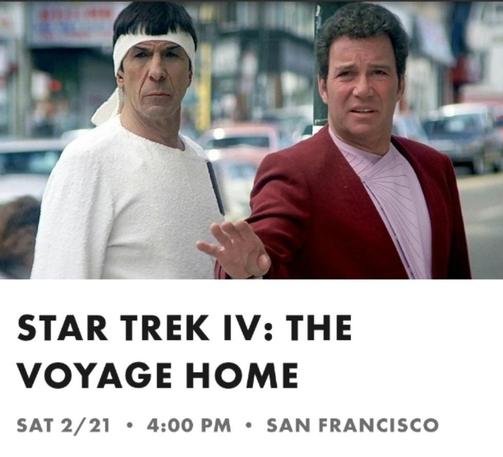
Just went to see this EPIC movie from my childhood.. Odin bless #GeneRoddenberry the #GreatBirdOfTheGalaxy and kudos to Mr #LeonardNimoy for a beautifully directed and co-written piece of art.
#LiveLongAndProsper mother fuckers

#StarTrek #TheVoyageHome #SaveTheWhales #AlamoDraftHouse

They are not here to entertain us. They deserve freedom. 🐋🌊  #emptythetanks #animalrights #savethewhales #whales #orca
‘It’s heartbreaking’: how 30 captive beluga whales have become pawns in row over animal cruelty https://www.theguardian.com/world/2025/nov/26/canada-captive-beluga-whales #Canada #cdnpoli #MarineLand #BelugaWhales #SaveTheWhales #AnimalCruelty
‘It’s heartbreaking’: how 30 captive beluga whales have become pawns in row over animal cruelty

As the government, Marineland of Canada and activists remain at loggerheads over whales’ fate, health and freedom of beloved animals hangs in balance

The Guardian
“This is about ensuring our national sovereignty. It's about securing our energy independence. Not bowing to the whims of wittering Wellington wokesters. "Why else did we save the whales?" #satire #nzpol #savethewhales #energy

“What this nation needs as we build bundles of big beautiful roads is not another round of hand-wringing, airy-fairy woke utopianism. We need a sensible, boots-on-the-deck approach to securing our energy future. And yes – harvesting the noble whale for its bountiful oil is the common-sense solution.

“Look, I’d love to proclaim that some miraculous source of clean, limitless energy is about to tumble upon us like manna from the heavens or blow in from across the ditch. But reality, my friends, is not written by the communications department of the green politburo. It is written in the stars, by me, Shane Jones. Minister of Resources and Oceans.

"We must pursue the whales, harvest their bountiful blubber, render it in stout Kiwi vats, and extract the energy that will warm our homes, light our lamps again, and ignite our furnaces for generations to come. This is about ensuring our national sovereignty. It's about securing our energy independence. Not bowing to the whims of wittering Wellington wokesters.

"Why else did we save the whales?"

#savethewhales #satire #nzpol

Marineland in Niagara Falls threatened to euthanize 30 beluga whales unless Canada provides funding or reverses its block on exporting them to a Chinese theme park, after the fisheries minister halted the transfer to prevent further captivity. #SavetheWhales #WhaleSky🐳

Animal rights advocates urge O...
Animal rights advocates urge Ontario to seize belugas, fearing Marineland may euthanize them | CBC News

Animal rights advocates are condemning Marineland’s threat to euthanize the 30 remaining belugas at the defunct amusement park in Niagara Falls, Ont., if the federal government doesn't provide funding or authorize the whales' export by Tuesday.

CBC

We were warned! From September 2024. And now the #whales are falling silent!!! And #krill are dependent on whales as much as whales are dependent on krill!

#KrillHarvesting threatens #whale recovery

Soaring human demand for krill in the Southern Ocean poses a challenge to the recovery of whale species once hunted nearly to extinction. Stanford researchers identify the growing food conflict and offer solutions.

September 10th, 2024

"Human harvesting of krill in the Southern Ocean could threaten the recovery of whale species that were nearly wiped out by industrial whaling in the 20th century, according to a Sept. 10 study in Nature Communications.

"The tiny, shrimp-like crustaceans known as krill are the essential food source for baleen whales such as blues and #humpbacks. To feed, these giant marine mammals take in great gulps of ocean water, filtering krill through bristly mouth structures. Booming demand for krill as #FishMeal and #omega3 fatty acid nutritional #supplements, however, could leave whales without enough victuals to sustain even their diminished numbers.

" 'Our calculations suggest an alarming possibility that we might harvest krill to the point where we do real damage to recovering whale populations,' said lead study author Matthew Savoca, a research scientist in the lab of Jeremy Goldbogen, associate professor of oceans in the Stanford Doerr School of Sustainability.

"The results highlight a need for scientists, regulators, and industry to carefully assess the impacts of krill harvesting in the Southern Ocean at current levels before expanding. 'With this study, we want to draw attention to how there likely isn’t enough krill to support fully recovered whale populations, and now on top of that, we’re harvesting krill and plan to harvest more krill in the near future,' said Goldbogen, the study’s senior author
.
Counting on krill

"The new research grew out of a prior Stanford study documenting how baleen whales gobble up significantly more krill than scientists had previously estimated. A paradoxical finding of that study was that, as whale populations plummeted by roughly 90% in the Southern Ocean during whaling’s grim heyday, so, too, did krill populations.

"The researchers worked out that #BaleenWhales effectively fertilize the ocean through their prodigious droppings, providing nutrients for the #phytoplankton that krill eat. The upshot: The krill population must have been much larger, perhaps five times greater, than it is currently to have sustained the pre-whaling whale populations in the early 20th century.

" 'Krill is the foundation of the entire Southern Ocean ecosystem. They’re really the only thing that large whales eat down there,' Savoca said.

"In the nearly 40 years since a global whaling moratorium went into place in 1986, some Southern Ocean species – particularly humpbacks – have made an impressive comeback. Yet this recovery has taken place against increasing competition with humans for the whales’ critical food source; over the past 30 years, the krill catch has quadrupled to around 400,000 tons annually and is set to expand further.

"Savoca and colleagues calculated how much krill is left in the Southern Ocean for baleen whales, seabirds, and other predators to eat after industrial krill harvesting at current rates, compared to the estimated amount of krill available before industrial whaling began. 'The basic math makes it pretty clear that the current krill biomass cannot support both an expanding krill fishery and the recovery of whale populations to pre-whaling size,' said Savoca."

Read more:

#SaveTheWhales #KrillSupplements #Overfishing #FoodChain #FoodIsLife #WaterIsLife #Whales #Extinction #BlueWhales