STUDENTS PROTEST OSAP CHANGES

Ontario students across the province are protesting about the recent changes made to the Ontario Student Assistance Program (OSAP). The Ontario government has announced that, starting this fall, OSAP grants will decrease from a maximum of 85 per cent to 25 per cent.  

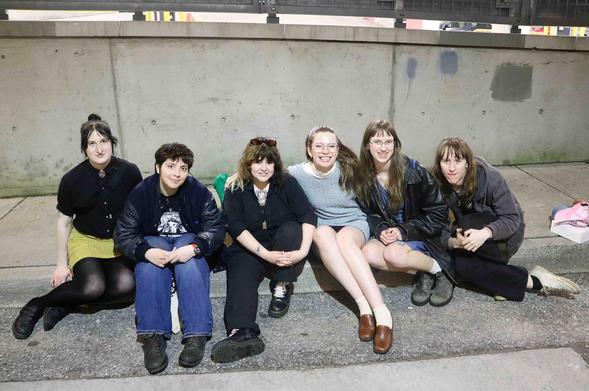
On Mar. 4, 2026, hundreds of students and community members from across Ontario gathered at Queen’s Park to protest the cuts. Similar protests broke out in different cities, including Waterloo and Ottawa. The OSAP changes are not only affecting post-secondary students but also secondary schools.  

At the University of Waterloo, the reaction has been described as historic. Remington Aginskaya-Zhi, Vice President of the Waterloo Undergraduate Student Association (WUSA), noted that the campus is seeing a level of mobilization not seen in decades.  

“This is the most engaged we’ve seen students probably ever,” Aginskaya-Zhi said. “The rally that we held was one of the biggest gatherings or protests on campus in probably our entire history.”  

The movement is gaining even more traction in the Greater Toronto Area, where students are framing the cuts as a systemic attack on public institutions. Trudi Kiropatwa, a third-year student at Toronto Metropolitan University and a member of the Student Mobilization Committee (SMC), says the impact in Toronto is extreme.  

“We’re essentially on a sinking ship,” Kiropatwa said. “This government and their corporate cronies see us as customers and our education as an industry that is ready to be exploited.”  

The urgency stems from a lack of clarity on how these cuts will affect individual bank accounts. According to WUSA, the provincial OSAP estimator for the upcoming year has yet to be released, leaving students in a state of financial limbo.  

Kiropatwa noted that for many, the breaking point is graduating into a job market with record-high youth unemployment while saddled with massive debt.  

“Me, personally, I’m going to be graduating with tens of thousands of dollars of student debt already without these changes,” she said. “These changes are making the issue ten times worse.”  

“Students definitely are very worried,” Aginskaya-Zhi said. “We are hearing stories from students telling us they’re uncertain whether they can come back to school next year, or whether they can pursue graduate studies.”  

This uncertainty is already forcing students to make difficult lifestyle changes. Aginskaya reported that some students are opting for longer commutes rather than living in Waterloo to save on costs, while others are seeing their younger siblings reconsider university altogether.  

Beyond the provincial level, the University of Waterloo is also grappling with internal budget crisis pressures. Aginskaya-Zhi highlighted that financial support units on campus are currently understaffed, which could complicate the processing of student aid.  

“The university right now is understaffed and has lots of challenges to hire new staff…but funding should not come at the cost of giving more debt to students,” she said.  

In response, organizations like WUSA and the SMC carried out a massive convergence at Queen’s Park on Mar. 24, 2026. Despite the government maintaining its argument that the 25 per cent grant limit is sustainable, the mobilizations saw hundreds of activists reiterating demands for a full reversal.  

“We’re not here to demand a return to normal…which is a Band-Aid solution,” Kiropatwa said. “We’re here fighting for free, democratic, and accessible education.”  

“Right now, I think students are angry, and what we are focusing on is giving students an avenue to let out their anger,” Aginskaya-Zhi said.   

She emphasized that the momentum will not fade as the semester ends.   

“Just because winter term is ending and it’s summer now doesn’t mean that students have forgotten this betrayal from the government.”  

As Parliament returns to session, WUSA intends to keep the pressure on local MPPs to ensure the student voice is heard.  

“We hear your anger, we hear your frustration,”  Aginskaya-Zhi concluded as a message to the student body. “We are going to work to make sure that you can share that with us.”  

#Government #greaterTorontoArea #GTA #impact #OSAP #percent #Protest #queensPark #RemingtonAginskayaZhi #sangjun #SangjunHan #smc #Toronto #TrudiKiropatwa #UniversityOfToronto #universityOfWaterloo #UofT #UW #wusa

REGION INVESTS $15.1 MILLION TOWARD WATER CAPACITY ISSUE

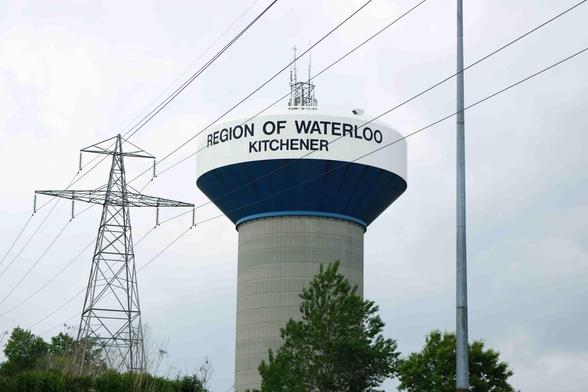
The Region of Waterloo is hurrying to install a $15.1 million temporary plug into a water capacity crisis that effectively hung a “Closed for Business” sign over one of Canada’s fastest-growing tech hubs.  

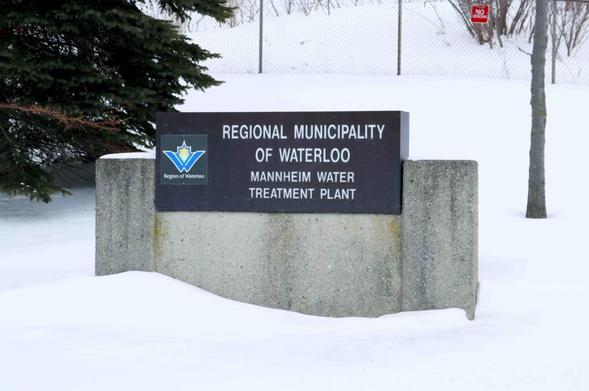
The Region of Waterloo council has approved using more than $15 million in capital funding to pay for a project that could offer a short-term solution to the ongoing water capacity issues. The project involves H2O Innovation Inc., a water and wastewater treatment company based in Oakville, installing three temporary ultrafiltration containers, each with an estimated flow rate of 50 litres per second, at the Mannheim Water Treatment Plant.   

The Region of Waterloo relies heavily on groundwater for its municipal drinking water supply and regularly monitors for contaminants, including per- and polyfluoroalkyl (PFAS) such as perfluorooctanesulfonic acid (PFOS) and perfluorooctanoic acid (PFOA). These “forever chemicals” have been detected in water systems across Canada and are subject to Health Canada drinking water guidelines.

As regulatory standards evolve and monitoring continues, the Region evaluates treatment options to ensure drinking water remains safe and meets provincial and federal requirements. Granular activated carbon (GAC) filtration is a recognized method for reducing PFAS concentrations and is one of the technologies commonly considered by water utilities when addressing these compounds.  

The urgency of the situation was discussed during a recent community meeting. Kevin Thomason, vice-chair of the Grand River Environmental Network, warned that the system is running on a razor-thin margin.  

“If there’s a water main break or something that may take out five per cent or ten per cent of our supply…that suddenly means taps are going dry and  people aren’t getting service or a hospital isn’t getting water or a fire hydrant isn’t getting water,” Thomason said.  

“So, we certainly don’t want to be running so close to our capacity,” he said. 

The Waterloo Region staff members explain that any delays in approval could result in significant subsequent delays to project completion, which looks to regain lost capacity at that plant. They are seeking approvals before a detailed design gets completed.  

The project costs will be included in the 2026 capital budget and funded through the Water Capital Reserve Fund.  

The current-year costs of this project are significantly higher in the report presented to regional council at the Special Regional Council Meeting held on Friday, Feb. 6, 2026, compared to the projections detailed in a report from late January 2026. At that time, when the council was presented with a variety of potential options, the current-year impact on the capital budget was $2 million.  

Projections for the total project cost remained around $16 million. The $2 million price for engineering services and $2.5 million for electrical work are preliminary estimates.  

Beyond the immediate infrastructure bottleneck, a sedimentation capacity constraint at the Mannheim plant has choked the water supply by 300 litres per second, which revealed deeper concerns regarding the Waterloo Moraine.  

Regional Councillor Joe Nowak plans to introduce a blue belt motion to provide permanent provincial protection for the Moraine’s high volume recharge areas (HVRAs). These specific, porous sections of land are the primary sponges that refill the region’s aquifers and the motion aims to shield them from urban sprawl to prevent long-term water depletion.   

“We really need to look at this in conjunction with solving the capacity issue,” Nowak said. “Advocacy doesn’t have to be negative…we have this issue, we’re probably not going to be the only groundwater source community that has this issue.”  

As the region pivots to this emergency implementation, Kenneth Brothers officially joined the Region on Feb. 23, 2026, as the Interim Commissioner of Water Services and Wastewater Operations. An internationally recognized professional engineer and a Fellow of the International Water Association, Brothers is tasked with overseeing the immediate repairs and fast-tracking the infrastructure upgrades needed to restore development capacity.   

“Yes, we had a plan… but as with a lot of things, I think what we’re all seeing is there’s no holistic infrastructure plan that accompanies all of these things,” Brothers said.  

During a Grand River Watershed community meeting on Feb. 6, 2026 regarding the impacts of Bill 23, experts discussed whether the region could simply tap into deep bedrock aquifers, which are water-bearing rock layers found deeply buried below the surface, to solve the water capacity issue.  

Hydrogeologist Michael Friend and aquatic ecologist Jack Imhoff cautioned that this water is fundamentally different from the fresh, rain-fed “sponge” of the Waterloo Moraine.  

Because this deep water resides in the Salina Formation, a prehistoric underground rock layer composed of ancient sea salt and gypsum, it absorbed extreme levels of salt over millennia. While technically fixable through desalination, the process is prohibitively expensive and produces a massive amount of toxic brine waste that the Region has no safe way to dispose of without damaging the watershed the meeting sought to protect.   

“I look forward to joining the Region of Waterloo as we navigate through this pivotal moment,” Brothers said, emphasizing his commitment to “long-term water sustainability” for a population projected to reach one million by 2051.  

#closedForBusiness #grandRiverWatershed #kennethBrothers #michaelFriend #PFAS #PFOA #PFOS #RegionOfWaterloo #SangjunHan #temporary #urgency #waterCapitalResearveFund #waterlooRegion

UPDATES MADE TO URBAN DESIGN PLAN

On Feb. 9, 2026 during the public city council meeting, officials approved major updates to urban policy. These include mandatory inclusionary zoning for new developments within Major Transit Station Areas (MTSAs) along the ION light rail line.  

Beginning July 1, 2027, developers will be required to set aside a portion of their units for affordable housing, a mandate that impacts project profitability and may prompt a rush of application filings before the deadline to bypass the new requirement.   

Once the mandate begins, two per cent of units in qualifying developments within MTSAs will be required to be affordable. That requirement will gradually increase to five per cent by 2031—the current provincial maximum permitted under Ontario regulations. The decision marks the end of nearly a decade of deliberation over how to require affordable housing in high-growth areas.  

“Communicating certainty is actually a beneficial condition in all of this,” Julie Wright, ward 7 councillor for the City of Waterloo, said during the Feb. 9, 2026 public council meeting.   

Wright was referring to the city’s decision to set a firm implementation date for inclusionary zoning rather than tying it to fluctuating market triggers.  

By providing a fixed timeline, the city aims to provide a predictable environment for land budgeting and project planning, preventing the wait-and-see approach that often stalls affordable housing construction.  

With roughly a year and a half until implementation, Adam Lauder, the city’s manager of community planning, said staff do not anticipate a significant surge, noting that approximately 25,000 residential units are already in the planning pipeline.   

“I don’t expect that there’s going to be a large rush of developments…in order to get in front, or become exempt,” Lauder said. “I do think that the industry will use the next year and a half, as they acquire land, to factor inclusionary zoning into their pro forma.”  

The certainty of the 2027 start date was met with bittersweet reflections from some leaders.   

“The preferred time…for the development community on this is never…and for me the preferred time for this was 10 years ago when we first started talking about it,” Royce Bodaly, ward 2 councillor for the City of Waterloo, said during the Feb. 9, 2026 Waterloo public council meeting.   

While implementation had originally been targeted for March 2025, a consultant report warned that current economic conditions could slow the housing market. In response, the council adjusted the timeline and coordinated with the cities of Kitchener and Cambridge to ensure transit-oriented development sites remain viable for builders.  

Typically, inclusionary zoning units are set to market averages to provide moderate affordability, rather than being tied to rent-geared-to-income (RGI) programs, which cap rent at 30 per cent of gross income.   

“While you’re walking the hallways, you’re not really going to know which door is affordable,” Lauder said. “Inclusionary zoning is not intended to deliver deeply affordable units, but rather moderately affordable units.”  

To help the industry manage added costs, the city is offering density exemptions so that affordable units do not count toward maximum density limits. The move aligns with Waterloo’s strategy of growing inward and upward; data shows roughly 80 per cent of recent residential growth has occurred through infill development.   

“Inward growth is generally better for the tax base and the taxpayer,” Lauder said.  

Council also approved $260,000 for a dedicated by-law dispatch arrangement. Beginning July 1, 2026, after-hours noise and nuisance calls will be routed through Waterloo Regional Police Service dispatch. Referring to a $440,000 transfer from social service funding back into the police budget, Jen Vasic, Ward 5 Councillor for the City of Waterloo expressed her frustration.   

“The police budget is huge, and now we’re giving the police more money from an upstream organization… I can’t figure out some better way forward,” Vasic said during the Feb. 9, 2026  Waterloo public council meeting.  

The meeting concluded with a presentation on the Urban Design Manual refresh.   

“Beauty should be a part of life for everyone and not only the affluent… aesthetics is a social good,” Vasic said during the Feb. 9, 2026 Wasterloo public council meeting.   

Diane Freeman, ward 4 councillor for the City of Waterloo added that the creation of happiness actually does bring value when giving consideration to urban design. Ultimately, the policy updates are intended to ensure the city remains accessible.   

“Inclusionary zoning helps to ensure that there’s a place in the city of Waterloo for everyone,” Lauder said.  

#adamLauder #CityOfWaterloo #councillorJenVasic #dianeFreeman #douglasStewart #ionLightRailLine #JulieWright #kitchener #MajorTransitStationAreas #mtsas #policeBudget #ProForma #publicCityCouncilMeeting #rgi #SangjunHan #urbanDesignManual #WaterlooRegionalPoliceService

ENTERING THE NEXT CHAPTER : HAMLEY’S SECONDHAND BOOKSTORE OPENS IN CAMBRIDGE

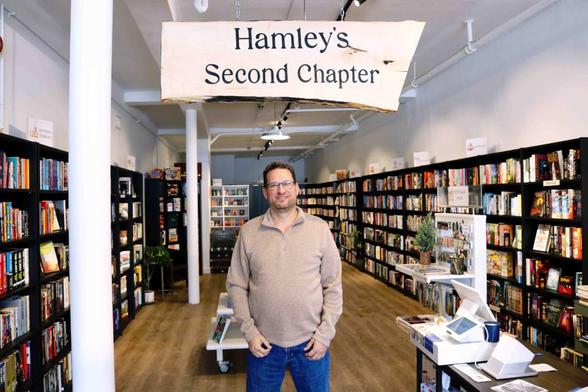
In Nov. 2025, Jamie Hamley and his wife Sheri opened Hamley’s Second Chapter at 132 Main St. in Cambridge.  

Jamie, a resident of Waterloo, spent 15 years of his life overseeing operations at Petro Canada gas stations within the city. But his love for literature started early. Growing up in Owen Sound, Jamie spent his after-school hours immersed in local used bookstores, hunting for western novels by Louis L’Amour.   

His passion for reading and books inspired his goal of opening a second-hand bookstore, especially when he discovered there were none in Galt.  

“My employment at Petro-Canada moved to 3 days a week, so I was looking for an add-on opportunity,” Jamie said. “I have always been a used bookstore customer and an avid reader, so the choice was easy for me.”  

The couple collected books for their inventory at a four-day used book sale in Guelph that had 80,000 books available; out of these, they purchased 4,000.  

They continued their efforts by purchasing more books through online platforms such as Facebook Marketplace and Kijiji, as well as from individual residents.  

“We have an open concept in the store,” Sheri said. “We don’t want to be overstocked and cramped. We like to offer open space for the customers to look around.”  

To further support the neighbourhood, the couple has dedicated a table at the front of the shop to showcase local authors.  

Aside from books, the store also offers second-hand puzzles, Funko Pops and DVDs. Jamie said they plan to sell games in the future, but since his stock has grown so quickly, he decided to stop buying merchandise for his store in January, to focus on organization.  

“It’s important to recycle products to a second or even tenth user,” Jamie said. “Everybody is a reader—some people just haven’t found the right book yet. Maybe they can find it here.”  

“We are just starting to see what the community wants,” Sheri said. “We have expanded our non-fiction section to try to meet our customers’ needs.”  

Although having space for their store was a big dream come true, Sheri explained that finding a rental space that suited their needs was a challenge.   

“I have always wanted a physical store,” said Jamie. “Customers want to have the book in their hands, and you never know what you will find when you search the shelves.”  

With a three-year lease in place, the couple hopes that the store will become their full-time focus. Jamie sees it as the perfect “second chapter” and a meaningful project for him and Sheri to share throughout their retirement. 

#Books #bookstore #Cambridge #dvds #facebookMarketplace #funkoPops #Galt #Guelph #hamelyS #jamieHamley #localBookstore #localBusiness #petroCanada #Reading #SangjunHan #secondhand #Thrift #Thrifting #vintage

WATER CAPACITY CONSTRAINTS FORCE TEMPORARY HALT ON NEW DEVELOPMENTS

As of January 2026, the Region of Waterloo reached a critical bottleneck. Severe water capacity constraints within the Mannheim Service Area, which encompasses Kitchener, Waterloo and parts of Cambridge, forced a temporary halt on all new development approvals. 

Although existing water supplies are safe, the water supply system lacks the necessary buffers for repairs, prompting the need for emergency plans regarding new infrastructure and enhanced water supplies. 

While the Region of Waterloo struggles with population growth and land development, Peter Huck, distinguished professor emeritus at the University of Waterloo, notes that the Mannheim district relies on a complex Integrated Urban System. 

“The Region of Waterloo is using two types of water,” Huck said. “One is groundwater from about 100 scattered wells, and the other is surface water from the Grand River treated at the Mannheim Treatment Plant.” 

The Mannheim Plant began it’s operations in 1994.  

This creates a technical bottleneck where the wells are at their full capacity and increasing river draw is limited by the need to protect downstream ecosystems. 

The Region initially identified the issue in November 2025 and announced the findings in December 2025, citing that rapid population growth and aging infrastructure led to demand exceeding available capacity.  

The issue has been further discussed and detailed in a Jan. 13, 2026, meeting of the Region of Waterloo’s Sustainability, Infrastructure, and Development committee, where staff confirmed the need for a revised water supply strategy and infrastructure investment. 

During the Jan.13 committee meeting, Sam Nabi, Director of Hold the Line WR, challenged the Region’s ‘surprise’ at the crisis, noting that the 2015 Master Plan had already identified the infrastructure and pumping stations necessary to bolster the Integrated Urban System.  

Nabi questioned why these long-planned interconnections failed to prevent the current bottleneck and challenged the lack of groundwater context in regional planning. He argued against Provincial oversight, calling instead for a collaborative solution led by the local municipalities directly affected by the freeze. 

Huck said that the current 60 per cent operating capacity may be due to equipment that requires more upgrading or replacing it to restore it to its full design potential. 

While Nabi focused on historical planning, Joseph Puopolo, co-CEO of Polocorp Inc., laid out a stark economic forecast for the Region. Puopolo warned that halting development approvals would trigger a “dry-up of municipal development charges, rendering capital budgets irrelevant and driving skilled trades and private investment out of the Region toward more stable municipalities. 

Additionally, he said that investments will be directed elsewhere, citing a further erosion of public trust and inevitable tax hikes if the construction industry remains stalled. 

To prevent what he claims is an economic exodus, Puopolo presented a detailed action plan to the committee, urging Council to decouple planning approvals from water allocation immediately.  

The proposed strategy includes a 30-day sprint to define a capital plan for the immediate refurbishment of the Mannheim system, bridge the gap by initiating a link between the Middleton and Mannheim water systems, and audit high-capacity users by meeting with the Region’s 50 largest water consumers to incentivize rapid reduction in usage before the August peak. 

However, the solution for the water capacity issue isn’t as simple as building more pipes and infrastructure. Alex Latta, associate professor in the Department of Global Studies and the Department of Geography and Environmental Studies at Wilfrid Laurier University, said that while ceasing development entirely is not the answer, the Region must re-evaluate its population targets.  

“We need to re-evaluate the scope of population growth that we have said we can accommodate in our region’s Official Plan,” they said. Huck also highlighted the “social” side of the capacity equation: conservation. While the Region has implemented odd-even lawn watering and low-flush toilet incentives, Huck said that further measures might begin impacting residents’ daily lives, raising the question of whether residents would support the further restrictions necessary to measurably increase the buffer between supply and demand. 

While a Great Lakes pipeline is often discussed as a solution for capacity issues, both Latta and Huck remain cautious. Latta said it would be a “last resort” due to extreme costs, urging the Region instead to adopt aggressive conservation measures and stricter regulation of commercial water permits. 

“One of Canadians’ deeply held myths is that we have boundless supplies of fresh water,” said Latta. “Starting to value and respect water is the first step to living in tune with the hydrological realities of our region.” 

Sam Nabi is WLUSP’s Web Manager

This article was cross published with The Cord.

#alexLatta #canadians #grandRiver #greatLakes #integratedUrbanSystem #mannheimTreatmentPlant #RegionOfWaterloo #RegionOfWaterlooCouncil #SangjunHan #serviceArea #universityOfWaterloo #water #waterConstraints #waterlooRegion #Wilmot #wilmotLandAssembly

THE LEGACY OF SHANNON LEE

The melodies of HouseCat returned to Maxwell’s Concerts and Events on Jan. 23, 2026, to recognise the professional legacy of Shannon Lee, a local musician and Laurier alum.  

Lee was a musician, songwriter, sound technician, and alumnus of the Wilfrid Laurier University Integrated Musical Arts program. According to the Laurier website, she was a local talent who brought creativity, insight, and warmth to every space and community. She passed away at the age of 24 on Nov. 7, 2025.  

The event attendees included Lee’s close family, acquaintances, and HouseCat fans.  

Shannon was known for her deep artistry, curiosity and collaborative spirit that elevated group projects and conversations. Outside of music, she also volunteered with Laurier’s Food Distro initiative, supporting students experiencing food insecurity. Housecat bandmate Emily Gilbart noted that Lee’s volunteerism reflects Lee’s broader commitment to activism and standing up for marginalised groups.  

Lee was also the driving force behind Housecat. Gilbart, who met Lee at Laurier, described her as the founder of the group. Beyond her vocal talent, Lee acted as the band’s organiser, organizing rehearsals and meticulously managing their presence on the scene.  

“Shannon’s personality and stage presence were just so fun,” Gilbart said. “I think it was the most fun I’ve probably ever had on stage.”  

Outside of her performance, Lee was known for her meticulous and quirky pre-show rituals. Gilbart recalled how Lee would write the band’s setlists using markers and customised stickers, ranging from Peppa Pig to Teenage Mutant Ninja Turtles for each member.  

“She had amazing ways of writing… super devastating, tragic lyrics, connected with an intense compassion,” Gilbart said.  

For Kieran Lee, Lee’s youngest brother, and second-year Photography student at Toronto Metropolitan University, her musical passion was a lifelong soundtrack. He said that Lee’s journey was a family legacy, sparked by their father’s own history in a band, which initiated her lifelong curiosity. He also recalled her singing out loud at home, from the shower to her bedroom.  

“It’s one of those things that, when I think about it now, it makes my house feel a little empty,” he said. “I feel like I won’t ever get to witness it again.”  

Kieran said that people grieve over the tragic loss of someone for their entire lives—grief is not something that disappears.   

He said that seeing the scale of the Waterloo community’s support provided a sense of comfort for his family.  

Kieran said his experience at the concert was surprising because there were so many people who knew his name, because Lee talked about her younger brother a lot.  

“It felt really nice and a little bit more comforting, in that sense, to hear all these things about my sister and how much she loved her siblings and how much she loved her brothers,” he said.  

“I found it really comforting, and it’s really nice to see how much music really brings people together and how much it really creates connection through people,” Kieran said.  

For him, the song “Porch Orange” was a standout moment where he could almost hear Lee singing along on stage.  

Cameron O’Connell, an acquaintance of Lee and a HouseCat fan, noted that the band’s song “Play Dead” had a significant impact on him.  

“I think that it means a lot to her family, and I wish she could know how much she meant to us,” O’Connell said. “This concert is deeply personal and there is so much love here. Everyone is showing the utmost care.”  

Gilbart reflected on the void Lee leaves behind, stating she does not envisage the band continuing without its driving force.  

“I don’t think that we’ll be a band in the future without her,” Gilbart said.  

“I think another hard aspect was feeling like this could be the last time that I play some of these songs that I love so much.”  

The tribute to Lee featured performances from all her favourite people. These ranged from her bandmates and best friends to her favourite bands and even a suprise performance by Kieran—his first time on stage. 

At the end of the night, volunteers gathered on stage to have their heads shaved by a group of eager amateur barbers. This was a beautiful call back to the release party of The Porch Orange EP in 2024, where the finale saw Gilbert grabbing the shears and shaving Shannon’s head to the soundtrack of HouseCat’s tune, “Shave My Head.” 

Lee’s impact is omnipresent in each of the lives she touched. Ending the night on a chorus of ‘Shave for Shannon’ felt all too fitting, despite the somber atmosphere, the perseverance of music and community are only small fragments of the impact that she had.  

The desire to preserve Lee’s essence is shared by her family. Kieran hopes that her friends and acquaintances will remember her.  

“I hope that everyone who gets introduced to her music can really tell who my sister is, even if they don’t personally know her,” Kieran said.  

This article was cross published with The Cord.

#cameronOConnell #celebrationOfLife #EmilyGilbart #Grief #KieranLee #laurierAlumnus #LocalArt #LocalArtist #localMusic #LocalMusician #loss #peppaPig #porchOrange #SangjunHan #shannonLee

A WALK IN BECHTEL PARK WITH HIYAM MAHRAT

Born and raised in the United Arab Emirates, Syrian Canadian artist Hiyam Mahrat was used to a desert environment, but when she and her family moved to Canada in 2018, she quickly developed an appreciation for green spaces. 

“I did not think that I would fall in love with nature the way that I did when I came here,” Mahrat said. “There’s just something about being in trees, waking up to the sounds of birds. That’s why I’m now camping every summer.” 

We met in Bechtel Park to walk the trails, embarking on a hike by the water and ending on a bench next to the playground as we talked about Mahrat’s journey to the Waterloo Region and her artistic career. 

She arrived in Canada with a degree in medical laboratory science but found the bureaucracy of getting her credentials recognized laborious.  

After her sister suggested a performing arts program at Sheridan College, Mahrat decided to pursue her interest in theatre and discovered a love of acting. 

While she loved the program and performing, what came after was a challenge for Mahrat to navigate. 

“I would apply for stuff, but I wouldn’t hear back, especially in Toronto,” she said. “I [found] some challenges in auditioning, finding roles that fit me.” 

Mahrat and her family were living in Ajax at that time, but her sister had connections to the theatre community in Kitchener-Waterloo and facilitated introductions. Mahrat began volunteering with MT Space, and a conversation with the company’s founder Majdi Bou-Matar in 2021 shaped the direction of Mahrat’s artistic practice. 

“He told me about his challenges of going into the theatre community,” Mahrat said. “He did not get the chance to do the work he wanted until he recognized he needed to create his own opportunities…that really clicked in my mind.” 

From there, Mahrat focused on building her own project and seeking funding and collaborators to support the work. She went from volunteering with MT Space to working as an administrative assistant before finally landing in her current role as General Manager. In 2023, she convinced her entire family to move to Kitchener-Waterloo. That same year, she won the Waterloo Region Emerging Artist Award

The trail took us over a bridge to nowhere and we paused to appreciate the surroundings and the creek while Mahrat told me about Homecoming, a piece she created with Ameya Kale exploring the immigrant experience and housing issues in the Region. 

“What does it mean to create a home while you are still facing challenges in finding a house or a place to call home?” Mahrat said. “We tied the housing crisis to colonization…how that affected high prices and inflation, causing suffering.” 

Mahrat began exploring these ideas in 2022, and kept developing the work, including exploring the perspective of landlords as well as tenants. Under the guidance of director and mentor Nada Humsi, she and Kale unlocked a more physical interpretation of the text. In 2025, the piece was presented at MT Space’s Works-In-Progress Mini Festival, and Mahrat is looking at further development and touring. 

“The journey of creating something over multiple years [is] powerful, and it’s something you cannot just leave and move away from,” Mahrat said. “It stays with you…and it’s part of you.” 

The year 2025 also saw Mahrat tackle directing a full-length production for the first time. She pitched the play Scorched by Lebanese-Canadian playwright Wajdi Mouawad and it was accepted into the KWLT’s season with Mahrat at the helm. The play was one she first encountered in her program at Sheridan. 

“The script has always been in my mind,” Mahrat said. “I had a burning passion for it, and I had to do it.” 

Passion is a guiding principle for Mahrat who believes in the connection between community and artist, and that each has a responsibility for the other. And for Mahrat, her identity as a newcomer remains at the forefront of her work. 

“All of my art now…talks about the war, colonization, my immigration journey, my journey as a woman of colour who wears the hijab and acts,” Mahrat said. “But I do wish to reach some point where I can talk about my internal struggles…I feel like we don’t have the luxury to do that.” 

The wind picked up as we finished our walk and Mahrat told me about some of her favourite camping locations. As well as planning time in nature, Mahrat also wants to explore bringing dance into her work. 

“I’m interested in the intersectionality of dance,” she said. “How dance can be a resistance tool, and a way of preserving culture.” 

Whatever the artistic medium, Hiyam Mahrat will continue to challenge, reflect, resist and above all persist as she creates and builds art and community in the Waterloo Region. 

#AWalkInThePark #ajax #AmyNeufeld #BechtelPark #Column #HiyamMahrat #majdiBouMatar #SangjunHan #scorched #sheridanCollege #syrianCanadian #unitedArabEmirates

HEATING AND COOLING CENTRES OFFER REFUGE ACROSS THE REGION

Waterloo Region residents can access a network of warming, cooling, and clean air spaces designed to provide temporary relief from extreme weather and poor air quality.  

According to the Region of Waterloo, these designated public buildings offer space for anyone who needs refuge from heat, cold or unsafe air during regular business hours. These spaces are intended for temporary relief and are not meant for extended stays.  

The region made these spaces more accessible during late 2022 and early 2023 by expanding hours beyond official weather warnings. This makes spaces available year-round during extreme cold or heat and opens specific overnight warming shelters.  

“Warming, Cooling, and Clean Air Spaces are buildings in the region that provide space for the public to get temporary relief from heat, cold, or poor air quality during regular business hours,” the Region of Waterloo environmental health webpage state.  

So far, there are 57 spaces coordinated by Region of Waterloo Public Health in Waterloo, Kitchener, Cambridge, North Dumfries, Wellesley, Wilmot and Woolwich. They are operated by various partners, including the Region itself, area municipalities, community agencies, recreation centres, libraries, and other public buildings.  

In addition to these locations, two Region of Waterloo buildings, 150 Main St. in Cambridge and 150 Frederick St. in Kitchener, are open on weekends and holidays for community members.  

The Region of Waterloo Housing Services is also working closely with community partners, service providers, and those with lived experience to prepare for the cold weather this year.  

“Winter plans include expansions of the emergency shelter system, creating new overflow spaces in shelters and motels across the community, the distribution of winter warming packages, and the opening of two overnight warming spaces,” Scott Cressman, communications specialist at Waterloo Region, said.   

He stated the Region developed warming packages in partnership with co-creators of the Plan to End Chronic Homelessness, including items to support people experiencing homelessness. These packages are distributed by outreach workers who can connect individuals to supports.  

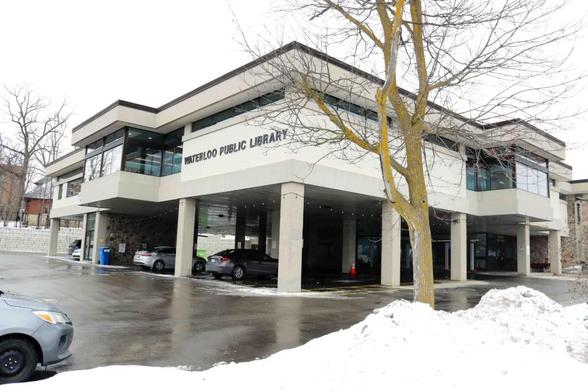
Public libraries also serve as designated spaces. Waterloo Public Library currently has three libraries serving as cooling, warming, and clean air spaces. These branches include the Eastside branch, the John M. Harper branch and the Main branch. Due to size constraints, the McCormick branch is not considered a warming, cooling, or clean air space.  

“As public spaces, community members are welcome and encouraged to visit our library locations any time. In extreme weather conditions, we offer our spaces to anyone in the community, along with all our free library amenities, services, programs, and online resources,” Anjana Kipfer, Marketing and Communications manager at the Waterloo Public Library, said.  

Kipfer explained that she does not know when the libraries were designated as cooling, warming, or clean air spaces, but she suspects it occurred quite a long time ago, and the branches will continue to have this designation.  

“We have been used for temporary relief from heat, cold, or poor air quality throughout the seasons, as a cooling centre in the summer during heat waves, as a clean air space during poor air quality conditions, and as a warming centre during extreme cold warnings,” Kipfer said.  

She also said that besides the Heating, Ventilation, and Air Conditioning (HVAC) system the library has for heating, cooling, and air quality, they do not have other specialized equipment.  

Residents can access these spaces even without official weather alerts. Extreme Cold Warnings are issued when temperatures or wind chill reach -30 degrees for at least two hours, while Heat Warnings are issued during high temperatures or when humidex values meet national criteria.   

Many of the designated spaces operate year-round during business hours to provide relief whenever needed, ensuring that residents of all ages, including those experiencing homelessness, have safe and accessible options during extreme weather or poor air quality conditions. 

#anjanaKipfer #Cambridge #cooling #eastsideBranch #extremeColdWarnings #heating #johnMHarper #kitchener #NorthDumfries #publicBuildings #SangjunHan #spaces #waterloo #WaterlooPublicLibrary #Wellesley #Wilmot #windChill #Woolwich

INSTRUMENT LIBRARIES HELP SPREAD MUSIC

As the cost of music education continues to rise, instrument lending programs across Waterloo Region are helping remove financial and logistical barriers for families, students, and schools. 

Local nonprofit organizations operate instrument lending programs aimed at improving access to music education, particularly for children and youth. One program is Bandology, a program that enriches the music experience of kids and teens through performance opportunities. The Kitchener Public Library (KPL) also runs their music library program, where library members can sign out an instrument using their library card. 

Juliana Rutledge, the Innovation Manager and Head of Operations at Bandology, said instrument libraries play a crucial role in helping young people who may not otherwise be able to participate in music programs. 

“Music libraries are really important because they level the playing field for a lot of kids and the whole community…in order to be able to access music and to be able to experience music education,” Rutledge said. 

They also allow community members to experience new interests at low cost.  

“Borrowing an instrument from the library offers people a chance to try a new creative interest without an expensive investment,” Kerri Hutchinson, Manager of Marketing and Communications at the KPL, said. 

For Rutledge, the goal is simple: ensuring that cost or access never prevents someone from experiencing music. 

“If you’re looking for a little more music in your life, reach out. There’s absolutely something that can be done,” she said. 

Research has shown that music education is associated with enhanced academic and cognitive skills, improved social and emotional development, and positive effects on youth well-being. However, access to music programs has become increasingly difficult, as arts funding is often among the first areas cut during budget constraints. 

“The arts generally are often the first to be cut when there are expense issues,” Rutledge said. “If you are looking to shrink a budget and find some light arms to cut, music is an easy one to say no to.” 

Bandology’s instrument lending library was developed in 2021 and 2022 to improve access to instruments and music programs. The program officially launched after the organization received capital grants from the Ontario Trillium Foundation in 2023 and 2024, allowing the nonprofit to purchase a wide range of instruments. 

Today, the library includes 77 instruments across 23 different categories, including woodwinds, brass, and large percussion instruments such as tubas, vibraphones, and timpani. The collection has also been supported by donations from community members. 

“These instruments, they’re doing no good to us sitting on our shelves,” Rutledge said. “We want them to be loaned out. We want students in the community who want to make more music and are looking for a way to do that.” 

Bandology’s lending program serves multiple regions, including Kitchener-Waterloo, Halton and Guelph. Rutledge said the program fills gaps for families who cannot afford instruments, as well as for schools with limited or aging collections. 

“We had one school in Milton last year that was brand new, like still a dirt patch on Google Maps, and they borrowed about a dozen instruments to supplement what they didn’t have,” Rutledge said.  

The organization works closely with local educators, who play a key role in connecting students with the program. Rutledge said more than half of applicants learned about the lending library through their music teachers. 

“We have a network of teachers that we stay in touch with, and they definitely feel the impact of knowing that there is something to fall back on if their classroom doesn’t have whatever the item might be,” she said. 

In addition to the lending library, Bandology runs annual band camps for students in grades one through twelve and offers music workshops in partnership with schools and community organizations. While the nonprofit primarily focuses on children and youth, Rutledge said it is also exploring intergenerational programming that brings different age groups together through music. 

The Kitchener Public Library’s musical instrument collection shares a similar focus on accessibility through instrument lending. According to the Kitchener Public Library, instruments can be borrowed for free with a valid library card. 

“The library has a musical instrument collection with 19 different instruments to choose from,” Hutchinson said. The most popular items include acoustic guitars, digital keyboards, xylophones, and bongo drums. Other available instruments include cajons, djembes, dulcimers, and doumbeks. Instruments can be borrowed for three weeks at a time, with the option to extend if there are no holds. 

The collection is available at the library’s Central branch in downtown Kitchener and was created with support from Sun Life Financial. The library now maintains the collection through its operating budget and donor contributions. 

Rutledge said the growth of instrument lending programs reflects a broader recognition of music’s value within communities. 

“There’s more push for instrument loans through libraries and non-profits like Bandology,” she said. “More music is good for all music organizations.” 

For more information, visit the KPL website or bandology.ca. 

#arts #Bandology #Education #goal #instrument #julianaRutledge #kerriHutchinson #KPL #library #music #nonprofit #ontarioTrilliumFoundation #SangjunHan

WR RELEASES BUDGET FOR 2026

In November, the Region of Waterloo released its 2026 preliminary budget plan, which includes major allocations for local initiatives such as the Ending Veteran Homelessness Initiative and a tree-planting project by the Waterloo Region District School Board (WRDSB).  

The budget lists federal grants among its revenue sources—a sign that recent funding from Ottawa may help support key projects in the region.  

The 2026 budget draft proposes a 4.94 per cent increase in the regional tax levy, which would add around $96 per year to the average homeowner’s bill.  

Meanwhile, the City of Kitchener’s draft budget includes a 2.2 per cent property tax increase, plus utility rate hikes, bringing the total estimated impact for the average household to $117. These increases reflect rising operational costs across housing and homelessness services, transit, infrastructure maintenance and other essential programs.  

In 2025, the region spent $165.2 million on social housing and homelessness initiatives. Across 2024, total spending on affordable housing and homelessness programs reached $245 million, with roughly 23 per cent specifically dedicated to shelters and supportive housing. Without federal and provincial transfers, the Region of Waterloo warns that maintaining current service levels could require even higher taxes or cuts to critical programs.  

“Federal and municipal programs play a critical role in supporting housing and food security locally,” Ke Cao, assistant professor of Strategic Management at Wilfrid Laurier University, said. 

Cao also believes that only the governments can address the crisis we are facing.  

“I teach in business school, and I told my students that the role of government is very important because it handles the business of the whole society,” he said.  

The federal funding announced this year helps relieve some of this financial pressure. The contributions support the Ending Veteran Homelessness Initiative, addressing the gap in local housing services by providing support for veterans, along with other homelessness-response programs.   

This funding helps sustain shelters, outreach teams, and supportive housing while reducing strain on municipal budgets. Additional funds support long-term initiatives such as environmental and infrastructure projects, including the WRDSB’s tree-planting program, which contributes to urban canopy growth and climate resilience.  

According to the preliminary budget, the region plans to increase their spending in 2026 by $11.7 million for housing services and $2.7 million for homelessness-related programs. These increases reflect rising costs for housing and homelessness services, transit, infrastructure and other essential programs. Municipal leaders also welcomed federal contributions, noting that without them, residents would face significantly higher tax burdens and essential services could be reduced.  

“We’re happy to see the $6 billion over 10 years through the Direct Delivery Stream to support regionally significant projects,” Dorothy McCabe, mayor of Waterloo, said.  

In a 2024 public statement, McCabe warned that Waterloo is under structural financial pressure and stressed the need for stable, predictable funding instead of one-time grants to support long-term municipal priorities.   

Advocates, including the Federation of Canadian Municipalities, repeatedly called on Ottawa to expand multi-year funding streams to help municipalities meet growing demands without overburdening residents.  

Federal support combined with municipal budgeting decisions will determine whether services keep pace with community needs or whether tax increases and service pressures continue to rise.   

Although the latest funding provides relief to the Waterloo region community, regional leaders explained that ongoing collaboration between federal, provincial and municipal governments will be essential to sustain programs, stabilize communities and advance long-term priorities such as housing affordability and environmental resilience.  

The Waterloo Region’s annual budget process began on Oct. 22, and regional council plans to review the final 2026 budget on Dec. 16. For more information regarding the preliminary 2026 budgets, visit the Region of Waterloo’s Budget and Financial Statements page. 

#2026 #Budget2026 #canadianMunicipalities #CityOfKitchener #directDeliveryStream #DorothyMcCabe #endingVeteranHomelessness #EndingVeteranHomelessnessInitiative #FederationOfCanadianMunicipalities #KeCao #localPolitics #municipality #preliminaryBudget #RegionOfWaterloo #SangjunHan #strategicManagement #waterloo #WaterlooRegionDistrictSchoolBoard #wilfridLaurierUniversity #WRDSB