Calls to sober up retirement celebrations
"Among 15.9mil #Thais aged 45–59, 6.7mil (41.9%) were reported to consume #alcohol, w 2.8mil identified as regular #drinkers. "Tis age gp is particularly at risk of LT #health probs due to decades of alcohol use," he warned. Teera also referred to #research in Te #Lancet #PublicHealth tt said no level of alcohol consumption is safe, as alcohol is both #psychotropic & #addictive.. #IARC classifies alcohol as a Group 1 #carcinogen"⚠️
https://www.bangkokpost.com/thailand/general/3096409/calls-to-sober-up-retirement-celebrations

@fiend_unpleasant @ai6yr Don’t forget the #deer and their midnight attacks on vehicles. Organized in groups of two or three, they watch from the side of the road, waiting for exactly the right moment. There are reports that deer insurgents in some areas are emboldened by #drugs for these suicide attacks, in particular, #psychotropic #mushrooms.

“Reindeer go to great lengths to seek out the hallucinogenic fly agaric mushroom”

http://www.drugdiscoverytoday.com/view/14778/why-reindeer-love-magic-mushrooms/

Why Reindeer Love Magic Mushrooms - Drug Discovery Today

Santa needs to ensure Rudolph is kept on the straight and narrow this Christmas if all the presents are to be delivered on time.

"...#Akathisia is a state of distressing restlessness that can be brought on by #antipsychotic and #psychotropic #medication. It feels like being trapped in your own body, ceaseless movement driven by a tormenting need.

What exacerbates this already agonizing condition is the lack of information patients receive from their health care providers. They are prescribed antipsychotic and psychotropic medication without being adequately informed. This needs to change."

https://www.change.org/p/mandate-psychiatrists-and-doctors-to-inform-patients-of-akathisia-risk-from-antipsychotics

Sign the Petition

Mandate Psychiatrists and Doctors to Inform Patients of Akathisia Risk from Antipsychotics

Change.org
Why Do Kids With Type 1 Diabetes Take More Psychotropic Medication?

A new analysis found an increasing trend in psychotropic medication dispensation for Swedish children and adolescents with type 1 diabetes. The results from from 2006 to 2019 showed consistent higher use than kids without type 1 diabetes. 

Science 2.0
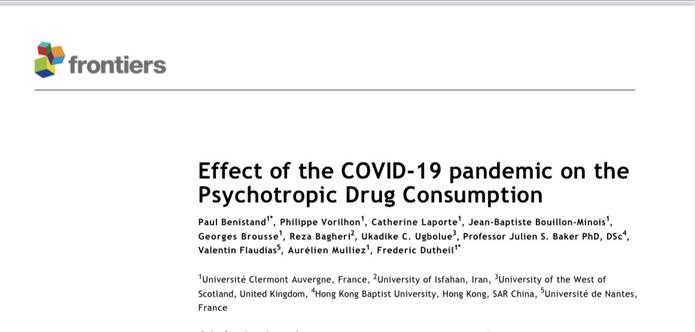
2/A new article accepted. In this article we analyzed the #prescription of #psychotropic drugs during the #COVID 19 pandemic in France. @[email protected] @[email protected] @[email protected]

2 additional leads:

Psychedelic drugs take on depression https://www.nature.com/articles/d41586-022-02205-w "might work by reopening a window of brain development — one in which the brain is much more plastic."

Critical period plasticity as a framework for psychedelic-assisted psychotherapy https://www.frontiersin.org/articles/10.3389/fnins.2021.710004/full combined with proper experience, "near-blindness from amblyopia can be reversed in rodent models."

#neuroscience #plasticity #psychedelic #psychotropic #ketamine #psilocybin #MDMA #depression #amblyopia

Psychedelic drugs take on depression

Mind-altering drugs might provide relief for those who don’t respond to conventional therapies — but does the hype outweigh the hope?

Catching up the August 2022 issue of #OEM: #swedish #workers reporting exposure to #gender based #violence and #sexual #harassment had an excess risk of #psychotropic medication use.

https://oem.bmj.com/content/79/8/507

Sexual and gender harassment and use of psychotropic medication among Swedish workers: a prospective cohort study

Objective To estimate the prospective association between the exposure to three types of gender-based violence and harassment (GBVH) and psychotropic medication. Methods Information on three measures of workplace GBVH—sexual harassment (1) from superiors or colleagues, (2) from others (eg, clients) and (3) gender harassment from superiors or colleagues—were retrieved from the biannual Swedish Work Environment Survey 2007–2013 (N=23 449), a representative sample of working 16–64 years old registered in Sweden. The survey answers were merged with data on antidepressants, hypnotics/sedatives and anxiolytics from the Swedish Prescribed Drug Register. Cox proportional hazards analyses with days to purchase as time scale and first instance of medicine purchase as failure event were fitted, adjusted for demographic and workplace factors. Results Workers who reported exposure to gender harassment only (HR 1.2, 95% CI 1.07 to 1.36), to sexual but not gender harassment (HR 1.21, 95% CI 1.04 to 1.40), or to gender and sexual harassment (HR 1.31, 95% CI 1.08 to 1.60) had an excess risk of psychotropics use in comparison to workers who reported neither of the exposures in the past 12 months. We found no interaction between the exposures and gender in the association with psychotropics use. Conclusions Exposure to sexual or gender harassment at the workplace may contribute to the development of mental disorders. Data may be obtained from a third party and are not publicly available. Due to legal restrictions, the data are not open to the public. To ensure the integrity and privacy of the study participants, publishing the data set underlying the study is not permitted. Data requests may be addressed to the SLOSH data manager, Constanze Leineweber at [email protected].

Occupational & Environmental Medicine