Ah, the perennial quest to make #polygons behave, now with the thrilling twist of formal verification! 🤯🥳 GitHub's labyrinthine menu navigation and AI buzzwords turn a simple code check into a Cirque du Soleil performance, complete with advanced security acrobatics and code review contortions. 🌀🔍 Perhaps the next act will involve untangling the menu spaghetti. 🍝
https://github.com/schildep/verified-polygon-intersection #formalverification #GitHub #AIcode #reviewsecurity #HackerNews #ngated

GitHub - schildep/verified-polygon-intersection: Formally verified polygon intersection

Formally verified polygon intersection. Contribute to schildep/verified-polygon-intersection development by creating an account on GitHub.

GitHub
Realistic Rabbits | 3D Animals | Unity Asset Store

Elevate your workflow with the Realistic Rabbits asset from MalberS Animations. Find this & other Animals options on the Unity Asset Store.

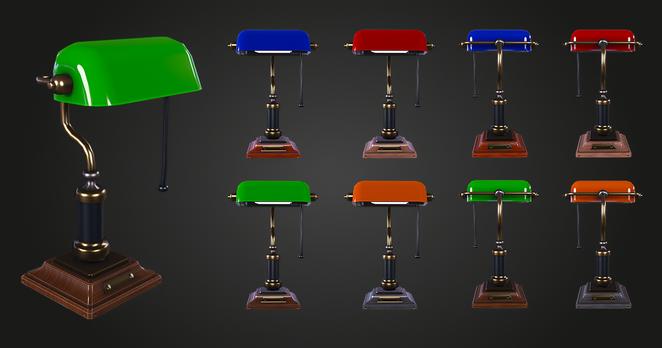
Desk Lamp Vol. 1 | 3D Props | Unity Asset Store

Elevate your workflow with the Desk Lamp Vol. 1 asset from Kraffing. Find this & other Props options on the Unity Asset Store.

RE: https://mastodon.social/@n3wjack/116634267809062167

"How come your tableware is all white?"

"Give it a second. The textures still have to load."

#textures #loading #polygons

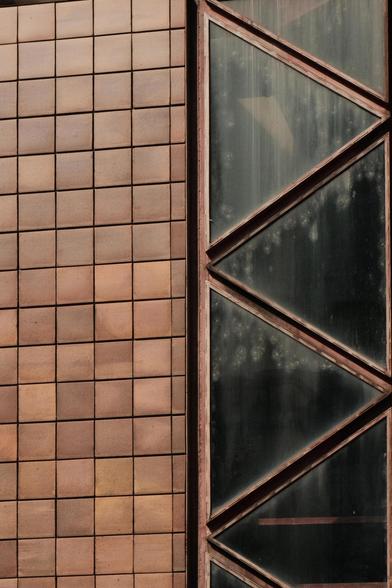
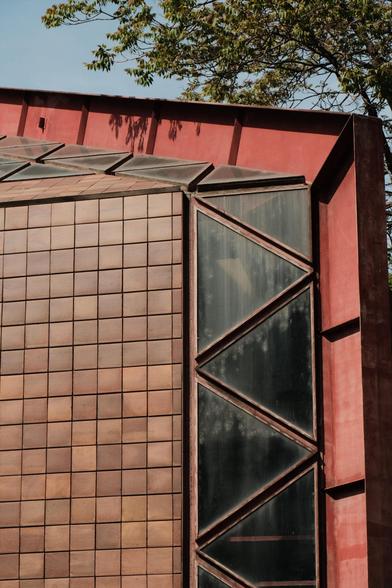
The patterns on this building & the industrial style definitely caught my eye. I couldn’t find out what the building harbours, it appears to be associated with the university/hospital.

#Prague #Architecture #ArchitecturePhotography #ArchitecturalDetail #facade #Industrial #steel #tiles #squares #triangles #polygons #red #UrbanPhotography #UrbanExploration #factory #AutumnVibes #PalePalette #EarthTones #Patterns
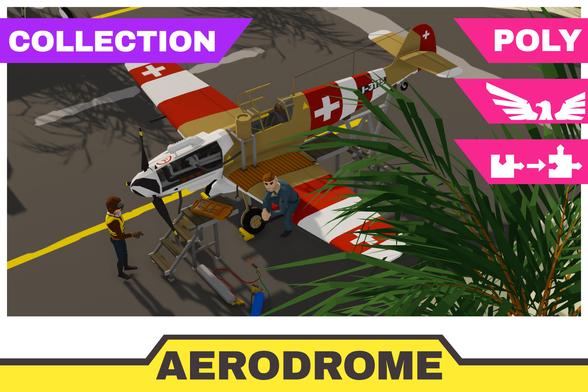
POLY aerodrome | 3D Environments | Unity Asset Store

Elevate your workflow with the POLY aerodrome asset from A.R.S|T.. Find this & other Environments options on the Unity Asset Store.

#Polyhedron #Polygons #tiles #opticalillusion #MathArt #MathsArt

The hue octagon is symmetric under a rotary reflection by a quarter turn (the symmetry of a tennis ball seam) like here @GerardWestendorp

https://mathstodon.xyz/@GerardWestendorp/116489390390156043

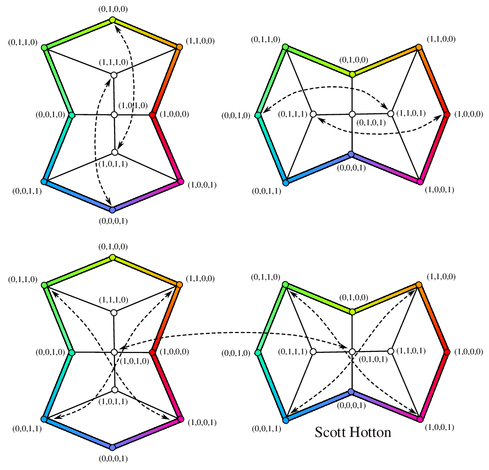
The rotation axis passes through the 2 nonspectral secondary hues. The color complement of each tetrachromatic hue is the point on the opposite side of the square dodecahedron. Complementary colors remain antipodal in the rhombic dodecahedron. The primary and tertiary hues form 4 pairs of complementary hues. This is shown in the top of the figure. The 6 secondary hues form 3 pairs of complementary hues. They are shown in the bottom of the figure.

A surprising feature of this model for tetrachromaticity is that only 4 points on the hue octagon have their color complements on the hue octagon. In trichromaticity the complement of every hue on the hue hexagon is on the hue hexagon. But only the 4 secondary hues on the hue octagon have their complements on the hue octagon. The color complement of every other hue on the hue octagon is not on the hue octagon.

Trichromats should not be able to experience the hues tetrachromats would consider to be complementary to the hues of the visible spectrum. But since trichromats experience many of the hues for the visible spectrum as having their complements in the visible spectrum it seems unlikely that trichromats and tetrachromats both experience the same hues for monochromatic light. A better understanding of which hues trichromats and tetrachromats can both experience might be achieved with more realistic spectral sensitivity curves.

(6/6)

#Polyhedron #Polygons #tiles #opticalillusion #MathArt #MathsArt

The spectral locus is the image of the quadruple of spectral sensitivity curves, \((\chi_1(\nu), \chi_2(\nu), \chi_3(\nu), \chi_4(\nu))\), where \(\nu\) varies across the visible spectrum. Its image is 6 edges from \((1,0,0,0)\) to \((0,0,0,1)\).

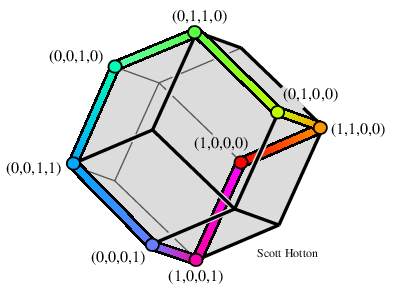
The path of length 2 connecting \((0,0,0,1)\) back to \((1,0,0,0)\) is the "line" of purples, the hues stimulated by mixtures of \(\chi_1\) and \(\chi_4\) light. The union of the spectral locus and line of purples is a nonconvex equilateral octagon that we will call the hue octagon. It has all 4 primary hues and 4 of the 6 secondary hues.

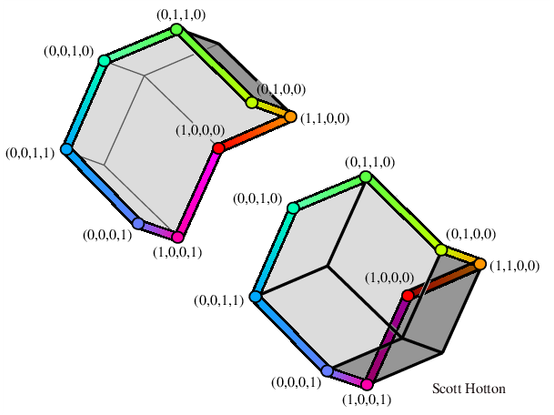
All of the tetrachromatic hues that we trichromats should not be able to experience are in the rhombic dodecahedron but outside of the hue octagon, according to this simple model. Trichromats might be able to perceive the primary and some of the secondary tetrachromatic hues. They alternate along the vertices of the hue octagon.

The hue octagon divides the rhombic dodecahedron into two congruent halves. This is shown in the figure. Each half contains 1 secondary hue situated between 2 tertiary hues.

(5/6)

#Polyhedron #Polygons #tiles #opticalillusion #MathArt #MathsArt

The achromatic axis is the diagonal connecting \((0,0,0,0)\) to \((1,1,1,1)\). The color tesseract has 2 achromatic vertices and 14 chromatic vertices. The saturation of a \((\chi_1,\chi_2,\chi_3,\chi_4)\) color is its distance from the achromatic axis. Maximum saturation occurs at the 14 chromatic vertices

Removing the achromatic vertices and their edges from the tesseract leaves behind a nonconvex square dodecahedron. The standard basis of \(\mathbf{R}^4\) are 4 chromatic vertices. They are the primary hues. The 6 sums of pairs of primary hues are the secondary hues. The 4 sums of triples of primary hues are the tertiary hues. This is all 14 chromatic vertices. Each hue achieves its maximum saturation in this dodecahedron.

To visualize the square dodecahedron we can project it to the orthogonal complement of the achromatic axis. This turns the square dodecahedron into the Catalan solid known as a rhombic dodecahedron. It is shown in the figure. Right now we are only interested in its surface. A rhombic dodecahedron can be built by attaching the base of 6 square pyramids to the faces of a cube. The triangular faces of adjacent pyramids have to be coplanar so they can join to form the 12 rhombi. The edges of adjacent pyramids are the edges of the cube inscribed in the rhombic dodecahedron.

(4/6)

#Polyhedron #Polygons #tiles #opticalillusion #MathArt #MathsArt

The visible spectrum is a line segment in frequency space for light. It is naturally embedded in 4 edges of the hue hexagon. This is shown in the previous figure. We let the frequency of monochromatic light, \(\nu\), vary across the visible spectrum to get the curve. Its image is the 4 edges from \((1,0,0)\) to \((0,0,1)\). This is the spectral locus in the color cube. The remaining 2 edges is the "line" of purples, the hues that do not correspond to monochromatic light. They are stimulated by mixtures of red and violet light.

The complement of a hue is the hue it has to be mixed with to get a completely desaturated color. The antipodal points on the surface of the color cube are pairs of complementary colors. Antipodal points on the hue hexagon are pairs of complementary colors. The primary and secondary hues form 3 pairs of complementary hues.

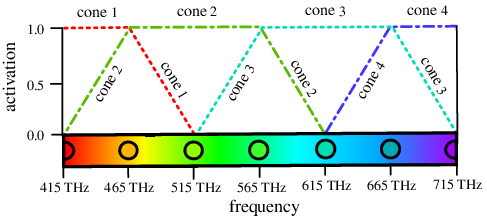
Proceeding with the analogy, there are four cones in tetrachromatic vision. To implement Ooqui's "rule of hue" their spectral sensitivity curves are again idealized to piecewise linear functions shown in the figure. Call them \(\chi_1(\nu)\), \(\chi_2(\nu)\), \(\chi_3(\nu)\), and \(\chi_4(\nu)\). They are surjective to \([0,1]\). Again, each cone type has exactly 1 frequency where it is the only type of cone that is activated and that cone's activation is 1 at that frequency. These frequencies are 415, 515, 615, and 715. At every other frequency exactly 2 cone types are activated and the activation of at least one of them is 1. The set of all tetrachromatic colors is the color tesseract \([0,1]^4\).

(3/6)