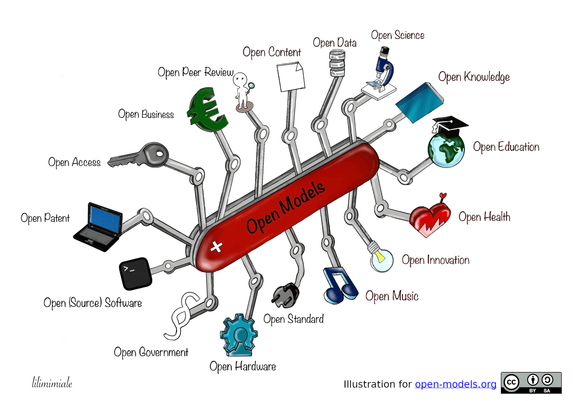
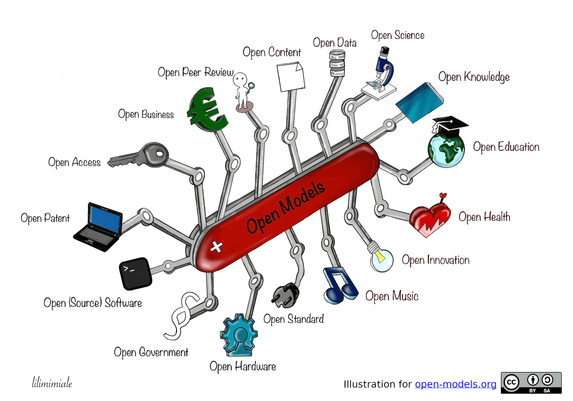
Why and how to do education on open models and digital commons? One key project of this initiative is to build a knowledge base on open models: https://open-models.org
To facilitate the use of this tool the homepage and the introduction have just been updated, by @simon (myself, the author of this publication).
Open models education remains a very emerging topic which is generally conducted in silos: open science to researchers, open software to computer scientists, open education to teachers... Without providing a global picture of these phenomena, these various parties may even be unaware of each other's existence.
The knowledge base tries to answer this gap and connect openness movements. It can have multiple interests, at first because open models share some common laws and because these dynamics are complementary by articulating with each other!
An openly available resource to be able « to train people, a basis to create educational resources adapted to the multiplicity of contexts, a means to empower a network of trainers and specialists and a way to gather research in order to follow the state of the art in these areas. »
Education on open models can be a really broad topic targeting a variety of audiences, the intent with the base is at first to provide a general culture and then redirect to more specialized actors for advanced training.
A way to initiate people to these phenomena and then let them dive deeper depending on their needs.
Whether you're new to these movements or already well-versed in them but want to understand openness in other domains, this resource might be of interest to you. Or for any organization/university/school working around digital literacy!
To see the introduction: https://open-models.org/content/introduction.html
In this culture of contribution, feedback and suggestions for improvements are appreciated. Open models are hard to explain!
Author: @simon
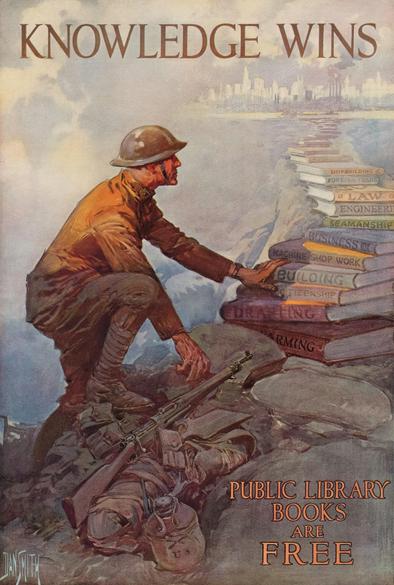
Credit image: Boston Public Library, Unsplash
#openmodels #openeducation #openscience #opensource #opensoftware #openhardware
 NGI0_Moldova
 simon
simon
 Open Models Unfoundation