#UCDavis - Students Lead #HabitatRestoration at #RussellRanch

Fri, March 20, 2026

"At Russell Ranch, just west of campus along Russell Boulevard, a transformation is underway. What was once grazed #pasture and alfalfa field is becoming a thriving #NativeHabitat led by UC Davis students and funded by #TheGreenInitiativeFund, or #TGIF.

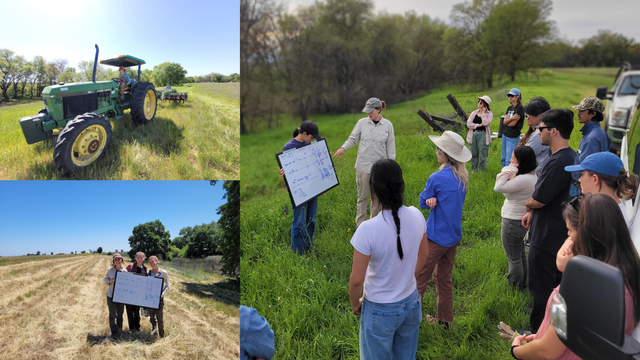
"The Russell Ranch Slough Restoration Project, designed and implemented by the Arboretum and Public Garden’s Learning by Leading™ Ecological Land Management, or #ELM, team, is now at its midpoint. Site preparation is complete, invasive species have been cleared, and nearly 200 native trees and shrubs have been planted along the seasonal slough.

" 'Projects like this show students that restoration isn’t theoretical. It’s something they can design and implement themselves,' said Miles DaPrato, environmental steward for the Arboretum and Public Garden and staff mentor for the ELM team.

"Turning Working Land into #WildlifeHabitat

"The 2.5-acre site sits within the #PutahCreek Riparian Reserve, surrounded by agriculture and rural residences. Rather than separating nature from working landscapes, the project shows how the two can work together — creating habitat while improving the ecological function of the land.

"This past fall, students removed old livestock fencing that blocked #wildlife movement, prepared the soil, and seeded the site with locally adapted #NativeGrasses and #wildflowers timed to the first seasonal rains.

"Over the winter, the team planted nearly 200 native trees and shrubs, including #ValleyOak, #Cottonwood, #Willow, #Elderberry and #Toyon. Temporary drip irrigation has been installed to help the young plants establish during their first critical summers. 'You can study restoration in class, but being out here actually doing the work is completely different,' said Keira Folkers, Environmental Engineering, 2026, and Kayden Delvo, Environmental Science and Management, 2026. 'You start to understand the land, the timing of the seasons and the decisions that go into every step.' "

Learn more:
https://publicgarden.ucdavis.edu/news/students-lead-habitat-restoration-russell-ranch

#SolarPunkSunday #California #HabitatRestoration #Wildlife #CoExistence

Students Lead Habitat Restoration at Russell Ranch

At Russell Ranch, just west of campus along Russell Boulevard, a transformation is underway. What was once grazed pasture and alfalfa field is becoming a thriving native habitat led by UC Davis students and funded by The Green Initiative Fund, or TGIF.

UC Davis Arboretum and Public Garden

#EDRR Alert: Status Update of #Stiltgrass in #Maine

February 24, 2026

"Background

Japanese stiltgrass (Microstegium vimineum) is a severely invasive, annual grass originating from southern Asia. Originally introduced to Tennessee in 1919, stiltgrass has seen unbridled spread across the eastern United States over the past century. In Maine, stiltgrass is classified as an early detection and rapid response invasive species (EDRR). EDRR species are recent invaders, meaning they can still be feasibly eradicated from the state. A prolific seed producer, stiltgrass easily invades natural areas and outcompetes many of our native #groundcover species. Stiltgrass is also highly #allelopathic, meaning it releases organic compounds into the soil that degrade the health of the soil and inhibit the growth of other plant species.

As the growing season ends, stiltgrass stems dry out, leaving a thick layer of dry thatch along the forest floor. This introduces a severe #wildfire risk to any invaded areas. Due to the countless negative impacts that stiltgrass poses on Maine's natural areas, identifying stiltgrass populations and managing its spread is among the highest priorities for invasive species management in the state.

Identification

There are several characteristics that can be used to identify stiltgrass and distinguish this species from our native grasses in Maine. The most reliable identifying characteristic for stiltgrass can be found on its pale green, alternate leaves. On the upper surface of stiltgrass leaves is a recognizable silvery midrib (central vein running along the length of the leaf). This silver midrib is unique to stiltgrass and is not found on any of Maines native grasses. Additionally, the texture of stiltgrass leaves is extremely smooth or silky. Nearly all of Maine's #NativeGrasses possess a sticky or grippy texture when passing the leaves between your fingers.

Stiltgrass can also be distinguished from native grasses using its growth form. Mature plants produce aerial roots, or 'stilt roots' (the namesake for this species), at lower nodes along the stem that help to prop up the plant. This trait is unique to stiltgrass. Additionally, stiltgrass tends to branch out close to the ground, producing several main stems that may appear to have a sprawling growth habit. This trait is extremely uncommon among Maines native grass species."

Learn more:
https://www.maine.gov/dacf/about/news/news.shtml?id=13343932

#SolarPunkSunday #Fields #SoilHealth #NativeGrasses #InvasiveGrasses #InvasiveSpecies #InvasiveSpeciesWeek
#MaineDepartmentOfAgricultureConservationAndForestry

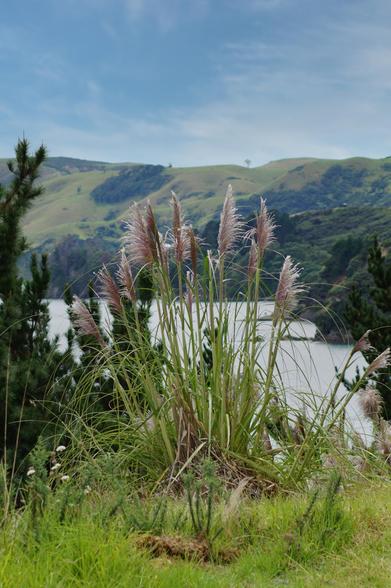
A clump of native grasses at the side of the road on the Coromandel Peninsula in New Zealand overlooking part of the Hauraki Gulf.
#photography #photo #NewZealand #NativeGrasses #Landscape #Coromandel

Dead Soils, Lost Roots, and the Path to Recovering the West

To understand how to heal the land, we have to remember what was lost—and what still survives in hidden patches of ungrazed land.

Aug 27, 2025, @WesternWatershedsProject

"From the sagebrush-steppe of the Intermountain West to the coastal prairies of Point Reyes National Seashore, it is crucial to to restoring native perennial grasslands to understand what makes up a healthy ecosystem.

"Widespread and heavy cattle and sheep grazing have degraded or eliminated much of the native bunchgrasses that were important components of western grasslands. We have reconstructed a baseline visual model of how a generalized thriving perennial grassland community might have appeared within 500 years prior to European contact in North America.

[...]

"The process can be reversed, and progress can be made in setting the path toward recovery and restoration of the original grasslands. Ungrazed or little-grazed native grassland relicts in parks, fenced livestock exclosures, and inaccessible spots like cliffs can give us clues as to what the land used to be like. But the removal of the primary stressor is absolutely necessary to begin this healing: the cattle and domestic sheep must go."

Learn more:
https://westernwatersheds.substack.com/p/dead-soils-lost-roots-and-the-path

#SoilRestoration #NativeGrasses #Restoring #Rewilding #CattleGrazing #SheepGrazing #SolarPunkSunday #SoilIsLife

Dead Soils, Lost Roots, and the Path to Recovering the West

To understand how to heal the land, we have to remember what was lost—and what still survives in hidden patches of ungrazed land.

Western Watersheds Project

Farmworkers Heal Climate-Scarred Land With #NativeSeeds

At #California’s #HedgerowFarms, specialists produce seeds to #revegetate burned areas, reestablish #wetlands, and transform drought-prone #farmland

By Caleb Hampton

July 7, 2025

"Quiroz and Gómez are seed-cleaning specialists and field workers at Hedgerow Farms, a native seed farm near the #CentralValley town of #WintersCA. Hedgerow’s collectors gather seeds from native plants in the wild, and field workers grow them out at the 300-acre farm to produce more seeds. This spring, neat rows of #mugwort, #PurpleNeedlegrass, and #CaliforniaPoppies sprouted in the midst of neighboring almond orchards, tomatoes, and alfalfa.

"Government agencies, tribes, and other land managers use the seeds to revegetate #FireRavagedAreas, transform #AbandonedFarmland, reestablish wetlands, and repair other damaged or altered lands, creating environments that support local #ecosystems and #biodiversity.

" 'We’re doing something for the planet,' Quiroz said in Spanish.

"Recreational areas have benefited too: Hedgerow Farms’ #SilverbushLupine grows in the Golden Gate National Recreation Area, and its #NativeGrasses can be found in the Yolo Bypass Wildlife Area outside Sacramento. The farm also supplies native seeds to seed packet retailers, helping sow #DroughtResistant plants and establish #pollinator habitat in #urban environments.

"Some projects, such as the ongoing restoration of the #KlamathRiverBasin in Oregon and California, involve billions of seeds — from various suppliers, including Hedgerow — spread across thousands of acres. 'Native vegetation is the foundation of a healthy #ecosystem,' the #YurokTribe said in a social media post showing #wildflowers blooming this spring in the scar of a former reservoir.

"After four dams were removed from the #KlamathRiver, the tribe began #revegetating the riverbanks last year, planting species such as #milkweed — a key food source for #MonarchButterflies — that once flourished in the watershed."

Read more:
https://civileats.com/2025/07/07/farmworkers-heal-climate-scarred-land-with-native-seeds/

#SolarPunkSunday #FoodSecurity #RegenerativeAgriculture #Restoration #GardeningForPollinators #RestorativeAgriculture

Farmworkers Heal Climate-Scarred Land With Native Seeds

At California’s Hedgerow Farms, specialists produce seeds to revegetate burned areas, reestablish wetlands, and transform drought-prone farmland.

Civil Eats

Could This #Arizona Ranch Be a Model for #Southwest Farmers?

Oatman Flats has undergone a dramatic transformation, becoming the Southwest’s first #Regenerative #Organic Certified farm and a potential source of ideas for weathering #ClimateChange.

" 'We embraced the abundance of #heirloom and native crops in the #SonoranDesert,' Hansen said. 'We are looking at the land and asking it what we should grow, rather than asking the land to grow what we want.' " - Dax Hansen, owner of Oatman Flats Ranch.

By Samuel Gilbert
May 12, 2025

Excerpt: "Regeneration Rooted in #Indigenous Practices

"Southern Arizona’s rich agricultural history stretches back more than 5,000 years. By 600 CE, the Hohokam people were constructing North America’s largest and most elaborate irrigation systems along the Salt and Gila Rivers. The descendants of the Hohokam—the Pima and Tohono O’odham—continued to farm the land up to and after the arrival of the Spanish, who began to colonize southern Arizona in the 1600s. They continue to farm in Arizona today.

"At the Tohono O’odham Indian Reservation, about two hours southeast of Oatman Flats, the San Xavier Co-op Farm uses historic land management practices and grows traditional crops that reflect their respect for the land, plants, animals, elders, and the sacredness of water.

"San Xavier Farm Manager Duran Andrews and his team plant #CoverCrops, rotate fields, and collect #rainwater.

" '[Regenerative agriculture] is nothing new to us,' Andrews said. 'We have been doing this for decades. Harmony between nature and people has been our approach all the time.' Rotating fields and cultivating multiple mutually beneficial species in the same fields improves water and soil quality and biodiversity in this harsh landscape.

" 'You’ve seen what the land looks like in five years; imagine it in 10. If we can do it here, we can do it anywhere.'

"The co-op grows a variety of native crops that were developed in the region and cultivated for centuries or, in some cases, millennia, such as grains and beans, which they sell online. 'We irrigate them till they sprout, then cut them off till the monsoon shows up,' Andrews said. 'We try to keep crops in that hardy state through all the years and decades they have been here. We try not to get away from how things were done in the past.'

"They also grow White Sonora wheat, introduced to Arizona by Spanish Jesuit missionaries in the 1600s. 'It was a gift from Father Kino that we have taken as our own,' Andrews said. 'The [San Xavier] community was one of the first to grow this wheat.'

"Following the Mexican-American War in the mid-1800s, the United States claimed parts of modern-day Arizona, New Mexico, California, Nevada, and Utah. The Anglo ranchers who moved into the area dug canals to irrigate agricultural fields, transforming the landscape. An 1852 watercolor by surveyor Jon Russell Bartlett depicts a verdant valley with cottonwoods and mesquite trees lining a flowing Gila River as it passes through Oatman Flats Ranch.

"That landscape is unrecognizable today. The lower Gila has gone bone dry after years of upstream diversions, dams, water overuse, and climate change. In 2019, the Gila River earned the title of Most Endangered River by the nonprofit advocacy group American Rivers.

"Standing on the sandy Gila riverbed, which divides the north and south farms of Oatman Flats Ranch, Wang pointed to the nearby invasive salt cedars. Healing the land involves rebuilding the water, nutrient, and carbon cycles from the ground up, 'at the micro level,' he said. 'On the macro level, it’s broken.'

"The ranch team has poured resources into rebuilding soil health by planting #hedgerows and 30-plus species of cover crops, at a cost of approximately $100,000. The hedgerows, mostly native trees, were planted along the edges of the fields to reduce erosion and provide habitat for beneficial species, including #pollinators such as #bees and #hummingbirds.

"The cover crops — #millet, #chickpeas, #sunflowers, #sorghum, sudan grass, broadleaves, and #NativeGrasses among them—are planted immediately after harvesting wheat, to provide 'soil armor,' help conserve water, fix nitrogen in the soil, suppress weeds, attract beneficial insects, and sequester carbon. The once-barren land now supports life for more than 120 species of flora and fauna."

Read more:
https://civileats.com/2025/05/12/could-this-arizona-ranch-be-a-model-for-southwest-farmers/

#SolarPunkSunday #RegenerativeAgriculture #RegenerativeFarming #RestorativeAgriculture #ClimateChangeFarming
Could This Arizona Ranch Be a Model for Southwest Farmers?

The Southwest’s first Regenerative Organic Certified farm provides a source of ideas for weathering climate change.

Civil Eats

So, I've been attempting to do this. I have a few patches established and try to increase them every year...

Turning a #SepticField into a #wildflower #meadow

by Anna, January 18, 2023

"When I mentioned not wanting to turn our septic field into the traditional mowed lawn, Travis Sparks wrote in to share his impressive mini-meadow, started in 2017 atop his #Maine septic field.

First step turning a septic field into a wildflower meadow

" 'I mowed the area down as low as I could in late spring 2017,' he wrote, 'spread a thin layer of compost over the whole area, broadcast a variety of both perennial [be careful about root depth if using perennials -- or annuals for that matter] and annual seed mixes over it, and lightly raked everything. I mowed it a couple more times that year (higher cut) to try to knock the competition back while things germinated, and then left it be.'

" 'I just had sparse grasses and wildflowers to start (nothing woody) before doing any of this, so the competition wasn’t too strong early on. It was reasonably successful the following year.'

"Travis wasn’t entirely thrilled with wildflower establishment, though, so he repeated the process in late spring 2019 including 'another very light top-dressing of compost since the leach field soil is mostly just sandy fill.' The results that year were even more inspiring...

"[2021 update] Travis wrote that after the establishment phase, he hasn’t done anything to keep the meadow on track (although I suspect he’ll have to mow now and then to keep woody plants out).

"I’m so impressed by his success, which turns his septic field into habitat for pollinators and lots of other wildlife. Have you turned a blah septic field into an integral part of your homestead? If so, I’d love to hear about it!"

https://wetknee.com/turning-a-septic-field-into-a-wildflower-meadow/

#SolarPunkSunday #Gardening #NativeGrasses #WildflowerMeadows #Sedges #Rewilding #NativeGrasses #GardeningForPollinators

Turning a septic field into a wildflower meadow - WetKnee Books

When I mentioned not wanting to turn our septic field into the traditional mowed lawn, Travis Sparks wrote in to share his impressive mini-meadow, started in

Wetknee Books
9 Native Grasses That Will Revitalize Your Sad, Water-Wasting Lawn

Turn your yard into a living fireworks show while saving money, time, and nature.

Pocket

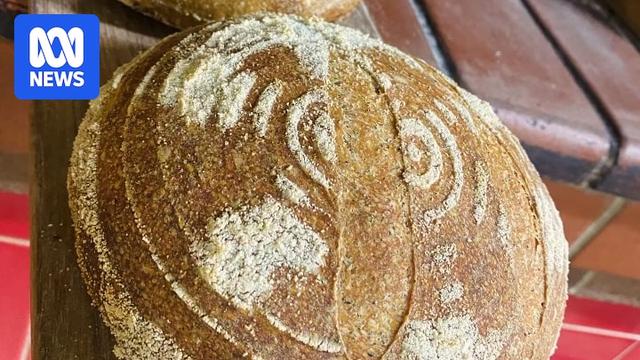
#Australia - Native '#superfood' #grasses used to create flour, beer growing in popularity

By Fiona Broom, August 27, 2024

"Just three years ago, Chris Harris was using an old metal bed frame to shake out the tiny seeds that hide in native #KangarooGrass.

"The #AncientGrains can be roasted, brewed or ground into high-protein flour for baking.

" 'I spent a lot of time on my country — #Ngiyampaa country — with my pop, my dad, my mum and aunties and uncles,' Mr Harris said.

"Mr Harris has made flour out of #WattleSeed, as well as #MitchellGrass, #ButtonGrass and #KangarooGrass.

"He has sent native flours and seeds to kitchens across the country for the past two-and-a-half years but said he was looking at ways to expand his operations.
From builder to bush foods

"Mr Harris is the farm manager at #BlackDuckFoods, an #Aboriginal social enterprise at #Mallacoota on Victoria's far eastern border with New South Wales.

"The farm, named #Yumburra — the Yuin word for the black duck native to the Mallacoota region — was set up by award-winning author Bruce Pascoe, whose book Dark Emu shone a spotlight on the lost history of #AboriginalFood systems.

"Mr Harris was a plasterer with an Aboriginal construction company when first visited the property about four years ago.

"But he said after discussing bush foods with Mr Pascoe, he realised his future would be as a farmer and native foods educator.

" 'I'd been talking a lot to him about the lilies, the murnong, and the grains and he'd seen a real interest that I had in the native food space,' Mr Harris said.

"In the past few years, the small team has grown its knowledge of the ancient grains at their former beef farm on the banks of the Wallagaraugh River.

"They have encouraged the return of the #NativeGrasses, wattles and #tubers that produce the nutritious ingredients that foodies across the country are learning to love."

Read more:
https://www.abc.net.au/news/rural/2024-08-27/native-superfoods-flour-grasses-seeds-kangaroo-grass-black-duck/104153962?future=true&

#IndigenousFood #NativeAustralians #BushTucker #TraditionalFoods

Native 'superfood' grasses used to create flour, beer growing in popularity

Native ancient grains are bringing fresh flavours to recipes as brewers and bakers fall in love with bush foods.  

ABC News